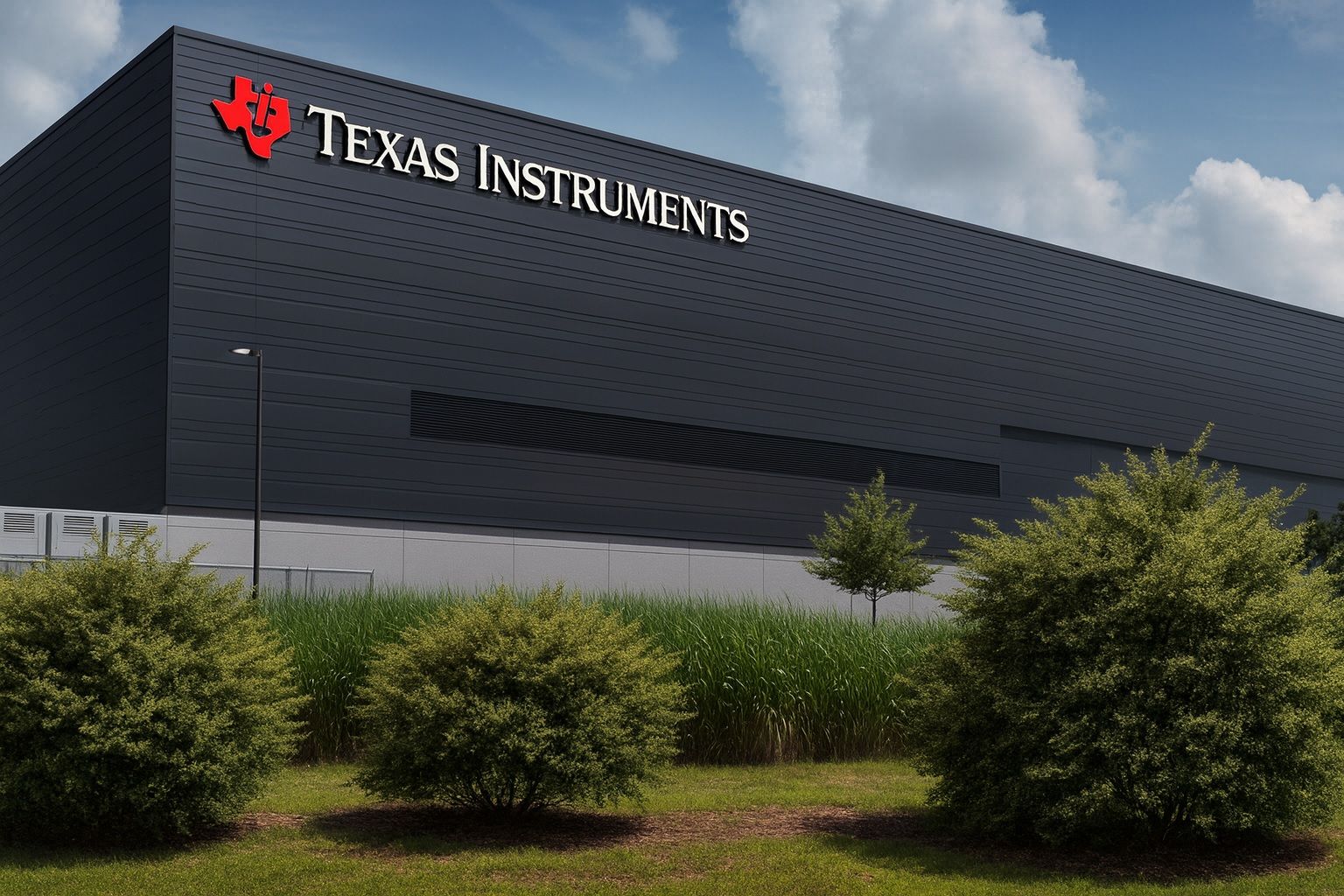

- Earnings & Guidance: TI reported Q3 2025 EPS of $1.48 on $4.74B revenue (vs. $1.49/$4.66B consensus), then offered a cautious Q4 outlook (revenue $4.22–4.58B vs. ~$4.51B estimate, EPS $1.13–1.39 vs. $1.41 est) reuters.com reuters.com. The conservative guidance spurred an 8% stock drop in after-hours/pre-market trading on Oct. 21–22 reuters.com reuters.com.
- Stock Price: TXN closed around the high‑$170s (mid‑Oct) and traded near $180 on Oct. 21 ts2.tech. After the earnings beat, shares initially jumped on news of a dividend hike and AI tailwinds ts2.tech, but the weak forecast then erased gains. The stock is roughly flat to slightly down (~3–5%) year-to-date reuters.com ts2.tech. It trades around 29–32× forward earnings, higher than Analog Devices (~26×) or Micron (~12×) reuters.com ts2.tech.
- Dividends & Leadership: TI raised its quarterly payout 4% to $1.42 (yield ~3%) in Oct. 2025 ts2.tech, marking 22 straight years of hikes. This underscores its cash-generous culture. Also, CEO Haviv Ilan will become chairman in 2026 as longtime boss Rich Templeton retires ts2.tech, a transition analysts say “is not expected to materially impact near-term catalysts” ts2.tech.
- Industry Trends: TI – the world’s largest analog-chip maker – faces macro headwinds. Tariff uncertainty and slow auto/industrial demand are delaying the analog recovery reuters.com reuters.com. CEO Ilan cautioned there “is a recovery, but it’s at a very moderate pace” reuters.com. Stifel’s Tore Svanberg adds that demand signals are “mixed in light of tariffs and trade-disputes” reuters.com. In July, TI warned similarly that tariffs and a “shallow” auto market were dimming chip demand reuters.com. Meanwhile the broader semiconductor index is up ~100% this year (AI boom), far outpacing TXN ts2.tech. TI acknowledges its “limited exposure to the AI capex cycle,” focusing on traditional analog niches ts2.tech ts2.tech.
- Analyst Views: Wall Street is split. Some see TI as a stable dividend play poised to benefit when industry improves (“high-quality asset… if industrial demand rebounds” ts2.tech). But many are cautious: Bank of America cut TXN to “Underperform” ($190 target), warning of “rich valuation” and limited AI upside amid tariffs and soft industrial demand ts2.tech. Jefferies kept a Hold but lowered its 1-year target to $180 investing.com. In contrast, Goldman Sachs and UBS recently initiated with Buy (≈$255 targets) citing long-term automotive/industrial growth ts2.tech. The consensus rating is neutral (“Hold”), with analysts’ price targets ranging from about $145 up to $255; the average is ~$213 (implying ~20% upside) ts2.tech.
Mixed Q3 Results and Uncertain Guidance
In late October 2025 TI reported Q3 results that narrowly beat revenue forecasts but gave a below‑expectation outlook. Revenue was $4.74 billion, up ~14% year-over-year and slightly above the $4.66 billion consensus investing.com. Adjusted EPS was $1.48, matching guidance but just shy of the $1.49 Wall Street estimate investing.com reuters.com. However, the company warned Q4 revenue would be $4.22–4.58 billion (midpoint $4.40B) and EPS $1.13–1.39, both notably under analysts’ $4.51 billion/$1.41 targets reuters.com reuters.com. Management attributes the shortfall to customers “managing excess stock,” especially in industrial and automotive markets ainvest.com ainvest.com. CEO Ilan noted a tentative recovery in chip demand but said it’s “at a very moderate pace” reuters.com. Stifel’s Svanberg similarly notes that data on analog chip demand are still mixed due to tariffs and trade uncertainty reuters.com.
The tepid outlook sent TXN shares plunging in after-hours and pre-market trading on Oct. 21–22 – down roughly 8% reuters.com reuters.com – wiping out earlier gains. (For context, TI stock had lagged the semiconductor rally: while the chip index roughly doubled in 2025, TXN was up only modestly ts2.tech.) Overall, TI stock is basically flat for the year (≈–3%) reuters.com, underperforming tech peers on the back of analog-market weakness.
Industry Headwinds: Tariffs, Autos and Analog Chips
TI’s core business is analog and embedded processors for industrial, automotive and other markets. These segments have been sluggish worldwide. Escalating U.S. tariffs and broader trade tensions have made industrial customers cautious. (President Trump has talked of huge 100% tariffs on semiconductor imports, with uncertain implementation reuters.com reuters.com.) Many factory and auto customers have “held back” spending amid the policy uncertainty reuters.com. TI has spent over $60 billion to expand U.S. fabs, but that onshoring push can’t immediately offset global demand slowdowns reuters.com. In a mid‑year call, Ilan warned “tariffs and geopolitics are disrupting and reshaping global supply chains” and said U.S. fiscal changes could raise TI’s tax rate this year reuters.com reuters.com.
Auto demand in particular has been “shallow,” Ilan said, citing weak orders (a story echoed by automakers worldwide). Analog chips tend to see inventories swing with the cycle: distributors have excess analog stock now, forcing TI and peers to cut production and margins. (Stifel has noted that TI’s factories ran flat in Q3 vs Q2, pressuring margins reuters.com.) Overall, analysts like JPMorgan note that the analog recovery is “much more gradual than anticipated,” and that auto/industrial weakness and tariffs could keep growth muted reuters.com.
Dividend Strength and Leadership Transition
Amid the cyclicality, TI continues to reward shareholders. In mid-October it announced a 4% dividend increase to $1.42 per share (payable Nov. 12) ts2.tech. This marks the 22nd consecutive annual hike – evidence of TI’s “fortress” financials and focus on cash returns ts2.tech. The 3.2% yield (at ~$176 stock price) is attractive for income investors. TI also reaffirmed its $60+B capital spend on U.S. manufacturing, reinforcing its defense against tariffs reuters.com.
Corporate leadership is also shifting: longtime chairman Rich Templeton (45-year TI veteran) will retire at year-end, and CEO Haviv Ilan (26 years at TI) will become chairman in 2026 ts2.tech. Market observers view this as a smooth succession – Ilan already leads the company and has championed its analog/industrial focus ts2.tech. Analysts generally say the change “is not expected to materially impact near-term catalysts” such as the auto/industrial recovery ts2.tech. It does, however, signal continuity in strategy: Ilan has emphasized continuing to invest in the analog “megatrends” of automotive and factory chips, which he still sees as TI’s long-term growth drivers ts2.tech.
Analyst Outlook and Forecasts
Wall Street currently has a neutral-to-cautious stance on TXN. The consensus “Hold” rating reflects uncertainty. Price targets vary widely: after Q3 guidance, at least five firms cut theirs. Jefferies (Hold) lowered its 12-month target to $180 investing.com; Mizuho cut to $145 (Underperform) investing.com. Bernstein trimmed to $160 (viewing the quarter as “decent” but trimmed EPS outlook) investing.com. Even Evercore (Bullish) reduced its target to $226 on weaker December-quarter EPS expectations investing.com. On the bearish side, Bank of America sees only $190, calling the stock “richly valued” with limited AI upside amid tariffs ts2.tech. Wells Fargo cut its target to $195 (Equal Weight) on near-term margin concerns ts2.tech.
On the bullish side, some see TI’s strengths: Goldman Sachs started coverage with a Buy and ~$255 target (citing long-term auto/industrial growth), as did UBS with $245 capital.com ts2.tech. Wolfe Research also upgraded TXN to Outperform ($230 target) after Q2, expecting a cyclical upturn. Overall, analysts’ price targets range roughly $145 on the low end up to ~$255 on the high end ts2.tech. The average target (~$210–$215) suggests about 15–20% upside from current levels ts2.tech. Consensus earnings forecasts are modest: analysts expect mid-to-high single-digit declines in chip sales through Q4, with profits roughly flat year-over-year in the near term. For example, consensus Q4 EPS is about $1.40 on $4.5B revenue finviz.com reuters.com, implying very little growth from this year’s Q4.
Peers and Valuation Comparison
Compared with peers, TI trades at a premium. Its forward P/E (~29×) is higher than Analog Devices (~26×) and far above memory players like Micron (~12×) reuters.com. TI’s high profitability (≈30% net margins) earns it a valuation premium, but its growth prospects are considered limited near term ts2.tech. For instance, BofA notes that on 2026 estimates TI is valued around 31× EV/FCF versus ADI’s ~24×, despite TI’s free cash flow margin (~9%) being much lower than ADI’s (35–40%) ts2.tech. This rich multiple reflects confidence in TI’s stability and dividends, but also explains the caution: investors are paying up for quality, with the expectation of a slow rebound rather than a rapid boom.
Peers have also been weak. In July, TI’s cautious tone sent peers NXP, ADI and ON Semiconductor down a few percent as investors braced for a broad analog slowdown ts2.tech. Even amid industry volatility, TI’s scale in analog ($3.7B analog revenue in Q3, +16% YoY ainvest.com) gives it an edge. And TI is quietly pivoting toward higher-growth segments – for example, ramping products for data centers and AI. The company projects that data-center/AI chips will reach $1–$1.2 billion of its sales by 2025 (about 20% of total) ainvest.com ainvest.com, up from a much smaller base now. This aligns with industry forecasts (Yole Group expects data-center chip demand to hit ~$492B by 2030 ainvest.com). In time, the AI/data center boom could provide a tailwind for TI, but it remains secondary to its core analog markets today.
Outlook: Balanced Between Caution and Long-Term Opportunity
In the near term, Texas Instruments faces clear headwinds. Tariff wars, a still-soft auto/industrial cycle and excess chip inventories are keeping sales and margins under pressure. That explains why analysts are reluctant to upgrade the stock today ts2.tech reuters.com. On the other hand, TI’s strong balance sheet (net cash >$8B), hefty R&D, and multidecade lead in analog/embedded chips give it resilience. Its generous dividend (now $1.42 per quarter) and ongoing $60+B US fab buildout signal management’s confidence in the long term reuters.com ts2.tech.
Most experts suggest that TXN will likely track an analog-chip recovery that may not materialize until late 2025 or 2026. JP Morgan analysts note the industry “could still be muted by tariff/trade and sluggish auto recovery” reuters.com. On the flip side, any pick-up in factory or auto spending (for example, if China’s economy or U.S. infrastructure projects accelerate) could quickly benefit TI’s sales. Investors should also watch for signs of stabilization in AI capital spending; currently TI is positioned to capture only a slice of that market.
Bottom line: Texas Instruments sits at a crossroads. Its stock is well off its 2025 highs and analyst targets have been trimmed. But it still offers a high dividend yield and steady cash flow. If the analog market turn comes sooner than feared, TI’s undervalued slice of a huge electronics industry could drive upside. As one analyst put it, TI remains a “high-quality asset, poised to benefit if industrial demand rebounds or U.S. reshoring accelerates,” even as many investors stay cautious ts2.tech. For now, most forecasts see only modest moves on the next earnings release (±2–3%) – the bigger question is whether macro conditions improve over the next year.
Sources: Company filings and news releases; Reuters and Investing.com analysis reuters.com investing.com reuters.com ts2.tech; TechStock² report ts2.tech ts2.tech; Capital.com forecasts capital.com; Market analyst commentary capital.com ts2.tech investing.com.
Related articles: NASDAQ:TXN