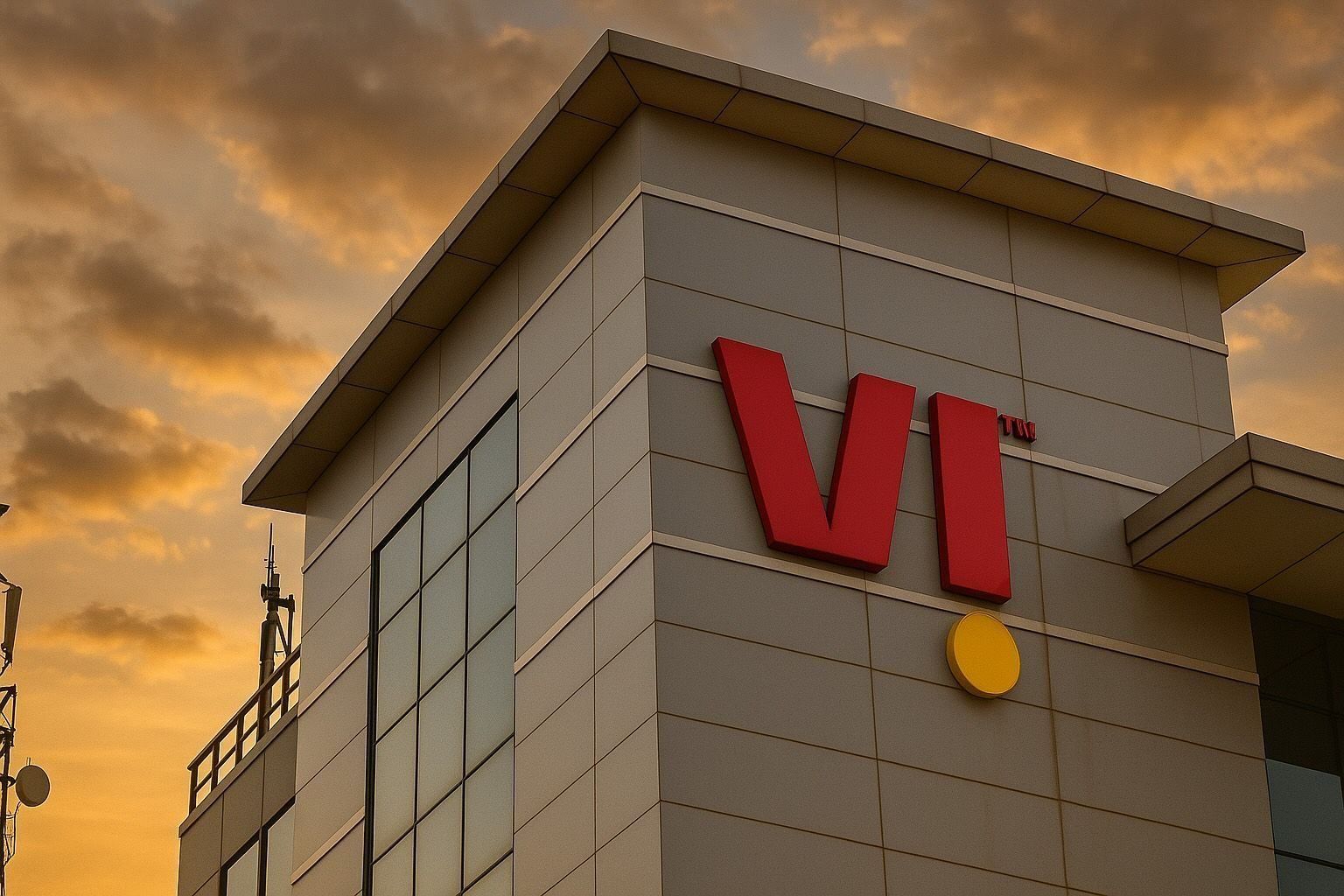

Mumbai, 1 December 2025 – Vodafone Idea Ltd (Vi) shares were in the spotlight on Monday as traders digested a cocktail of tariff-hike expectations, a recent Supreme Court lifeline on adjusted gross revenue (AGR) dues, aggressive 5G rollout updates, and fresh analyst targets.
Vodafone Idea share price snapshot: 1 December 2025
On the National Stock Exchange (NSE), Vodafone Idea (ticker: IDEA) was trading around ₹10.1–10.2 in late morning deals on 1 December 2025, up roughly 1.5–1.7% versus the previous close near ₹10.0. 52‑week levels currently stand around ₹6.12 (low) and ₹11.08 (high), putting today’s trade closer to the upper end of the yearly band.
Market capitalisation is hovering near ₹1.1 lakh crore, with the stock still reflecting deep accumulated losses: trailing twelve‑month EPS is about –₹2.39, implying a negative P/E and negative book value per share (roughly –₹6.5 to –₹7.6), according to exchange data and major financial portals.
Despite the weak fundamentals, price momentum has been strong in recent months. Business Standard data show one‑month gains of ~16% and a three‑month rally of ~55%, even though the three‑year return (~24%) still lags the Nifty’s ~40% rise over the same period.
Market activity on 1 December has been particularly intense: volumes on the NSE and BSE together are in the tens of crores of shares, and screeners like MarketsMojo flagged Vi as a top stock by traded volume and traded value during the session, highlighting “exceptional” participation amid mixed technical signals. Business Standard+3Markets Mojo+3Markets Mojo+3
Why Vodafone Idea is in the news today
Several overlapping catalysts are driving interest in Vodafone Idea as of 1 December 2025:
1. Tariff hikes from December: ARPU tailwind in the making
Indian media and social channels have been buzzing for weeks with reports that Reliance Jio, Bharti Airtel and Vodafone Idea will raise mobile tariffs by around 10–12% from 1 December 2025, especially in mass prepaid packs. A widely cited Hindi report in Navbharat Times suggested that some popular low‑value plans (for example, a ₹199 pack) could see substantial upward resets as operators chase higher average revenue per user (ARPU).
Even before 1 December, telecom‑focused portals had started documenting plan‑level changes. For instance, TelecomTalk recently noted a Vodafone Idea unlimited pack moving from ₹509 to ₹548, consistent with a low double‑digit hike, while industry commentary expects more repricing across the board over the next few weeks.
For Vi, which already managed to push ARPU up to ₹180 in Q2 FY26 (from ₹166 a year earlier), any further price lift without massive subscriber churn could be a powerful lever for revenue and cash‑flow repair.
2. Supreme Court opens door to AGR relief
On 27 October and 3 November 2025, the Supreme Court effectively gave Vodafone Idea a crucial lifeline by allowing the Government of India to reassess its AGR dues, including the contentious penalty and interest components up to FY2016–17.
Reuters reported that the court’s clarification allows the Centre to consider relief on the full AGR bill, not just incremental demand, and that Vi has sought relief on both an additional demand of about ₹9,500 crore and a total AGR burden of nearly ₹80,000 crore.
The AGR dispute is central to Vi’s survival. Earlier disclosures put its total obligations to the government—AGR plus deferred spectrum payments—at over ₹2.1 lakh crore as of late 2024.
Brokerages have framed the latest judgment as a potential game‑changer but not a silver bullet:
- Emkay called the verdict a “lifeline for Vodafone Idea” but still keeps a Sell rating with a ₹6 target, citing high leverage and execution risk. The Economic Times+1
- Motilal Oswal upgraded the stock from Sell to Neutral, raising its target to ₹10 and estimating that a 50% cut in AGR liabilities could add roughly ₹3.6 per share to fair value.
Vi itself, in recent communications, has said it is actively engaging with the Department of Telecommunications (DoT) on next steps and “welcomes” the court’s orders that allow a comprehensive reconciliation of AGR dues, including interest and penalties. Trade Brains+1
3. Fundraising pivots: bond issue resized, bank financing in focus
Funding is the other critical leg of the story. In May 2025, Vodafone Idea’s board approved plans to raise ₹20,000 crore through equity and/or loans; the company had already raised over ₹61,000 crore of equity in FY25 through a massive follow‑on offering, promoter infusions and vendor preferential allotments.
Most recently, Vodafone Idea Telecom Infrastructure, a subsidiary, decided to reduce a planned bond issue from ₹5,000 crore to about ₹3,200 crore, with two‑ to three‑year paper at coupons around 12–14%. Reuters sources say the issue was downsized because management is increasingly optimistic about obtaining cheaper bank funding in 2026, particularly after the AGR judgment improved the legal backdrop.
The proceeds from these high‑yield bonds are earmarked for network expansion, especially 4G densification and 5G rollout, but the company is clearly trying to avoid locking in too much expensive private credit if bank lines become available later.
4. Government stake at ~49%: the quasi‑public telco
In April 2025, the Indian government converted roughly ₹36,950 crore of spectrum dues into equity, raising its shareholding in Vodafone Idea to about 48.99–49.02%, making it the single largest shareholder.
Promoters Vodafone Group and Aditya Birla Group together now hold around 25.6%, with the rest split between FIIs (~6%), DIIs (~4.7%) and public shareholders (~14.7%) as of September 2025. Operational control, however, formally remains with the original promoter groups rather than the government.
For investors, this hybrid ownership structure cuts both ways: the state’s deep equity involvement reduces the probability of outright collapse, but it can also constrain strategic flexibility and raise questions about future dilution or policy‑driven decisions.
Q2 FY26 results: slower losses, stronger ARPU, shrinking base
Vodafone Idea declared its Q2 FY26 (quarter ended 30 September 2025) results in mid‑November, and those numbers continue to underpin today’s debate around the stock.
Key highlights from exchange filings, company disclosures and media coverage: Moneycontrol+3ICICI Direct+3mint+3
- Revenue:
- Consolidated revenue from operations came in at roughly ₹11,195 crore, up about 2–2.5% year‑on‑year and a little over 1% quarter‑on‑quarter.
- Profitability:
- Net loss narrowed to ~₹5,524 crore (vs ~₹7,176 crore in Q2 FY25 and ~₹6,611 crore in Q1 FY26), indicating gradual operating improvement but still substantial losses.
- Cash EBITDA (pre‑Ind AS 116) was around ₹2,250 crore, with margins near 20%, helped by cost discipline and better ARPU.
- ARPU and subscriber base:
- ARPU (ex‑M2M) rose to ₹180, from ₹166 a year ago – a solid 8–9% YoY increase.
- Total subscriber base slipped from about 205 million to 196–197 million year‑on‑year, continuing the trend of market‑share erosion versus Jio and Airtel.
- Network metrics:
- 4G/5G subscribers reached around 127–128 million;
- 4G population coverage expanded from ~78.8% to 84.4%;
- Unique tower count rose from ~1,84,000 to ~1,98,000, reflecting sustained capex.
- Balance sheet & liquidity:
- Bank debt has been cut to approximately ₹1,530 crore as of 30 September 2025, but the company still carries massive deferred spectrum and AGR obligations.
- Cash and bank balances stood at about ₹3,080 crore, offering some near‑term liquidity but limited comfort given the scale of upcoming capex and dues.
Jefferies recently noted that even though all three private telcos reported revenue growth in Q2 FY26, Vi’s market share has slipped to an all‑time low, underscoring the urgency of network investments and tariff repair.
5G rollout and strategy: from catch‑up to selective aggression
Vi is trying to close the technology gap with rivals through a focused 4G and 5G rollout in its most profitable circles.
Company press releases and earnings commentary outline the following trajectory: Perivis+6MyVi+6RCR Wireless News+6
- 5G footprint:
- By mid‑FY26, Vi has 5G live in at least 22–29 cities across all 17 priority circles, including major markets such as Mumbai, Delhi NCR, Bengaluru, Ahmedabad, Jaipur, Kochi and Visakhapatnam.
- Management’s near‑term goal is to deepen 5G coverage in these revenue‑dense regions rather than blanket the entire country immediately.
- Capex roadmap:
- The company is planning ₹50,000–55,000 crore (₹500–550 billion) in capex over roughly three years, subject to successful debt funding.
- H1 FY26 capex was around ₹4,200 crore, with management signalling an acceleration as funding lines firm up.
- Service mix:
- Beyond mobility, Vi is nudging growth in digital content, fintech (Vi Finance), enterprise connectivity and IoT solutions, aiming for a larger non‑voice revenue mix.
CEO Abhijit Kishore, who took over from Akshaya Moondra on 19 August 2025, has reiterated that the immediate priority is to push 4G coverage to ~90% of the population and expand 5G where handset adoption justifies it, while simultaneously negotiating with lenders for long‑tenor debt.
Management and governance: new CEO, new CFO, old problems
2025 has been a transition year at the top:
- CEO: Abhijit Kishore, previously COO since 2015, became CEO for a three‑year term effective 19 August 2025, as Akshaya Moondra’s tenure ended.
- CFO: In October, Vi appointed Tejas Mehta, formerly CFO at Mondelez India, as its new Chief Financial Officer, succeeding Murthy Gvas.
The C‑suite reshuffle is being closely watched by analysts, who see it as an opportunity to reset capital‑allocation and funding strategy. However, the incoming team inherits the same structural issues: high leverage, intense competition, and the need to execute a capital‑heavy 5G rollout without derailing the balance sheet.
What brokerages and models are saying about Vodafone Idea stock
1. Street consensus as of 1 December 2025
Trendlyne’s consensus share price target, dated 1 December 2025, pegs Vodafone Idea’s 12‑month target at about ₹8.88 per share versus a last traded price around ₹10.12, implying ~12% downside and a “Hold” stance overall. Trendlyne.com+2Business Standard+2
Investing.com’s poll of analysts similarly shows a “Neutral” consensus, with: Investing.com+1
- Average target: ~₹8.9
- High target: ~₹15
- Low target: ~₹2.4
- Ratings split: about 5 Buy, 7 Hold, 9 Sell over the last three months
On the technical side, several quantitative tools (including Investing.com’s daily technical summary) currently classify the stock as “Neutral” to “Strong Sell” on longer time frames, reflecting overbought conditions after the recent run‑up and the absence of a confirmed long‑term trend reversal in earnings. Investing.com+1
2. Recent detailed views from major brokerages
Recent post‑Q2 FY26 notes and AGR‑related updates provide a good map of where the Street stands today: Trendlyne.com+4The Economic Times+4Trade Brains+4
- Citi – Buy (High Risk), Target ~₹14
- Sees ~35–40% upside from current levels, framing Vi as a “high‑risk, high‑reward” play.
- Argues that AGR clarity plus tariff hikes could accelerate long‑pending fund‑raising and de‑risk execution.
- Motilal Oswal – Neutral, Target ₹10
- Previously Sell with a ₹6–6.5 target; now Neutral after the AGR judgment.
- Highlights improved ARPU and 5G expansion to all 17 priority circles but remains wary of leverage and continued subscriber losses.
- UBS – Neutral, Target ₹9.7
- Slight downside to CMP; recommends a wait‑and‑watch stance while monitoring capex, 5G ramp‑up and AGR relief quantum.
- ICICI Securities – Hold, Target ₹7–10 (different notes through 2025)
- Emphasises that debt funding and AGR resolution are “critical”; acknowledges early benefits from capex but notes that long‑term survival still hinges on balance‑sheet repair.
- Edelweiss – Hold, Target ~₹10
- Maintains a cautious stance despite Q2 loss reduction, pointing to ongoing negative net worth and high interest costs.
- Emkay – Sell, Target ₹6
- Views the AGR verdict as a lifeline but not enough to offset “expensive valuations” and competitive pressure without visible progress on funding and market‑share stabilisation. The Economic Times+1
In short, Street opinion spans a band from aggressively bullish (Citi) to outright bearish (Emkay), with most large houses clustering around Neutral / Hold and targets in the ₹7–10 range.
Key risks and upside triggers investors are watching
Analysts and institutional investors tend to frame Vodafone Idea as a binary, event‑driven story rather than a typical growth compounder. Based on the latest research notes and earnings commentary, the main swing factors are: ETTelecom.com+4The Economic Times+4Trade Brains+4
Bullish triggers
- Meaningful AGR relief
- A large reduction in penalty and interest – or broader restructuring of dues – could sharply improve net present value and ease annual cash outflows.
- Successful, reasonably priced funding
- Securing long‑term bank loans and/or additional equity at manageable dilution would allow Vi to execute its ₹50,000–55,000 crore capex plan without resorting excessively to ultra‑high‑coupon private credit.
- Sustained ARPU lift via tariff hikes
- If December’s price hikes stick across the industry and Vi can limit churn, ARPU could climb further from ₹180, bringing the company closer to cash break‑even.
- 5G and digital monetisation
- Enterprise, IoT and fintech revenue gaining traction could gradually diversify earnings away from pure prepaid voice/data.
Bearish risks
- Insufficient or delayed AGR relief
- If the government reassessment yields only modest reductions, the debt overhang remains largely intact.
- Funding at punitive terms or continued delays
- Prolonged uncertainty could starve capex and accelerate subscriber losses, undermining the very turnaround the market is pricing in.
- Execution risk on 5G rollout
- Falling behind Jio and Airtel in quality of coverage or speed could lock Vi into the low‑value segment, capping ARPU.
- Persistent dilution and negative net worth
- With book value already negative and government equity conversions ongoing, existing shareholders face ongoing dilution risk.
Vodafone Idea outlook: high‑beta turnaround, not a settled story
As of 1 December 2025, Vodafone Idea sits at the intersection of improving operating metrics and unresolved structural challenges:
- The company is narrowing losses, growing ARPU, and expanding both 4G and 5G networks.
- The Supreme Court’s AGR judgment and the government’s near‑49% stake have clearly reduced the immediate risk of a disorderly collapse.
- At the same time, Vi remains heavily indebted, structurally loss‑making, and reliant on external funding and regulatory forbearance to complete its turnaround.
With the stock trading a little above the consensus target but below the most bullish fair‑value estimates, market pricing currently reflects some optimism—but not a full‑blown revival story. Any concrete announcements on AGR relief, bank funding lines, or the real impact of December’s tariff hikes could sharply move the share in either direction.
For investors and traders tracking Vodafone Idea on Google News or Discover, the key is to watch three dashboards over the coming quarters:
- Regulation: final shape of AGR reassessment and any broader telecom‑sector relief;
- Funding: size, cost and timing of bank loans, bond placements and further equity issuances;
- Execution: ARPU trajectory, subscriber churn, and 5G rollout versus peers.
Related articles: NSE:IDEA