
Royal Tunbridge Wells, Kent – Thousands of homes and businesses across Tunbridge Wells have been hit by a third day of empty taps after a “bad chemical batch” at Pembury Water Treatment Works forced a shutdown, leaving around 23,000–24,000 South East Water customers without running water or facing very low pressure. The company says supplies should start to return during Monday morning, 1 December 2025, as it slowly refills storage tanks, but warns that disruption will continue for many throughout the day. ITVX+3BBC Feeds+3Kent Online+3
What happened at Pembury Water Treatment Works?
South East Water (SEW) confirmed that Pembury Water Treatment Works was taken offline on Saturday 29 November after operators identified a faulty batch of coagulant chemicals used in the treatment process.
Coagulants are chemicals routinely used in drinking water treatment to bind tiny particles together so they can be removed by filtration. When a batch does not behave as expected, water companies must halt production to avoid sending inadequately treated water into supply. In this case, SEW says the plant stopped working “due to a bad chemical batch” and was shut down while a new batch was sourced and the site cleaned through. BBC Feeds+2NationalWorld+2
With Pembury offline, the drinking water storage tanks feeding much of Tunbridge Wells began to run low, and as demand continued, pressure collapsed in parts of the network. What began as an outage affecting roughly 6,000 properties soon escalated.
From 6,000 to 24,000 customers: how the outage spread
Early on, SEW believed about 6,000 customers were without water. Further flow and pressure testing across the network showed the real figure was closer to 23,000–24,000, with properties experiencing either no water at all or a trickle at the tap.
The affected area covers large parts of the TN1, TN2, TN3 and TN4 postcodes, with further localised problems reported in nearby villages such as Benenden and Lamberhurst. In Benenden, a burst main has compounded the wider supply issue, while in Lamberhurst a separate pumping fault has led to low pressure.
South East Water has been moving water around the network from other zones and using tankers to keep as many customers as possible supplied, but acknowledges that tens of thousands have faced a weekend of dry taps and disrupted routines.
‘Utterly disgraceful’: political anger as crisis deepens
Local Liberal Democrat MP Mike Martin has been highly critical of the company’s handling of the incident. He said he had been told that around 24,000 people were affected, calling the situation “utterly disgraceful” and saying he himself was without water. ITVX+3Kent Online+3BBC Feeds+3
Martin has been working with lorry drivers, emergency services and local partners to prioritise bottled water deliveries, including requesting blue-light access for vehicles bringing supplies into the town.
The outage lands against a politically charged backdrop. South East Water has previously faced fierce criticism for major supply failures in Tunbridge Wells and neighbouring areas, particularly in December 2022 when thousands of households went days without running water in the run‑up to Christmas. That crisis prompted a House of Commons debate on the company’s performance and promises from SEW that it would improve the resilience of its network.
The latest incident is already reviving questions about whether those resilience promises have been fully delivered.
Schools and businesses forced to close
The timing of the outage – spanning Saturday, Sunday and into Monday morning – has had a sharp impact on both education and local commerce.
Several schools announced they would remain closed on Monday 1 December because they could not operate safely without water. Among those affected are: Kent Online
- Tunbridge Wells Girls’ Grammar School
- Tunbridge Wells Grammar School for Boys
- Oakley School
- Claremont Primary School
- Skinners’ Kent Primary School
For parents in the hardest‑hit areas, the school closures have added to the stress of managing basic needs such as drinking water, handwashing and toilet use at home.
Local businesses have also been hit. At least two pubs in Tunbridge Wells – The Black Horse on Camden Road and The Bull on Frant Road – said they were unable to open, noting that it is illegal to trade without running water for hygiene reasons. Landlords warned that losing an entire day’s trading would be “extremely damaging” given already difficult conditions for the hospitality sector. Kent Online+2BBC Feeds+2
Bottled water stations and support for vulnerable residents
To help those without a supply, three bottled water stations have been set up in Tunbridge Wells, operated by South East Water and contractors:
- Tunbridge Wells Sports Centre, St John’s Road (TN4 9TX)
- RCP Car Park, Tunbridge Wells (TN2 5TP)
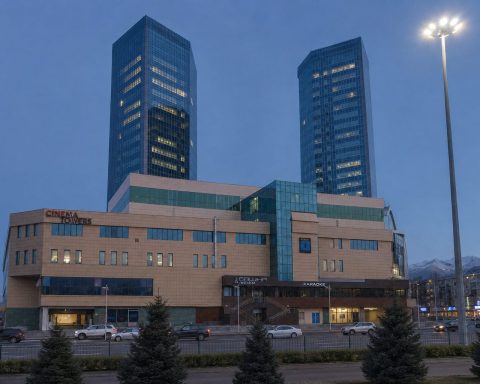
- Odeon Cinema, Knights Way, Tunbridge Wells (TN2 3UW) southeastwater.co.uk+3BBC Feeds+3NationalWorld+3
These sites were open late into Sunday evening and reopened from around 8:30am on Monday. Residents reported long queues over the weekend, with some people waiting for hours to collect bottled water for their households.
SEW says that, alongside these public stations, its customer care team and partner Water Direct have delivered bottled water to more than 2,000 of the most vulnerable customers, including those on its Priority Services Register and a number of care homes. Tankers have also been deployed to support Tunbridge Wells Hospital, which has on‑site storage but still requires reassurance that supply will be maintained.
Hospital managers have said that the site is currently operating normally, and patients discharged to areas hit by the outage are being sent home with additional bottled water.
What South East Water is saying today
In updated statements to customers and media on Monday morning, South East Water said it had begun refilling its drinking water storage tanks at Pembury Water Treatment Works, a necessary step before water can be pumped on to the Blackhurst reservoir, which supplies much of Tunbridge Wells.
The company has cautioned that this process must be carried out slowly to avoid introducing further airlocks or pressure shocks into the network. It expects supplies to “start to return throughout this morning”, but has not given a firm time by which all customers can expect normal service. NationalWorld+2ITVX+2
SEW has also said:
- Water currently in supply is safe and “does not require boiling”, as the issue is confined to the treatment works and not to treated water already in the network. ITVX+1
- When taps come back on, some customers may see brown or discoloured water, caused by harmless iron deposits disturbed inside the mains. Running the cold kitchen tap until clear is advised.
- Cloudy or “milky” water is likely due to air bubbles and should clear from the bottom of a glass upwards if left to stand. NationalWorld
Residents whose supply has not returned are being urged to check the SEW “Works and Outages”/“In Your Area” map and sign up for text or email updates, or to call the company’s helpline if they are medically vulnerable and need urgent support. southeastwater.co.uk+2southeastwater.co.uk+2
How residents are coping on day three
For many households, the weekend turned into an exercise in improvisation.
Some families told local media they had sent children to grandparents or friends’ houses simply so they could wash, flush toilets and have a guaranteed supply of drinking water. One mother near the Pantiles said her young children had “decamped to their grandmother’s” because the family could not rely on bottled water alone. BBC Feeds+1
Supermarkets in and around Tunbridge Wells reported shelves stripped of bottled water, with hand‑written signs warning customers that still water had sold out.
On social media, some residents expressed frustration that the first bottled water station on Sunday morning appeared to be in Tonbridge rather than Tunbridge Wells, forcing them to drive further while still uncertain whether supplies had arrived.
Others, however, praised SEW’s frontline engineers and distribution staff but criticised planning and communication, echoing complaints made in earlier water outages in the area.
Is the water safe when it comes back?
Any mention of “chemical contamination” naturally raises public anxiety, especially in a country that still remembers historic incidents such as the Camelford water poisoning in 1988, when a delivery error led to aluminium sulphate being dumped into the drinking water supply of a Cornish town. Wikipedia
In this case, South East Water says the faulty coagulant batch was detected at the treatment works, prompting operators to shut the plant and prevent improperly treated water from entering the supply network. Officials have repeatedly stressed that water still flowing in the system is not affected by the faulty chemicals, and that the current crisis is about supply interruption, not toxic contamination.
That distinction matters. While brown or cloudy water is understandably worrying to see, SEW and public‑health advice indicate that:
- Brown water after a major outage is usually caused by rust and iron particles being disturbed; it is aesthetically unpleasant but not inherently hazardous at the levels typically seen.
- Cloudy water that clears from the bottom of a glass upwards is usually just tiny air bubbles – again, not harmful.
Anyone who is unsure can run the cold kitchen tap until the water runs clear. If discolouration persists or water has an unusual odour, residents are advised to contact SEW directly for testing and guidance.
Why a “bad chemical batch” can shut down a town’s water
Modern drinking water treatment is heavily regulated. Plants like Pembury Water Treatment Works use a multi‑stage process:
- Coagulation and flocculation – adding chemicals that cause fine particles to clump together.
- Sedimentation and filtration – removing those clumps and other impurities.
- Disinfection – typically by chlorination or ultraviolet light, to kill harmful microorganisms.
If a coagulant does not perform within specification – for example because the concentration or purity is wrong – it can compromise subsequent filtration and the clarity of the water. Rather than risk breaching water quality standards, operators must stop output, flush systems and verify that the fault is fixed before resuming normal production.
That safety‑first approach protects public health, but as Tunbridge Wells is now experiencing, it also means that a single treatment works fault can leave tens of thousands of people without water if the network does not have enough alternative capacity or storage.
South East Water serves around 2.2 million consumers across Kent, Sussex, Surrey, Hampshire and Berkshire, operating 83 treatment works and more than 14,000 km of mains. Wikipedia The Pembury outage shows how heavily some communities still depend on a limited number of strategic sites.
What to do if you are still without water
If you live in Tunbridge Wells or nearby villages and still have no water or very low pressure on Monday 1 December, authorities and the company are advising the following:
- Check your postcode on South East Water’s “In Your Area”/Works & Outages page to confirm whether your property is within the known incident zone and to see live updates. southeastwater.co.uk+1
- Visit a bottled water station if you can travel safely, especially if you have young children, are pregnant or have health conditions that make dehydration risky.
- If you or someone you care for is vulnerable (for example, older, disabled, or reliant on medical equipment), contact SEW to ensure you are on the Priority Services Register so that bottled water can be delivered directly where possible.
- Use stored water sparingly, prioritising drinking, preparing food and essential hygiene. Remember that toilets can be flushed using buckets of water poured into the bowl if needed.
- Look out for neighbours, particularly older residents or families with newborns who may struggle to carry large quantities of bottled water.
If you have water but it is brown or cloudy, run the cold kitchen tap until it clears. If problems persist, SEW advises contacting them before consuming large quantities.
Will customers be compensated – and what happens next?
South East Water has not yet set out a detailed compensation package for those affected by the Pembury incident, but under industry rules customers are often entitled to automatic payments when supply failures exceed certain durations. In previous outages, the company has offered bill credits to households and businesses left without water for extended periods.
Given the scale of this latest disruption, and the fact it follows earlier high‑profile failures in the same region, SEW can expect close scrutiny from Ofwat and local MPs over:
- The robustness of its treatment chemical supply chain
- The resilience of storage and alternative supply routes into Tunbridge Wells
- The speed and clarity of its communication with customers
- Whether long‑promised network upgrades have been delivered
For now, the immediate priority is to restore reliable water supplies to every affected home, school, business and public service in Tunbridge Wells and the surrounding villages. But once taps are flowing again, questions about infrastructure resilience and corporate accountability are unlikely to fade quickly.
Related articles: Stock Market