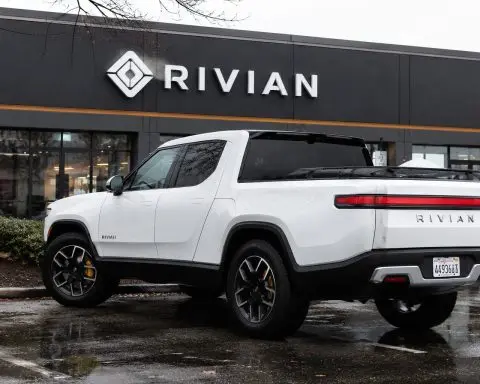

Rivian Automotive, Inc. NASDAQ:RIVN kicked off December with exactly the kind of drama investors have come to expect: insider selling headlines before the opening bell, options “whale” activity in the middle of the day, and a stock that ultimately traded higher despite the noise.
As of Monday, December 1, 2025, Rivian stock has been changing hands around the mid‑$17 range, roughly 2–3% above Friday’s close near $16.86, after an intraday range of about $16.5 to $17.5 on relatively moderate volume. Yahoo Finance+2MarketWatch+2 Over the past month, RIVN has climbed roughly 20–25%, and it’s now showing a gain of around 25–30% year‑to‑date and about 40% over the last 12 months, depending on the exact measure of total return used.
At the same time, Rivian is still down more than 85–90% from its post‑IPO peak near $170, underlining how much damage early investors have suffered.
Key Takeaways for Rivian Stock on December 1, 2025
- Price today: Trading around the mid‑$17s, up a few percent on the day after starting weaker in pre‑market trading.
- Headline driver: CEO RJ Scaringe’s recent stock sales totaling roughly $1.13 million, which initially pressured the shares pre‑market.
- Options signal: A large bullish call trade — 500 contracts of January 2027 $25 calls, worth about $165,000 — points to at least one big player betting on long‑term upside.
- Fundamentals: Q3 2025 revenue jumped 78% year‑over‑year to $1.56 billion, with positive consolidated gross profit for the first time, but losses remain heavy.
- Guidance: Management reaffirmed 2025 delivery guidance of 41,500–43,500 vehicles and expects a sizable adjusted EBITDA loss of $2.0–$2.25 billion and capex of $1.8–$1.9 billion.
- R2 & AI catalysts: The lower‑priced R2 SUV is tracking for first deliveries in the first half of 2026, and Rivian will host an “Autonomy & AI Day” on December 11, 2025. Electrek+1
- Wall Street view: Around 20+ analysts cover the stock; the consensus rating is a Hold, with an average price target around $19 and a wide range from about $10 to $25.
- Long‑term forecasts: Independent research from 24/7 Wall St. sees downside over the next 12 months but projects a potential share price near the mid‑$40s by 2030 — nearly triple today’s level — if the story plays out.
Let’s break down what’s happening and how today’s news fits into the bigger Rivian story.
Rivian Stock Today: Price Action & Sentiment on December 1, 2025
Pre‑market wobble, intraday recovery
Before the opening bell on December 1, Benzinga reported that Rivian shares were trading lower in pre‑market trading after CEO RJ Scaringe disclosed another round of stock sales.
According to SEC filings summarized in that report:
- Scaringe sold 17,450 shares at an average price around $15.11, worth about $264,000.
- Earlier in November he had sold about 52,350 shares at roughly $16.60, worth about $869,000.
- Total November sales come to roughly $1.13 million in stock.
The article also notes pre‑market weakness of roughly 1.5–2% on the news, with RIVN around the mid‑$16s.
However, during regular trading hours the tone turned more constructive. By late morning, MarketWatch showed RIVN trading around $17.36, up about 3% from Friday’s close. MarketWatch Robinhood data pointed to an intraday range of roughly $16.43–$17.53, with shares hovering near $16.8–$17.0 in early afternoon. Robinhood Yahoo’s historical table later recorded a close near $17.04 on volume of about 2.6 million shares.
Options “whales” step in
In a separate December 1 report, Benzinga flagged Rivian as one of the consumer discretionary names seeing notable options “whale” activity. Benzinga For RIVN specifically:
- A bullish call trade:
- 500 contracts of January 15, 2027 $25 calls
- Total premium around $165,000
- More than 3,000 contracts traded at that strike volume‑wise.
This kind of long‑dated, out‑of‑the‑money call buying suggests at least one large trader is willing to wager on Rivian’s ability to scale and potentially push well above current levels over the next two years.
The Fundamental Backdrop: Q3 2025 Earnings and Outlook
Today’s moves are happening against a radically improved, but still very risky, fundamental backdrop.
Record Q3 revenue and first positive gross profit
Rivian’s Q3 2025 results, released on November 4, show the business is growing quickly: Electrek+1
- Revenue:
- $1.56 billion consolidated revenue, up 78% year‑over‑year.
- About $1.14 billion came from automotive sales, up roughly 47% YoY.
- $416 million came from software and services, surging about 324% YoY.
- Deliveries & production:
- 13,201 vehicles delivered in Q3 — Rivian’s highest quarter of 2025.
- 10,720 vehicles produced in the quarter, as the Normal, Illinois plant ramped back up after a planned slowdown in Q2.
- Margins:
- Consolidated gross profit turned positive at about $24 million, versus a large gross loss a year ago.
- Automotive gross margin was still negative (about –$130 million gross loss) but improved significantly versus 2024.
- Software and services gross profit hit around $154 million, a bright spot that’s attracting analyst attention.
A detailed breakdown by StocksToTrade also notes that Q3 revenue slightly beat estimates (around $1.56B vs. $1.51B), although Rivian reported a loss per share of about –$0.96, slightly worse than the expected –$0.86. The firm estimates Q3 gross margin at roughly 2%, with an operating margin near –57%, highlighting that profitability remains distant.
2025 guidance: growth with heavy losses
Rivian’s Q3 shareholder letter and Electrek’s analysis confirm that management narrowed and reaffirmed its 2025 outlook: Electrek+1
- Vehicle deliveries:41,500–43,500 for full‑year 2025.
- Adjusted EBITDA:–$2.0 to –$2.25 billion.
- Capex:$1.8–$1.9 billion.
A Zacks‑authored piece, syndicated via Yahoo Finance and summarized on SwingTradeBot, notes that while Rivian’s Q3 beat expectations, it cut its full‑year delivery outlook compared with prior guidance, citing softer demand for its high‑priced R1 lineup and broader EV headwinds.
R2, new AI company and strategic moves
Beyond the numbers, Rivian is reshaping its future product and technology roadmap: Electrek+1
- R2 SUV:
- Rivian expects initial R2 customer deliveries in the first half of 2026.
- The company has completed major facilities for R2 at its Normal site, including a new 1.1‑million‑square‑foot body shop and a 1.2‑million‑square‑foot supplier park and logistics center.
- AI & robotics:
- Rivian spun out a new e‑bike brand (ALSO) and founded Mind Robotics, a separate company focused on industrial AI and robotics, funded with about $110 million in external seed capital.
- Autonomy & AI Day:
- On December 11, 2025, Rivian will host an Autonomy & AI Day to detail its autonomy vision, AI strategy and technology roadmap — a key upcoming catalyst many analysts are watching.
Insider Moves: CEO Stock Sales and Pay Package
Insider activity is in the spotlight today — and not only because of the new share sales.
November stock sales
As noted, CEO RJ Scaringe sold around 69,800 shares in November, worth roughly $1.13 million in total. Benzinga That’s not enormous relative to his total ownership, but frequent sales in the context of a still‑unprofitable business can unsettle investors, especially after such a large peak‑to‑trough decline in the share price.
Controversial new compensation plan
Rivian has also proposed a new CEO compensation package that could be worth approximately $4.6 billion over 10 years, tying payouts to ambitious profit goals and stock price milestones, in a structure broadly reminiscent of Tesla’s famous Elon Musk plan.
Critics have seized on the optics: 24/7 Wall St. points out that Rivian shares are down over 90% from their peak, and the company has lost $2.82 billion in the first three quarters of 2025 alone, yet the CEO stands to receive a massive new package after the prior one proved unrealistic. 24/7 Wall St. Supporters, meanwhile, argue that tying compensation to future milestones may better align incentives with shareholders — provided those milestones are tough enough.
Wall Street’s View: Hold‑Heavy, but Targets Are Drifting Up
Analyst ratings and price targets
AnaChart, which tracks analyst forecasts, shows Rivian covered by 21 analysts with: AnaChart
- Average price target: about $19.39
- Implied upside: roughly 15% from a recent price near $16.86
- High target: around $25
- Low target: around $10
- Rating distribution: roughly 29% Buy, 64% Hold, 7% Sell.
Recent moves include:
- Tigress Financial raising its target from $21 to $25, reiterating a Buy rating, citing improved prospects after Q3.
- Stifel lifting its target from $16 to $17, also with a Buy, highlighting stronger software economics, lower cost of goods per vehicle and improving gross profit per car.
- Other firms like D.A. Davidson and Mizuho maintain Hold ratings with targets in the mid‑teens or lower, pointing to ongoing execution risk and competition.
MarketBeat similarly notes that, on average, Wall Street still labels Rivian a “Hold”, despite some recent upward target revisions. MarketBeat+1
Valuation concerns after the rally
The Zacks / Yahoo Finance valuation note emphasizes that after a roughly 17–20% one‑month rally, Rivian’s valuation looks demanding relative to current profitability, even with gross margins finally turning slightly positive.
StocksToTrade’s analysis underscores this point with some key metrics: StocksToTrade
- Operating margin: about –57%
- Price‑to‑cash‑flow: around 179x
- Price‑to‑book: around 3.7x
- Current ratio: ~2.7, indicating solid liquidity but also reflecting the need to keep funding heavy capex.
In short, the Street’s message is: Rivian is improving, but at current levels it’s not obviously cheap and still carries substantial execution risk.
Long‑Term Forecasts: 2025–2030 Scenarios
For investors thinking beyond the next quarter, one of the more detailed public forecasts is from 24/7 Wall St., which lays out a multi‑year scenario for Rivian.
12‑month outlook
According to that analysis, using Wall Street’s median data and its own modeling:
- Street median 12‑month target: about $13.98, implying single‑digit downside from recent prices.
- 24/7 Wall St. 12‑month target: about $11.88, implying roughly 20% downside from today.
In other words, that particular model is skeptical Rivian can hold its recent gains over the next year.
2030 “blue‑sky” case
The same piece then projects Rivian’s revenue climbing steadily and pegs a 2030 price target near $44.85, which would be roughly a 190–200% gain from current levels. 24/7 Wall St. That scenario assumes:
- Continued strong EV adoption
- Significant cost reductions from the Gen‑2 R1 platform and R2 line
- A path to positive adjusted EBITDA by 2027 and long‑run targets of 25% gross margin and high‑teens EBITDA margin.
While the numbers are model‑based estimates rather than guarantees, they show how much embedded optionality bulls still see — if Rivian can successfully scale R2, improve margins and have its software and services business become a material profit driver.
The Extreme Bear Case: “Rivian Shares Collapse 91%”
Not everyone buys the long‑term bull narrative.
In a separate piece bluntly titled “Rivian Shares Collapse 91%”, 24/7 Wall St. highlights that: 24/7 Wall St.
- Rivian’s stock is around 91% below its post‑IPO high of $170.
- The company produced 10,720 vehicles and delivered 13,201 in Q3, but still lost about $1.16 billion in the quarter.
- Cumulative losses through the first three quarters of 2025 total approximately $2.82 billion.
- The upcoming R2 is entering a brutally competitive segment against the Tesla Model Y, Ford Mustang Mach‑E, Hyundai Ioniq 5, Kia EV6 and others, many of which are heavily promoted with aggressive incentives.
The author concludes that Rivian’s prospects are “dim” and suggests shares could fall further, effectively presenting Rivian as a cautionary tale in speculative EV investing. 24/7 Wall St.
This helps explain why, despite the recent rally and positive analyst updates, a meaningful minority of the market still sees RIVN as a high‑risk story that may never fully pay off.
AI, Software and Tariff Policy: The Emerging Bull Narrative
The more optimistic camp leans heavily on three pillars: software economics, cost reductions and AI‑driven differentiation.
Software & services: a growing profit engine
Both Electrek and Stifel (via Finviz / Insider Monkey) stress that Rivian’s software and services revenue — including connectivity, OTA updates, fleet services and other subscription‑like income — has exploded, growing over 300% YoY to around $416 million in Q3 with robust gross margins.
Stifel highlights several positives: Finviz
- Software and services profitability is strong and rising.
- Cost of goods sold per vehicle dropped by about $2,200 quarter‑over‑quarter.
- Gross loss per vehicle (excluding software and services) improved from roughly –$3,142 in Q2 to about –$985 in Q3, much better than their own expectation.
- Management believes costs can be cut by about half moving from R1 to R2.
These trends are central to the bull case: if Rivian can keep scaling volumes while software and services grow faster than hardware, the path to sustainable margins becomes more realistic.
AI Day and autonomy roadmap
Rivian’s upcoming Autonomy & AI Day on December 11, 2025 is another piece of the bullish story. Stifel calls Rivian one of the “must‑watch AI stocks” in autos and notes that the event will focus on: Finviz+1
- Rivian’s product and technology roadmap
- Its autonomy strategy
- The role of AI in its vehicle and robotics platforms
Combined with the Mind Robotics spin‑out, this is driving some investors to view Rivian not just as an EV maker, but as a vertically integrated software, services and AI platform with optionality in industrial robotics and fleet automation.
Tariffs and policy noise
The macro backdrop matters too. The Finviz/Insider Monkey piece relays Stifel’s view that upcoming policy changes could reduce tariff impacts to only a few hundred dollars per vehicle, down from several thousand, if reforms are implemented as expected.
Separately, Benzinga notes that Scaringe has publicly framed the rollback of the $7,500 U.S. federal EV tax credit as ultimately simplifying Rivian’s competitive landscape and “reducing competition” over the medium to long term, even though it likely created some short‑term sales friction. Benzinga+1
Policy risk cuts both ways, but these comments show management positioning Rivian as a premium brand that can compete even in a less‑subsidized EV environment.
Institutional and Retail Positioning
MarketBeat records that Charles Schwab Investment Management and other institutional investors have been adding to their RIVN positions in recent quarters, suggesting at least some “smart money” sees value at current levels. MarketBeat+1
Meanwhile, retail traders remain active — as shown by options whale trades and Rivian’s consistent presence on “most‑watched” and “top momentum” lists across trading platforms and screeners. Benzinga+2moomoo+2
Risks, Opportunities and What to Watch Next
Main upside drivers
- R2 launch on time and on budget, with strong demand at a more accessible ~$45,000 starting price.
- Continued margin improvement as cost reductions and scale benefits flow through.
- Growth in software & services as a high‑margin, recurring revenue stream.
- AI and autonomy progress, especially if December’s AI Day reveals compelling tech or partnerships.
Main downside risks
- Persistent large losses and cash burn, forcing fresh capital raises or dilutive financing if conditions worsen.
- Demand risk for expensive EVs in a higher‑rate, less‑subsidized environment.
- Intense competition from Tesla, Ford, Hyundai/Kia, GM and new EV entrants in both premium and mid‑priced segments.
- Execution risk around R2, software rollout and AI initiatives, where delays or missteps could rapidly erode investor confidence.
Near‑term catalysts to monitor in December 2025
- Autonomy & AI Day (Dec 11, 2025):
- Look for concrete details on driver‑assistance features, AI roadmap, and how Mind Robotics integrates with Rivian’s data and vehicle platforms.
- Further insider or institutional filings:
- Additional CEO sales or large institutional buys/sells could shift sentiment quickly.
- Macro & EV policy headlines:
- Any updates on tariffs, EV credits or industrial policy may impact Rivian’s cost structure and demand profile.
- Ongoing analyst revisions:
- More upward or downward target changes and rating moves will give clues about how Wall Street’s risk‑reward view is evolving.
Bottom Line: A Classic High‑Beta EV Battleground
On December 1, 2025, Rivian stock is once again living up to its reputation as a high‑beta battleground name:
- The insider selling headlines created early jitters.
- Options whales and momentum traders helped push shares higher intraday.
- The fundamental story continues to improve slowly — record revenue, first positive gross profit, a growing software business and a clear path to R2 — but losses and competition remain formidable.
- Long‑term forecasts range from deep skepticism (12‑month downside targets) to optimistic multiyear scenarios that see the stock potentially tripling by 2030.
For investors and traders following RIVN, December will be a critical month: what Rivian reveals at its Autonomy & AI Day, how the market digests the CEO’s pay package and stock sales, and whether the recent rally can hold may set the tone heading into 2026.
As always, none of this is personal investment advice. Rivian remains a high‑risk, high‑reward EV play where position sizing, time horizon and risk tolerance matter as much as any forecast.
Related articles: NASDAQ:RIVN