
The UK stock market spent Tuesday trading in cautiously positive territory, with bank and housebuilder stocks doing much of the heavy lifting while investors digested a fresh Financial Stability Report from the Bank of England (BoE)and a new round of corporate earnings.
By late morning in London, the FTSE 100 hovered around 9,740 points, up roughly 0.4% on the day, while the FTSE 250 was fractionally higher near 22,040. In contrast, growth‑oriented small caps underperformed, with the AIM All‑Share index in the red, reflecting a more risk‑averse tone further down the market-cap spectrum.
Market snapshot: Banks and builders support a modestly higher FTSE
Data from Halifax’s market centre showed the main UK indices as follows around midday on 2 December 2025:
- FTSE 100: 9,739.57 (+0.38%)
- FTSE 250: 22,038.03 (+0.08%)
- FTSE All‑Share: 5,246.94 (+0.34%)
- FTSE AIM All‑Share: 751.48 (–0.44%)
The pattern is classic “risk‑on but selective”:
- Financials are finding support from a more relaxed capital outlook after BoE stress tests.
- Housebuilders are being re‑rated on the back of a bullish sector note from RBC Capital and encouraging UK housing data.
- Smaller growth names remain under pressure as the BoE flags stretched valuations in parts of the global tech and AI complex.
Intraday commentary has highlighted some volatility, with live blogs at various outlets noting that the FTSE 100 has swung between modest gains and slight dips as investors toggle between the positive bank story and unease about overvalued AI‑linked equities.
Banks in the spotlight after BoE stress tests and capital rule easing
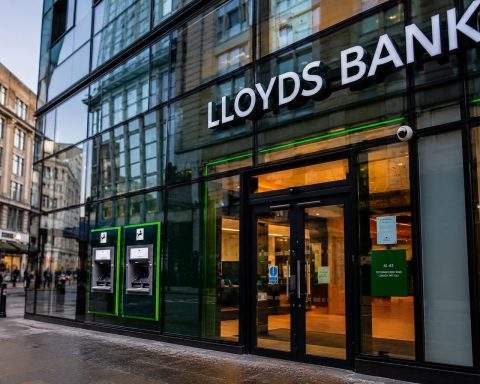
Financials are centre stage today. The Bank of England has published the results of its latest bank capital stress tests, concluding that major UK lenders hold sufficient capital to withstand severe economic shocks.
Alongside the tests, the BoE moved to ease certain capital requirements for UK banks, a decision widely read as a signal that the sector is robust enough to support credit growth even under stress scenarios.
Key points for the sector:
- All major lenders passed the BoE’s capital stress tests, including HSBC and Lloyds Banking Group, which both reported passing the regulatory hurdle in exchange announcements.
- The BoE subsequently relaxed some capital buffers for banks, which markets interpret as a modest tailwind for lending capacity and shareholder returns (dividends and buybacks), even if detailed calibrations remain behind paywalls in some reports.
Shares responded accordingly:
- Lloyds Banking Group was quoted around 97p, up roughly 1.6% on the session in early US‑time trading, with the stock up more than 70% year to date according to MarketScreener snapshots.
- HSBC traded just above 1,080p, posting smaller but still positive gains on the day.
The combination of successful stress tests and lighter capital requirements gives UK banks a cleaner runway into 2026. It also helps explain why financials have been among the biggest positive contributors to today’s FTSE 100 performance.
BoE warns on AI‑driven valuation risks and gilt repo concentration
If the stress tests were the “good news” for markets, the BoE’s Financial Stability Report (December 2025) provided the caveat.
In commentary summarised by several outlets, the BoE’s Financial Policy Committee (FPC):
- Warned that valuations of AI‑driven technology companies, especially in the United States, have become “stretched” and look reminiscent of past speculative episodes.
- Noted that US equity valuations are now near levels last seen during the dot‑com bubble, while UK valuations, though lower, have climbed back toward pre‑global‑financial‑crisis ranges.
- Highlighted broader global risks around high sovereign debt, elevated risk‑asset prices and pockets of leverage across non‑bank financial institutions.
The FPC also flagged a more niche but potentially important issue: concentration in the UK gilt repo market. According to one analysis, a small group of hedge funds accounts for over 90% of net gilt repo borrowing, approaching £100 billion, largely tied to leveraged basis trades between cash gilts and futures.
In plain English, the BoE is worried that:
- An AI‑driven tech sell‑off could trigger a global risk‑off phase, even if the UK market itself is less tech‑heavy.
- Highly concentrated leverage in the government bond market could amplify shocks if positions unwind abruptly.
For UK investors, the message is clear: bank balance sheets look resilient, but market‑based finance and high‑growth tech valuations remain a source of systemic risk.
Housebuilders rally as RBC upgrades Persimmon and Taylor Wimpey
One of the day’s most talked‑about sector calls comes from RBC Capital Markets, which revised its UK housebuilder coverage after a major sector review.
RBC’s big calls
RBC argues that the UK housing market is “far from broken”, pointing out that:
- Mortgage approvals have returned to levels broadly in line with the 2015–pre‑Covid period.
- Transaction volumes are close to what RBC describes as “normal” market activity.
- Major house‑price indices suggest prices remain broadly stable, still holding onto much of the post‑Covid gains despite higher interest rates.
At the stock level, RBC:
- Upgraded Persimmon from “sector perform” to “outperform” and raised its price target from 1,375p to 1,750p, citing the company’s strong pipeline of site openings, innovation in mortgage products, and growing build‑to‑rent and partnership operations. Halifax Investments
- Upgraded Taylor Wimpey to “outperform” with a higher target price (130p to 150p), highlighting its strategic land bank as a platform for future growth. Halifax Investments
- Double‑downgraded Berkeley Group from “outperform” to “underperform” and cut its target from 4,900p to 3,700p, stressing that the firm’s London‑centric apartment model is more exposed to mansion tax and landlord‑focused fiscal measures announced in the recent budget. Halifax Investments
RBC also struck a more cautious tone on Barratt Redrow, pointing to building‑safety due‑diligence issues and senior management gaps, calling the current environment “not the best time” to be missing a CFO. Halifax Investments
Market reaction
While detailed intraday moves vary by data source, housebuilders and building‑materials names were consistently cited among the FTSE 100 and FTSE 250’s leading risers in morning trade as investors digested the RBC note and fresh housing data.
Nationwide’s latest monthly report showed UK house prices rising in November on a month‑on‑month basis, even as annual growth slowed, reinforcing the narrative of a cooling but not collapsing housing market.
Taken together, upgrades for Persimmon and Taylor Wimpey, plus a more nuanced view on the sector, help explain why cyclical domestic plays are outperforming the broader market today.
Corporate movers: Victrex surges, Foresight slips, IG Design struggles
Beyond the macro and sector calls, individual UK stocks are moving sharply on earnings news.
Victrex: profit jump on cost cuts
High‑performance polymer specialist Victrex plc delivered a strong set of full‑year numbers:
- Pre‑tax profit rose around 44% to £33.8 million for the year to 30 September, aided by a significant reduction in exceptional items.
- Revenue nudged up about 1% to £292.7 million, while sales volumes climbed 12%, suggesting improved demand across industrial and energy end markets, even if pricing and mix weighed on top‑line growth.
- The company kept its total dividend flat year‑on‑year, signalling a commitment to shareholder returns despite a still‑gradual recovery.
Victrex also set expectations for low‑ to mid‑single‑digit volume growth in FY 2026, targeting at least £10 million in annual savings from its profit‑improvement plan by FY 2027.
Investors liked what they saw: shares were reported up more than 8% in morning trade, making Victrex one of the day’s standout mid‑cap performers.
Foresight Group: strong AUM, weak share price
In the FTSE 250, Foresight Group posted a solid first half:
- Assets under management rose 4% to £13.7 billion, with funds under management up 1% to £9.6 billion.
- Total revenue grew 11% to £81.5 million, while core EBITDA before share‑based payments increased 6% to £30.6 million, though the margin slipped due to outflows in its capital‑management arm.
- The firm highlighted £223 million of inflows into high‑margin retail products and €505 million of commitmentsto its Foresight Energy Infrastructure Partners II fund, including a major acquisition in UK battery storage.
Despite the operational progress, Foresight’s shares traded nearly 6% lower around 10:40 GMT, suggesting investors are focusing on fund outflows and potentially full valuation after a strong run.
IG Design and other small caps
On the smaller‑cap side, IG Design Group reported sharply lower interim revenues and profits, blaming a mix of US tariffs and weaker UK demand, though it reiterated its full‑year outlook.
The update underlines how trade frictions and pockets of domestic consumer weakness are still complicating life for UK‑exposed small caps, even as large‑cap indices sit near record highs.
Energy sector: Harbour job cuts keep windfall‑tax debate alive
The UK energy complex is still digesting news from Monday that Harbour Energy, a major North Sea producer, plans to cut around 100 offshore jobs as part of a review of its UK operations.
Harbour has explicitly linked the move to:
- Lower commodity prices
- An “uncompetitive” domestic tax regime, a reference to the UK’s Energy Profits Levy (windfall tax) on oil and gas producers. LBC+1
While the job cuts hit just a fraction of Harbour’s offshore workforce, they have reignited industry criticism that the UK’s fiscal stance is undermining investment and employment in the North Sea. That, in turn, acts as a counter‑weight to any short‑term boost UK oil and gas names might otherwise receive from global crude‑price moves.
Macro backdrop: Eurozone inflation, housing data and global yields
Several macro releases and cross‑asset moves are providing context for today’s trading.
Eurozone inflation edges higher
Fresh Eurostat data showed Eurozone headline inflation rising to 2.2% in November from 2.1% in October, slightly above expectations and marking a joint‑highest reading since February. Services inflation ticked up to 3.5%, while the pace of energy price declines slowed. Core inflation held steady at 2.4%.
Analysts quoted by Sharecast suggested the move is unlikely to derail the ECB’s current policy stance, but it does reinforce the idea that rates will stay restrictive for longer – a backdrop that typically favours value‑tilted markets like the UK over high‑growth, rate‑sensitive regions.
UK housing data
As noted above, Nationwide’s November house‑price data showed monthly gains but slower annual growth, supporting the RBC narrative of a resilient but cooling housing market.
This is important because housebuilders’ earnings are highly sensitive to transaction volumes, planning bottlenecks and build‑cost inflation. RBC explicitly points to planning delays and infrastructure as bigger constraints than end‑demand per se – a subtle but important shift in the debate.
Global yields and gold
On the global side, US Treasury yields have nudged higher, putting pressure on gold, which slipped on Tuesday according to commodity commentary.
Higher yields tend to:
- Support bank earnings (good for the FTSE’s heavy financial weighting).
- Weigh on long‑duration growth stocks (a headwind for AI and tech valuations that the BoE is already worried about).
Again, this plays into the relative‑value story that has supported UK equities in 2025: cheap, cash‑generative sectors in a world of still‑elevated interest rates.
Technical view: FTSE 100 still rangebound near record highs
From a technical perspective, analysts at MarketPulse describe the FTSE 100 as trading above its 100‑day moving average and holding in a relatively tight range, with nearby support levels in the high‑9,600s and resistance just under the 9,800–9,850 area.
The takeaway:
- As long as the index holds above its key support band, the path of least resistance remains sideways‑to‑higher, with traders eyeing potential retests of the recent record zone.
- A break below support would likely trigger more aggressive profit‑taking, especially given the BoE’s warnings on stretched global valuations.
What today’s moves mean for UK investors
For investors looking at 2 December 2025 in context, several themes stand out:
- Banks look structurally stronger, not just cyclical winners.
The BoE’s stress tests and subsequent easing of some capital rules give UK banks more room to support the real economy and reward shareholders. That doesn’t eliminate credit‑cycle risk, but it does make a systemic banking crisis less likely than in previous eras. - Housing is cooling, not collapsing.
RBC’s upgrade‑driven rally in housebuilders rests on data showing stable prices and “normal” transaction volumes, with bottlenecks in planning and infrastructure rather than a collapse in demand. That paints a more nuanced picture than the doom‑laden headlines of 2023–24. Halifax Investments+1 - Valuation risk has migrated from banks to AI‑heavy tech.
The BoE is more worried about global tech and AI valuations than about UK bank balance sheets. For UK investors with heavy US or thematic‑ETF exposure, that’s a cue to re‑check concentration risks. - Stock‑picking still matters.
The divergence between Victrex (sharply higher) and Foresight Group (lower despite growth) shows how the market is selectively rewarding companies that can grow profits and defend margins in a still‑patchy global environment.
As always, this is general market commentary, not personal investment advice. Anyone considering UK shares should weigh their own risk tolerance, time horizon and portfolio diversification, and may wish to seek independent financial advice.
Related articles: LSE:LLOY