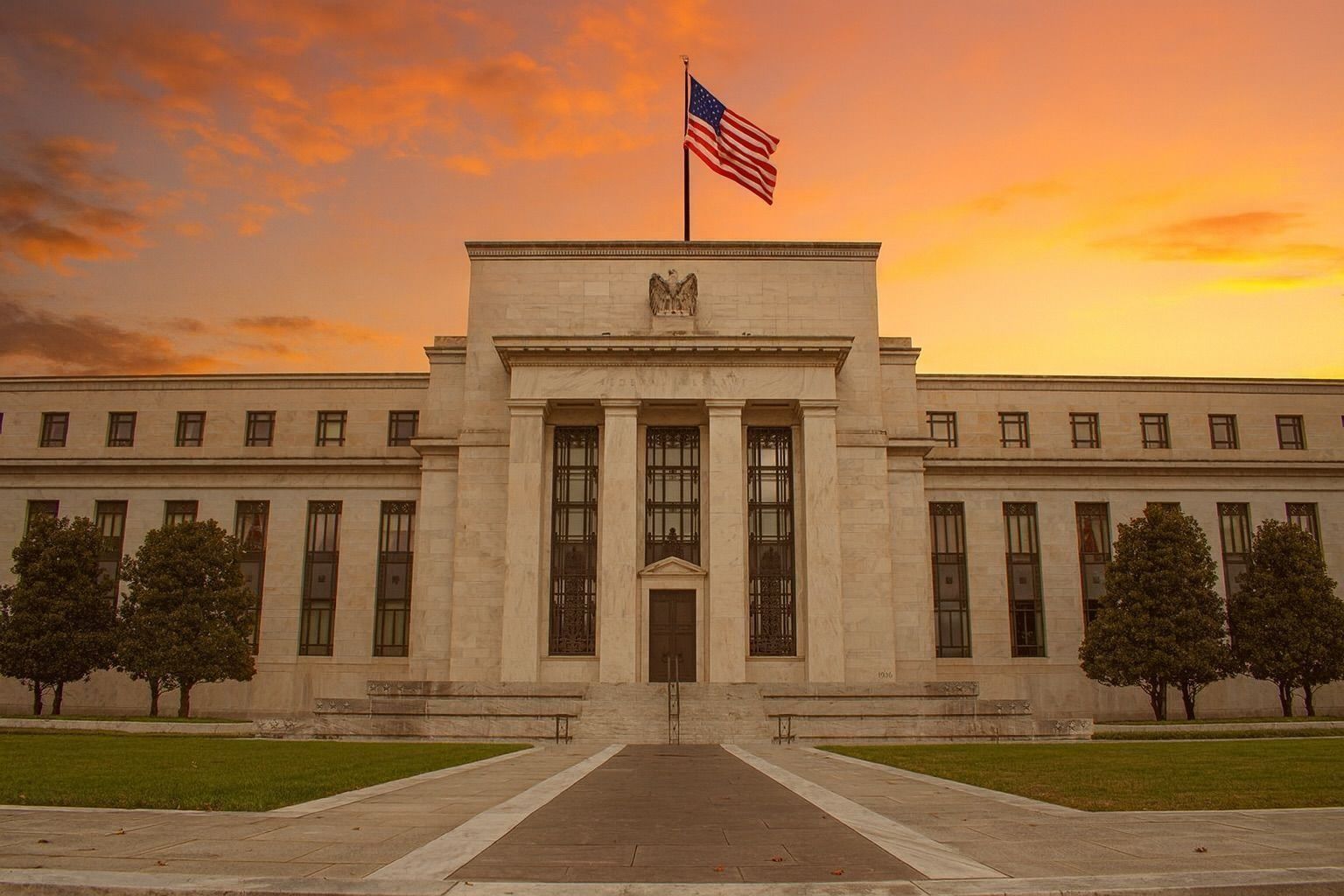

The U.S. Federal Reserve entered December 2025 with three big shifts all hitting at once: its balance‑sheet tightening has officially ended, markets are betting heavily on another rate cut next week, and regulators are rolling out a fresh assessment of the banking system just as internal divisions at the Fed deepen.
Below is a detailed rundown of what happened on 1 December 2025, and how the latest coverage on 2 December 2025is interpreting those moves for interest rates, banks, and the broader economy.
1. The Big Picture: Three Fed Storylines Collide
As of early December, Fed watchers are focused on three interlocking developments:
- Quantitative tightening (QT) officially ended on 1 December 2025.
The Fed is no longer shrinking its securities portfolio; principal payments on Treasuries and agency securities are now being fully reinvested. - Markets put the odds of a December rate cut at close to 90%.
Futures tracked by the CME FedWatch tool and mortgage‑market commentary suggest traders see a very high probability that the Fed trims its policy rate again at the 9–10 December FOMC meeting. - The committee itself looks unusually divided.
Recent reporting indicates that as many as five of the twelve voting Federal Open Market Committee (FOMC) members are skeptical of further cuts, raising the risk of multiple dissents at upcoming meetings.
Layered on top of this is fresh regulatory news: the Fed’s December 2025 Supervision and Regulation Report went live around December 1, and on December 2 Vice Chair for Supervision Michelle Bowman is using congressional testimony to frame the banking system as “sound and resilient” despite pockets of stress. Federal Reserve+2Federal Reserve+2
2. December 1: Quantitative Tightening Officially Ends
How we got here
At its 29 October 2025 meeting, the FOMC voted to halt the runoff of its securities holdings starting on 1 December 2025, ending the latest round of QT (often dubbed “QT2”). Federal Reserve+2Reuters+2
Key points from Fed documents and market analysis:
- QT began in June 2022 and steadily reduced the Fed’s balance sheet by roughly $2.2–$2.4 trillion, bringing total securities holdings down to about $6.5–$6.6 trillion.
- The October statement and subsequent Balance Sheet Developments report explain the rationale: money‑market conditions had tightened, and reserve balances were approaching the level the Fed considers “ample” for its interest‑rate control framework. Federal Reserve+2The Real Economy Blog+2
- From 1 December onward, principal payments are reinvested rather than allowed to roll off, so the securities portfolio should stabilize in size (subject to normal day‑to‑day fluctuations in other liabilities).
In short: December 1, 2025 is the official “stop date” for QT, even though the decision itself was made weeks earlier.
Why the end of QT matters
Ending QT doesn’t instantly make policy “easy,” but it is a major pivot:
- Reserves and liquidity: The Fed is signaling that it’s reached the lower bound of comfortable reserve levels, wary of repeating the funding strains seen in 2019.
- Market impact: With no further balance‑sheet runoff, there is less mechanical upward pressure on Treasury yields over time and a somewhat more predictable backdrop for bond and credit markets, according to bank research and asset‑manager commentary.
This balance‑sheet pivot on 1 December sets the stage for the debate over rate cuts later in the month.
3. Rate‑Cut Odds Near 90% for the December 9–10 FOMC Meeting
Where policy rates stand
Going into December, the Fed’s target range for the federal funds rate is 3.75%–4.00%, after quarter‑point cuts at the September and October meetings.
Daily data from the Fed’s H.15 Selected Interest Rates release for late November show: Federal Reserve
- An effective fed funds rate around 3.88–3.89%;
- A bank prime rate at 7.00%;
- A discount window primary credit rate of 4.00%;
- A 10‑year Treasury yield hovering near 4.0%.
These numbers frame the starting point for any December move.
What markets are pricing in
Several strands of coverage as of 2 December 2025 paint a consistent picture:
- The CME FedWatch Tool, widely followed by traders and personal‑finance outlets, shows markets assigning odds in the mid‑to‑high‑80% range for a 25‑basis‑point (0.25 percentage-point) cut at the December meeting.
- A CBS News mortgage‑rate update notes that Fed cut expectations are “just under 90%,” underscoring how rate‑sensitive sectors are already reacting to the anticipated move. CBS News
On Wall Street, research teams are re‑aligning their forecasts:
- Bank of America Global Research now expects:
- A December 2025 cut,
- Followed by two more quarter‑point reductions in mid‑2026, taking the policy rate down toward 3.00%–3.25%.
- A Reuters factbox shows most major brokerages in the “cut in December” camp, with only a handful (such as Morgan Stanley and Standard Chartered) still projecting no change this month. Investing.com+2Investing.com+2
Importantly, some of these more aggressive easing paths are tied not only to economic data but also to anticipated changes in Fed leadership (see below), rather than simply the inflation and employment outlook.
4. A Fractured Fed: Dissents, Politics and the Next Chair
Growing risk of dissenting votes
A widely cited Reuters analysis on 1 December warns that a “flurry of Fed dissents” could accompany upcoming decisions if the committee presses ahead with cuts while some members still see inflation risks as elevated. Reuters+1
Key themes from that and related coverage:
- As many as five of the twelve voting FOMC members are described as skeptical of additional near‑term cuts.
- Fed officials such as Governor Christopher Waller have flagged the possibility of three or more dissents, something that has been rare since the early 1990s.
Meanwhile, Treasury Secretary Scott Bessent has publicly criticized the Fed’s “ample‑reserves” framework, arguing that its network of facilities and large balance sheet have become overly complex and blur the lines between monetary and fiscal policy. Reuters+2Reuters+2
The Fed chair race and Kevin Hassett
Markets are also reacting to politics around Fed leadership:
- A Bloomberg‑sourced Reuters report, echoed in market commentary, suggests that White House economic adviser Kevin Hassett has become the frontrunner to replace Jerome Powell when his term ends in May 2026.
- Currency and rates strategists quoted in that coverage view Hassett as likely more dovish, potentially leading to a weaker dollar and faster rate cuts over time—though they also stress that the broader FOMC would still constrain any single chair’s preferences.
This combination of internal disagreement, outside political pressure, and leadership uncertainty is part of why the December 9–10 meeting is being described as one of the most consequential of this rate‑cut cycle.
5. December 1 Supervision Report and December 2 Bowman Testimony
While monetary policy grabs the headlines, bank supervision and regulation is the other major axis of Fed news around December 1.
What the December 2025 Supervision and Regulation Report says
The Fed’s December 2025 Supervision and Regulation Report (released around December 1) takes stock of bank health through mid‑2025 and the third quarter. Among its key findings: Federal Reserve+1
- Delinquencies remain contained overall.
- The total loan delinquency rate in the first half of 2025 was about 1.5%, slightly below its 10‑year averageof roughly 1.7%.
- However, commercial real estate (CRE) and consumer loans still show delinquency rates above their decade‑long averages.
- CRE pockets of concern:
- CRE loan delinquencies were around 1.5% in Q2 2025—about double the 10‑year average.
- At large banks, office‑loan delinquency rates remain near 10%, highlighting ongoing stress in that segment.
- Consumer credit:
- Credit card and auto‑loan delinquencies have leveled off but remain above their 10‑year averages.
- Profitability is solid:
- In the first half of 2025, banks posted a return on assets around 1% and return on equity around 10.5%, both above their 10‑year averages.
- Net interest margins stayed at what the report calls “healthy” levels.
- Market‑based indicators are reassuring:
- Average credit default swap (CDS) spreads for the largest banks sit near the lower end of their post‑2015 range.
- Market leverage ratios for those firms are close to multiyear highs, implying strong market confidence in large‑bank balance sheets.
Taken together, the Fed’s own data depict a banking system that is profitable and well‑capitalized overall, but with elevated risk in specific areas—notably office CRE and some consumer credit segments.
Bowman’s message to Congress on December 2
On 2 December 2025, Vice Chair for Supervision Michelle Bowman appears before the House Financial Services Committee to discuss supervision and regulation, explicitly tying her remarks to the new report.
In her prepared testimony, Bowman:
- States that “the banking system remains sound and resilient”, citing strong capital ratios, substantial liquidity buffers, continued loan growth and declining non‑performing loans in most categories. Federal Reserve+1
- Warns that nonbank lenders are gaining market share without being subject to the same prudential standards, and calls for a framework that lets banks compete effectively with fintech and digital‑asset firms.
- Signals the Fed is working with other regulators to craft capital, liquidity and diversification rules for stablecoin issuers under new legislation, and to bring more clarity to banks’ permissible digital‑asset activities.
- Re‑emphasizes regulatory tailoring, arguing that rules designed for the largest banks should not be pushed down onto small community banks whose risk profiles are very different.
Specialist regulatory outlets also report that Bowman has hinted at modifications to the Basel III “endgame” capital proposal—potentially easing some capital surcharges and risk weights, especially for regional and mid‑size banks. TechStock²+2Federal Reserve+2
Because these supervisory shifts are unfolding just as QT ends, markets are watching closely for how capital rules and liquidity management together will shape banks’ appetite to lend and to hold Treasuries.
6. Powell’s December 1 Speech: No Policy Hints
Fed Chair Jerome Powell did speak publicly on 1 December, but he carefully avoided adding fuel to the rate‑cut debate.
At the George P. Shultz Memorial Lecture Series at Stanford’s Hoover Institution, Powell focused on the late statesman’s economic legacy and opened with a clear disclaimer:
“Just to be clear, I will not address current economic conditions or monetary policy.” Federal Reserve
Markets had been alert for any last‑minute policy clues ahead of the Fed’s pre‑meeting blackout period. Powell’s decision to steer entirely clear of current conditions reinforced the message that the data and the committee, not a single speech, will decide December’s outcome.
7. What December 1 Fed Developments Mean for Households and Markets
Borrowers: mortgage and loan rates
The end of QT and the prospect of a December cut are already filtering into consumer credit conditions, but not always in straightforward ways.
According to CBS News, as of 2 December 2025: CBS News+1
- The average 30‑year mortgage purchase rate is about 5.99%.
- The average 15‑year mortgage rate is about 5.37%.
- For refinancing, 30‑year refi rates average roughly 6.80%, while 15‑year refi rates are near 5.76%.
These rates are well below the peaks of 2023–24, but still higher than the ultra‑low levels of the early 2020s. Lenders and analysts note:
- Much of the expected December cut may already be “priced in” to today’s mortgage offers.
- Further declines in long‑term rates will depend as much on inflation expectations, Treasury supply and global risk appetite as on the Fed’s next 25‑basis‑point move.
Put simply: short‑term policy cuts help, but they don’t guarantee cheaper fixed‑rate mortgages overnight.
Savers: deposit and CD yields
Personal‑finance coverage emphasizes that another Fed cut would likely push savings and CD rates slowly lower:
- Investopedia notes that each additional quarter‑point cut tends to lead high‑yield online savings accounts and CDs to drift down from the 4–5% range, as banks re‑price in line with the policy rate.
For savers, that means today’s yields may represent a near‑term peak, especially for multi‑year CDs.
Markets: bonds, stocks, and funding conditions
For markets, the interaction between ending QT and cutting rates is key:
- Ending QT removes a persistent source of Treasury supply pressure, which is generally supportive of longer‑term bond prices and risk assets over time.
- However, Reuters has highlighted that repo rates remain elevated, and liquidity is tight in the run‑up to year‑end despite earlier rate cuts—evidence that financial plumbing is still under stress.
- If the December meeting produces a cut alongside a spread of dissents, traders worry it could increase volatilityacross bonds, equities and crypto, especially with year‑end balance‑sheet constraints already in play.
8. Key Fed Dates After December 1, 2025
Looking ahead from the December 1 inflection point, a few dates matter most: Federal Reserve+2Federal Reserve+2
- 9–10 December 2025 – FOMC meeting and press conference
- Decision on the policy rate, accompanied by updated economic projections and the “dot plot.”
- 30 December 2025 – FOMC minutes for the December meeting
- A deeper look at the internal debate and any dissents.
- Throughout December – key data releases
- Delayed inflation and labor‑market data (after earlier shutdown disruptions) will frame how confident the Fed can be about cutting further in 2026.
- Early 2026 – ongoing regulatory work
- Potential revisions to the Basel III capital proposal and new guidance on stablecoins and digital assets, building on the December Supervision and Regulation Report.
9. Takeaways
Putting it all together, December 1, 2025 marks a turning point for the Federal Reserve:
- Balance sheet: QT has formally ended, locking in a large but now stable stock of Fed securities.
- Policy rates: Markets see a December 9–10 cut as the base case, with odds near 90% and some banks projecting further easing in 2026.
- Governance: The Fed is more divided than usual, under both market and political scrutiny, with the future of its leadership already shaping expectations.
- Banking system: Official reports and Bowman’s testimony present a resilient banking system with solid capital and profitability, even as CRE and consumer credit remain watch points.
- Real‑economy impact: Borrowers are seeing better—but still not cheap—mortgage and refi rates, while savers may be nearing the high‑water mark for deposit yields.
Nothing in this article is personalized financial advice, but the news flow around 1–2 December 2025 makes one thing clear: the Fed is transitioning from “tightening and shrinking” to “easing and holding,” and the details of that transition will define markets and money in 2026.
Related articles: Interest Rates