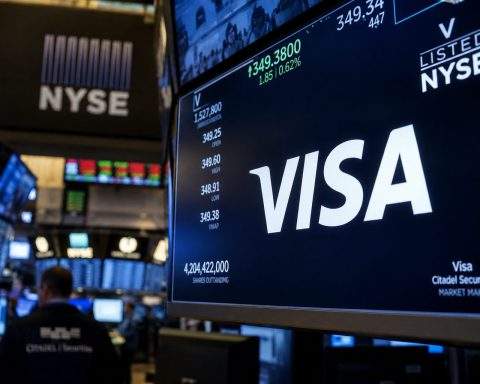

Visa Inc. NYSE:V is back in the headlines today as Wall Street doubles down on bullish targets, the company deepens its stablecoin strategy, and new survey data shows AI and crypto reshaping how consumers spend this holiday season.
Visa stock price today: where things stand
As of mid‑day on December 2, 2025, Visa stock is trading around $329 per share, giving the company a market capitalization of roughly $630 billion.
Key snapshot:
- Latest price: about $329
- 52‑week range: $299 – $375.51
- Market cap: ~$629–645 billion
- Trailing P/E: ~32
- Forward P/E: ~25–26
- Dividend yield: ~0.8%, with an annual dividend of $2.68 per share after the recent hikeStockAnalysis+1
Visa shares are trading roughly 12% below their 52‑week high, but still near the upper end of the range, reflecting a business the market already sees as high‑quality and durable.
What happened today (December 2, 2025)?
Several fresh stories are driving attention to Visa on December 2:
1. Jefferies reiterates Buy with a $410 target
Jefferies analyst Trevor Williams reaffirmed a Buy rating on Visa and maintained a $410 price target, implying mid‑20s percentage upside from current levels.
The note, highlighted today by Insider Monkey and other outlets, frames Visa as:
- One of the top dividend names in financials
- A core beneficiary of global card and digital payment growth
- A network with strong pricing power and high margins
This sits comfortably above the broader Street consensus (more on that below), and reinforces the idea that institutional research desks still see room for upside even after a strong multi‑year run.
2. Visa expands stablecoin settlement across CEMEA
Another big theme today: stablecoins.
Visa is expanding its stablecoin settlement capabilities across Central & Eastern Europe, the Middle East and Africa (CEMEA) through a partnership with Aquanow, a digital asset infrastructure platform.
Key points from the latest coverage:
- Aquanow’s infrastructure plus Visa’s network will let issuers and acquirers settle using approved stablecoins, aiming to lower costs and shorten settlement times.
- Trefis notes this push has helped drive a stablecoin settlement run‑rate of about $2.5 billion annually in the region, illustrating that this is more than an experimental pilot.
- Visa was already an early mover, piloting USDC-based settlement back in 2023; this is an explicit scale‑up of that strategy.
At the same time, Visa remains under regulatory and legal scrutiny. A recent settlement with merchants revised a long‑running U.S. antitrust dispute: Visa and Mastercard agreed to a $38 billion settlement and will reduce swipe fees by about 0.1 percentage point for five years, while capping certain consumer rates around 1.25% for eight years and allowing surcharges up to 3%.
For investors, that combination—embracing stablecoins while giving up a bit of interchange pricing—is central to the risk/reward debate.
3. New Visa survey: AI and crypto are going mainstream in holiday shopping
Visa also released new survey data today that ties directly into consumer trends—and, by extension, payment volumes.
Highlights from the 2025 Holiday Spending Shift Survey:
- 47% of U.S. shoppers say they’ve used an AI tool for at least one shopping task, with gift discovery the top use case.
- 28% of consumers would be excited to receive cryptocurrency as a gift, rising to 45% among Gen Z.
- Around 1 in 10 believe stablecoins will dominate by 2030; more than a quarter expect greater stablecoin usage by 2035.
- Gen Z leads in adopting digital wallets, biometric authentication and crypto purchases; they’re as likely to prefer a digital wallet as a physical card.
- Despite the tech enthusiasm, over 60% still prefer human customer service and two‑thirds worry friends or family could be scammed online, underlining the importance of Visa’s fraud and security initiatives.
Visa also forecasts ~4.6% year‑over‑year growth in total U.S. holiday spending, underlining a still‑resilient consumer backdrop heading into year‑end 2025.
4. Sector review: Visa’s position in the payment ecosystem
A new Kalkine Media piece published today takes a sector‑wide look at payment processors and highlights Visa’s role inside a global web of authorization, clearing and settlement networks.
The article emphasizes:
- Visa’s extensive cross‑border and business‑to‑business services
- Its reliance on tokenization, fraud detection, and digital authentication
- The degree to which digital transformation and regulatory shifts shape the entire payment‑services environment
It’s more structural than stock‑specific, but reinforces the idea that Visa is deeply embedded in the economic plumbing of global commerce.
5. Fresh 13F filings: institutions still moving pieces
MarketBeat’s latest instant alerts this morning flag several institutional moves in Visa:MarketBeat+2MarketBeat+2
- M&T Bank Corp reported Visa holdings valued around $107 million in its latest filing.
- Westerkirk Capital disclosed an additional ~39,766 Visa shares, adding to its stake.
- Portfolio Design Labs trimmed its Visa position, even as other institutions nudged holdings higher.
While none of these moves is thesis‑changing on its own, they illustrate that Visa remains a core institutional holding, with some funds rotating exposure but no broad exodus.
Fundamentals: earnings, margins and dividend growth
FY 2025 results: another record year
According to StockAnalysis, Visa’s fiscal 2025 numbers look exactly like you’d expect from a mature compounding machine:StockAnalysis
- Revenue: $40.0 billion, up 11.3% from the prior year
- Net income: $19.85 billion, up just over 2%
- EPS (ttm): $10.20
Trefis breaks this down further:
- Net revenue growth was driven by 9% higher payment volume and 11% growth in cross‑border transactions, the latter being especially high‑margin.
- Over the last year, Visa posted roughly 66% operating margin and nearly 58% operating cash‑flow margin, with similar levels on a three‑year average basis—extraordinary even by payment‑network standards.
Q4 2025 in focus
A detailed earnings recap from GuruFocus (via Investing.com) notes that in Q4 2025 Visa:Investing.com+1
- Generated around $10.7 billion in quarterly revenue, up roughly 12% year‑on‑year
- Delivered GAAP EPS of about $2.62, with transaction counts up about 10% and cross‑border volume up roughly 12%
- Returned about $22–23 billion to shareholders over the fiscal year through dividends and buybacks
The result: steady double‑digit revenue growth, but slower net‑income growth as Visa invests in innovation and navigates higher rebates, incentives and regulatory pressures.
Dividend: small yield, big growth
Visa recently raised its quarterly dividend by about 14% to $0.67 per share, taking the annual payout to $2.68 and pushing Visa closer to future “Dividend Aristocrat” status if the streak continues.Investing.com+1
Even after that raise, the yield is under 1%, which income‑focused investors might find underwhelming. However, payout growth plus aggressive buybacks have made Visa a significant capital‑return story over the last decade.
How Wall Street values Visa right now
Consensus ratings: still a Strong Buy
Across multiple sources, the message is consistent:
- StockAnalysis reports that 23 analysts rate Visa a “Strong Buy”, with a 12‑month average price target of $400.09, about 21–22% upside from current levels.StockAnalysis
- Yahoo Finance shows a median 1‑year target of $394.43, based on roughly 40 analysts, with the majority rating the stock Buy or Strong Buy.
- Benzinga aggregates data from 34 analysts and finds a consensus price target of $383.84, with a range of $300 to $450; the three most recent targets average $414.33.
- Jefferies is on the more bullish end with its $410 target.
Taken together, traditional Wall Street research is overwhelmingly positive on Visa, expecting mid‑teens to low‑20s percentage upside over the coming year.
Long‑term fundamental forecasts: 24/7 Wall St.
A new deep‑dive from 24/7 Wall St. published December 1 outlines how Visa’s earnings power could compound through 2030:24/7 Wall St.+1
Their base case:
- 2025 year‑end price target: $374.21 (≈12.7% upside)
- 2026 target: $394.73 (≈18.8% upside)
- 2027 target: $430.90
- 2030 target: $522.60 (≈57% upside versus today)
These targets are built on projections that Visa revenue rises from about $39.9 billion in 2025 to $67.7 billion by 2030, with EPS climbing from $11.28 to $23.58 as margins expand toward the high‑50s.
The underlying thesis: Visa’s network‑effects, scalable cost structure and pricing power should allow earnings to grow faster than revenue.
Quant models and technical signals: a more cautious near‑term view
Algorithmic models are a bit more mixed than human analysts:
- CoinCodex forecasts Visa drifting up in the short term, with a projected price of $330.39 on December 3 and as high as $347.69 by December 7, implying ~5–6% gains over a week.
- Their longer‑term models point to:
- 1‑year target: $365.13 (≈10.5% upside)
- 2030 target: $585.55 (≈77% upside)CoinCodex
- However, technical sentiment is labeled “bearish”, with 21 of 26 tracked indicators flashing “Sell” and only 5 signaling “Buy”. Most popular moving averages (50‑day, 100‑day, 200‑day) are currently in sell territory at today’s price.CoinCodex
Translated: purely rules‑based models see a great long‑term story, but are cautious in the very short term as Visa trades below several key moving averages.
The valuation debate: “premium quality at a premium price”
A widely‑circulated GuruFocus/Investing.com analysis captures the central tension nicely: Visa is “a great business, but already priced for perfection.”Investing.com
Key valuation takeaways:
- Visa trades around 32–33x trailing earnings and about 25–27x forward earnings, putting it at the top end of global financials and still rich versus many non‑payment blue chips.
- Yet its return on invested capital hovers near 30%, and net margins are approaching 50%, far above most banks and fintech peers.
Trefis arrives at a similar conclusion but leans more bullish:
- They estimate Visa’s P/S multiple around 11x, which they say is roughly 38% lower than a year ago as the stock lagged while revenues kept climbing.
- Compared with S&P 500 medians, Visa’s revenue growth (~11% vs ~6%) and operating margins (mid‑60s vs high‑teens) look exceptional, while its P/E near 22x on their numbers is close to the index average.
From that angle, Visa now looks like “high margins at a discount to its own history”, rather than an obviously over‑priced defensive.
Benzinga adds a DCF angle, suggesting fair value between roughly $392 and $530 per share, driven by rapid free‑cash‑flow growth and stable margins.
Strategic themes shaping Visa’s long‑term story
Beyond the numbers, several strategic threads stand out across the latest coverage:
1. Stablecoins and crypto as both threat and opportunity
Recent stories from Aquanow, BusinessWire and multiple analyst notes paint a clear picture: Visa wants to be the rails for regulated digital assets, not their victim.
- Partnerships like Aquanow in CEMEA and pilot programs for Visa Direct stablecoin payouts aim to make USDC and similar assets just another funding mechanism riding on VisaNet.
- Analyst commentary from outlets like The Motley Fool and Forbes increasingly describes Visa and Mastercard as “crypto disruptors” rather than targets, because they integrate stablecoins into their existing fee‑based networks instead of competing on raw blockchain rails.StockAnalysis
If this strategy works, Visa could capture more cross‑border volume while retaining its take‑rate, even as on‑chain settlement grows.
2. AI, agentic commerce and security
Today’s survey release shows AI already touching nearly half of U.S. shoppers. At the same time, Visa’s recent Threats Report highlights five forces reshaping global payment security, including generative‑AI‑enabled fraud and increasingly sophisticated cybercrime.
Put together:
- Visa is using AI for fraud detection, anomaly spotting and risk scoring, which is critical as transaction volumes keep climbing.
- On the consumer side, it wants to be the trusted backbone for agentic shopping tools (like price‑comparison bots) rather than watch those flows move off‑network.
3. Brand reach: from cash registers to e‑sports
The Jefferies‑highlighted deal with the M7 World Championship and Mobile Legends: Bang Bang (MLBB) shows Visa continuing to invest in youth‑oriented, digital‑first brand platforms.
With a player base in the hundreds of millions, mostly ages 19–32, Visa is positioning itself as the default payments brand in gaming and e‑sports, which dovetails with:
- Rising digital wallet usage
- Strong cross‑border online spend
- The shift from physical cards to embedded, in‑app credentials
Key risks investors should watch
Even the most bullish research notes flag real risks that could challenge Visa’s multiple:
- Regulatory pressure on fees
- The latest U.S. interchange settlement forces modest fee reductions and tighter caps for years, and could act as a template for further regulation globally.
- Competition from alternative rails
- Real‑time payment systems, fintechs like PayPal, and merchant‑friendly solutions built on open banking or blockchain could gradually chip away at card volumes or pricing power.
- Economic cycles and travel demand
- Cross‑border and discretionary spend are key profit drivers. A global slowdown, weaker tourism or prolonged consumer belt‑tightening would directly hit transaction growth.
- Valuation risk
- Even if Visa keeps executing, a P/E in the high‑20s or low‑30s leaves limited cushion if growth slows, guidance disappoints, or the market rotates away from high‑quality compounders toward deep value.
- Technology and security
- Visa is on the front line of AI‑driven fraud and cyber threats; any large‑scale breach or prolonged outage would be both reputationally and financially painful.
So… is Visa stock a buy on December 2, 2025?
Nothing in markets is guaranteed, and this isn’t financial advice—but based on today’s information, the investment case for Visa looks something like this:
The bullish case
- World‑class economics: mid‑60s operating margins, high‑50s cash‑flow margins and ~30% ROIC are hard to find at scale.
- Durable growth: revenue has compounded around 10–11% annually, with 2025 up over 11%.
- Secular tailwinds: digital payments, e‑commerce, travel recovery, AI‑driven commerce and stablecoin adoption all expand Visa’s transaction universe.
- Shareholder returns: double‑digit dividend growth plus consistent buybacks have already returned well over $100 billion to shareholders over the past decade.
- Wall Street support: consensus “Strong Buy” with clustered targets in the $380–$410 range suggests many professionals see current levels as reasonable entry points.StockAnalysis+2Benzinga+2
The cautious case
- Valuation still rich vs the broader market, and not dramatically cheaper than top‑tier peers—so execution has to remain near‑flawless.
- Technical indicators and quant models are short‑term bearish, hinting at the possibility of better entry points if markets wobble.
- Regulatory and competitive risks are real, especially as merchants, regulators and fintechs all try to reduce their dependence on the card duopoly.
For long‑term investors who are comfortable with short‑term volatility and already like the payment‑network business model, the latest news—stablecoin expansion, AI‑driven consumer trends and reaffirmed Buy ratings—will probably reinforce the idea that Visa remains a core compounder.
For valuation‑sensitive or more tactical traders, the combination of a premium multiple, bearish technicals and macro uncertainty may argue for gradual, staged entries rather than an all‑in move at today’s price.
Important note
This article is for information and news purposes only and does not constitute investment advice, a solicitation to buy or sell any security, or a recommendation tailored to your situation. Always consider your own financial circumstances and, if needed, consult a licensed financial advisor.
Related articles: NYSE:V