
Published: December 3, 2025
Interstellar comet 3I/ATLAS – only the third known visitor from another star system – is putting on one of the strangest shows astronomers have ever seen.
In the last 48 hours alone, new research and images have revealed:
- Evidence that 3I/ATLAS is likely a metal‑rich “primitive carbonaceous” body undergoing cryovolcanism – the equivalent of ice volcanoes erupting into space. IFLScience+1
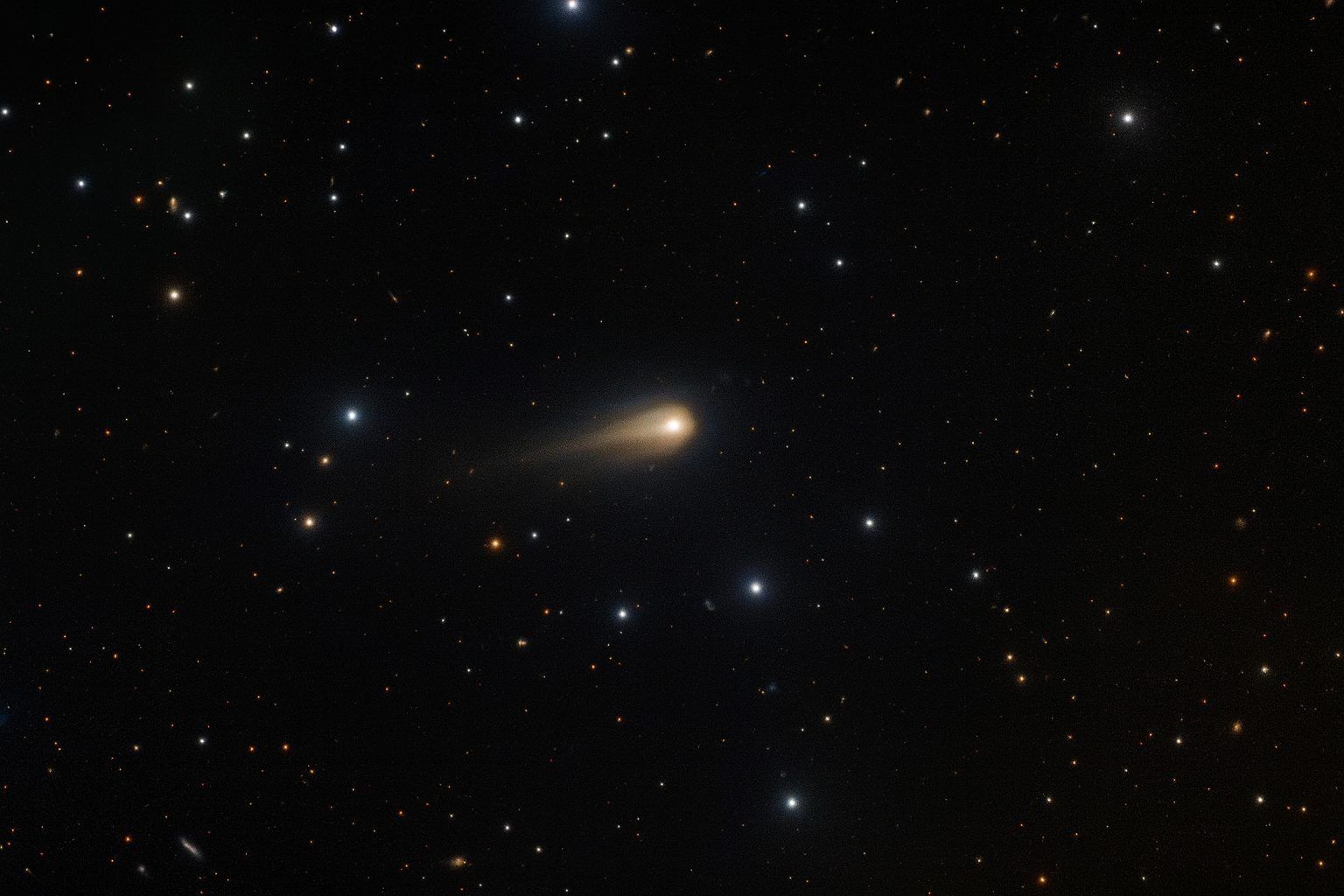
- Fresh images showing an expanding, almost perfectly symmetric coma with no obvious tail, sparking questions about why this interstellar comet looks so different from typical comets.
- Continued discussion of a 16.16‑hour “heartbeat” pattern in its brightness, probably caused by rotating jets of gas and dust – but still fueling speculation about alien technology. TS2 Tech+1
- Viral clips of a tail‑less, “star‑like” blob circulating on social media, prompting scientists to explain how grainy data and comet physics can be misleading. International Business Times UK+1
All of this is happening as 3I/ATLAS climbs back into the pre‑dawn sky after whipping around the Sun in late October and heading toward its closest approach to Earth on December 19, 2025, at a safe distance of about 170 million miles (270 million km).
Here’s what you need to know today about this once‑in‑a‑lifetime interstellar visitor.
What Is Interstellar Comet 3I/ATLAS?
A rare visitor from beyond the solar system
3I/ATLAS – also catalogued as C/2025 N1 (ATLAS) – is an interstellar comet, meaning its orbit is so strongly hyperbolic that it is not gravitationally bound to the Sun and will never return. It’s only the third confirmed interstellar object, after 1I/ʻOumuamua (2017) and 2I/Borisov (2019).
Key basic facts:
- Discovery: First spotted on 1 July 2025 by the ATLAS survey telescope in Rio Hurtado, Chile, with pre‑discovery images back to mid‑June.
- Name: “3I” = third interstellar object; “ATLAS” credits the survey that found it. NASA Science+1
- Orbit: A one‑time fly‑through of the solar system on a hyperbolic trajectory.
- Closest to the Sun (perihelion): Late October 2025 at roughly 1.4 astronomical units (AU) – slightly inside Mars’ orbit.
- Closest to Earth: Expected 19 December 2025 at about 1.8 AU (170 million miles / 270 million km) – nearly twice the Earth–Sun distance.
- Speed: Zooming through the inner solar system at around 130,000 mph (≈210,000 km/h), making it one of the fastest known visitor comets.
NASA and ESA both stress that 3I/ATLAS poses no danger to Earth; it never comes remotely close enough for impact scenarios to be a concern.
Size, age and origin
Hubble and other observatories suggest that 3I/ATLAS’s solid nucleus is somewhere between a few hundred meters and about 5.6 km across – modest by comet standards, but enormous compared with anything we could build.
Dynamical and chemical studies indicate:
- It likely formed in a very cold outer region of its home system.
- It may be 7–8 billion years old, significantly older than our 4.6‑billion‑year‑old Sun, making it arguably the oldest comet we’ve ever observed up close.
- A recent analysis of its path through the galaxy suggests it probably originated in the Milky Way’s thin disk, where many relatively young, Sun‑like stars reside.
In other words, 3I/ATLAS is a fossil shard of another solar system, wandering the galaxy for billions of years before blundering into ours.
New Science Results as of December 3, 2025
1. “Ice volcanoes” on a primitive carbonaceous body
A new preprint led by Josep M. Trigo‑Rodríguez, highlighted by IFLScience and other outlets this week, argues that 3I/ATLAS is showing cryovolcanism – eruptions of icy material – and may be a metal‑bearing, primitive carbonaceous object.
From their photometric and spectroscopic work:
- The team compared 3I/ATLAS’s reflected light with pristine carbonaceous chondrite meteorites from NASA’s Antarctic collection.
- They found strong similarities suggesting a carbon‑rich body enriched in native metals like iron and nickel, with signs of aqueous alteration – meaning liquid water probably interacted with its minerals in the distant past.
- As the comet warmed on its way to the Sun, it entered a rapid brightening phase, with spiraling jets of gas and dust consistent with subsurface reservoirs venting through cracks – essentially, ice volcanoes.
The authors propose that a mix of metal grains, sulfides and abundant water ice could explain 3I/ATLAS’s unusual chemical products and the strange shape of its coma.
For planetary scientists, this is huge: it suggests that planet‑forming disks around other stars can produce objects very similar to the icy debris in our own outer solar system, even in distant parts of the Milky Way.
2. An expanding, symmetric coma with no obvious tail
One of today’s most‑shared updates comes from The Economic Times, which reports on new amateur images taken on December 2 showing that the coma – the diffuse cloud around the nucleus – appears to be expanding, with: The Economic Times+1
- A smooth, symmetric glow
- No clearly visible tail
- Subtle micro‑jets and internal gradients
- Little sign of the usual solar‑wind shaping seen in many comets
At first glance, that sounds almost too neat and spherical for a “normal” comet, and social media posts have seized on the frames as evidence that 3I/ATLAS is “not behaving like a comet at all.” The Economic Times+1
However, comet scientists and a separate explainer from IBTimes point out several natural factors that can make a comet look tail‑less and star‑like from Earth: International Business Times UK+1
- Dust grain size: If the coma is dominated by relatively large dust grains, radiation pressure is less effective at sweeping them into a long tail, so the tail may be short, faint, or hidden within the outer coma.
- Viewing geometry: Depending on how we’re aligned with the comet’s orbit, a tail can be foreshortened almost directly behind the coma, making it hard to distinguish.
- Polarimetric properties: A new polarimetry study finds 3I/ATLAS has an extremely deep, narrow negative polarization branch unlike any previously studied comet, but similar to some trans‑Neptunian objects. That unusual scattering behavior affects how its coma brightness appears.
In other words, the expanding, symmetric coma is weird but not necessarily unnatural. It may simply reflect the combination of unusual dust, interstellar heritage, and our current viewing angle.
3. The 16‑hour “heartbeat” in 3I/ATLAS’s light
Back in the autumn, astronomers reported a 16.16‑hour periodic signal in 3I/ATLAS’s brightness – a repeating bump in its light curve that some outlets have nicknamed a “cosmic heartbeat.” TS2 Tech+1
What most scientists think is happening:
- 3I/ATLAS is rotating roughly once every 16 hours.
- One or more active jets on its surface periodically rotate into the Sun’s glare, producing a surge of outgassing that brightens the surrounding coma.
- Because most of the light we see comes from that glowing coma, not the tiny nucleus itself, the brightness rise and fall looks like a beat rather than a simple rotational modulation.
Harvard astronomer Avi Loeb has suggested an alternative, more speculative view: if the pulses are not tied to the Sun’s direction, they might represent some kind of controlled thrust or engineered activity, rather than simple rotation.
So far, though:
- The observed 16.16‑hour pattern is fully compatible with a natural spinning comet.
- The original scientific work does not claim any technosignature; it interprets the heartbeat in standard cometary terms.
The alien‑tech angle makes great headlines, but no hard evidence currently supports it.
4. A sunward “anti‑tail” and a possible swarm of objects
Another head‑turning feature is the presence of a sunward‑pointing “anti‑tail” – a structure that appears to extend toward the Sun rather than away from it. EarthSky+1
In a new Medium essay, Loeb proposes that this anti‑tail could be formed by a swarm of separate objects – perhaps fragments, perhaps something more exotic – that do not share the same non‑gravitational acceleration as 3I/ATLAS itself.
His argument in brief:
- The comet shows a small but real non‑gravitational acceleration consistent with outgassing.
- Objects nearby that don’t feel this extra push would lag slightly closer to the Sun, forming a sunward extension of dust and debris – an apparent anti‑tail.
- A large swarm with a relatively small fraction of the comet’s mass could still dominate the reflected sunlight in the glow around the object.
Mainstream comet experts counter that anti‑tails are a known phenomenon in ordinary solar‑system comets and can arise purely from dust dynamics and viewing geometry. Large, slow‑moving particles can create structures that, from Earth’s line of sight, appear to point toward the Sun even though the dust is still moving away.
At the moment, no independent group has confirmed a distinct swarm of separate objects, and no spacecraft has resolved such fragments. The anti‑tail is real; whether it demands exotic explanations is still an open question.
5. Viral videos, “signals” and what scientists actually say
If your feeds are flooded with dramatic clips of a perfectly round “spacecraft,” claims of radio messages, or talk of an impending impact, you’re not alone.
Today’s IBTimes piece and earlier explainers from outlets like PrimeTimer dissect one particularly viral video of a tail‑less, star‑like blob, noting that: International Business Times UK+1
- The footage is heavily processed, often stacking frames or stretching contrast to bring out the comet, which can easily create unnatural‑looking shapes and halos.
- Astronomers attribute reported “radio activity” to water chemistry and plasma interactions, not intentional communication.
- There is no credible evidence of an imminent impact or of coordinated “escorting objects”; such claims rely on misinterpretations of noisy data or outright fabrications. International Business Times UK+1
NASA officials have been blunt about this. At a major press event on November 19, they said:
“It looks and behaves like a comet, and all evidence points to it being a comet.” The Times of India+1
They also emphasized that no technosignatures – no unnatural radio signals, maneuvers or engineered materials – have been detected.
6. Solar storms and planetary‑defense drills
A recent X‑class solar flare erupted just as 3I/ATLAS moved into the final leg of its flyby, leading some outlets to describe it as arriving at “the worst possible time” for this interstellar object. USA Herald – The People’s Voice+1
What this actually means:
- Strong solar activity can buffet the comet’s coma and tail, potentially shredding or reshaping dust structures and adding complexity to images.
- It may also enhance auroras on Earth near the December solstice, independent of the comet itself.
- However, it does not change 3I/ATLAS’s orbit in any meaningful way. The comet’s trajectory is dominated by gravity and a small outgassing thrust, not by solar‑storm gusts.
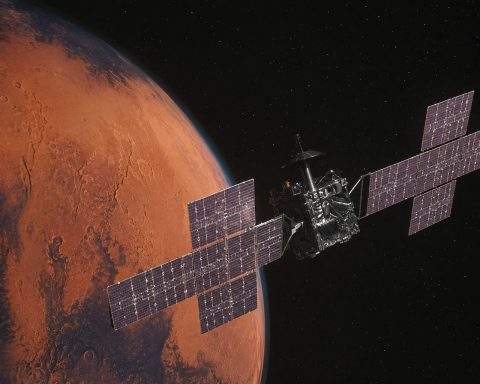
Separately, ESA used observations from its ExoMars Trace Gas Orbiter around Mars, combined with ground‑based data, to improve the predicted path of 3I/ATLAS by a factor of ten – the first time a comet’s orbit has been refined using a spacecraft around another planet.
European agencies and others have layered planetary‑defense drills on top of these observations, treating 3I/ATLAS as a harmless “practice target” for how the world would respond to a genuinely hazardous object in the future. European Space Agency+1
Where Is 3I/ATLAS Now – and How Can You See It?
As of December 3, 2025, 3I/ATLAS is:
- Past perihelion and heading outward again, roughly between the orbits of Earth and Mars but well above the ecliptic plane.
- Located in the morning sky, currently in or near the constellation Virgo, and drifting toward Leo as the month progresses.
- Continuing to fade slowly as it recedes, though ongoing outgassing and cryovolcanism are still feeding a detectable coma.
Sky‑watching guides compiled by EarthSky, Popular Science, regional newspapers and specialized astronomy sites agree on a few practical points: TS2 Tech+3EarthSky+3TS2 Tech+3
- Closest approach to Earth: Around 19 December 2025, but still far too distant to become a naked‑eye spectacle.
- Best time: Pre‑dawn hours, looking east to east‑northeast as it slides from Virgo toward Leo, passing near stars like Zavijava and, later, Regulus.
- Brightness: Expect a faint smudge, not a dramatic “Great Comet.” Most guides suggest you’ll need at least a 30 cm (12‑inch) telescope under dark skies to glimpse it visually. Smaller instruments may pick it up via long‑exposure imaging. TS2 Tech+1
If you don’t have access to a large telescope, several observatories and outreach projects – including the Gemini Observatory’s “Shadow the Scientists” program – are offering livestreams and public data so you can watch scientists track the comet in real time. Space+1
Why 3I/ATLAS Matters
Beyond the memes and clickbait, 3I/ATLAS is scientifically priceless.
- A sample of another solar system
Its chemistry – rich in water, carbon dioxide, carbon monoxide, cyanogen, and metal‑bearing dust – suggests that worlds forming around other stars produce icy debris very much like our own, strengthening theories that planet formation is a messy, universal process. - A test of comet physics in extreme conditions
Its high speed, interstellar weathering, and unusual polarization and coma morphology push existing models of how ice, dust and gas behave near the Sun. Cryovolcanism on such a small, old body is especially intriguing. - A rehearsal for future interstellar missions
ESA’s Comet Interceptor mission is explicitly designed to wait in space and then swoop in on a future dynamically new or potentially interstellar comet. Everything astronomers learn from 3I/ATLAS feeds into how we will design, target and operate those missions. - A reality check on how we talk about aliens
The intense public interest in 3I/ATLAS – and the ease with which speculative ideas go viral – has turned this object into a live case study in science communication and misinformation. NASA, ESA and independent astronomers have had to repeatedly clarify that unusual ≠ artificial.
At the moment, the overwhelming consensus is clear: 3I/ATLAS is a natural, though highly unusual, interstellar comet. No technosignatures have been detected, and every anomaly so far has at least one plausible astrophysical explanation.
That doesn’t make it any less exciting – it makes it the best‑studied chunk of another star system we’ve ever had, and we’re still only partway through its brief visit.
Is 3I/ATLAS an Alien Spacecraft?
Short answer: There’s no solid evidence for that.
Longer answer:
- A small number of scientists, most prominently Avi Loeb, have argued that features like non‑gravitational acceleration, the heartbeat pattern, the anti‑tail and color changes could be hints of technology – thrusters, swarms, deployed probes and so on.
- These ideas have sparked wagers (Loeb even accepted a $1,000 bet that alien life will be confirmed by 2030) and plenty of headlines.
- But independent analyses of the same data find that:
- The acceleration is consistent with asymmetric outgassing.
- The heartbeat matches rotating jets.
- The anti‑tail can be explained by dust and geometry.
- The chemistry looks like icy rock, not exotic alloys.
As the saying goes, extraordinary claims require extraordinary evidence. Right now, the evidence points to a bizarre but natural comet, not a confirmed alien probe.
What to Watch for Next
In the coming weeks, scientists will be watching for:
- How the coma and jets evolve as 3I/ATLAS recedes from the Sun.
- Whether the heartbeat signal changes or fades.
- How the anti‑tail and tail structures respond to solar‑wind gusts and the recent X‑class flare.
- New results from spacecraft like JWST and ESA’s Juice, which are continuing to observe the comet from far‑flung vantage points.
For the rest of us, mid‑December will be the best time to try spotting this interstellar wanderer – even if that means watching it through someone else’s telescope on a livestream.
One thing is certain: once 3I/ATLAS is gone, it’s gone for good. We won’t see this particular traveler again, and the data we gather in the next few weeks will be our only direct look at this ancient fragment of another world.
Related articles: Space Exploration