Dollar Tree, Inc. NASDAQ:DLTR just delivered a decisive Q3 2025 update on 3 December 2025, beating Wall Street expectations, raising its full‑year profit outlook, and underscoring how far its transformation has come since selling Family Dollar earlier this year.
For investors watching discount retail as consumers continue to trade down, Dollar Tree is suddenly one of the most interesting stories on the shelf.
Dollar Tree stock today: a quick snapshot
- Last close (2 Dec 2025): $108.99
- Pre‑market indication (3 Dec 2025): around $110, modestly higher after the earnings release
- 12‑month performance: roughly +45–48% as the market has re‑rated the company following its turnaround moves and Family Dollar divestiture
- Market cap: about $22 billion
- 52‑week range: $61.80 – $118.06
Despite the rally, Wall Street’s stance is cautious rather than euphoric: most analyst services classify DLTR as a “Hold”, with average 12‑month price targets sitting very close to where the stock trades today.TipRanks+1
Q3 2025 earnings: solid beat on both sales and profit
For the quarter ended 1 November 2025, Dollar Tree reported:
- Total revenue: $4.75 billion, up about 9% year on year (from $4.34 billion)
- GAAP diluted EPS from continuing operations:$1.20 (vs. $1.08 a year earlier)
- Non‑GAAP / adjusted EPS:$1.21, beating analyst expectations of around $1.09 per share
- Operating income: $343 million, slightly above last year’s $331 million
- Operating margin (continuing ops): about 7.2%
A number of independent breakdowns highlight additional points:
- Revenue of $4.75 billion was roughly $60 million above consensus, and EPS beat was in the low‑double‑digit percentage range.
- Same‑store (comparable) sales rose around 4.2%, slightly ahead of expectations and an acceleration versus the prior year.
The company’s own release shows gross margin improving modestly while selling, general and administrative costs (SG&A) increased as a percentage of sales, reflecting higher labor, occupancy, and transformation‑related costs.
Raised outlook for 2025 and Q4: guidance gets a lift
The star of the morning wasn’t just the Q3 beat – it was the guidance reset.
Dollar Tree now expects for full‑year fiscal 2025:
- Net sales:$19.35 – $19.45 billion (narrowed but slightly raised vs prior outlook)
- Comparable store sales growth:5.0% – 5.5%
- Adjusted EPS:$5.60 – $5.80 (up from a prior range of $5.32 – $5.72)
For Q4 2025 specifically, management is guiding to:
- Net sales:$5.4 – $5.5 billion
- Same‑store sales growth:4% – 6%
- Adjusted EPS:$2.40 – $2.60
Reuters notes that the guidance implies a stronger profit profile than analysts were modeling, and helped push the stock about 2% higher in early trading after the announcement.
In other words, Dollar Tree didn’t just clear the bar – it raised it.
A very different Dollar Tree after the Family Dollar sale
The Q3 report is one of the first clean looks at Dollar Tree after its exit from the troubled Family Dollar banner.
- In July 2025, the company completed the sale of Family Dollar to private equity firms Brigade Capital Management and Macellum Capital Management for a cash purchase price of roughly $1.01 billion, generating estimated net proceeds of about $800 million.
- The deal unwound a 2015 acquisition that originally cost more than $8 billion and had weighed heavily on profitability for years.
Following the sale, Dollar Tree:
- Removed Family Dollar assets and liabilities from its balance sheet, shrinking both sides of the ledger by roughly $4 billion each.
- Entered a transition services agreement to provide back‑office support to Family Dollar for a time, with associated reimbursement flowing through SG&A.
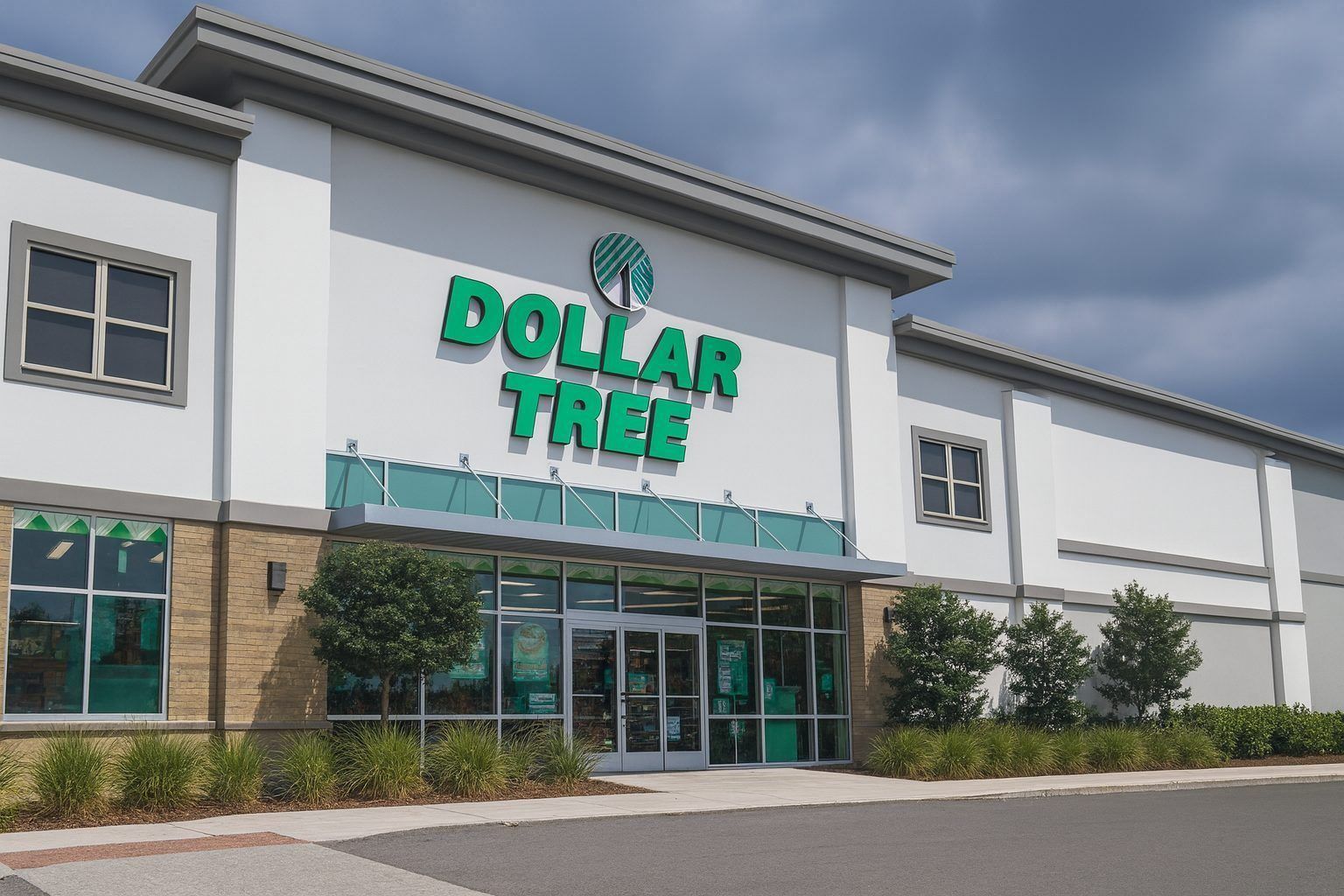
Dollar Tree is now essentially a pure‑play “treasure hunt” dollar store chain, running 9,269 stores under its namesake banner at quarter‑end, up from 8,868 a year earlier. Selling square footage grew about 5.4%, and sales per square foot ticked higher to around $236.Dollar Tree, Inc.
This clean break matters for valuation: investors can finally model Dollar Tree without the chronic drag and volatility of Family Dollar — but also without the additional scale and urban exposure that banner offered.
Store optimization and closures: clearing out the underperformers
Even before the sale, Dollar Tree launched a sweeping portfolio optimization effort:
- Management identified around 1,000 stores, mostly Family Dollar, for closure, relocation, or conversion.
- About 600 Family Dollar stores were set to shut in the first half of 2024, with another ~370 Family Dollar and 30 Dollar Tree stores to close over subsequent years as leases roll off.
Since then, third‑party tracking has recorded hundreds of Family Dollar closures in 2025, as the new owners continue to prune the weakest locations.
For Dollar Tree shareholders, the key takeaway is that the remaining store base is higher‑quality and increasingly focused on its core value proposition rather than propping up an underperforming second banner.
Multi‑price strategy and demand trends: more than just $1.25
Dollar Tree’s transformation is not just about portfolio cleanup – it’s also about repositioning the store for a higher‑value, multi‑price world.
Several recent reports emphasize that:
- Around 85% of items are still priced under $2, but expanded price points (e.g., $3, $4, $5 “Dollar Tree Plus” assortments) are drawing in higher‑income shoppers while deep‑value staples keep core customers loyal.Reuters+1
- Management highlighted strength in consumables and seasonal categories, with a particularly strong Halloween season that lifted traffic and average basket size.
Same‑store sales growth of 4.2% in Q3 was driven largely by ticket growth rather than traffic, according to one detailed analysis, suggesting customers are buying more per visit even as footfall is roughly flat.
This mix – modest positive traffic plus larger baskets – is exactly what investors like to see from a mature retailer facing intense competition.
Cash flow, balance sheet, and buybacks
Under the hood, Dollar Tree’s financial position looks healthier but still highly active:
- Over the first three quarters of fiscal 2025, the company generated about $958 million of operating cash flow from continuing operations.
- It invested roughly $870 million in capital expenditures, much of it tied to new and converted stores and distribution infrastructure.
- It also spent around $1.3 billion on share repurchases over the period.
Depending on the definition, some third‑party services estimate slightly negative free cash flow for Q3, largely because of the heavy capex and buyback program.
On the balance sheet side:
- Long‑term debt stands at about $2.43 billion, versus shareholders’ equity of roughly $3.46 billion, implying a debt‑to‑equity ratio close to 0.7x – consistent with MarketBeat’s 0.67 estimate.
- Liquidity is tighter but still adequate, with a current ratio just over 1.0 and a quick ratio around 0.27, meaning working‑capital management remains a focus area.
One interesting “skin in the game” signal: in September, newly appointed CFO Stewart Glendinning bought about 3,500 shares of Dollar Tree stock on the open market at prices around $97–100, bringing his stake to more than 50,000 shares.Barron’s
Institutional buying: Norges Bank and other large holders
The stock is firmly in institutional hands:
- Norges Bank disclosed a new stake of 1.88 million shares (about 0.9% of the company), worth roughly $186 million, in its latest filing.
- Overall, institutional investors and hedge funds control about 97% of the float.
Multiple filings through November 2025 show a mix of institutions increasing and trimming positions, but the overall message is consistent: DLTR is squarely on the radar of large, long‑only asset managers.
What Wall Street is saying: mixed but improving sentiment
Analyst opinion on Dollar Tree is far from unanimous.
According to TipRanks:
- 23 analysts have issued ratings in the last three months.
- Consensus: Hold (8 Buy, 11 Hold, 4 Sell).
- Average 12‑month price target:$109.47, only about 1% below the recent price near $111.
- Target range spans from $70 (bear case) to $135 (bull case).
MarketBeat’s aggregation of brokerage research paints a similar picture:
- A consensus “Hold” rating with a target around $108–109.
- A roughly even split between bullish, neutral, and bearish calls.
Recent rating moves show the tension clearly:
- Barclays upgraded Dollar Tree to Overweight in July 2025, hiking its target to $120, citing momentum in the multi‑price rollout and a cleaner story post‑Family Dollar.
- In contrast, Goldman Sachs shifted to a Sell in mid‑November, arguing that value perception for shoppers and investors might be stretched after the rally.
Overlay that with the Simply Wall St valuation work, which estimates that Dollar Tree’s share price could be trading at nearly double its discounted cash‑flow fair value (roughly 90% overvalued by their model), and you get a sense of why the analyst community is hesitant to chase the stock much higher despite the operational progress.
Valuation check: expensive, cheap, or “fair for the growth”?
Traditional valuation metrics are a bit messy right now:
- MarketBeat shows a headline P/E ratio of around –8x, thanks to accounting losses linked to the Family Dollar sale and related charges – a reminder that GAAP earnings can look odd in a transition year.
- GuruFocus highlights a price‑to‑sales ratio near 2x and a price‑to‑book ratio over 6x, both at the higher end of the company’s own history, and flags the stock as potentially rich compared with its fundamentals.
On the other hand:
- The company is guiding to mid‑single‑digit comp growth and high‑single‑digit EPS growth into 2026, which is attractive for a defensive retailer if it can be sustained.
- Free cash flow should normalize higher once the current wave of heavy capex and restructuring spending rolls off.
Put simply: Dollar Tree no longer looks “cheap on problems”; it looks “re‑rated on execution”, with expectations to match. Whether that’s justified depends on your view of how durable the new earnings power really is.
Key risks and catalysts to watch
Despite the upbeat quarter, several issues remain front‑of‑mind for analysts and investors:
- Macro & consumer strain
- Dollar stores typically benefit when consumers trade down, but there’s a limit: if lower‑income shoppers’ budgets are stretched too far (for example by benefit changes or job losses), even trip frequency to discounters can suffer.
- Pre‑earnings commentary flagged risks from potential changes in SNAP benefits and broader economic uncertainty.
- Tariffs and supply chain
- Reuters notes that management sees tariff‑related uncertainty as a key swing factor, even as it leans on a broader price ladder to protect margins.
- On the plus side, Dollar Tree is rebuilding and expanding its distribution network (including a new million‑square‑foot facility in Oklahoma to replace one destroyed by a tornado), which should improve efficiency over time.
- Execution on multi‑price and brand positioning
- If customers start to feel that Dollar Tree has drifted too far from its ultra‑low‑price roots, the brand could lose some of its edge against rivals and regional grocers.
- Goldman’s downgrade in November was explicitly concerned with whether shoppers still perceive Dollar Tree as a standout value in a world where many items now cost more than the iconic $1.25.
- Competition
- Competitors like Dollar General and Five Below are also aggressively pushing into consumables, seasonal goods, and multi‑price formats, raising the bar for Dollar Tree’s own innovation.
- Capital allocation discipline
- With billions going into capex and buybacks, investors will be watching closely to see that returns on invested capital actually improve in the coming years, not just EPS.
So what does it all mean for Dollar Tree stock?
As of 3 December 2025, Dollar Tree looks like a company that has:
- Simplified its structure by offloading Family Dollar.
- Re‑accelerated its core business, with mid‑single‑digit comps and a clear earnings beat.
- Lifted its profit outlook for the second time this year as shoppers continue to seek value across income brackets.
- Attracted serious institutional interest, including a notable new stake from Norges Bank.
At the same time, the stock has already enjoyed a ~45% rally in 2025, and several valuation frameworks – from analyst price targets to DCF‑based models – suggest that a good chunk of that improved outlook is already reflected in the price.
For investors, DLTR now looks less like a classic “deep value” turnaround and more like a quality, defensive growth story priced near what the Street considers fair value, with upside or downside hinging on execution in 2026–2027.