
The US stock market spent Wednesday trading just shy of record territory as investors digested a surprisingly weak private‑jobs report, a still‑resilient services sector, and a flood of 2026 stock‑market forecasts clustering around fresh all‑time highs.
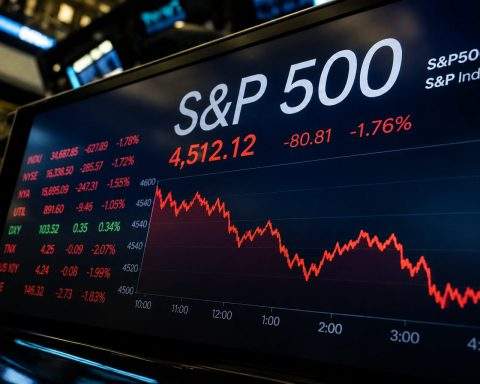
By early afternoon, the S&P 500 was up about 0.4%, the Dow Jones Industrial Average roughly 0.9%, and the Nasdaq Composite about 0.2%, leaving the S&P within half a percent of its record high set in late October.The Washington Post Later in the session, a global markets wrap from Reuters showed those gains moderating, with the Dow up about 0.4%, the S&P barely positive, and the Nasdaq fractionally lower — but all still near the top of their recent ranges.
Key takeaways for December 3, 2025
- Major US indices hovered near record highs as traders bet heavily that the Federal Reserve will cut rates at its final meeting of 2025.
- ADP data showed private employers shed 32,000 jobs in November, the biggest drop since 2023 and a sharp miss versus expectations for job growth.
- The ISM Services PMI held in expansion at 52.6, suggesting the service economy is still growing even as employment in the sector contracts.
- Rate‑cut odds surged to roughly 89% for a 25‑basis‑point move next week, pushing Treasury yields and the US dollar lower while helping gold and Bitcoin extend their rallies.
- Energy, financials, materials and small caps outperformed, while mega‑cap tech — led by Microsoft — lagged. The Russell 2000 rose around 1.1–1.2%.
- Wall Street’s 2026 S&P 500 targets now cluster around 7,500–7,800, implying ~10–14% upside, with Bank of America a notable bear at 7,100.
US stock market today: Dow, S&P 500 and Nasdaq hover near records
Trading on Wednesday had a distinctly “calm but tense” feel: prices were near records, volumes were solid, and yet nearly every move was filtered through the lens of the Fed’s upcoming decision and signs of a cooling labor market.
- As of about 1:55 p.m. Eastern, the S&P 500 was up 0.4%, the Dow up 428 points (0.9%), and the Nasdaq up 0.2%, according to an Associated Press report, which also noted that the S&P sat within 0.5% of its all‑time high.
- A later global markets update showed more muted gains — Dow +0.43%, S&P 500 +0.05%, Nasdaq −0.12% — underlining how choppy intraday trading became as investors juggled mixed data and sector rotation.
Under the surface, about 400 stocks in the S&P 500 were higher, even as some of the market’s biggest names weighed on the index.SWI swissinfo.ch That breadth — more stocks up than down — is exactly what bulls have been hoping to see after several years when a handful of mega‑cap tech names drove most of the gains.
Jobs shock: ADP says private payrolls fell 32,000 in November
The biggest surprise of the day came from the ADP National Employment Report, which showed that US private‑sector employment fell by 32,000 jobs in November, compared with economists’ expectations for roughly 10,000–40,000 new jobs.
Key details:
- Small businesses were hit hardest, shedding about 120,000 jobs, while larger firms continued to add workers.
- ADP’s chief economist, Nela Richardson, described hiring as “choppy” and noted that November’s slowdown was broad‑based and led by small businesses facing cautious consumers and higher costs.ADP Employment Report+1
- Annual pay growth continued to cool, in line with a gradual easing of wage pressures.
While ADP doesn’t always line up perfectly with the official nonfarm payrolls data, it reinforced the narrative of a slowing labor market and helped cement expectations that the Fed can afford to cut rates again.
Complicating matters, the official jobs reports for October and November have been delayed until December 16 due to earlier government funding issues, leaving investors more reliant than usual on private data like ADP and survey‑based indicators.
Services sector still expanding: ISM data offer a counterweight
Offsetting the bleak jobs surprise, the ISM Services PMI showed that the massive US services economy is still growing:
- The headline index rose to 52.6 in November, staying above the 50 line that separates expansion from contraction.
- Business activity and new orders remained comfortably in expansion territory, indicating ongoing demand in areas like finance, retail and insurance.
- However, services employment stayed in contraction for the sixth straight month, highlighting that companies are getting more cautious about hiring even as demand holds up.
AP’s write‑up emphasized that stronger‑than‑expected services activity and softer price pressures — the survey showed the slowest price increases since April — could help the Fed by easing inflation concerns just as growth in jobs cools.
Fed expectations: markets bet heavily on a December rate cut
Between the negative ADP surprise and a still‑resilient services sector, traders pushed their Fed bets to near certainty:
- Futures tied to the federal funds rate now imply about an 89% chance of a 25‑basis‑point cut at next week’s Fed meeting, up from around 87% earlier in the day, according to Reuters citing CME FedWatch data.
- The 10‑year Treasury yield slipped to roughly 4.07%, while the 2‑year yield fell to about 3.5%, reflecting expectations for easier policy in 2026.
- A related AP report noted the 10‑year yield easing from 4.09% to about 4.06% over the session.
Lower yields weighed on the dollar and boosted risk assets:
- The US dollar index headed for a ninth straight daily decline, while the euro climbed to around $1.17.
- Gold traded around $4,200 an ounce, near record territory, as investors sought hedges against both policy missteps and geopolitical risk.
- Bitcoin extended its rebound to roughly the low‑$90,000s, having recently fallen below $81,000 before bouncing back on renewed risk appetite.
In short, “bad” jobs news was interpreted as “good” news for interest rates — at least for now.
Sector rotation: small caps, cyclicals and value lead, mega‑cap tech lags
Wednesday’s trading also underscored a theme that’s been building for weeks: leadership is broadening beyond a handful of tech giants.
Small caps and cyclicals
- The Russell 2000 small‑cap index climbed around 1.1–1.2%, on track for its best day since late November after a 5.5% surge last week — its strongest weekly performance in more than a year.
- Reuters quoted strategists at BofA Securities saying they expect small caps to outperform in 2026, helped by Fed rate cuts and a strong capital‑expenditure cycle.
Cyclical sectors tied to growth and reflation were also in favor:
- Energy, financials, and materials were among the top gainers in the S&P 500, buoyed by higher oil prices and the prospect of lower borrowing costs.
- Brent crude futures rose about 1.2% to roughly $63 per barrel, while US crude advanced around 1.4% to the high‑$50s.
Mega‑cap tech takes a breather
By contrast, mega‑cap growth and AI leaders lagged:
- Microsoft fell roughly 2% after reports that it had cut internal AI sales quotas, suggesting slower‑than‑hoped adoption of new AI products; the company later pushed back on those reports, but the damage to sentiment was done.
- Nvidia and Broadcom slipped modestly, helping pull the broader tech sector down around 0.4%, making it the biggest decliner in the S&P 500.
- A Bloomberg‑syndicated markets wrap noted that about 400 stocks in the S&P 500 advanced even as most mega‑caps were flat or negative, a sign of improving breadth.
The message from sector moves: investors still like equities, but they’re no longer crowding exclusively into the AI mega‑caps.
Stock movers: Marvell, American Eagle, Capricor and more
Several individual names stood out:
- Marvell Technology jumped around 4–6% after beating profit expectations and announcing a $3.25 billion acquisition of AI infrastructure start‑up Celestial AI, which investors saw as deepening its data‑center positioning.
- Microchip Technology rallied more than 8% after raising its third‑quarter outlook, reinforcing the idea that parts of the semiconductor complex are still seeing strong demand despite pockets of softness.
- American Eagle Outfitters surged roughly 14–15% after lifting its annual comparable‑sales forecast and reporting a robust start to the holiday shopping season.
- Macy’s gained close to 2% after posting a surprise profit instead of the expected loss, capping what has already been a year of outsized gains for the department‑store stock.
- Capricor Therapeutics, a small biotech, spiked more than 300% after encouraging trial results for a Duchenne muscular dystrophy treatment, highlighting the persistent “risk‑on” appetite in parts of biotech.The Washington Post+1
On the downside:
- Alongside Microsoft’s slide, CrowdStrike and other high‑multiple cloud stocks dipped modestly even after reporting strong results, a sign that expectations had simply become harder to beat.
Nasdaq and growth stocks: still in an uptrend, but pausing
A detailed Nasdaq‑focused recap from TS2.Tech painted Wednesday’s action as a pause within an ongoing uptrend rather than a trend change.
Highlights from the technical and valuation lens:
- Short‑term technicals: FXEmpire’s intraday analysis described the Nasdaq 100 as “rallying slightly” and pushing toward a potential breakout, with upside targets around 26,000–26,250 and support near 25,000, which roughly aligns with its 50‑day moving average.TechStock²
- Technical summary tools on Investing.com rate the Nasdaq 100 as a “Strong Buy” on the daily timeframe, with most moving averages still flashing bullish signals.TechStock²
- Valuation: Morningstar’s new December 2025 Stock Market Outlook estimates that US equities trade at roughly a 3% discount to the firm’s composite fair value. Value and small‑cap stocks led November’s performance, while large‑cap growth — including many Nasdaq heavyweights — screens closer to “fairly valued.”TechStock²
In other words, the Nasdaq doesn’t look cheap, but it doesn’t look like an obvious bubble either, assuming earnings and the Fed backdrop remain supportive.
Some algorithmic and long‑range models project the Nasdaq to finish December slightly below early‑month levels and edge higher into 2026, but these models are highly sensitive to assumptions and shouldn’t be treated as precise forecasts.
Dow and S&P 500 technical picture: tight range just below all‑time highs
On the Dow Jones Industrial Average, technical analysts see the index consolidating just under record territory:
- MarketPulse analysis highlighted a resistance zone between roughly 47,750 and 48,000, just below the all‑time high around 48,458.
- On the downside, support around 47,000–47,200 has repeatedly attracted buyers; a decisive break below could open the door to a deeper pullback toward the mid‑45,000s.
Given that the Dow is less than 2% from its record, thin December liquidity and upcoming data releases could amplify moves in either direction.
The S&P 500, meanwhile, is:
- Up about 16% year‑to‑date, according to Associated Press tallies, and
- Trading within half a percent of its record high, as noted earlier.
That combination — strong year‑to‑date gains and prices near records — is exactly why strategists are so focused on what 2026 might look like.
2026 US stock market forecasts: 7,100–8,000 on the S&P 500
Wall Street’s heavy hitters have now published detailed 2026 outlooks, and a clear pattern is emerging:
The bullish camp: 7,500–7,800 and beyond
Several major banks cluster around S&P 500 targets in the 7,500–7,800 range:
- JPMorgan: Sees the S&P 500 at 7,500 by end‑2026 — roughly 10–11% above current levels — with a bull case above 8,000 if the Fed keeps cutting rates and the AI “supercycle” delivers 13–15% earnings growth.Reuters+2Yahoo Finance+2
- Morgan Stanley: Projects the S&P 500 to reach 7,800 over the next 12 months, arguing that US equities should outperform global peers in 2026 as AI‑driven productivity gains and a dovish Fed support earnings and risk appetite.
- BNP Paribas: Forecasts the S&P 500 at 7,500 by the end of 2026, citing a robust US economy, healthy corporate profit growth and a still‑resilient labor market.
- HSBC: Also targets 7,500 for the S&P 500 by December 2026, viewing today’s elevated valuations as largely justified by expectations of above‑trend earnings growth, an AI capex boom and easier policy.
Across these bullish scenarios, the common threads are:
- AI‑related earnings growth,
- A soft‑landing macro backdrop, and
- Several more Fed rate cuts over 2026.
The cautious camp: Bank of America’s “AI air pocket”
Bank of America stands out as a relative bear:
- BofA projects the S&P 500 will end 2026 at 7,100, only about 4% above current levels, after three years of double‑digit returns that have already pushed valuations to lofty levels.
- Strategist Savita Subramanian warns of an “AI air pocket” in which AI‑driven capex stays high while actual monetization lags, squeezing free cash flow at mega‑cap tech names.MarketWatch+1
- BofA is also more concerned than peers about a struggling consumer and fading liquidity, favoring sectors like financials, healthcare and real estate over high‑multiple tech.
Taken together, these forecasts suggest consensus upside of roughly 10–14% for 2026, with a non‑trivial risk that returns could be much closer to flat if valuations compress or growth disappoints.
December catalysts: PCE inflation, delayed payrolls, the Fed and S&P 500 reshuffle
Investors tracking “US stock market today” need to keep one eye firmly on the calendar:
- Friday’s PCE inflation report
- As the Fed’s preferred inflation gauge, core PCE will heavily influence how aggressively policymakers feel they can cut in 2026. A softer‑than‑expected reading could reinforce the rate‑cut narrative and support risk assets; a hot print could challenge it.
- December Fed meeting (next week)
- Markets are pricing in a near‑certain 25‑bp cut; the real action may come from the “dot plot” and Chair Powell’s comments on how many cuts to expect next year.Reuters+1
- Politics are an additional wrinkle: markets are also watching President Trump’s plans for a new Fed chair, with Kevin Hassett widely seen as the leading candidate and viewed as dovish.
- Delayed official jobs reports (Dec. 16)
- With ADP showing a 32,000 drop in private payrolls, the combined October/November nonfarm payrolls release will be a key test of whether ADP is signaling a trend or just noise.
- S&P 500 December reshuffle
- A widely read MarketMinute piece notes that the final S&P 500 rebalance of 2025 will be announced after the close on December 5 and implemented on December 19, with Comfort Systems USA and Pure Storage among the most discussed candidates for inclusion.
- Index changes can trigger short‑term price spikes for entrants and pressure on deletions due to forced buying and selling by index funds.
- Seasonal patterns and positioning
- Several outlook pieces point to the historical tendency for December to be a relatively strong month for US stocks, but also warn that thin holiday liquidity can magnify reactions to any negative surprises.
What today’s US stock market setup means for investors
Nothing in this article is personalized advice, but today’s tape is sending a few clear signals:
- The bull market is intact, but more fragile.
- Indexes near record highs, broad participation and strong year‑to‑date gains all argue that the uptrend is still in place.
- At the same time, leadership is rotating, the labor market is softening at the margins and valuations leave less room for error.
- “Bad news is good news” has limits.
- ADP’s job loss boosted rate‑cut hopes and helped push yields lower, but a series of weak labor reports could eventually undercut the earnings outlook that bullish 2026 targets rely on.
- AI and mega‑cap tech are entering a prove‑it phase.
- With Microsoft and other leaders slipping on AI‑related headlines, investors are becoming more sensitive to how quickly AI investment turns into cash flows.
- Breadth and small caps matter again.
- Strong performance in the Russell 2000 and cyclical sectors suggests investors are betting on a broader, more inclusive rally if the Fed eases and growth stabilizes.
- Forecasts are scenarios, not certainties.
- Whether your mental anchor is 7,100 (BofA) or 7,800 (Morgan Stanley) for the S&P 500 in 2026, the path will depend on inflation, growth, policy and geopolitics — all of which can surprise in either direction.
For now, the US stock market on December 3, 2025 looks like a late‑cycle bull run that’s broadening out, powered by rate‑cut hopes and AI optimism but increasingly sensitive to any cracks in the labor market or earnings story.
Related articles: NYSE:MS