
Published: December 3, 2025
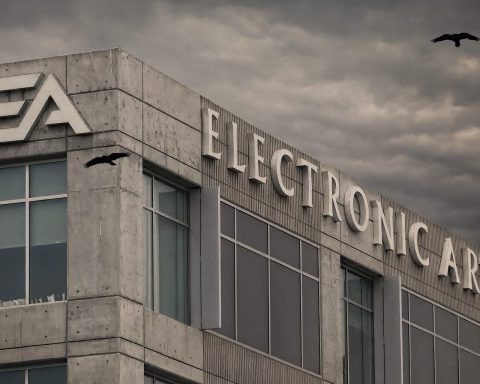
Electronic Arts Inc. NASDAQ:EA, one of the world’s biggest video‑game publishers and the company behind EA SPORTS FC, The Sims, Battlefield and Apex Legends, is in the middle of its most dramatic transition in decades. A Saudi‑led $55 billion buyout is set to take the company private, earnings are under pressure, law firms are probing the deal’s fairness, and EA is trying to highlight its long‑term commitments in areas like accessibility and live services.
Below is a detailed look at all the major news, forecasts and analyses that matter as of December 3, 2025.
What’s New for Electronic Arts on 3 December 2025?
Several fresh developments landed today or in the last 24 hours:
- Saudi Arabia’s Public Investment Fund (PIF) is now expected to own about 93–93.4% of EA once the $55 billion leveraged buyout closes, according to filings cited by The Wall Street Journal and summarized by outlets including the Los Angeles Times, GameSpot and Reuters. Silver Lake would own roughly 5.5% and Affinity Partners about 1.1%.
- Two law firms, Kaskela Law LLC and Kahn Swick & Foti (KSF), announced or reiterated investigations into whether the $210‑per‑share cash offer is fair to EA shareholders and whether directors fulfilled their fiduciary duties in agreeing to sell.
- EA expanded its industry‑first accessibility patent pledge, adding eight new patents including “Grapple Assist” for EA SPORTS UFC and new speech/audio technologies, bringing the total to 46 patents made free to use by the industry. Electronic Arts Inc.
- Institutional holders are repositioning: OMERS Administration Corp disclosed a 133% increase in its EA stake, while Independent Franchise Partners LLP cut its holdings by 13.4%, even as the stock trades just below the $210 deal price near $203 per share.
All of this comes on top of EA’s soft Q2 FY26 results and the late‑September announcement of the take‑private deal that will reshape the future of EA Games.
Inside the $55 Billion Saudi‑Led Buyout of Electronic Arts
Deal terms and ownership structure
On September 29, 2025, EA announced that it had entered into a definitive agreement to be acquired by a consortium led by Saudi Arabia’s Public Investment Fund, alongside Silver Lake and Jared Kushner’s Affinity Partners.
Key terms include:
- Purchase price: $210 in cash per EA share.
- Implied value: About $55 billion enterprise value, which EA and its advisers describe as the largest all‑cash sponsor‑led take‑private in history.
- Premium: Roughly 25% above EA’s “unaffected” share price of $168.32 on September 25, 2025, and above its prior all‑time high of $179.01. Electronic Arts Inc.
- Financing mix: About $36 billion of equity (mostly from PIF, plus Silver Lake and Affinity) and $20 billion in debt, fully committed by JPMorgan, of which about $18 billion is expected to fund at closing.
- Timeline: EA expects the transaction to close in Q1 FY27, subject to regulatory approvals and shareholder approval. After closing, EA shares will be delisted and the company will operate as a private entity.
The ownership picture has sharpened this week. A Brazilian antitrust filing shows that PIF is slated to own around 93.4%of EA post‑deal, with Silver Lake at 5.5% and Affinity at 1.1%.
EA says it will remain headquartered in Redwood City, California, and that Andrew Wilson will continue as CEO after the buyout, signaling continuity in day‑to‑day leadership even as control shifts overwhelmingly to Saudi Arabia’s sovereign wealth fund.
Why PIF wants EA – and why some analysts are skeptical
Saudi Arabia’s PIF has been aggressively building a global gaming and entertainment portfolio, with prior stakes in companies such as Nintendo and Take‑Two Interactive, and major investments in esports and mobile game studios.
Buying EA outright gives PIF:
- A top‑tier global publisher with a powerful sports portfolio (EA SPORTS FC, Madden, F1 and College Football),
- Durable “games as a service” franchises like Apex Legends and The Sims, and
- A strong pipeline including Battlefield 6 and the skate. reboot.
However, a fresh analysis by Reuters’ Breakingviews notes that PIF is shouldering nearly all of the roughly $36 billion equity cheque, and questions whether the returns justify such concentration in a single foreign asset. Assuming mid‑single‑digit revenue growth and high‑30s EBITDA margins, Breakingviews estimates that PIF might only achieve around a 10% internal rate of return if it exited in five years at the same valuation multiple – far below the roughly 20% IRR typically sought in large buyouts.
The bet fits PIF’s ambition to become a heavyweight in global entertainment, but raises questions about capital allocation when Saudi Arabia also faces heavy domestic investment needs and possible budget pressures if oil prices fall.
Regulatory, political and governance concerns
Because PIF is a foreign sovereign wealth fund, the transaction faces a multi‑layered approval process:
- Regulatory reviews in multiple jurisdictions, including antitrust scrutiny and likely national‑security review in the United States (for example via CFIUS), given foreign control over a major U.S. content and online‑services provider. EA itself warns in its forward‑looking statements that the timing, conditions and approvals could delay or even derail closing.
- Political scrutiny: U.S. senators including Richard Blumenthal and Elizabeth Warren have already voiced concerns about “foreign influence” if PIF gains near‑total control of EA, as reported by GameSpot. GameSpot
From a governance and shareholder‑rights standpoint, today brought a notable uptick in legal activity:
- Kaskela Law LLC says it is investigating whether the $210 per‑share price is adequate and whether EA directors breached duties to shareholders in agreeing to the sale, urging investors to contact the firm before the voting deadline.
- Kahn Swick & Foti (KSF), headed in part by former Louisiana Attorney General Charles Foti Jr., separately announced an investigation into whether the consideration undervalues the company and whether the sale process was fair.
EA shareholders are expected to vote at an extraordinary meeting later in December 2025; MarketScreener’s calendar lists an extraordinary shareholder meeting on December 22, 2025, associated with the deal.
While activist funds haven’t yet mounted a high‑profile campaign to block or sweeten the deal, the emergence of multiple law‑firm probes increases the odds of litigation or at least pressure for additional disclosures and a clearer fairness narrative.
EA’s Latest Numbers: Q2 FY26 Under Pressure
Headline results
On October 28, 2025, EA released results for its second fiscal quarter of 2026, covering the three months ended September 30, 2025.
Key figures from company filings and earnings summaries:
- Net revenue: $1.84 billion, down about 9% year‑on‑year.
- Net income: $137 million, a decline of 53% from the prior‑year quarter.
- GAAP EPS: $0.54, down roughly 51% year‑on‑year.
- Net bookings: $1.82 billion, 13% lower than a year earlier, reflecting weaker full‑game sales and tougher comparisons.
Trailing twelve‑month data underscores how EA has been stuck in a low‑growth pattern: total net revenue over the year to September 30 came in around $7.29 billion, slightly below the prior year’s $7.41 billion – echoing Los Angeles Times reporting that EA’s annual revenues have hovered in the $7.4–$7.6 billion band for the last three years.
Because of the pending buyout, EA did not host a traditional earnings conference call and said it would no longer provide forward‑looking guidance, instead directing investors to static financial models on its IR site.
Franchise performance and live‑services mix
While the headline numbers disappointed Wall Street and were widely described as an “earnings miss,” the quarter wasn’t uniformly negative at an operational level. According to ChartMill’s breakdown and EA’s own commentary: ChartMill+1
- Apex Legends returned to double‑digit net‑bookings growth, helped by its Season 26: Showdown content drop.
- EA SPORTS Madden NFL 26 and EA SPORTS FC 26 delivered net‑bookings growth despite a tougher comparison against last year’s College Football 25 launch.
- New releases like skate. and Battlefield 6 were highlighted as successful launches that should contribute more fully in coming quarters.
Financially, EA continues to lean heavily on live services – in‑game purchases, Ultimate Team modes, subscriptions and other ongoing content:
- Over the twelve months to September 30, live services and other revenue totaled about $5.35 billion, versus roughly $1.94 billion from full‑game sales, meaning live services now account for around 73% of EA’s total net revenue.
That mix helps support recurring cash flow, but it also creates sensitivity to player engagement and the health of micro‑transaction‑driven modes, especially in flagship sports titles.
No guidance, but consensus expectations still rising
Even without formal company guidance, aggregated estimate services show that analysts have been nudging revenue and EPS forecasts for FY26 slightly upward over the past three months, despite the Q2 stumble:
- Intellectia’s AI‑driven dashboard notes that FY26 revenue forecasts have been revised about 2% higher and EPS estimates about 3.6% higher, with the stock up roughly 21% over that span, thanks largely to the takeover premium.
In other words, the LBO has become the dominant driver of sentiment; the underlying business is still viewed as fundamentally healthy but short of spectacular.
Accessibility and Technology: EA’s New Patent Pledge Update
In a move timed with the International Day of Persons with Disabilities, EA today marked the fifth anniversary of its Accessibility Patent Pledge by adding eight new patents to the initiative.
Highlights from the new batch:
- Grapple Assist – a system used in EA SPORTS UFC that lets players perform complex grappling transitions with simplified inputs, reducing both fine‑motor demands and cognitive load.
- Advanced speech and audio generation technologies, aimed at more natural, expressive synthesized speech and prosody to assist players with speech disorders or those who rely on assistive communication.
- Open‑sourced enhancements to the Fonttik accessibility tool, adding new color‑blindness simulation filters on top of existing text‑size and contrast checks.
EA says that since launching the pledge in 2021 it has now made 46 accessibility‑related patents free to use across the industry, including technologies behind Apex Legends’ ping system, photosensitivity‑detection tools (IRIS), and Unreal Engine plugins.
The company notes that these efforts have helped earn it recognition at the Game Accessibility Conference awards, including nominations for EA as “most dedicated publisher” and for specific titles like EA SPORTS FC 26, F1 25 and Battlefield 6. Electronic Arts Inc.
For EA, which is currently under intense scrutiny over its ownership and governance, the accessibility announcement doubles as brand positioning: a reminder to regulators, players and employees that it wants to be seen as a long‑term, values‑driven innovator, not just a takeover target.
How the Market Values EA Now: Price Targets and Forecasts
Price targets cluster around the $210 deal price
Because EA has a signed deal at $210 per share in cash, most professional coverage now treats that number as the effective ceiling for the stock in the near term, barring a competing bid or deal break. Analyst‑aggregation platforms paint a consistent picture:
- TradingView lists an average 12‑month price target of about $209.33, with a range from $168 to $250.
- TickerNerd reports a median target of $210, based on 47 Wall Street analysts, with 4 Buys, 18 Holds and 1 Sell, describing the overall stance as effectively neutral with roughly 3–4% upside from the current price around $203.
- Intellectia similarly shows an average one‑year target around $203.63 from 18 analysts, with 2 Buys, 15 Holds and 1 Sell, and emphasizes that most houses now see the stock trading more on deal‑completion risk than fundamentals.
Several major brokers—including Morgan Stanley, Argus, Jefferies and TD Cowen—have recently reset their EA price targets to $210, often downgrading from Buy to Hold explicitly because upside is capped by the agreed take‑private price.
At the same time, some technical‑forecast sites, which are more model‑driven and less focused on the LBO, have much more varied views:
- StockScan’s near‑term model suggests a negative 30‑day outlook with an average target near $157.56, but its long‑term scenarios run all the way out to 2050, with projected average prices above $330, underscoring how speculative automated forecasts can be when a company is set to go private well before those dates.
Growth expectations if EA remained independent
Fundamental‑focused platforms still publish long‑term earnings and revenue forecasts as if EA were a normal listed company:
- Simply Wall St pegs EA’s earnings growth at roughly 16.6% per year and revenue growth at about 5.2% per year over the next few years, with return on equity projected around 28% in three years—figures that help explain why a sovereign wealth fund is willing to pay a significant premium.
Earlier in 2025, before the buyout announcement, stock‑forecast articles typically modeled only modest upside (mid‑single‑digit percentages) on the view that EA was a quality but fully‑valued name facing a slower‑growth, post‑pandemic gaming market. Those more cautious narratives have been overtaken by the reality of a $55 billion all‑cash bid.
Institutional Positioning: Big Holders Adjust Their Bets
Today’s MarketBeat filings show that major institutional investors are actively re‑balancing in response to the LBO and recent earnings:
- OMERS Administration Corp, a large Canadian pension fund, raised its EA stake by 133.1% in Q2, adding 12,200 shares for a total of 21,365 shares worth about $3.4 million. MarketBeat notes that institutional investors now own roughly 90% of EA’s free float.
- Independent Franchise Partners LLP cut its stake by 13.4%, selling over 530,000 shares but still holding about 1.36% of EA (3.4 million shares), worth roughly $545 million.
Both reports also highlight that insiders have been net sellers, with CEO Andrew Wilson and other executives disposing of shares in November and total insider sales of around 135,000 shares (roughly $26.9 million) over the last quarter—though insiders still own less than 1% of the company.
Given that the stock is trading around $202–$203, just below the $210 cash price, institutional investors appear to be treating EA as a relatively low‑risk merger arbitrage situation rather than a long‑term growth stock, while some holders lock in gains ahead of the final vote.
What It All Means for Players, Creators and Employees
Player experience and franchises
From the player perspective, EA and its studios are emphasizing continuity:
- The consortium’s deal agreement explicitly states EA will remain headquartered in Redwood City with Andrew Wilson as CEO.
- Reporting by SimsCommunity notes that franchise teams, including The Sims, are telling their communities that their mission and values remain unchanged and that “The Sims will always be a space where you can express your authentic self,” despite the ownership change. Sims Community
EA has also continued announcing product and technology roadmaps independent of the transaction, such as:
- Future EA SPORTS F1 experiences and an all‑new F1 game slated for 2027.
- Ongoing live‑service updates for Apex Legends, EA SPORTS FC, Madden and other franchises, which are at the core of EA’s engagement strategy.
That said, not everyone in the ecosystem is reassured. SimsCommunity reports pushback from some EA employees and Creator Network members, with certain creators choosing to exit the program over concerns about Saudi control and the company’s direction.
Cultural and governance questions
The prospect of a foreign state‑backed entity controlling one of the largest Western game publishers raises several open questions:
- Content and editorial independence: EA has indicated in regulatory filings that it expects to retain creative control, but critics worry that political sensitivities or reputational risk could subtly influence decisions around themes, representation or partnerships.
- Employee morale and retention: Highly mobile game‑development talent may react negatively—or not at all—to the new ownership depending on how compensation, creative freedom and public perception play out post‑closing.
- ESG and reputational risk for partners: Console makers, mobile platforms and licensing partners may face scrutiny over working with a publisher effectively controlled by a sovereign wealth fund from a country that has drawn criticism on human‑rights grounds.
None of these issues are determinative on their own, but they add to the lens through which regulators, players and potential future hires will judge EA’s next chapter.
Bottom Line: EA at a Crossroads
As of December 3, 2025, Electronic Arts stands at a rare intersection of mega‑scale M&A, shifting ownership and fundamental operational challenges:
- The $55 billion PIF‑led buyout has turned EA into a merger‑arbitrage story with limited share‑price upside in the near term, but potentially substantial strategic freedom once private.
- Q2 FY26 results confirmed that EA is not currently a high‑growth rocket ship: revenue and earnings are down double digits year‑on‑year, even as core franchises remain resilient and live services dominate the mix.
- Legal and political scrutiny is intensifying, with multiple law firms questioning whether $210 per share is fair and U.S. lawmakers raising concerns about foreign influence.
- On the positive side, EA continues to invest in accessibility, R&D and new IP, as shown by today’s expanded patent pledge and the pipeline of next‑generation titles and technologies.
For investors, the core question is now less “Is EA cheap or expensive?” and more “Will the $210 deal close on time and on terms?” Given that most major brokers and AI‑driven platforms see only a thin spread between the stock price and the offer, the market clearly expects the transaction to succeed—though shareholder lawsuits and regulatory review still introduce some risk. MarketScreener+3Intellectia+3Ticker Nerd+3
For players and creators, the story is more open‑ended. On paper, EA will keep the same leadership, franchises and commitments to things like accessibility, inclusion and positive play. In practice, the next few years will reveal whether a Saudi‑dominated ownership structure accelerates innovation—or pulls one of gaming’s biggest publishers in new and more controversial directions.
This article is for informational purposes only and does not constitute investment advice. Investors should do their own research or consult a qualified financial adviser before making investment decisions.
Related articles: NASDAQ:EA