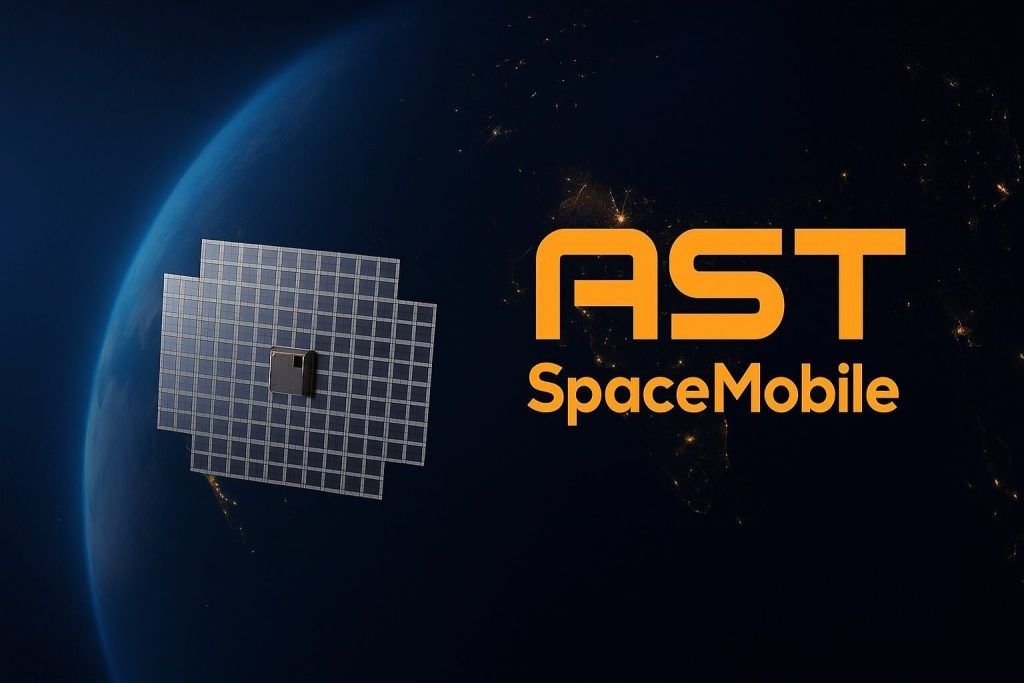
AST SpaceMobile, Inc. NASDAQ:ASTS is back in the spotlight. The satellite‑to‑smartphone pioneer’s share price has jumped into the low‑$70s, powered by a wave of manufacturing expansion news, a firm launch date for its next‑generation BlueBird 6 satellite, and a string of big‑name carrier deals across the U.S., Europe and the Middle East.
Below is a detailed rundown of everything that matters for ASTS stock today — including the freshest news from 4 December 2025, the latest analyst price targets, and how bulls and bears are framing the next leg of the story.
AST SpaceMobile (ASTS) stock today: price, range and volatility
As of the close on 4 December 2025, AST SpaceMobile stock is trading around $71.76, up roughly 16–17% on the day, with an intraday range between about $61.65 and $71.96.
Key trading context:
- Market cap: roughly $26–27 billion, based on about 370 million shares outstanding.
- 52‑week range: approximately $17.50 to $102.79, highlighting extreme volatility.
- Beta: around 2.7, meaning ASTS tends to move far more than the broader market.
News‑driven trading has accelerated this week. AInvest notes an 8% gain on 3 December with roughly $0.7 billion in trading value, ranking ASTS among the most actively traded names in the U.S. equity market. AInvest Intraday updates from trading platforms like StockstoTrade have been flagging double‑digit percentage gains today as investors react to expansion headlines and the upcoming satellite launch.
Why AST SpaceMobile stock is surging now
The current rally rests on three intertwined storylines:
- Concrete timing for the BlueBird 6 next‑generation satellite launch.
- A major manufacturing build‑out in Texas and Florida.
- Growing evidence of demand via multi‑year carrier agreements and prepayments.
Together, these developments make the long‑promised “space‑based cellular broadband” story feel more tangible — even as valuation risk mounts.
BlueBird 6 launch: the next big catalyst
The single most important near‑term event for AST SpaceMobile is BlueBird 6.
In a 21 November 2025 press release, the company confirmed that BlueBird 6 — a U.S.-licensed satellite — is scheduled to launch on 15 December 2025 from the Satish Dhawan Space Center in India.
Key technical and strategic details:
- Largest commercial phased array in low Earth orbit: BlueBird 6 will carry nearly 2,400 square feet of phased‑array antennas, about 3.5× larger than the first five BlueBird satellites and capable of roughly 10× the data throughput.
- Next‑gen constellation kickoff: It is the first satellite in AST’s second‑generation (“Block 2”) fleet, designed specifically for large‑scale commercial service. Business Wire+1
- Aggressive launch cadence: AST SpaceMobile plans five orbital launches by the end of Q1 2026, then launches roughly every one to two months, targeting 45–60 satellites in orbit by the end of 2026 to enable continuous coverage across the U.S. and select international markets.
There have been schedule wrinkles. SatNews previously reported launch‑timing adjustments tied to BlueBird 6’s Indian launch vehicle, underscoring that execution risk remains. SatNews+1 But the latest guidance from AST is clear: the company is now publicly committed to a mid‑December launch window and a rapid follow‑on campaign.
Investor‑facing platforms like Simply Wall St have framed BlueBird 6 and the U.S. build‑out as central to the equity case, even suggesting the stock could be worth more than 3× its current price under optimistic assumptions about the constellation’s economics.
Manufacturing expansion in Texas and Florida
A second major driver of sentiment is AST SpaceMobile’s manufacturing footprint expansion.
On 25 November 2025, AST announced two new production sites — one in Midland, Texas, and another in Homestead, Florida — to accelerate next‑gen BlueBird output.
Across company releases and industry coverage, several themes stand out:
- Five facilities in Texas: Texas is now AST’s primary manufacturing hub, with five facilities including the new Midland site, where BlueBird satellites are built from raw materials to finished spacecraft.
- Workforce doubling: The firm reports more than 1,800 employees, with the majority based in West Texas, and says its U.S. headcount has more than doubled over the last six months.
- 500,000 square feet of facilities: BlueBird 6’s launch announcement notes nearly 500,000 square feet of manufacturing and operations space worldwide, about 400,000 square feet of that in the U.S.
Local and trade press in Texas have emphasized that Midland is becoming a genuine space‑industry cluster, while business outlets have highlighted AST’s expansion alongside large tech investments from companies like Google in the state.
For investors, the takeaway is clear: AST is building the industrial base to support dozens of satellites, not just a handful of demos.
Global carrier partnerships and revenue visibility
AST SpaceMobile’s long‑term value proposition depends on monetizing its constellation through mobile network operators (MNOs) rather than selling directly to consumers. That strategy is starting to crystallize in a series of formal agreements.
U.S. market: AT&T and Verizon
- AT&T: In May 2024, AT&T and AST SpaceMobile signed a definitive commercial agreement running through 2030 to provide space‑based broadband service directly to standard cell phones. AT&T Newsroom+2Benton Foundation+2 The partnership has already delivered milestones such as two‑way voice calls, 5G direct‑to‑cell tests and video calls carried over AT&T spectrum via AST’s satellites.
- Verizon: AST also has a partnership with Verizon, aiming to extend coverage across 100% of the United States, effectively filling in rural and remote gaps using satellite connectivity.
These deals position AST as the satellite layer for both of the two largest U.S. carriers — a significant strategic edge, at least on paper.
Middle East & Africa: stc group
On 29 October 2025, AST announced a 10‑year commercial agreement with stc group, Saudi Arabia’s largest telecom operator, covering Saudi Arabia and selected markets across the Middle East and Africa.
Key details:
- $175 million prepayment by stc for future services, plus a “significant” long‑term revenue commitment. Business Wire+1
- AST will build three ground gateways and a Network Operations Center in Riyadh to support the service.
- Commercial launch is targeted for Q4 2026, subject to regulatory approval.
The prepayment provides upfront cash and strengthens the perception of real demand beyond proof‑of‑concept tests.
Europe: Vodafone constellation and EU “sovereign” capability
On 7 November 2025, Vodafone and AST SpaceMobile unveiled a plan to create a Europe‑led satellite constellation for satellite‑to‑smartphone connectivity, with a European operations centre in Germany and a joint‑venture structure.
Highlights from the Reuters report:
- The constellation will support both commercial and government applications, including public safety and disaster relief.
- The system will have a “command switch” to ensure secure European control over communications and satellites.
- AST aims to deploy up to 60 satellites by 2026, up from just six today, to support the service.
Vodafone is already a strategic investor in AST, and the deal strengthens the company’s positioning against competing offerings from SpaceX’s Starlink and other satellite‑to‑phone players.
Global footprint
Beyond these flagship deals, AST lists more than 45 mobile network operator partners and strategic investors including Google, Rakuten, American Tower and Bell Canada, collectively giving access to over 2.8 billion mobile subscribers.
For the bull case, these partnerships are central: they suggest that if AST’s technology works at scale, distribution channels are already in place.
Q3 2025 results: big revenue growth, bigger losses
On 10 November 2025, AST SpaceMobile released its Q3 2025 business update and financial results.
Key numbers:
- Q3 2025 revenue:$14.7 million, up from $1.1 million a year earlier — more than 10× year‑over‑year growth.
- Nine‑month 2025 revenue:$16.6 million, vs $2.5 million in the first nine months of 2024.
- Net loss attributable to common stockholders (Q3):–$122.9 million, an improvement from –$171.9 million in Q3 2024, but still substantial.
- Q3 EPS:–$0.45 per share, versus –$1.10 a year earlier.
- Cash and cash equivalents: about $1.2 billion at 30 September 2025, up from $565 million at year‑end 2024, following capital raises and strategic funding.
- Long‑term debt (including current portion): roughly $706 million, a sharp increase from about $159 million at the end of 2024.
Operating expenses remain heavy, with engineering, general & administrative, and depreciation all rising as AST scales up manufacturing and development. The company is still pre‑profit, and relies on its large cash pile and credit to finance the build‑out.
Barron’s analysis of the earnings noted that while Q3 missed Wall Street expectations on both revenue and EPS, the stock barely moved after hours, reflecting investors’ focus on long‑term growth rather than near‑term earnings. The article highlighted forecasts for 2026 revenue of about $267 million versus $56.4 million expected for 2025, and estimated 2027 EBITDA around $500 million, implying that AST trades at roughly 50× projected 2027 EBITDA after its big share‑price run.
In short: revenue is finally appearing, but valuation is already discounting very aggressive growth.
AST SpaceMobile stock forecasts and analyst price targets
Analyst and model‑driven forecasts for ASTS are all over the map — which is exactly what you’d expect for a high‑risk, early‑stage space‑tech name.
Street consensus snapshots (as of early December 2025)
Different data providers show slightly different numbers depending on which analysts they track, but a few patterns emerge:
- MarketBeat:
- Average 12‑month price target: about $45.66 across 11 analysts, implying ~35–40% downside from today’s price in the low‑$70s.
- Rating: overall “Hold”, and recent commentary emphasizes that some top‑rated analysts currently see better opportunities elsewhere. MarketBeat+2MarketBeat+2
- StockAnalysis.com:
- 7 analysts, consensus rating: “Buy”.
- Average target: around $59.37, which was a double‑digit downside from the latest quoted price on their page.
- Investing.com / Zacks data:
- 8 analysts, average target about $71.51, with a range from $43 to $95.
- Implied move: roughly flat to modestly negative versus today’s price, suggesting the stock has largely “caught up” to earlier targets. Investing.com+2Zacks+2
- TipRanks & WallStreetZen:
- TipRanks: 9 analysts, average target around $72.39, high $95, low $43, implying upside based on older price levels (mid‑$50s).
- WallStreetZen: 6 analysts, average target $64.27 with the same $43–$95 range, representing only single‑digit upside from a recent price around $61.
- Other aggregators (ChartMill, GuruFocus, Zacks, etc.) cluster their mean price targets around the high‑$60s to low‑$70s, again with a $43–$95 band and a mixed Buy/Hold consensus.
What the dispersion tells you
Putting this together:
- The average price target across most major sites sits roughly in line with or slightly below the current market price.
- The spread is huge — from around $30–$45 at the low end to $90–$95 at the high end.
That wide range reflects genuine disagreement on:
- How quickly AST can convert MOUs and trials into real, recurring revenue.
- What kind of margins a direct‑to‑device satellite network can achieve.
- How big a threat Starlink and other rivals pose to AST’s long‑term economics.
Model‑based technical forecast sites, such as CoinCodex and Intellectia, add another layer of noise — their short‑term predictions swing between modest upside and double‑digit daily downside based on trend signals rather than fundamentals.
Bull case: why some analysts think ASTS could still climb
Recent bullish commentary on AST SpaceMobile has come from a mix of sell‑side analysts, retail‑oriented research and narrative platforms.
1. Massive addressable market
Advocates argue that AST is targeting a multi‑billion‑dollar satellite‑to‑phone market, often cited as exceeding $10 billion annually by 2033, driven by demand for connectivity in rural and underserved areas.
The pitch: Unlike traditional satellite providers, AST’s network is meant to work directly with unmodified smartphones, allowing MNOs to sell satellite coverage as a seamless extension of existing plans.
2. Strategic partnerships and pre‑sold demand
The AT&T, Verizon, Vodafone, and stc group deals are central to the bullish thesis:
- Long‑dated U.S. agreements lock in AST as the satellite partner to the two largest American carriers.
- The stc group contract includes a $175 million prepayment and a defined plan for gateways and a regional operations centre — which looks more like an infrastructure rollout than a test.
- Vodafone’s European constellation JV suggests governments and regulators may favor a “sovereign” alternative to Starlink in some markets. Reuters+1
Platforms like Simply Wall St highlight that, given AST’s balance sheet and prepayments, the company has both funding runway and visibility on future service revenue — at least if the constellation gets built.
3. Unique technology and manufacturing scale
BlueBird 6’s 2,400‑square‑foot phased array and the plan for 45–60 satellites by 2026 are key technical calling cards. Bullish narratives stress that this gives AST a potential advantage in capacity per satellite versus smaller‑aperture competitors.
The recent expansion to five Texas facilities and a new Florida plant, combined with a workforce topping 1,800, reinforces the idea that AST is building a vertically integrated manufacturing platform, not just buying satellites off the shelf.
4. Long‑term valuation upside
Narrative‑driven pieces on Simply Wall St and elsewhere suggest that, if AST executes on its launch plan and revenue forecasts, the stock could justify valuations several times higher than current levels.
Even Barron’s, while highlighting elevated multiples, notes analyst expectations for revenue to jump from $56 million in 2025 to $267 million in 2026 and EBITDA to reach $500 million by 2027 — numbers that, if achieved, could eventually validate a premium multiple.
Bear case: valuation, competition and execution risk
The bear case is equally forceful, and some recent coverage has leaned cautious.
1. Valuation stretched versus current fundamentals
Based on trailing twelve‑month revenue of roughly $18.5 million and a market cap north of $26 billion, AST trades at well over 1,000× trailing sales — a multiple that leaves almost no room for disappointment.
Barron’s notes that the stock is valued at around 50× projected 2027 EBITDA, a level more commonly associated with hyper‑growth software companies rather than capital‑intensive satellite operators.
2. Fierce competition from Starlink and others
UBS’s downgrade of AST SpaceMobile from “Buy” to “Hold” earlier this year — discussed in Barron’s — cited intensifying competition from SpaceX’s Starlink, which recently acquired spectrum from EchoStar and is already serving millions of users. Barron’s+1
Additional headwinds:
- T‑Mobile and Starlink are rolling out a competing “T‑Satellite” service, initially for messaging and later for data, showing that U.S. incumbents are not relying solely on AST. The Verge
- In Africa, Vodacom is working with Starlink while still engaging with AST, indicating that carriers may hedge their bets between multiple satellite partners.
The core worry: Even if the direct‑to‑device market grows rapidly, AST might have to share it with deep‑pocketed rivals who already operate far larger constellations.
3. Capital intensity and balance sheet risk
AST’s Q3 financials show:
- $1.2 billion in cash — but also ~$706 million in debt and rapidly rising property and equipment as BlueBird production ramps.
- Heavy ongoing operating losses, with R&D, engineering and G&A all climbing.
The business model demands billions more in capital over time. If markets turn risk‑off, new financing could become more expensive or dilutive.
4. Execution risk on launches and regulatory approvals
A multi‑year plan that hinges on:
- Five launches by Q1 2026, then launches every 1–2 months.
- Regulatory approvals across dozens of countries, including the Saudi CST and European regulators.
…leaves a lot of room for delays. SatNews has already highlighted previous launch timing issues, and AST’s own forward‑looking statements stress that actual outcomes could differ materially from goals.
5. Short‑term froth and analyst caution
MarketBeat’s forecast page now shows an average target well below the current share price, and UBS’s downgrade following Starlink’s spectrum deal underscores that some analysts feel the stock has run ahead of fundamentals.
Articles with titles along the lines of “Is AST SpaceMobile’s wild price swing a signal or a mirage?” reflect growing concern that recent spikes may owe as much to momentum trading as to incremental fundamental news. Yahoo Finance+2AInvest+2
Key catalysts to watch through 2026
For anyone following ASTS closely, these milestones are likely to move the stock:
- BlueBird 6 launch and on‑orbit performance
- Successful deployment on or around 15 December 2025.
- Early network tests: call quality, data rates, latency and coverage.
- Subsequent launches and constellation density
- Whether AST can actually hit its target of five launches by Q1 2026 and 45–60 satellites in orbit by year‑end 2026.
- Commercial service launches
- Activation timelines for AT&T and Verizon offerings in the U.S.
- stc’s planned Q4 2026 commercial launch in Saudi Arabia and parts of MENA.
- Regulatory decisions
- Approvals from bodies like the FCC, Saudi CST, and European national regulators.
- Updated guidance from management
- The company’s participation in the UBS Global Media and Communications Conference (8–9 December 2025) is a near‑term venue where investors will be looking for more color on capex, revenue ramps and launch readiness.
- Further institutional interest or insider activity
- Recent filings show increased positions from large investors such as State Board of Administration of Florida Retirement System and Legal & General Group Plc, which have been covered by MarketBeat.
Is AST SpaceMobile (ASTS) stock a buy right now?
From a purely factual standpoint, here’s how AST SpaceMobile looks as of 4 December 2025:
- The technology story is advancing: BlueBird 6 has a firm launch date, the manufacturing base is scaling up, and AST has signed real, revenue‑bearing contracts with Tier‑1 carriers in the U.S., Europe and the Middle East.
- Financials are early‑stage: revenue is ramping fast but remains tiny relative to market cap; losses and capital needs are still large.
- Valuation is demanding: most analyst targets now sit at or below the current share price, and some high‑profile analysts see meaningful downside from here, while a minority still project sizable upside.
- Risk is very high: competition from Starlink and others is intensifying, the launch schedule is aggressive, and regulatory and execution risks are significant.
For conservative or income‑focused investors, those factors make ASTS look more like a speculative growth play than a core holding. For investors comfortable with high volatility and binary‑ish outcomes, AST SpaceMobile offers something rare: a publicly traded vehicle for betting on a global, direct‑to‑smartphone satellite network that could either become critical infrastructure or struggle under the weight of its ambitions.