
As of Friday, December 5, 2025, all eyes are on the Federal Reserve ahead of next week’s December 9–10 FOMC meeting. Markets are betting heavily on another interest‑rate cut, economists’ surveys show a strong consensus for a 25‑basis‑point move, and a new political twist has entered the picture as President Donald Trump signals he will name a new Fed chair in early 2026, with economic adviser Kevin Hassett seen as the frontrunner.
At the same time, fresh inflation estimates, a still‑resilient labor market, and the Fed’s own recent communications are keeping the outlook uncertain. Here’s a detailed look at the latest Federal Reserve news, forecasts, and analysis as of today.
Where Fed policy stands going into the December meeting
The Fed’s last major policy move came on October 29, 2025, when the FOMC cut the federal funds target range by 25 basis points, to 3.75%–4.00%, its second reduction this year.
In that statement, policymakers said:
- Economic activity was expanding at a moderate pace.
- Job gains had slowed and unemployment had edged higher, though remained low.
- Inflation had “moved up” from earlier in the year and was still “somewhat elevated.” Federal Reserve
Crucially, the Fed also signaled a shift in its balance‑sheet strategy, announcing it would stop reducing its securities holdings on December 1, effectively ending quantitative tightening (QT).
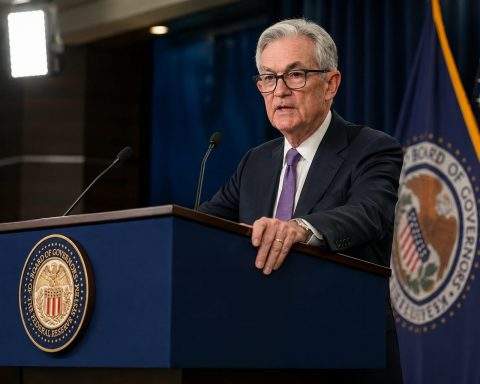
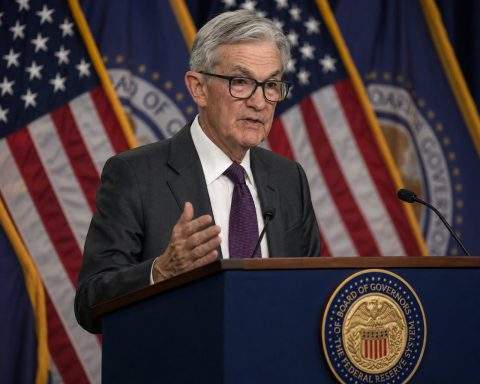
Since then, Chair Jerome Powell has stayed mostly away from live commentary on the economy. In a December 1 speech at Stanford’s Hoover Institution, Powell explicitly said he would not address current economic conditions or monetary policy, underscoring the central bank’s typical quiet period in the run‑up to a key meeting.
Outside of monetary policy, the Fed this week issued two notable operational announcements:
- New 2026 pricing for payment services (checks, ACH, instant payments and wholesale services).
- A request for public input on the future of the Fed’s check services, including whether to invest in or wind down check‑processing infrastructure as check usage declines and fraud rises.
Those moves won’t directly change interest rates, but they matter for banks’ costs and the broader payments landscape.
Economist forecasts: Strong consensus for a December cut, but deep division behind it
A new Reuters poll of 108 economists, conducted from November 28 to December 4, shows a powerful consensus that the Fed will indeed cut rates next week:
- 82% (89 respondents) expect a 25‑basis‑point reduction at the December 9–10 meeting, which would take the target range down to 3.50%–3.75%.
The same survey reveals several key themes:
- The economists’ view lines up with rate‑futures pricing, which implies roughly an 85% chance of a cut.
- Yet Fed officials themselves are sharply split: as many as five of the 12 voting members have publicly signaled opposition to further cuts.
- Median forecasts see the fed funds rate around 3.00%–3.25% by end‑2026, implying two additional cuts next year, but there is no clear majority on exact timing.
- The poll expects the Fed’s preferred inflation gauge, PCE, to stay above 2% through 2027, with growth slowing from about 3.0% in Q3 to 0.8% in Q4 and averaging roughly 2% in both 2025 and 2026.
Other major institutions broadly agree that another cut is likely but highlight the uncertainty behind it:
- Goldman Sachs Research still forecasts a December cut, even after Powell sounded more cautious in his October press conference. They see “risk‑management” cuts continuing, followed by two more 25‑bp cuts in March and June 2026, bringing the policy rate down to 3.00%–3.25%. Goldman Sachs+1
- Goldman argues that inflation, excluding one‑off tariff effects, is now close to the 2% target, while labor‑market weakness “is genuine” enough to justify further easing. Goldman Sachs+1
- By contrast, economists at RSM US note that while the forward market assigns a roughly 96% probability to a December cut, their policy models suggest it might be prudent to pause further cuts until the Fed has more clarity on the economic damage from the recent 43‑day government shutdown, which disrupted key data.
In other words: the bulk of professional forecasters expect a cut, but beneath that apparent consensus is a genuine debate over whether the Fed is risking an inflation flare‑up or doing just enough to protect a cooling job market.
What markets are pricing right now
Financial markets are, if anything, more confident than economists that the Fed will act next week.
- Fed‑funds futures and related tools (like CME’s FedWatch) put the odds of a 25‑bp cut at around 85%–90% as of Friday morning.
- Traders are also pricing 2–3 additional cuts in 2026, according to LSEG data cited by Reuters and other outlets.
That expectation is showing up across asset classes:
- The U.S. dollar index is hovering near a five‑week low around 99, down about 0.4% on the week, as investors position for lower U.S. rates.
- Global equities are on track for a second straight week of gains, with European benchmarks higher and U.S. stock futures pointing to modest gains, helped by softer yields and optimism about further easing.
- Treasury yields have drifted lower at the front end of the curve: two‑year yields are near 3.53%, while the 10‑year sits around 4.11%, as markets anticipate a lower policy rate path but still‑restrictive longer‑term borrowing costs.
- Commodities like copper and gold have rallied, with copper hitting record highs and gold near historic peaks, partly on the expectation of easier Fed policy.
A fresh FXStreet/Saxo Bank analysis published today characterizes the upcoming move as a “careful cut” rather than a victory lap. Their base case:
- A 25‑bp reduction to 3.50%–3.75%,
- Coupled with a hawkish message emphasizing data‑dependence and not pre‑committing to an aggressive cutting cycle in 2026.
They see the Fed shifting from “restrictive and rising” to “restrictive but gently easing,” keeping financial conditions easier without signaling a return to ultra‑cheap money.
Inflation backdrop: Nowcasts point to ~3% prices, still above target
The tug‑of‑war between inflation and growth is at the heart of next week’s decision.
The Cleveland Fed’s Inflation Nowcasting model, updated daily, currently estimates: Cleveland Fed
- December 2025 month‑over‑month inflation (PCE): about 0.27% headline and 0.24% core.
- Year‑over‑year inflation for December: roughly 2.9% headline PCE and 3.0% core PCE, with similar readings for CPI.
- Q4 2025 annualized inflation: around 3.0% on both headline and core measures.
Taken together, these figures suggest that inflation has come down significantly from its peaks but remains persistently above the Fed’s 2% goal.
On the labor side:
- The Reuters economist poll expects economic growth to slow sharply in Q4, reflecting softer demand and the lingering impact of the shutdown, but not an outright recession.
- Weekly jobless claims have recently fallen to their lowest levels in about three years—though data around the Thanksgiving holiday can be noisy—reinforcing the picture of a cooling but not collapsing labor market.
This combination—inflation near 3% and a labor market that is no longer red‑hot but still resilient—helps explain why:
- Doves see room for further cuts to insure against labor‑market weakness, and
- Hawks worry that easing too much, too quickly could entrench inflation above target.
New political overhang: Kevin Hassett and the future of Fed leadership
Adding a fresh layer of uncertainty to Fed policy beyond 2025 is the mounting speculation about who will lead the central bank once Jerome Powell’s term as chair expires in May 2026.
This week:
- President Donald Trump said he plans to announce his nominee for Fed chair in early 2026, keeping investors on alert and explicitly leaving the door open to multiple contenders.
- Multiple outlets, including Al Jazeera, the Financial Times, and others, report that Kevin Hassett, head of the National Economic Council and a longtime Trump adviser, is currently seen as the frontrunner.
Hassett is a conservative economist best known for his work on tax and investment issues. Recent coverage and interviews suggest that:
- He has argued there is little reason to stop interest rates from falling further,
- He has downplayed ongoing tariff‑related inflation as largely one‑off, and
- He has floated ideas like 50‑year mortgages, which could structurally change housing finance and long‑term rate dynamics.
This has prompted unease among some investors and Wall Street banks, who worry that a Hassett‑led Fed might face:
- Heightened political pressure to deliver rapid rate cuts aligned with the administration’s growth and market goals, and
- Potential strains on the Fed’s perceived independence, with some analysts drawing parallels to the UK’s brief “mini‑budget” turmoil in 2022. Financial Times+1
At the same time, it’s important to note:
- No nominee has been formally named,
- Any Fed chair must be confirmed by the Senate, and
- The Fed is governed by a committee (the FOMC), not a single individual, which provides institutional checks even under a more dovish chair.
For now, markets are mostly focused on next week’s decision, but the looming leadership transition is already influencing how traders think about the long‑term path of U.S. interest rates and the dollar.
What it means for households and savers
While next week’s decision is fundamentally about macroeconomic goals—maximum employment and stable prices—it will show up quickly in everyday financial products.
Savings accounts and CDs
As Investopedia notes, what the Fed does with its benchmark rate is a primary driver of savings and CD yields at banks and credit unions.
- After cuts in September and October, peak savings and CD rates have already drifted down from their 2023–2024 highs.
- A December cut would add more downward pressure on high‑yield savings and new CD offerings, especially at online banks that closely track the fed funds rate.
However, rates are still historically attractive:
- Top savings accounts continue to offer mid‑4% APYs, with a handful near 5%, and leading CDs around 4.0%–4.5% across a range of maturities.
If the Fed does cut again and signals more easing in 2026, those yields are likely to gradually decline over time, especially for new accounts.
Borrowing rates
Fed moves don’t control fixed mortgage rates directly, but they strongly influence short‑term borrowing costs and overall financial conditions:
- Lower policy rates typically ease credit‑card APRs, home‑equity lines, and auto‑loan rates, though lenders may lag in passing on cuts.
- The recent drop in Treasury yields has already pulled many mortgage rates down from their highs, with 30‑year rates drifting into the low‑6% area according to bank and rate‑survey data.
As always, how much of the Fed’s move you feel will depend on your lender, credit score, and the broader market backdrop—not just the headline rate decision.
(Nothing here is individualized financial advice. For personal decisions, it’s wise to consider your own situation and, if needed, consult a qualified advisor.)
What to watch between now and the Fed decision
Even in the quiet period, several key milestones will shape expectations over the coming days:
- PCE inflation data (later today)
Markets expect the core PCE price index for September (released with a lag) to rise about 0.2% month‑on‑month, keeping the annual rate near 2.9%. A major upside or downside surprise could nudge rate‑cut odds, but most analysts think it would take a large shock to derail a move that’s already heavily priced. - December 9–10 FOMC meeting
The December meeting is paired with a fresh Summary of Economic Projections (SEP), meaning:- Updated Fed forecasts for growth, unemployment, and inflation,
- A new “dot plot” showing where each policymaker expects the policy rate to be over the next several years. Federal Reserve
- Confirming or pushing back against the idea of multiple 2026 cuts, and
- Revealing how divided the FOMC truly is after October’s contentious decision.
- Data after the Fed: Jobs and CPI
The next jobs report (December 16) and CPI release (December 18) will land after the meeting, but will be crucial for whether today’s talk of “insurance cuts” evolves into a more extended easing cycle, or whether the Fed hints at a pause after December. Goldman Sachs+2RSM US+2
The bottom line
As of December 5, 2025:
- Markets and economists overwhelmingly expect a 25‑bp rate cut next week, taking the fed funds target range down to 3.50%–3.75%.
- Inflation is much lower than its peak but still hovering near 3%, while growth is slowing and labor markets are cooling rather than collapsing.
- The Fed itself appears deeply divided, with a sizable minority worried about cutting further while inflation is above target.
- Looking beyond next week, the looming decision over Powell’s successor—and the prospect of Kevin Hassett as a more aggressively dovish Fed chair—has become a new and important driver of long‑term rate expectations and dollar sentiment.
For now, the most likely scenario is a “careful cut”: one more small step toward easier policy, wrapped in cautious language that stresses the Fed is not declaring victory on inflation and is not yet committed to a rapid easing cycle.
If you follow Fed policy for your portfolio, your business, or your household budget, next Wednesday’s announcement and Powell’s press conference will be the last major monetary‑policy story of 2025—and could set the tone for markets well into 2026.
Related articles: Interest Rates