On 6 December 2025, three major space-weather stories are converging in Earth’s skies:
- A giant sunspot complex, comparable in size to the region that triggered the 1859 Carrington Event, is now squarely facing our planet.
- A strong geomagnetic storm that peaked at G3 earlier this week has eased, but NOAA still expects fresh bouts of minor storming from a recent solar eruption.
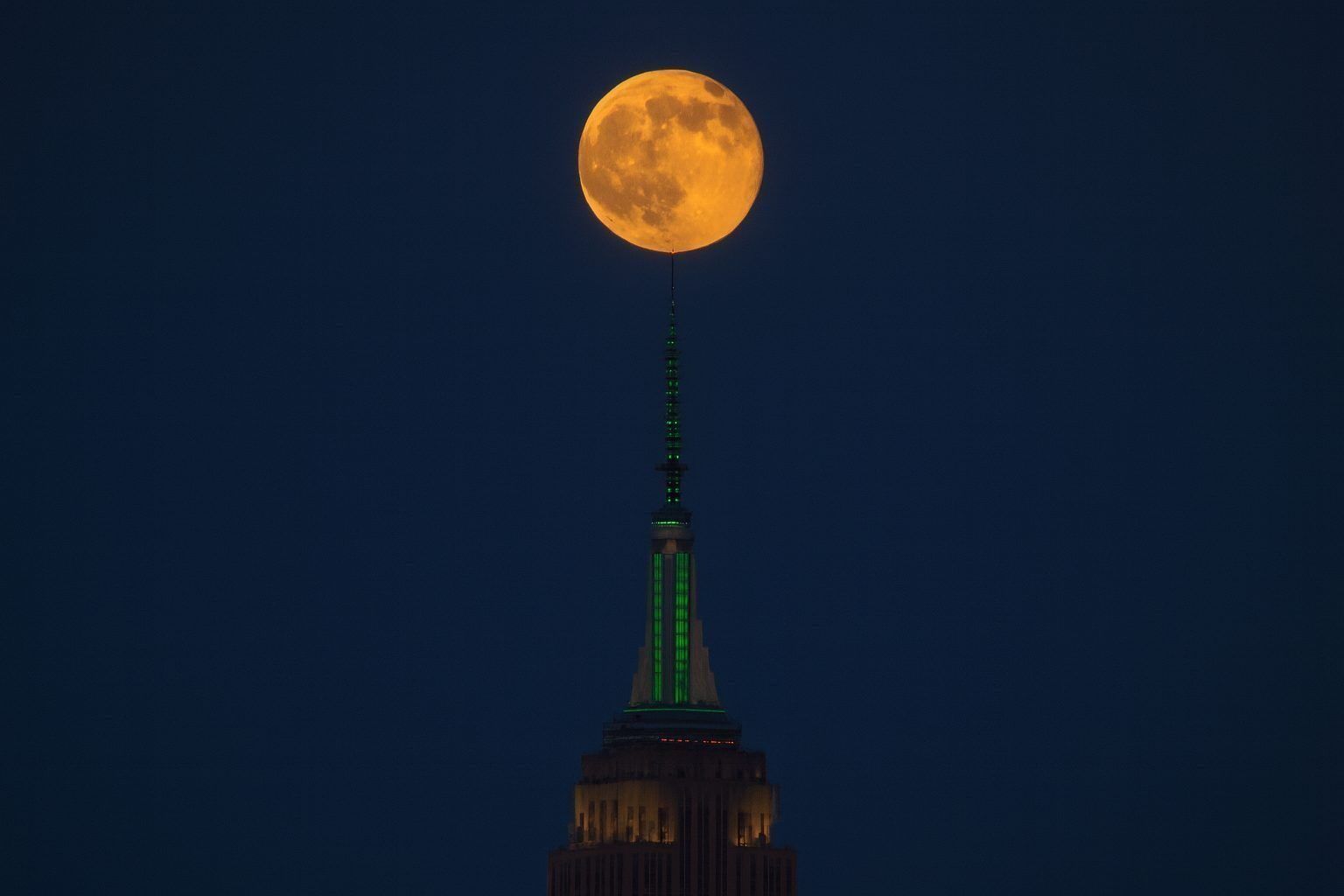
- Overhead, December’s Cold Moon — the last and highest supermoon of 2025 — is still blazing in the night sky after reaching full phase on 4 December.
Here’s what that all means for power grids, satellites, northern lights hunters and anyone heading outside to enjoy the sky.
1. The giant AR 4294–4296 sunspot complex facing Earth
A sunspot almost as big as Carrington’s
A new sunspot complex designated AR 4294–4296 has rotated onto the Earth-facing side of the sun and is now directly pointed at our planet.
Key facts:
- The complex is made up of at least two major regions, AR 4294 and AR 4296, whose magnetic fields are intertwined.
- Together, their dark umbrae and surrounding penumbrae cover roughly 90% of the area of the sunspot sketched by British astronomer Richard Carrington before the 1859 superstorm — close enough in scale to invite direct comparison.
- The group first appeared on the far side of the sun, where NASA’s Perseverance rover on Mars spotted it about a week before it rotated into Earth’s view around 28 November.
Space-weather monitors describe AR 4294–4296 as one of the largest sunspot groups of the past decade, with a magnetic configuration capable of producing high‑end X‑class solar flares, the most powerful category on NOAA’s scale.
Why “Carrington-class” doesn’t mean “Carrington repeat”
The comparison to the Carrington Event matters because that 1859 storm remains the strongest solar storm ever directly observed. A flare estimated around X45 in strength launched a massive coronal mass ejection (CME) that sparked auroras in the tropics and set telegraph lines on fire.
Modern simulations suggest that a storm of similar magnitude today could:
- Knock out a large fraction of satellites in orbit
- Cause prolonged power-grid damage
- Produce global economic losses well into the trillions of dollars
However, size alone doesn’t guarantee disaster:
- Flares and CMEs depend on how twisted and unstable a sunspot’s magnetic fields become, not just how big it is.
- Some large regions stay relatively quiet; others erupt repeatedly.
So far, AR 4294–4296 has been more threatening on paper than in reality. It has the complexity and energy to produce major flares, but there is no evidence yet of an imminent, truly extreme event on par with Carrington.
Scientists expect the region to remain visible for several more days. If it survives an entire solar rotation, it could reappear near Christmas for a “round two” encounter later this month. Live Science
2. From X‑class flare to G3 geomagnetic storm — and what’s next
The 1 December X1.9 flare and radio blackouts
This week’s space‑weather chain reaction began before AR 4294–4296 came fully into view.
On 1 December, a separate region, AR 4299, unleashed a powerful X1.9‑class solar flare. Satellites observed the burst at the start of the month, and the resulting blast of X‑rays caused R3 (strong) radio blackouts across Australia and parts of Southeast Asia for a short period.
The flare also launched a coronal mass ejection. Most of that CME appears to have missed Earth, but a glancing blow contributed to the disturbed conditions that followed.
G2 watch upgraded to G3 warning
As multiple sunspot regions rotated into view and a coronal hole high‑speed solar wind stream aligned with Earth, NOAA’s Space Weather Prediction Center (SWPC) issued a G2 (Moderate) geomagnetic storm watch for 3–4 December.
Conditions escalated faster than expected:
- By the afternoon of 3 December, SWPC observed G3 (Strong) geomagnetic storm levels, with Kp values reaching the range associated with significant auroral activity.
- At 3:31 p.m. EST, the agency upgraded to a G3 warning as the leading edge of a coronal hole high‑speed stream intensified the disturbance.
Local and national outlets reported that, at the peak, northern lights were potentially visible from around 15–22 U.S. states, stretching from traditional aurora zones in Alaska and the Upper Midwest down toward states like New York, Wisconsin and parts of the northern Plains, depending on cloud cover.
Today’s outlook: G1 storms likely from 7–8 December
By 6 December, the immediate G3 storm has subsided. NOAA’s latest 3‑Day Space Weather Forecast, issued at 03:15 UTC on 6 December, paints a calmer but still active picture:
- The strongest geomagnetic activity observed over the past 24 hours reached Kp 3 (below storm level).
- The greatest expected Kp between 6–8 December is 5, which corresponds to G1 (Minor) geomagnetic storm strength.
- Periods of G1 storming are considered likely on 7–8 December, driven by the anticipated glancing arrival of the CME associated with the 4 December eruption.
- Solar radiation storms (S1 or higher) remain only a slight 10% risk, and no such events have been observed in the last day.
- Radio blackouts in the R1–R2 (Minor–Moderate) range are considered likely (around 70% chance) through 8 December, thanks to the continued chance of M‑ and smaller X‑class flares, with roughly a 15% chance of stronger R3 events.
In practical terms, that means:
- High‑latitude areas may see more auroras over the weekend.
- Occasional HF radio and GPS disruptions are possible, especially on the sunlit side of Earth during flares.
- Power‑grid operators and satellite controllers are on watch but not in crisis mode.
3. The Cold Moon: last and highest supermoon of 2025
When and why this supermoon is special
While the sun stirs up space weather, the moon is putting on a show of its own.
December’s full moon — known widely as the Cold Moon — reached full phase at 6:14 p.m. EST on 4 December 2025, coinciding closely with perigee, the point where the moon is nearest Earth in its orbit.
Because of that timing, this full moon qualifies as a supermoon:
- It appears roughly 10–14% larger in apparent diameter than the smallest full moons.
- Its brightness can be up to 30% higher than a so‑called “micromoon,” when the full moon occurs near apogee (its farthest distance from Earth). Live Science+2EarthSky+2
Several outlets and astronomical calendars confirm that this Cold Moon is the last full supermoon of 2025, following earlier supermoons in October and November.
What makes this particular full moon stand out even more is its height in the sky:
- As the Northern Hemisphere approaches the winter solstice on 21 December, the sun rides very low at midday.
- The full moon, sitting opposite the sun, climbs to its highest nighttime track of the year.
That’s why observers are reporting the Cold Moon riding unusually high and bright above the horizon — a classic hallmark of December full moons.
Where the name “Cold Moon” comes from
The term Cold Moon is commonly attributed to Mohawk naming traditions and is echoed in compilations such as The Old Farmer’s Almanac. Other Indigenous and historical names for this moon include:
- “Frost Exploding Trees Moon” (Cree)
- “Moon of the Popping Trees” (Oglala)
- “Moon When the Deer Shed Their Antlers” (Dakota)
- “Winter Maker Moon” (Western Abenaki)
- “Long Night Moon” (Mohican and some European sources)
All point to the same reality: in the Northern Hemisphere, December is defined by long, cold nights — exactly the backdrop for this week’s supermoon.
Supermoon vs. auroras and meteors
The Cold Moon is bright enough to wash out fainter night‑sky phenomena:
- A recent regional forecast noted that its glare is already complicating early viewing of the Geminid meteor shower, which peaks around 12–13 December but has meteors visible all month.
- The same logic applies to auroras: under a nearly full moon, you typically need a stronger geomagnetic storm to see vivid colors with the naked eye at mid‑latitudes.
In other words, the supermoon is both friend and foe: it’s a beautiful sight in its own right, but it will make any subtle northern lights or dim meteors harder to spot.
4. How dangerous is the current space weather?
Where we are on the NOAA scales
On NOAA’s geomagnetic storm scale:
- The Carrington Event is estimated to have reached G5 (Extreme) territory.
- The November 2024 storm that produced auroras as far south as Florida reached G4 (Severe).
- This week’s storm briefly hit G3 (Strong) on 3 December, and the coming days are forecast to feature G1 (Minor) conditions at most.
On the radio blackout scale, the X1.9 flare on 1 December triggered R3 (Strong) conditions over parts of Australia and Southeast Asia, temporarily disrupting HF communications and some aviation and maritime links in those regions.
None of this reaches the threshold that would warrant widespread public emergency measures, but it is enough to:
- Force satellite operators to adjust orbits or temporarily shut down sensitive systems
- Prompt power‑grid operators to watch for geomagnetically induced currents
- Cause intermittent issues for radio users, GPS‑dependent operations and polar‑route flights
These are known, manageable risks for space‑weather‑aware industries, not signs of civilization‑level disruption.
How it fits into the current solar cycle
The cluster of events we’re seeing this week is part of a broader pattern:
- Scientists have confirmed that the sun is in the most active part of its roughly 11‑year solar cycle, known as solar maximum.
- 2024 produced more X‑class flares than any year since modern records began in 1996, including eruptions that generated a G4 storm in November 2024 and an even more intense event in May that drove unusually widespread auroras.
Against that background, large sunspots and frequent storm watches are expected, not exceptional. What is unusual this week is the timing: a Carrington‑scale sunspot in size, an elevated but not extreme geomagnetic storm, and a spectacular supermoon are all lining up at once.
5. What this means for you — and how to watch safely
Everyday impacts
For most people, the coming days are likely to pass without obvious problems. The effects you might notice include:
- Slightly degraded GPS accuracy at times
- Sporadic HF radio or shortwave interference
- Occasional “bars dropping” for certain long‑distance communications, especially on polar routes
If you work in aviation, satellite operations, power‑grid management or long‑distance radio, your organization will already be receiving detailed SWPC alerts and adjusting operations as needed.
There is currently no indication that AR 4294–4296 is about to trigger a Carrington‑level storm, though that risk cannot ever be reduced to zero during solar maximum. The most realistic scenario in the short term is more G1–G2‑level disturbances, not a global blackout.
For aurora hunters
If you’re chasing northern lights over the next few nights:
- Watch the Kp index and SWPC dashboards, not just headlines. Values of Kp 5–6 (G1–G2) greatly improve aurora chances at high latitudes; mid‑latitudes may need Kp 6+ and darker skies.
- Go north and go dark. Light pollution plus a bright moon will erase all but the strongest auroras.
- Use a camera or phone night mode; long exposures reveal colors and structure that eyes may only see as faint gray.
For supermoon watchers
To make the most of the Cold Moon while it’s still almost full:
- Catch moonrise: the moon looks most dramatic when it’s low, near the horizon, with buildings or trees for scale. Check your local moonrise time and be in place about 10–15 minutes early.
- Look toward Taurus, near the bright star Aldebaran and the Pleiades cluster, for a pleasing binocular view.
- Expect the moon to remain strikingly bright for at least a couple more nights, even though the moment of full phase has passed.
Never look at the sun without proper protection
If you’re tempted to point binoculars or a telescope at AR 4294–4296:
- Never look directly at the sun with the naked eye, through binoculars or through an unfiltered telescope.
- Use only certified solar filters designed for safe viewing, placed in front of the telescope or binocular objective, not at the eyepiece.
- Alternatively, consider indirect viewing methods such as solar projection recommended by reputable observatories and astronomy clubs.
Bottom line
As of 6 December 2025:
- A giant, magnetically tangled sunspot complex (AR 4294–4296) is facing Earth and has the potential to unleash major solar flares, but no catastrophic event is currently underway.
- The G3 storm that peaked on 3 December has faded, and NOAA now expects mainly G1‑level geomagnetic storms on 7–8 December from a glancing CME, plus a continued chance of modest radio blackouts.
- The Cold Moon supermoon, last and highest full moon of 2025, is still dominating the night sky, offering a brilliant backdrop — and plenty of glare — for any auroras and meteors that manage to break through.
For skywatchers, it’s a rare confluence: a restless sun, a glowing supermoon and a magnetosphere humming with energy. For everyone else, it’s a reminder that space weather is an everyday factor in our wired world — mostly invisible, occasionally inconvenient, and endlessly fascinating.