Santa Monica’s tiny, famously controversial airport is getting a big new role in the age of “private jet–style” flying for the masses. On December 2, the City of Santa Monica approved a commercial operations permit and three‑year lease for JSX, clearing the way for all‑business‑class ATR 42 turboprop flights from the airport through November 30, 2028—just one month before the airfield is scheduled to close permanently. Santa Monica+1
At the same time, JSX and rival Aero are making headlines nationally for offering private‑jet‑like perks—lounge‑style terminals, 20‑minute check‑in, and free drinks—for fares starting around $149 one way, a model now drawing both devoted fans and intense scrutiny.
Santa Monica approves JSX—but keeps the 2028 closure date
According to a city press release, Santa Monica has issued JSX a Commercial Operations Permit (COP) and executed a lease that allows the carrier to operate at Santa Monica Airport (SMO) through November 30, 2028. Officials stress that this does not change the city’s long‑promised plan to shut the airport at midnight on December 31, 2028, under a 2017 consent decree with the Federal Aviation Administration (FAA).
City staff and legal counsel say they conducted a multi‑disciplinary review of JSX’s proposal, looking at:
- Aircraft safety and runway operations – JSX is federally certified to operate its 30‑seat ATR 42‑600 at SMO. The runway is 3,500 feet with additional safety areas at each end, and the city maintains an aircraft rescue and firefighting vehicle staffed by Santa Monica Fire Department personnel.
- Noise and environmental impact – Noise modeling and historic monitoring data indicate community noise levels remain inside airport boundaries, even during busier periods when the runway was longer. JSX must comply with a 95 dBA single‑event noise cap and all local environmental standards.
- Traffic and security – JSX operates as a public charter under 14 CFR Part 380 and is required to follow TSA‑approved security procedures. The city reviewed expected ground traffic and says it will continue monitoring access and parking impacts over the lease term.
Officials also say federal law and the 2017 consent decree prevent Santa Monica from denying access to qualified aviation users who meet established standards. Allowing JSX to operate on a limited‑term lease, they argue, actually protects the city’s legal ability to close the airport on schedule.
In a companion report, the Santa Monica Daily Press notes that JSX filed its application in September, and that the city concluded a fresh environmental impact study wasn’t required because the permit does not constitute a completely new project or a major expansion in use.
JSX’s new ATR 42: small turboprop, big ambitions
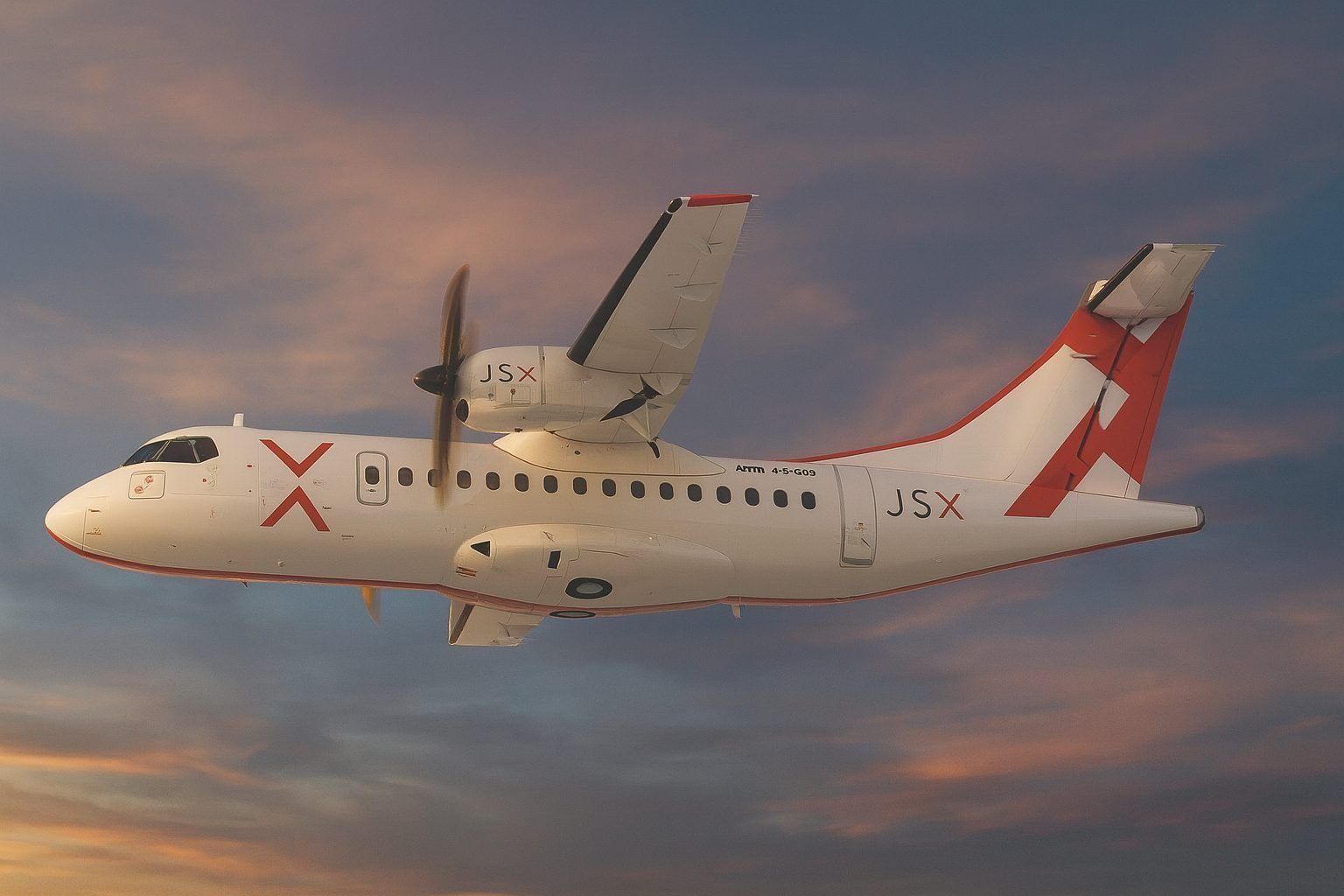
JSX is using Santa Monica’s approval to debut an entirely new aircraft type for the company: the ATR 42‑600 turboprop, configured with just 30 spacious seats and an upscale interior that aligns with its semi‑private branding.
Key details from recent fleet coverage and schedule filings:
- The first ATR 42‑600 joined JSX in November 2025 after previously flying for Silver Airways. It has been refitted with business‑style seating and ATR’s HighLine cabin.
- JSX plans to operate at least four ATR 42‑600s, with a broader letter of intent covering up to 25 ATR turboprops (a mix of ATR 42 and ATR 72) configured with 30 seats each.
- Turboprops burn roughly half the fuel of similar regional jets and are about 30% cheaper to operate, making them attractive for shorter, thin routes and noise‑sensitive airports.
- According to route‑planning data, the ATRs could unlock access to more than 1,000 airports across the U.S., many currently used only by private and corporate traffic.
Santa Monica is the first showcase for this strategy. Multiple aviation outlets report that JSX will launch once‑daily ATR service between Santa Monica (SMO) and Las Vegas (LAS) on December 19, 2025, with fares advertised from around $149 one way, including checked bags, snacks, and drinks.
For JSX, the appeal is clear: Santa Monica is a wealthy catchment area with horrible traffic to LAX, a short runway ideal for turboprops, and a high‑visibility stage for the brand’s “last‑mile” airport strategy.
Semi‑private skies: JSX and Aero sell a private‑jet vibe for less
JSX’s move into Santa Monica lands just as semi‑private carriers are having a cultural moment.
A widely shared New York Post feature this week paints a vivid picture: a 20‑something traveler skipping packed terminals and TSA lines by heading to a private terminal at Teterboro, paying a mid‑three‑figure fare to fly JSX with leather seats, complimentary cocktails, and a cabin of roughly 20 fellow passengers—at prices that sometimes rival or modestly exceed domestic first class.
A few key data points from recent coverage and analyses of JSX’s business:
- JSX launched in 2016 and now operates roughly 140 public charter flights per day to around 28 destinations across the U.S. and Mexico.
- Its Embraer ERJ‑135/145 jets are refitted with just 30 seats, generally in a 1‑1 or 1‑2 layout, with legroom similar to domestic first class.
- Passengers can typically arrive 20–30 minutes before departure, check bags at the counter, and board via a small lounge rather than a main terminal.
- Fares commonly start in the $150–$300 one‑way range on shorter routes, rising above $1,000 on peak or long‑haul sectors, positioning JSX between commercial first class and full private charter.
- On board, JSX markets a consistently premium experience: free snacks and alcoholic beverages, two checked bags included, and free high‑speed Starlink Wi‑Fi—JSX was an early launch customer for the SpaceX connectivity product.
Aero, meanwhile, plays at a more overtly luxury end of the same niche. The company operates heavily customized Embraer ERJ‑135s with just 16 seats and a design‑heavy cabin aesthetic. Tickets on many routes, such as London–Nice or Aspen–Los Angeles, often start around or above $1,200 per person each way, according to recent reports.
Both brands pitch a similar value proposition: “by‑the‑seat private” flying that trades the chaos of big hubs for boutique terminals, while remaining dramatically cheaper than chartering an entire jet.
Local backlash: CEQA lawsuit targets JSX permit
Not everyone is excited about semi‑private flights from Santa Monica’s compact, residentially surrounded runway.
On November 21, a newly formed group called Measure LC Defense, along with local residents, sued the City of Santa Monica in Los Angeles Superior Court. The suit challenges the city’s October approval of JSX’s commercial operations permit, alleging violations of the California Environmental Quality Act (CEQA).
According to the complaint and subsequent coverage:
- Plaintiffs argue that introducing daily scheduled public charter flights represents a major change from Santa Monica’s historic role as a general aviation field dominated by training and ad‑hoc charters.
- JSX initially plans to operate at least six flights per day, with its CEO reportedly expressing a goal of up to nine daily departures over time.
- The lawsuit claims JSX’s operations could more than double monthly jet fuel consumption at SMO—from about 30,000 gallons to roughly 66,000 gallons—with associated increases in emissions of carbon and ultrafine particles into nearby neighborhoods.
- Petitioners say the city improperly relied on multiple CEQA exemptions, including a “ministerial” classification and a categorical exemption for negligible expansion of existing use, despite what they view as unusual safety and environmental circumstances.
- They also highlight concerns about the airport’s shorter‑than‑standard runway protection zones and limited firefighting resources compared with certificated commercial airports.
The plaintiffs are seeking a court order rescinding JSX’s permit and an injunction blocking operations until a full environmental review is completed.
City officials, in turn, point back to the 2017 consent decree, arguing they have limited discretion to deny access to a qualified operator like JSX and that refusing such permits could undermine the legal framework that guarantees the airport’s closure in 2028.
Why turboprops + Santa Monica are strategically powerful for JSX
From an airline strategy perspective, Santa Monica is exactly the sort of airport turboprops are built for—and exactly the kind of market JSX targets.
Short runway, wealthy catchment area
Santa Monica’s runway was shortened in 2017 from 4,973 feet to 3,500 feet after decades of conflict with neighbors. That effectively shut out many larger jets but still works well for modern turboprops like the ATR 42‑600, which are optimized for short‑field performance.
Couple that with:
- Dense, high‑income neighborhoods in Santa Monica, Brentwood, and the Westside
- Gridlocked traffic to LAX, Burbank, or Long Beach
- Travelers willing to pay a premium to avoid big‑airport hassles
…and JSX sees an opportunity to “harvest” high‑yield demand during the airport’s final three years of life.
Turboprops as a growth engine
JSX has already built a loyal following with its Embraer jets out of secondary airports like Burbank, Concord, Carlsbad, and Scottsdale. Adding turboprops lets it push deeper into niche markets that jets struggle with, such as:
- High‑elevation airports (e.g., Telluride, Truckee)
- Short‑runway mountain or resort strips
- Airports that can’t or won’t support traditional scheduled airlines but will accept smaller charters
The economics of the ATR also support JSX’s positioning as a premium yet somewhat accessible product: lower fuel burn and operating costs give the carrier more room to offer competitive fares while maintaining the perks—Starlink Wi‑Fi, inclusive baggage, and generous legroom—that differentiate it from legacy airlines.
What passengers can expect flying JSX from Santa Monica
For travelers in and around Los Angeles, here’s what the Santa Monica–Las Vegas service is expected to look like based on JSX’s typical model and current filings:
- Private‑terminal experience
- Dedicated hangar/terminal at Santa Monica rather than the main concourse
- Check‑in generally starting 20–30 minutes before departure
- Minimal lines; ID verification and security handled with TSA‑approved charter protocols
- Onboard product
- ATR 42‑600 configured with about 30 reclining seats and enhanced legroom
- 2 checked bags included in the fare (often including bulky items like golf clubs or skis)
- Complimentary snacks and alcoholic drinks
- High‑speed Wi‑Fi via Starlink (where equipped), power outlets, and a quieter‑than‑expected turboprop ride
- Schedule & fares
- Initial once‑daily round‑trip between Santa Monica (SMO) and Las Vegas (LAS) beginning December 19, 2025
- One‑way fares advertised from around $149, with higher pricing likely on peak weekends and holidays
For Westsiders who currently drive to LAX, the time saved just in ground transport and security lines may be as compelling as anything that happens in the air.
What it means for residents and the airport’s future park
Santa Monica Airport has long been at the center of a tug‑of‑war between aviation advocates and neighbors who want the land turned into park space and housing. The JSX decision intensifies that debate rather than settling it.
- For residents, the fear is that semi‑private service will normalize bigger, busier operations in the airport’s final years and lock in higher levels of noise and emissions right up to 2028. The CEQA lawsuit reflects broader worries about precedent and environmental justice in a dense urban neighborhood.
- For the city, officials insist that granting JSX access is the price of staying in compliance with federal law—and therefore the price of retaining the legal right to shut the airport down on schedule and convert it to a large public park.
- For travelers and the broader industry, Santa Monica becomes a high‑profile test case for whether semi‑private carriers can operate responsibly from controversial urban airports, and whether turboprops can make a comeback in a country obsessed with regional jets.
If JSX’s Santa Monica experiment proves popular, expect the company—and competitors like Aero—to push similar concepts at other underused airports, from resort towns to suburban reliever fields.
Key facts at a glance
- JSX permit & lease approved: December 2, 2025
- Lease end date: November 30, 2028
- Santa Monica Airport closure date: Midnight, December 31, 2028 (per 2017 FAA consent decree)
- First ATR 42‑600 Santa Monica–Las Vegas flight: Planned for December 19, 2025
- Initial frequency: 1 daily round‑trip SMO–LAS, with ambitions to build up to 6–9 daily departures over time
- Indicative starting fare: From about $149 one way, including bags, snacks, and drinks
Santa Monica Airport is entering its final chapter—but before the bulldozers arrive to make way for a park, JSX and its ATR 42s are poised to give the airfield an unexpectedly glamorous coda, right as semi‑private flying breaks into the mainstream.