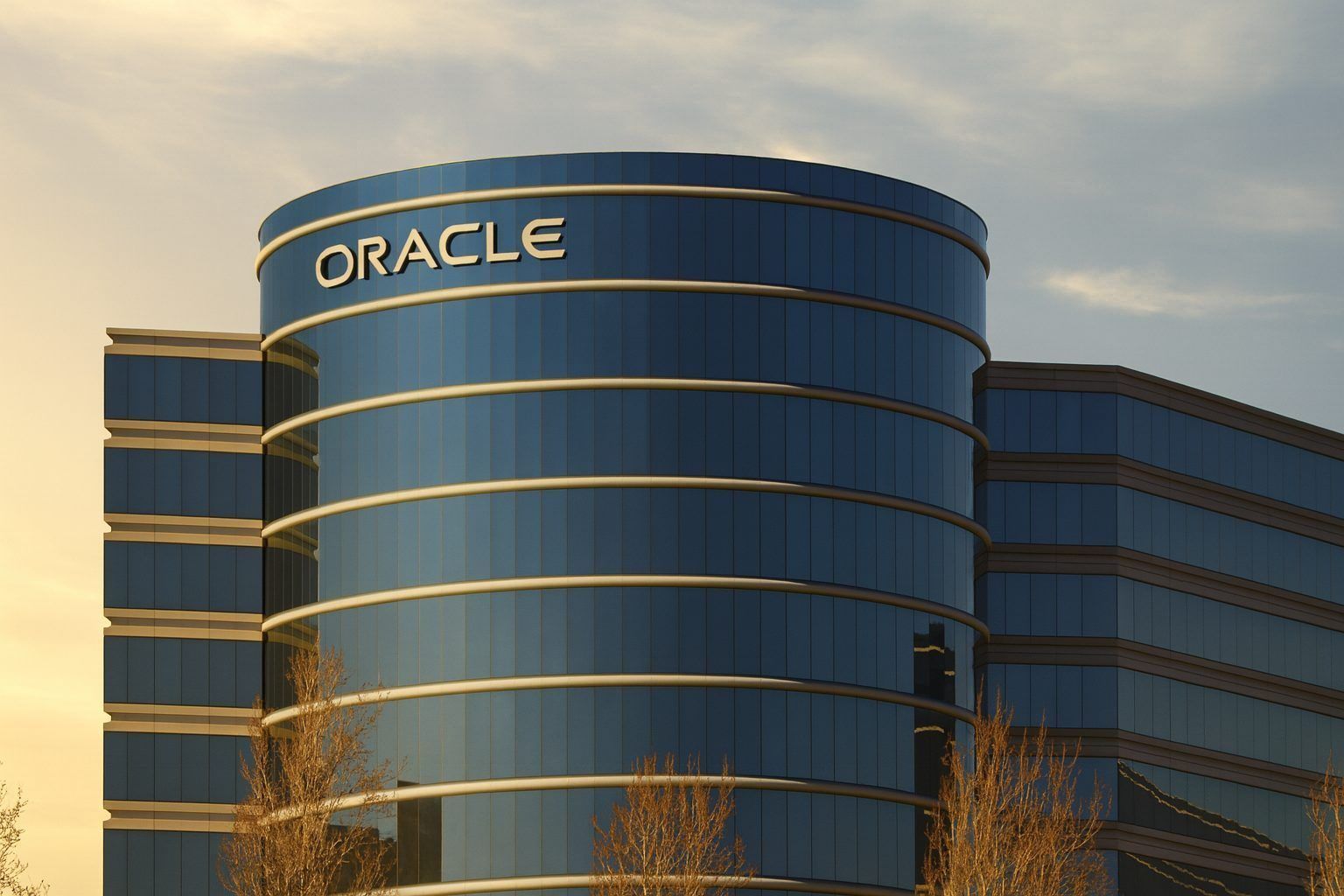

As of the weekend on December 6, 2025, Oracle Corp NYSE:ORCL is back on investors’ radar. The stock closed Friday at about $217.58, up roughly 1.5% on the day and marking its fourth straight session of gains, with trading volume running above its recent average. Even after this rebound, Oracle shares sit about 37% below their 52‑week high around $345.72 set in September, highlighting just how violent the recent pullback has been.
At the same time, Oracle’s role as a key infrastructure partner for OpenAI and other generative‑AI leaders has never been more strategically important – or more heavily debated. With fiscal Q2 2026 earnings due on December 10, 2025, sentiment is split between investors excited about a massive AI cloud backlog and those alarmed by mounting debt and growing competitive risks in AI.
Below is a detailed look at the latest Oracle stock news, forecasts, and analysis as of December 6, 2025, designed for readers following ORCL through Google News and Discover.
Oracle stock today: sharp rebound after a brutal autumn
Friday’s move capped a constructive week for Oracle:
- Price: ~$217.6 per share at the close
- Daily move: +1.5% on Friday, outpacing the S&P 500 and major tech peers
- Streak: Fourth consecutive day of gains
- Volume: Close to 24 million shares traded, above the 50‑day average MarketWatch+2MarketBeat+2
Despite the recent bounce, the damage from the autumn sell‑off is still visible. According to recent coverage, Oracle’s stock is down roughly 35% since October and about 38% from its all‑time high in September, a drawdown driven by worries about AI spending quality, leverage and credit risk.
Performance has lagged broader tech in the short term: over the past month, ORCL has fallen more than 12%, while the broader technology sector and the S&P 500 both posted modest gains.
Yet historically, Oracle has shown a habit of violent swings. Trefis notes that in 2025 the stock surged more than 50% in just two months, and there have been multiple prior periods (2011, 2024) where ORCL rallied over 30% in under two months, underscoring its high‑beta behavior around big narratives.
Earnings countdown: Q2 FY 2026 will test the AI story
Oracle’s next big catalyst is fiscal Q2 2026 earnings, scheduled for Wednesday, December 10, 2025, after the market close, with a conference call at 4:00 p.m. Central Time.
Estimates vary slightly depending on the data provider, but several themes are consistent:
- Earnings per share (EPS):
- Some aggregators (such as Public.com) show consensus Q2 EPS around $1.50.
- Other sources, including MarketBeat and recent Wall Street previews, cite expectations closer to $1.63 per share.
- Revenue:
- FactSet data referenced by Barron’s and other outlets point to around $16.2 billion in revenue, implying mid‑teens percentage growth year‑over‑year, driven by cloud and AI‑related workloads.
- Trend vs prior quarters:
- In Q1 FY 2026 (reported in September), Oracle delivered EPS of $1.47 vs. expectations of $1.35, a solid beat, on steady revenue growth compared with the prior year.
What investors care about most this time is not just whether Oracle “beats” EPS by a few cents, but how the AI cloud narrative evolves:
- OCI growth: Does Oracle Cloud Infrastructure (OCI) sustain the rapid expansion investors have been promised?
- AI backlog conversion: How quickly are huge multiyear AI commitments turning into recognized revenue?
- Margins vs capex: Can the company grow profitably while investing tens of billions in new data center capacity?
- Balance sheet and funding: Will management provide clearer answers on debt, funding for AI build‑out, and free‑cash‑flow trajectory?
After a previous quarter where “headline” metrics like bookings spike drew scrutiny for their composition, many analysts are framing this Q2 call as a credibility test for Oracle’s AI and cloud projections. Barron’s+2Seeking Alpha+2
AI cloud, multi‑cloud, and Oracle’s expanding infrastructure footprint
A big part of the Oracle stock story now lives far from traditional databases and ERP. Over 2025, the company has aggressively positioned itself as a foundational AI infrastructure provider:
Massive AI superclusters with AMD
At Oracle AI World in October 2025, Oracle and AMD unveiled an expanded partnership that would make Oracle the first hyperscaler to offer a publicly available AI supercluster powered by 50,000 AMD Instinct MI450 GPUs, with the initial deployment scheduled for calendar Q3 2026 and further expansion in 2027.
The same announcement highlighted:
- OCI superclusters designed to scale to more than 100,000 AMD Instinct GPUs for AI workloads.
- Architectures optimized for large‑scale training and inference using next‑generation AMD EPYC CPUs and advanced Pensando networking to reduce latency and power usage.
These moves are intended to give Oracle a differentiated, AMD‑centric alternative to Nvidia‑dominated AI clusters at rival hyperscalers.
Distributed cloud and on‑prem AI with OCI Dedicated Region
Also at Oracle AI World, the company announced OCI Dedicated Region²⁵, a more compact form factor that brings 200+ AI and cloud services directly into customer data centers with a smaller physical footprint.
Key points:
- Customers can start with as few as three racks and scale to hyperscale capacity without re‑architecting.
- The platform aims to meet stringent data sovereignty, security and regulatory requirements, while maintaining feature parity with Oracle’s public cloud, including AI services.
This distributed cloud strategy is designed to appeal to governments and regulated industries that want AI in their own data centers while still tapping Oracle’s cloud capabilities.
$2 billion AI and cloud investment in Germany
In July 2025, Oracle announced plans to invest US$2 billion over five years to expand AI and cloud infrastructure in Germany, particularly in its Frankfurt region.
The investment aims to:
- Boost AI training and inference capacity in Europe
- Support EU sovereign cloud requirements
- Serve large industries such as manufacturing, automotive, energy, research, and healthcare with expanded OCI and AI services Oracle
Together, these initiatives explain why Oracle is seen as a serious contender in AI‑era cloud infrastructure, even as questions remain about the profitability and funding of this build‑out.
OpenAI, multi‑cloud and a gigantic AI backlog
Oracle’s AI narrative is anchored in a handful of very large, very long‑term AI contracts:
- Barron’s and other outlets report that Oracle has disclosed or hinted at nearly $500 billion in AI‑related cloud commitments, including a roughly $300 billion, five‑year relationship with OpenAI, plus other hyperscale AI customers.
- A recent Trefis analysis pegs Oracle’s AI‑related backlog at about $455 billion, expecting this to support over 70% growth in OCI in FY 2026, if the company can execute on deployments.
On top of that, a December 2025 Simply Wall St note highlighted how Oracle’s partner Mythics is expanding support for Oracle’s multi‑cloud strategy, enabling Oracle AI Database services to run across Google Cloud, Microsoft Azure, AWS and OCI. This is meant to reduce friction for enterprises adopting Oracle’s AI stack inside existing cloud environments.
However, this concentration on a few huge customers cuts both ways. The same Simply Wall St piece models a scenario where Oracle’s revenue reaches $99.5 billion and earnings $25.3 billion by 2028, requiring about 20% annual revenue growth – an ambitious trajectory that depends heavily on these mega‑deals materializing as planned.
Debt, ratings and why credit analysts are nervous
The other half of the Oracle story in late 2025 is leverage.
Recent Barron’s coverage notes that:
- Oracle has issued roughly $18 billion in new bonds in 2025 to help fund its AI and cloud capex.
- Total debt has swelled to around $105 billion.
- Credit rating agencies have downgraded Oracle’s debt to BBB with a negative outlook, putting it just a step above junk.
- Credit default swaps (CDS) on Oracle have widened significantly, a sign that debt investors are demanding more compensation for perceived risk.
A MarketWatch piece this week added more nuance: while equity analysts are mostly bullish on the AI opportunity, credit analysts (including voices at Morgan Stanley) are worried about:
- Unclear funding plans for the multi‑hundred‑billion‑dollar AI backlog
- Rising lease obligations tied to data centers
- The risk that free cash flow may not keep up with capex and interest costs if AI demand slows or becomes more competitive MarketWatch+1
In other words, even if Oracle’s cloud and AI bets ultimately pay off, the path from here to there matters – especially if the company remains heavily reliant on debt markets to finance infrastructure.
Competition risk: Google Gemini vs. OpenAI – and what it means for Oracle
A separate thread weighing on Oracle stock is the escalation of AI competition.
A recent Barron’s article on Google’s new Gemini 3 AI model describes how its strong reception and rapid user adoption are putting pressure on OpenAI, whose internal response reportedly included a “code red” reprioritization to defend ChatGPT’s position. Barron’s
This has indirect implications for Oracle:
- Oracle’s largest AI cloud commitments are tied to OpenAI and a small set of hyperscale AI players.
- If OpenAI’s revenue growth falls short of the aggressive targets implied by its multi‑hundred‑billion‑dollar cloud deals, the pace of Oracle’s AI infrastructure ramp‑up or utilization could also fall short.
In short, Oracle is leveraged not just to “AI in general,” but to the success of specific AI platforms, notably OpenAI, in a landscape where Google, Chinese rivals like DeepSeek, and others are moving quickly. Barron’s
Oracle stock forecast: how Wall Street sees ORCL now
Despite the volatility and credit concerns, analyst forecasts for Oracle stock remain broadly positive.
Street‑wide 12‑month price targets
Different aggregators show slightly different averages, but all imply sizable potential upside from current levels:
- MarketBeat:
- Average price target: ~$322.73
- High: $400
- Low: $130
- Implied upside: ~48% from around $218.
- StockAnalysis.com:
- Average price target: ~$336.77 from 31 covering analysts
- Implied upside: ~55%
- Consensus rating: “Buy.” StockAnalysis
- TipRanks:
- Average price target: about $350.27, with a range from $175 to $400
- Implied upside: ~60% from recent prices
- Consensus rating: “Moderate Buy” (heavily skewed toward Buy with few Sells). TipRanks
On top of the consensus, several high‑profile analyst calls landed this week:
- Deutsche Bank’s Brad Zelnick reaffirmed a $375 price target, arguing the recent sell‑off is an opportunity and that AI‑driven cloud services, especially the OpenAI work, can justify a near‑90% upside over time.
- Citigroup also set a $375 target in early December, one of the highest on the Street.
- Wells Fargo recently initiated coverage with an “Overweight” rating and a $280 target, framing Oracle as a potential long‑term winner in cloud infrastructure, with market share potentially rising from ~5% to ~16% by 2029 if AI infrastructure growth continues. Yahoo Finance+1
- Other targets highlighted in aggregated data include $315 (Baird), $331 (Stephens), $342 (JMP) and a more cautious $200 (DA Davidson), illustrating the wide dispersion of views.
Independent valuation models echo this bullish tilt:
- Trefis currently sees “fair value” at around $330 per share, a ~50% premium to recent levels. Trefis
- Simply Wall St’s scenario analysis points to a fair value near $342.28, implying roughly 57% upside, albeit under aggressive growth assumptions through 2028.
The bull case vs. the bear case for Oracle stock
Bull case: Oracle as an AI infrastructure powerhouse
Supporters of Oracle stock focus on several pillars:
- Massive AI backlog: Tens or even hundreds of billions of dollars in AI‑related commitments, led by OpenAI, which could drive years of high‑margin cloud revenue if realized.
- Differentiated infrastructure: Deep partnerships with AMD, zettascale superclusters, OCI Dedicated Region²⁵, and a distributed cloud strategy designed for data sovereignty and hybrid deployments.
- Multi‑cloud reach: Oracle databases and AI services that can run across AWS, Azure, Google Cloud and OCI, reducing lock‑in concerns and making Oracle more “plug‑and‑play” for large enterprises. Oracle+1
- High‑margin software base: A still‑lucrative legacy of database and application licenses/subscriptions that can help fund the transition, assuming execution stays disciplined.
In this view, the current pullback reflects short‑term skepticism, while the long‑term upside from AI and cloud more than compensates for leverage and volatility.
Bear case: leverage, concentration and AI execution risk
Skeptics have their own list:
- Heavy debt load: More than $100 billion in debt plus large, ongoing capex requirements – all while free cash flow must compete with dividends, buybacks, and interest payments.
- Customer concentration: A very large portion of Oracle’s AI growth narrative hinges on a small number of hyperscale AI customers, especially OpenAI. If their growth or profitability disappoints, Oracle’s utilization and economics may suffer.
- Intense competition: Google’s latest Gemini models, as well as offerings from Microsoft, Amazon, and emerging AI players, could erode OpenAI’s dominance and the premium economics that Oracle’s AI backlog assumes.
- Execution & transparency: After previous quarters where headline booking numbers needed more context, some investors want clearer disclosure around backlog composition, pricing, and returns on invested capital.
Both narratives can be partially true at the same time, which is why ORCL’s valuation and sentiment have been so volatile in 2025.
What to watch on (and after) December 10
For investors following Oracle stock into the Q2 FY 2026 report, here are the key questions to track:
- OCI and AI growth
- Does OCI revenue growth re‑accelerate, and how much of that is directly tied to generative‑AI workloads?
- Are there concrete updates on ramp‑up timelines for large OpenAI and other AI contracts?
- Backlog and deployment details
- Does Oracle quantify the AI/cloud backlog more clearly (size, duration, mix of customers)?
- Are there signs that backlog is converting into recurring, high‑margin revenue rather than one‑off bursts?
- Capex, debt and credit outlook
- Updated capex guidance for 2026–2027, especially around AI data centers and AMD‑powered superclusters
- Commentary on debt levels, refinancing, and any dialogue with rating agencies
- Multi‑cloud and enterprise adoption
- Evidence that Oracle’s AI Database and distributed cloud solutions (e.g., OCI Dedicated Region, Mythics’ multi‑cloud integrations) are seeing broad enterprise uptake.
- Guidance for FY 2026 and beyond
- How management frames revenue and EPS for the full year and whether that aligns with more bullish sell‑side models that project strong earnings growth into 2027–2028.
Bottom line
On December 6, 2025, Oracle sits at the crossroads of two powerful forces:
- A genuinely transformative opportunity to become a top‑tier AI infrastructure provider, backed by enormous cloud commitments, a deep AMD partnership, multi‑cloud reach and distributed cloud products targeted at data‑sensitive industries.
- A heavily leveraged balance sheet and concentrated AI exposure that leave little room for error if AI demand patterns, competitive dynamics, or credit markets shift.
Most analysts still see meaningful upside for ORCL over the next 12 months, but their models hinge on Oracle turning its AI backlog into profitable, recurring revenue without overstretching its finances.
For readers and investors, Oracle’s Q2 FY 2026 earnings on December 10 will be less about one quarter’s EPS and more about whether management can convince the market that its AI gamble is on a sustainable, well‑funded path.
Disclaimer: This article is for informational and news purposes only and does not constitute investment advice, a recommendation to buy or sell any security, or a substitute for professional financial guidance. Always do your own research or consult a qualified adviser before making investment decisions.
Related articles: NYSE:ORCL