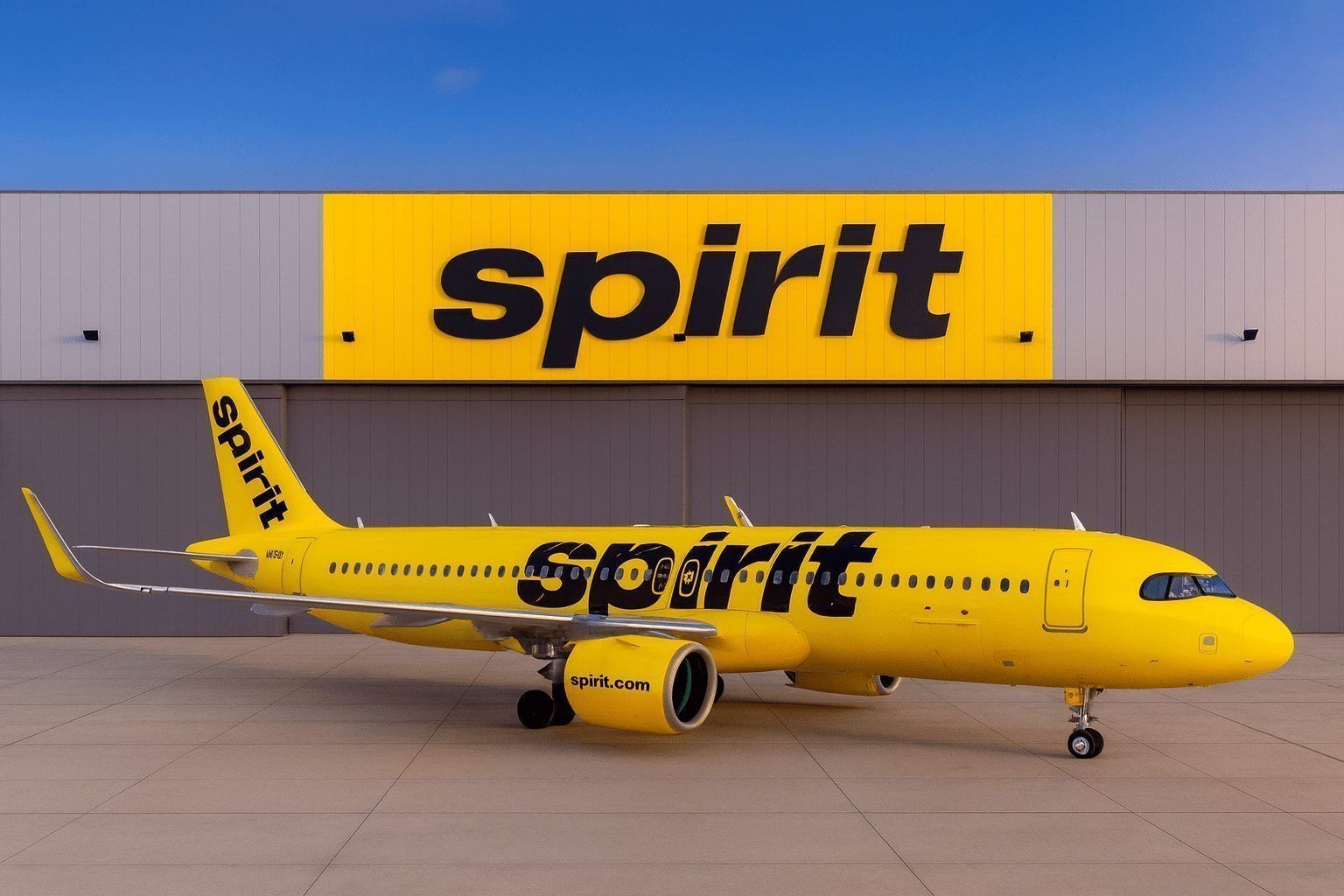

As of December 7, 2025, “Spirit Airlines stock” is no longer a simple NYSE ticker like SAVE. Instead, it sits deep in distressed territory under two over‑the‑counter symbols — SAVEQ and FLYYQ — after two Chapter 11 bankruptcies in barely a year, a massive fleet cut, and a restructuring plan that explicitly says existing shareholders should expect no recovery. Investing.com+5SEC+5Cash App+5
This article walks through the latest news, forecasts and analysis around Spirit’s stock situation as of today, and explains what’s actually trading when investors search for “Spirit Airlines stock.”
1. Which “Spirit Airlines stock” are we talking about now?
There are two main tickers connected to Spirit’s equity story:
- SAVEQ (Spirit Airlines, Inc.) – the legacy Spirit common stock that was delisted from the NYSE in November 2024 and moved to the OTC Pink market.
- FLYYQ (Spirit Aviation Holdings, Inc.) – the stock of the reorganized parent company, originally listed on NYSE American as FLYY in April 2025 and later delisted; it now trades OTC under FLYYQ.
Recent quotes from OTC data providers show:
- SAVEQ changing hands around $0.46–$0.47, down almost 90% over the past year and marked as “inactive” by some databases after the first restructuring. Digrin+3StockAnalysis+3Investing.com+3
- FLYYQ trading roughly around $0.30–$0.32 per share, with thin liquidity and large percentage swings on small absolute moves.
For practical purposes, when market participants talk about “current Spirit Airlines stock”, they increasingly mean FLYYQ, the equity of Spirit Aviation Holdings, Inc., which is the debtor in the second Chapter 11 case filed on August 29, 2025. ir.spirit.com+2Epiq 11+2
2. How Spirit Airlines stock got here: from merger hopes to “double Chapter 11”
The decline in Spirit’s equity has been a multi‑year saga:
- 2022–2023: Spirit pursued a $3.8 billion sale to JetBlue, but a federal judge blocked the deal on antitrust grounds in January 2024; JetBlue formally abandoned the acquisition in March 2024.
- November 2024: Spirit filed its first Chapter 11 case amid years of losses, rising costs and intense ULCC (ultra‑low‑cost carrier) competition. The NYSE delisted SAVE, which moved to OTC as SAVEQ.
- March 12, 2025: Spirit emerged from that first restructuring. It equitized roughly $795 million of funded debt, received about $350 million of new equity, cancelled the old common stock and issued new shares to creditors.
- April 29, 2025: The new parent, Spirit Aviation Holdings, Inc., began trading on NYSE American under ticker FLYY.
Yet the “fresh start” was short‑lived. By mid‑2025, Spirit was still burning cash, facing soft leisure demand, heavy domestic capacity and intense fare pressure. Ratings agencies downgraded its debt deep into junk territory and warned about a high likelihood of default. Reuters+2ratings.moodys.com+2
On August 29, 2025, Spirit Aviation Holdings and its affiliates filed for Chapter 11 again, this time positioning the process as a voluntary restructuring “to redesign network, optimize fleet and realign strategy.” Investing.com+3ir.spirit.com+3ir.spirit.com+3
Shortly after, NYSE American started delisting proceedings and FLYY migrated to the OTC market as FLYYQ, a classic sign of “distressed equity” status. Investing.com+4Investing.com+4ir.theice.com+4
3. The second restructuring: fleet halved, network shrunk, and a warning for shareholders
Fleet: nearly half the aircraft going away
In court presentations and creditor meetings, Spirit has outlined one of the most aggressive downsizing plans ever attempted by a major U.S. airline:
- CFO Fred Cromer told creditors in October that Spirit plans to cut nearly 100 aircraft, almost half its fleet, as part of the new restructuring.
- Court documents and aviation trade reports suggest the airline will retain only 88–106 jets, versus more than 200 pre‑bankruptcy, by rejecting leases on at least 87 aircraft and negotiating a large settlement with its biggest lessor, AerCap.
Analysts at AirInsight describe this as a “radical contraction” rather than a simple trim, noting that Spirit is reshaping itself into a much smaller, potentially more premium‑leaning ULCC with a reworked balance sheet. AirInsight+1
Network: exits from multiple cities and focus on “core” markets
To match the smaller fleet, Spirit is pulling out of several airports:
- As of December 1, 2025, Spirit ceased all operations at Minneapolis–St. Paul International Airport, canceling upcoming flights and offering refunds or rebooking.
- Reports indicate route withdrawals from at least a dozen other cities, including some in Connecticut, Georgia, Idaho and California, contributing to an overall network reduction of around 24% versus last year.
The strategy is to concentrate capacity in markets where Spirit believes it can still generate sustainable margins, while freeing up cash from selling slots and other assets — including its headquarters and LaGuardia slots, according to regulatory filings.
Labor: deep concessions, then a partial reprieve
Labor has been a key lever in Spirit’s turnaround plan:
- In October, Spirit told creditors it would furlough 330 pilots and around 1,800 flight attendants — roughly one‑third of its cabin crew — by December 1, targeting cost savings of about $211 million.
- In November, pilot and flight‑attendant unions agreed to pay and benefit cuts tied to the company’s Chapter 11 restructuring. Pilots will see an 8% hourly pay reduction and retirement contributions cut in half (from 16% to 8%) during 2026–2027, with gradual restoration once the airline hits a 7.5% adjusted pre‑tax margin for three consecutive quarters. Cabin crew accepted similar concessions, protecting base pay and healthcare while giving ground on incentives.
The most recent twist came on December 5, 2025, when Spirit scrapped a plan to furlough up to 365 additional pilots in early 2026 and sharply reduced the number of captains to be downgraded to first officers (from 170 to 25), after updating its staffing models and attrition assumptions. Already‑announced furloughs for around 600 pilots remain in place.
4. What Spirit’s own plan says about the stock: “no recovery” for existing equity
For holders of SAVEQ or FLYYQ, the most important information is buried in Spirit’s SEC filings and bankruptcy disclosures.
In its Q3 2025 Form 10‑Q, Spirit Aviation Holdings states plainly that under its proposed Chapter 11 plan:
“Our existing equity securities will no longer have any value, and holders of such existing equity securities will receive no recovery.” Q4 Capital+1
A November 2025 8‑K and related monthly operating report echoed the same message, noting that the proposed plan “contemplates no recovery of value for holders of the company’s equity securities.” Stock Titan+2Investing.com+2
Independent summaries of those filings — including coverage by restructuring trackers and financial‑news services — likewise describe Spirit’s equity as “out of the money,” with the Chapter 11 restructuring expected to wipe out existing shareholders. Seeking Alpha+3Stock Titan+3Investing.com+3
That doesn’t prevent the stock from trading — distressed equities often continue to change hands on the OTC markets — but it means prices may have little or no connection to the eventual legal recovery, a point Spirit itself has stressed in risk disclosures.
5. Company guidance and 2027 profit target
Despite the brutal equity math, Spirit is trying to sell a long‑term story focused on survival and eventual profitability.
In an October regulatory filing, highlighted by Reuters, Spirit forecast: Reuters+1
- An $804 million net loss in 2025, followed by a $145 million loss in 2026.
- A return to the black in 2027, with projected net income of about $219 million, its first full‑year profit since 2019.
- A transformation plan aiming for roughly $900 million in EBITDAR (earnings before interest, taxes, depreciation, amortization and aircraft rent) once the restructuring is fully executed in 2027.
- A 20% capacity reduction, substantial fleet downsizing and asset sales, including real estate and take‑off/landing slots, to help fund the transition.
Management argues that a smaller, less leveraged Spirit with tighter capacity, reworked labor deals and a refined network can ultimately produce acceptable returns despite a tougher U.S. domestic leisure market.
Whether that upside ever accrues to today’s FLYYQ or SAVEQ holders is another question — especially given the explicit “no recovery” language in the proposed plan.
6. Wall Street, ratings agencies and model‑driven forecasts
Credit‑rating agencies: default risk is still front and center
- In August 2025, Moody’s downgraded Spirit’s corporate rating further into junk (to around the Caa3 range), citing higher‑than‑expected cash burn, continued losses and a high probability of default.
- Fitch had issued similar warnings earlier, highlighting operating expenses running at roughly 118% of revenue and a failure to fix cost structure issues during the first bankruptcy.
In plain language: the bond market still treats Spirit as highly distressed, even with restructuring underway.
Equity research coverage: thin, cautious and mostly negative
Equity research on Spirit’s post‑restructuring stock is now sparse and fragmented:
- Consensus snapshots for FLYYQ compiled by platforms like Investing.com show a “Sell” recommendation based on a very small sample of analysts — essentially reflecting that there are no Buy or Hold ratings and minimal appetite among traditional institutions. Investing.com+2Wall Street Journal+2
- Market‑data hubs that track historical analyst lists still show names from major banks (Barclays, Citi, Evercore ISI and others) covering Spirit Aviation, but current forward price targets are either absent, withdrawn, or treated as stale in most retail‑facing tools.
In short, formal sell‑side coverage has largely evaporated, and where it still exists, the tone is overwhelmingly cautious.
Quant and technical “price prediction” sites
Algorithm‑driven forecast sites that still reference the old SAVE symbol or the OTC SAVEQ ticker often project narrow trading ranges with little expected upside:
- Some daily technical models peg December 2025 “target prices” around $1.06–$1.08 for SAVE, implying flat or slightly negative returns from recent levels. CoinCodex+1
Because these tools are usually built on historical price patterns, they do not fully reflect the legal realities of Chapter 11, including the strong possibility of equity cancellation. They can be useful to understand short‑term trading dynamics, but they are not a substitute for reading the restructuring documents.
7. Latest headlines investors are watching (early December 2025)
As of December 7, 2025, the key near‑term developments for Spirit equity watchers are:
- Pilot furlough reversal: Spirit dropped plans to furlough up to 365 additional pilots in Q1 2026 and sharply reduced planned captain downgrades, indicating some improvement in its manpower outlook or schedule assumptions versus earlier worst‑case models.
- Union concessions locked in: Pilot and flight‑attendant unions have agreed to substantial pay and benefit cuts that run through at least 2027, with restoration tied to profitability thresholds.
- Network pullbacks continue: The exit from Minneapolis–St. Paul and multiple secondary markets underscores how aggressively Spirit is shrinking to focus on supposedly higher‑yield routes, even at the cost of market share.
- Plan details pointing to zero equity recovery: Recent monthly operating reports and 8‑K filings reiterate that the proposed Chapter 11 plan contemplates no value for existing equity holders, reinforcing the message in the Q3 10‑Q.
- Next earnings call: Calendars from broker platforms show Spirit preparing for a December 19, 2025 earnings call to discuss results and restructuring progress — likely the last major scheduled update before year‑end.
8. What all this means for Spirit Airlines stock going forward
For traders and longer‑term investors looking at Spirit today, the landscape can be summarized in a few key points:
- The business may survive, but today’s equity may not.
Management’s projections show a path back to profit in 2027 with a radically smaller airline, but Spirit’s own filings and restructuring commentary say existing equity holders are not expected to receive any recovery under the proposed plan. - The stock behaves like a bankruptcy lottery ticket.
With FLYYQ and SAVEQ both trading in pennies on the OTC market and plan documents treating them as effectively worthless, prices can swing wildly on rumors, short squeezes or day‑trading flows — often decoupled from fundamental value. - Most professional coverage has shifted to the debt, not the equity.
The bulk of serious analysis is now in the credit space — ratings reports, DIP financing terms, lease‑rejection motions and recovery estimates for various creditor classes — rather than traditional equity research reports with clean buy/sell ratings. - Macro headwinds remain significant.
Spirit’s struggles are not just self‑inflicted. The broader U.S. low‑fare segment is under pressure from oversupply, higher interest costs and soft discretionary demand, with other ULCCs also faltering or shutting down.
9. Key things to watch in 2026–2027
For anyone following Spirit Airlines stock into 2026, the most important milestones will be:
- Final confirmation and effective date of the Chapter 11 plan, including the exact treatment of current FLYYQ and SAVEQ shares and the structure of any new equity or warrants.
- Execution of fleet and network cuts — whether Spirit can shrink to 88–106 aircraft and a smaller route map without undermining its competitive relevance or operational reliability.
- Labor relations and staffing levels, especially after the reversal of the latest pilot‑furlough plan and the implementation of pay cuts.
- Progress toward the 2027 profit and EBITDAR targets, and whether traffic, pricing and unit‑cost trends line up with the optimistic case laid out in October’s projections.
Until those pieces are clearer — and unless the company radically changes the equity treatment in its plan — Spirit Airlines stock will likely remain what it looks like today: a highly speculative, bankruptcy‑stage security where the legal documents matter more than the ticker price.