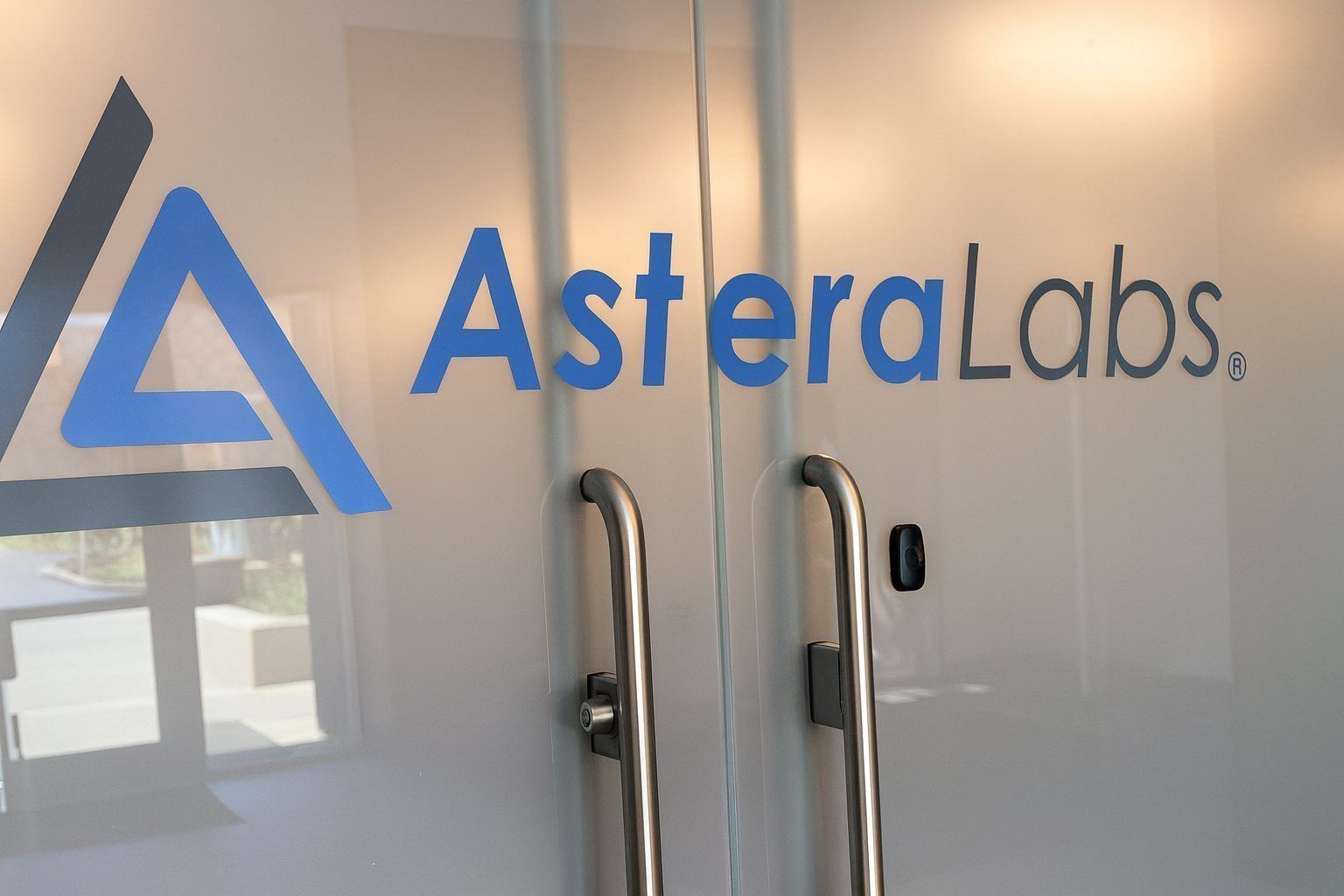

Astera Labs NASDAQ:ALAB has become one of the most closely watched pure-play AI infrastructure stocks on the market. After a spectacular post-IPO run, the shares are now in a classic high‑growth, high‑volatility phase: revenue is more than doubling year over year, new AI connectivity products are launching, analysts still see upside – and insiders are cashing out tens of millions of dollars’ worth of stock.
As of the close on December 5, 2025, ALAB traded at $161.23, giving the company a market capitalization of roughly $27 billion. Nasdaq+1 The stock sits well below its 52‑week high around $263 and comfortably above its 52‑week low near $47, a range that reflects both the scale of investor enthusiasm and the risk built into the AI hardware story.
Below is a full breakdown of the latest news, forecasts and analysis around ALAB stock as of December 7, 2025.
1. What Astera Labs (ALAB) actually does
Astera Labs is a fabless semiconductor company focused on high‑speed connectivity for modern data centers, with a heavy tilt toward AI infrastructure. Its products – including Aries PCIe/CXL retimers, Leo CXL memory controllers, Taurus Ethernet modules and Scorpio fabric switches – are used to stitch together GPUs, CPUs, custom AI accelerators and memory at rack scale.
The company positions itself less as a “chip for chip’s sake” vendor and more as an “intelligent connectivity platform”, combining silicon with its COSMOS software to unify PCIe, CXL, Ethernet, NVLink and UALink across big cloud and AI customers. ASTERA LABS, INC.+1
In other words: if Nvidia, AMD and custom accelerators are the muscles of the AI data center, Astera is trying to own the nerves and blood vessels between them.
2. ALAB stock snapshot as of early December 2025
Key trading metrics around the latest close (Dec 5, 2025):
- Last close: $161.23, up 5.72% on the day.
- Market cap: about $27.2 billion, up ~80% over the past year.
- 52‑week range: roughly $47–$263.
- Trailing/forward valuation: various data providers show a trailing P/E above 100 and a forward P/E in the mid‑60s–90s range, depending on whether 2025 or 2026 earnings are used.
Zacks notes that ALAB has surged about 51% over the past six months, easily outpacing the broader technology sector – but the stock is also down double digits from post‑earnings highs, highlighting how sensitive the price is to expectations.
3. The big new story: NVLink Fusion custom connectivity push
The headline development in early December is Astera Labs’ move into custom NVLink Fusion connectivity solutions for hyperscalers.
On December 2, 2025, the company announced a new business line of custom connectivity solutions built around NVIDIA’s NVLink Fusion interconnect and its own COSMOS platform.
Key points from the announcement:
- Astera will collaborate with hyperscale cloud providers to design custom NVLink‑enabled connectivity tailored to each operator’s AI architectures and workloads.
- The goal is to support heterogeneous AI systems – racks that mix different types of accelerators and CPUs – while maintaining extremely high bandwidth and low latency, measured in multiple terabytes per second per system.
- The new offering is additive to Astera’s standards‑based connectivity portfolio; it’s not abandoning open standards like PCIe, CXL or UALink, but layering custom design work on top.
- Astera plans to leverage newly acquired photonic chiplet capabilities to push higher bandwidth and lower power for these custom designs.
NVIDIA itself publicly endorsed the collaboration, framing Astera as a partner that helps customers create semi‑custom AI systems using NVLink Fusion in rack‑scale architectures, which is exactly where AI data center capex is exploding.
Why it matters for ALAB stock
- It deepens Astera’s strategic linkage to NVIDIA and the broader NVLink ecosystem – a key catalyst in prior rallies for the stock.
- It pushes Astera further into design‑in, not just component vendor territory, potentially increasing switching costs for hyperscalers that adopt its solutions.
- It reinforces the long‑term narrative that demand for connectivity silicon will scale with AI compute footprints, not just with general cloud traffic.
The market reaction around the announcement has been choppy but net positive over the week, with ALAB rebounding from profit‑taking earlier in December.
4. Volatility, options activity and short‑term trading dynamics
Profit‑taking and bounce
On December 3, ALAB fell roughly 13% in a single session, closing around $142.94, as investors locked in gains following a strong multi‑day rally and post‑earnings run‑up.
Yet by December 5 the stock had closed at $161.23, recovering a notable portion of that drop. Nasdaq Zacks and Insider Monkey both highlighted that shares are still more than 12–16% below their level immediately after the Q3 earnings release, underscoring how quickly sentiment can swing in high‑multiple AI names.
Unusually heavy options activity
On December 2, MarketBeat flagged unusually high call‑option trading in ALAB: traders bought 39,591 call contracts, about 33% above the average daily call volume of 29,801.
Elevated call activity can indicate:
- Speculators betting on short‑term upside around catalysts like the NVLink Fusion announcement and analyst reports.
- Institutions using options to hedge short exposure or adjust risk without moving the underlying stock.
By itself, heavy call buying is not a guarantee of further gains, but it reinforces that ALAB has become a favored trading vehicle in the AI infrastructure theme.
5. Earnings backdrop: Q3 2025 beat and Q4 guidance
Astera Labs is not just riding a narrative; the fundamentals are growing quickly.
In its Q3 FY2025 results (quarter ended September 30, 2025), Astera reported:
- Revenue: $230.6 million
- Up about 104% year over year (from ~$113.1 million)
- Up roughly 20% sequentially from Q2’s ~$191.9 million
- GAAP net income: $91.1 million, versus a loss in the prior‑year quarter
- GAAP diluted EPS: $0.50 per share
- Non‑GAAP EPS: $0.49, beating the Zacks consensus by about 26%.
- Non‑GAAP gross margin: ~76.4%
- Non‑GAAP operating margin: ~41.7%, up from ~32% a year earlier.
Growth was driven by:
- Ramp‑up of PCIe 6‑based products for custom AI systems.
- Strong demand for Scorpio fabric switches across AI platforms built on both NVIDIA GPUs and custom accelerators.
Q4 2025 guidance
For Q4 FY2025, management guided to:
- Revenue: $245–$253 million
- Non‑GAAP gross margin: around 75%
- Non‑GAAP EPS: roughly $0.51
If delivered, that would imply continued double‑digit sequential growth and sustain very high margins – one reason Wall Street remains bullish even after recent volatility.
6. Wall Street sentiment and ALAB stock forecasts
Ratings snapshot
Different data providers show slightly different counts, but the pattern is clear: most analysts are buyers.
- MarketBeat reports that 24 analysts currently cover Astera Labs, with a consensus rating of “Moderate Buy”:
- 8 Hold
- 15 Buy
- 1 Strong Buy
- StockAnalysis, which tracks 17 analysts, characterizes the consensus as “Strong Buy”, reflecting a heavier skew toward positive recommendations. StockAnalysis+1
Price targets
Recent target data paints a broadly consistent picture of double‑digit upside from current levels:
- StockAnalysis:
- Average 12‑month target: $179.24
- Range: $82–$275
- Implied upside vs. $161.23 close: roughly 11%.
- TipRanks:
- Average target: $198.93
- Range: $80–$275.
- TradingView / other aggregated sources:
- Consensus target around $206–$207, with a range of $155–$275.
- Zacks / related coverage:
- Highlights a target range $155–$275, consistent with other providers.
Taken together, Wall Street broadly expects mid‑teens to high‑20s percent upside over the next year, assuming the AI infrastructure cycle and Astera’s execution both continue on their current trajectories.
Recent analyst moves
A cluster of recent notes helps explain the tug‑of‑war in the share price:
- Stifel: On December 3, analyst Tore Svanberg reaffirmed a Buy rating with a $200 price target, explicitly arguing that investor worries about AWS and NVIDIA’s direct NVLink Fusion work displacing Astera are overblown. The note suggests Astera should still enjoy strong “content” in NVLink Fusion designs across hyperscaler deployments, and recommends buying ALAB on weakness. Finviz
- TD Cowen: Cut its target from $225 to $170, citing valuation and risk after the run‑up, even while acknowledging strong Q3 results – a reminder that multiple compression can bite even when fundamentals are solid.
- BNP Paribas Exane: Initiated coverage at Outperform with a $225 target, positioning Astera as a key beneficiary of AI connectivity demand.
Some commentators, including a November Seeking Alpha piece, have upgraded Astera to a Strong Buy on the back of Nvidia’s blockbuster earnings and continued AI capex momentum, arguing that Astera is structurally levered to that wave.
7. Valuation: AI winner or priced for perfection?
Even bullish analysts acknowledge that ALAB is not cheap.
Multiples vs. growth
Based on consensus forecasts compiled by StockAnalysis:
- Revenue 2024: ≈ $396 million
- Revenue 2025 (forecast): ≈ $848 million (+114% YoY)
- Revenue 2026 (forecast): ≈ $1.23 billion (+45% YoY)
- EPS 2025 (forecast): ~$1.78
- EPS 2026 (forecast): ~$2.39
Using the latest close around $161, that implies:
- Forward P/E 2025: roughly 90x
- Forward P/E 2026: roughly 67x (assuming estimates are met).
These are nosebleed levels compared to typical semiconductor stocks, which often trade at 20–30x forward earnings even when growth is strong. However, they are more in line with premium AI infrastructure plays that investors view as having unusually long runways.
Fundamental fair‑value checks
A recent Simply Wall St valuation piece argued that:
- Using a growth‑heavy earnings model, fair value for ALAB lands around $198 per share, implying the stock was roughly 23% undervalued versus a previous close of $152.51.
- At the same time, Astera trades at well over 100x trailing earnings, versus a sector average around 40x, suggesting that any disappointment in growth or margins could trigger a sharp de‑rating.
In short: if Astera continues to execute on a path of ~40–45%+ annual revenue growth and keeps margins near current levels, today’s valuation can be justified. If AI capex slows, standards evolve in unexpected ways, or competition intensifies, the multiple could compress quickly.
8. Insider selling and options: red flag or normal for a new AI star?
One thread running through recent coverage is heavy insider selling.
Director sales
Regulatory filings and news reports show significant sales by director Manuel Alba in early December:
- On December 1, 2025, Alba sold about 150,001 shares, at prices between roughly $154 and $173, for total proceeds near $24.9 million, under a 10b5‑1 trading plan.
- Futu and other outlets also reported a separate sale of around 183,000 shares at an average price of roughly $166, for proceeds of about $30.4 million.
- MT Newswires highlighted multiple insider sale filings in November and December totaling tens of millions of dollars.
Last month, CoinCentral framed the pattern bluntly: revenue is soaring, but insiders are selling, raising the question of whether management views the current price as rich.
Insider selling is common after IPOs and major rallies, especially when equity awards vest, but the sheer dollar amounts here reinforce the sense that expectations are high.
Derivatives and sentiment
As noted earlier, call‑option volume has spiked above normal levels, suggesting that speculative interest remains intense.
For long‑term investors, heavy insider selling plus aggressive options speculation is neither purely bearish nor bullish – but it is a sign that ALAB is a crowded trade where positioning can amplify moves in both directions.
9. How ALAB fits into the broader AI stock universe
Astera Labs is often grouped with a cluster of “picks‑and‑shovels” AI names rather than front‑line model providers.
Recent media coverage has:
- Compared ALAB with other AI infrastructure stocks like Credo Technology and various networking vendors, debating which will capture the largest share of AI interconnect spending.
- Pitted Astera Labs against Nebius Group (NBIS), a data‑center operator, in “which is the better AI stock?” features. These pieces generally frame Astera as a higher‑growth, higher‑volatility option tied directly to AI hardware cycles. Finviz+1
- Highlighted ALAB among “under‑the‑radar” chip names that could deliver rapid sales growth for multiple years, while warning that many such stocks trade at elevated multiples. Finviz+1
The consensus narrative: Astera Labs is no longer obscure. It is now a mainstream way to bet on AI data‑center build‑outs, but it carries risk commensurate with that status.
10. Key risks investors are watching
Based on company filings and third‑party research, the main risks around ALAB include:
- Customer concentration & hyperscaler dependency
A large share of revenue comes from a small group of cloud and AI infrastructure customers. Changes in their capex priorities or vendor choices could materially impact growth. - Standard and ecosystem risk (NVLink, CXL, UALink, etc.)
Astera’s strategy depends heavily on staying at the center of evolving connectivity standards and custom ecosystems. If hyperscalers adopt competing standards or more fully in‑house solutions, Astera’s long‑term addressable market could be smaller than bulls expect. - Valuation and multiple compression
At forward earnings multiples far above sector averages, even small disappointments in revenue growth, margin trends or guidance can trigger outsized stock declines – as glimpsed in the post‑earnings pullback. - Cyclical semiconductor and macro risk
Despite AI hype, semiconductors remain cyclical. A broader slowdown in cloud or AI spending, geopolitical shocks, or new trade restrictions (especially involving China) could hit demand. - Execution challenges in custom solutions
The NVLink Fusion custom connectivity initiative expands Astera’s opportunity but also raises execution risk, from engineering complexity to delivery at cloud scale.
11. Algorithmic price forecasts: handle with care
Some quantitative forecasting sites project near‑term moves for ALAB based on historical price patterns. For example, CoinCodex’s model suggests ALAB might drift slightly lower (around 1%) by early January 2026, before potential longer‑term appreciation.
These tools can be useful for sentiment checks, but they do not incorporate real‑time fundamentals like new NVLink deals, changing analyst targets, or macro shifts. For a stock as news‑driven and volatile as ALAB, any algorithmic forecast should be treated as a loose scenario, not a roadmap.
12. Quick FAQ on Astera Labs (ALAB) Stock
Is ALAB stock currently profitable?
Yes. Astera Labs reported GAAP profitability in 2025, with Q3 GAAP net income of about $91 million and non‑GAAP EPS of $0.49, after a period of losses prior to and shortly after its IPO.
Do analysts expect ALAB to keep growing?
Consensus forecasts point to triple‑digit revenue growth in 2025 and high‑double‑digit growth in 2026, with earnings per share also rising.
What is the average analyst price target for ALAB?
Depending on the source, average 12‑month price targets cluster in the $180–$205 range, with highs around $275 and lows near $80–$155.
Why is there so much insider selling?
Large equity awards, post‑IPO liquidity events and pre‑arranged 10b5‑1 trading plans all play roles. Still, the tens of millions of dollars in recent sales suggest insiders are taking advantage of high valuations, which investors often interpret as a cautionary signal rather than a clear red flag by itself.
13. Bottom line: How the ALAB story looks on December 7, 2025
As of early December 2025, the Astera Labs story looks like this:
- Business momentum: exceptional, with revenue more than doubling year over year, robust margins, and tight integration into the AI data‑center build‑out.
- Strategic positioning: strengthened by the new NVLink Fusion custom connectivity initiative, which deepens partnerships with NVIDIA and hyperscalers and extends Astera’s role beyond off‑the‑shelf chips.
- Analyst stance: generally positive, with most firms rating ALAB a Buy and modeling double‑digit percentage upside from current levels, albeit with disagreement about just how much room is left.
- Valuation & risk: undeniably rich. The stock is priced as if Astera will remain a prime beneficiary of the AI infrastructure boom for years, leaving little margin for error if growth slows or competition intensifies.
- Market behavior: high options activity, sharp single‑day moves and heavy insider selling mean the name behaves more like a high‑beta AI momentum stock than a sleepy semiconductor value play.
For investors and traders scanning Google News and Discover, ALAB currently represents a leveraged bet on the durability of the AI data‑center super‑cycle and Astera’s ability to entrench itself as the go‑to connectivity partner for hyperscalers. The opportunity is large, the execution so far has been impressive – and the bar set by the market is equally high.
Related articles: NASDAQ:ALAB