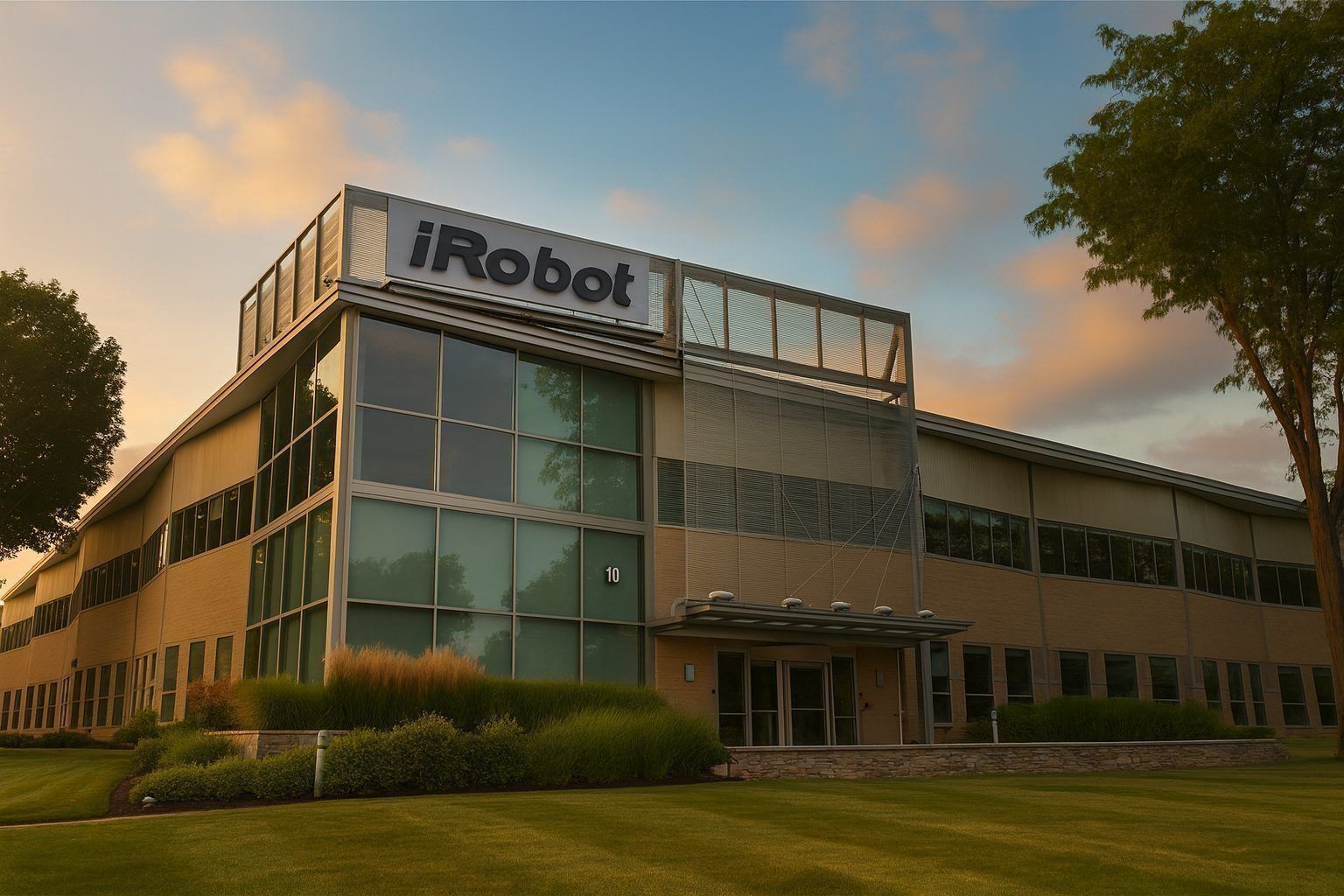

Ticker: iRobot Corporation NASDAQ:IRBT
Date: December 8, 2025
iRobot’s stock has suddenly gone from “left for dead” penny territory to a meme‑adjacent, policy‑driven rocket ship. In early December, shares of the Roomba maker more than doubled in a few trading sessions on speculation that the White House is preparing a major push to support the U.S. robotics industry, even as the company itself openly warns that bankruptcy is a likely outcome. StreetInsider.com+3TipRanks+3MEXC+3
As of this morning, iRobot trades around $3.69 per share, giving the company a market capitalization of roughly $109 million, with deeply negative earnings (trailing EPS about –$6.74). That tiny market value sits on top of a large debt load, shrinking sales, and extremely fragile liquidity. In other words: the stock has become a speculative battleground sitting on top of very real solvency risk.
This article walks through the latest news, financials, and forecasts around IRBT as of December 8, 2025, with a focus on what’s changed this month and how it fits into the longer drama.
1. Where iRobot Stock Stands Now
- Current price: about $3.69 per share.
- Market cap: roughly $109 million.
- Recent move: multiple sources report that IRBT jumped about 74% in a single day last week as traders reacted to reports that the Trump administration is preparing an executive order to support the domestic robotics industry.
- Year‑to‑date: even after the surge, the stock is still down more than 50% for 2025, reflecting the brutal collapse that followed the failed Amazon acquisition and subsequent “going concern” warnings. TipRanks+2Barron’s+2
Short sellers remain heavily involved. Quant and trading data put recent short interest in the 30–40% of float range, an extremely elevated level that helps explain the violent squeezes when any good news (or rumor) hits the tape.
So: big moves, tiny market cap, lots of shorts, very stressed balance sheet. Classic speculative cocktail.
2. December 2025: White House Robotics Buzz Supercharges IRBT
2.1 The policy story: a possible “robotics executive order”
Multiple outlets, citing a report in Politico, say the White House is considering an executive order in 2026 aimed at accelerating robotics development in the U.S., potentially via:
- subsidies,
- tax incentives, and
- extra funding for R&D and pilot programs.
This comes on the heels of a broader AI push, including the Genesis Mission executive order in late November that uses federal AI initiatives to accelerate scientific discovery.
In early December, several market notes highlighted robotics as “the next policy darling,” lumping iRobot in with other U.S. robotics and automation names despite its very consumer‑focused product line. Seeking Alpha+2Superhuman AI+2
2.2 What it did to IRBT’s share price
- CoinCentral/MEXC report IRBT soared about 74% in one session, driven by a short squeeze after the robotics policy story hit the newswires.
- TipRanks similarly notes a ~74% one‑day jump and ties it directly to reports that the Trump administration plans to support U.S. robotics via executive order.
- Simply Wall St calculates that iRobot is up over 100% in early December from prior lows, explicitly linking the move to the robotics policy chatter.
Other robotics stocks such as Richtech Robotics and Serve Robotics also moved sharply higher on the same news, underscoring that this is a sector‑wide policy trade, not a company‑specific turnaround.
2.3 Reality check: does federal robotics support actually help iRobot?
Most of the policy discussion appears to focus on industrial and “physical AI” platforms—humanoid robots, factory automation, and logistics—rather than consumer vacuums. Humanoids Daily+2Robotics & Automation New…
Analysts at Simply Wall St explicitly argue that whatever Washington does may only “nudge” sentiment, not fix the core issues:
- iRobot’s shrinking sales,
- mounting losses,
- a stretched balance sheet, and
- very short cash runway.
So far, there is no specific policy naming iRobot or guaranteeing subsidies or procurement. This is sentiment and optionality, not guaranteed revenue.
3. The Other December Bombshell: Debt Sold to iRobot’s Own Manufacturer
Robotics policy hype is only half the story. The other half is a stark new filing that made the bankruptcy risk feel far more concrete.
3.1 Santrum/PICEA steps into Carlyle’s shoes
On November 24, 2025, a new Form 8‑K revealed that Santrum Hong Kong Co., a subsidiary of iRobot’s primary contract manufacturer Shenzhen PICEA Robotics, bought about $190.7 million in principal and interest under iRobot’s senior credit agreement from affiliates of The Carlyle Group.
At the same time:
- iRobot disclosed it owed $161.5 million to PICEA for manufacturing,
- with $90.9 million already past due, and
- Santrum agreed to extend covenant waivers to January 15, 2026.
In plain English:
Your key supplier now also controls your main secured loan, and the loan covenants are being kept alive only by short‑term waivers.
3.2 “Strategic review is unlikely to avoid bankruptcy”
The same 8‑K was brutally direct: iRobot said its ongoing strategic review is unlikely to result in any transaction outside a bankruptcy process. Management added that, in a bankruptcy, shareholders would likely receive no recovery.
The filing also confirms:
- The company has drawn down the remaining $36 million of restricted cash from Amazon’s termination fee just to fund operations.
- Management says it has no additional sources of capital available.
That is about as close as a public company gets to saying “this equity may go to zero” in a filing.
4. Q3 2025: Revenue Down, Cash Running Out
4.1 Headline numbers
On November 6, 2025, iRobot reported third‑quarter 2025 results:
- Revenue: $145.8 million, down from $193.4 million a year earlier (roughly 25% year‑on‑year decline).
- GAAP gross margin: 31.0%, slightly below 32.2% in Q3 2024.
- GAAP operating loss: about $17.7 million, versus a $7.3 million operating profit in the prior‑year quarter.
- GAAP net loss per share:–$0.62, versus –$0.21 in Q3 2024.
- On a non‑GAAP basis, the company swung from a small profit to a loss as well.
Several tracking sites note that revenue did beat consensus estimates (around $136–139 million), but only because expectations were already very low.
4.2 Liquidity: the really scary part
The press release and accompanying commentary highlighted a sharp deterioration in cash:
- Cash and equivalents fell to $24.8 million as of September 27, 2025, down from $40.6 million at the end of Q2.
- There was $5 million of restricted cash left as of that date, which was fully drawn on September 30.
- Management explicitly stated that the company has no additional sources of capital it can draw on.
Coverage in The Verge, AppleInsider, and European tech press all hammered the same point: iRobot is “almost out of cash,” and its ability to continue as a going concern is in serious doubt. TechRadar+3The Verge+3AppleInsider+3
Meanwhile, the term loan’s fair value was about $203.2 million as of June 28, 2025, according to an October SEC filing, and cash has only fallen further since then.
5. How We Got Here: Amazon Deal Collapse and Restructuring
5.1 Amazon walks away
In January 2024, Amazon and iRobot terminated their planned $1.4–$1.7 billion acquisition following heavy antitrust pushback from EU regulators and likely challenges from the U.S. FTC.
Key fallout:
- Amazon paid a $94 million termination fee to iRobot.
- iRobot announced a major restructuring, including layoffs of about 31% of its workforce (roughly 350 people) and the resignation of founder‑CEO Colin Angle.
5.2 More layoffs and the “iRobot Elevate” plan
The pain didn’t end there:
- In November 2024, iRobot cut another 16% of its remaining staff, on top of the earlier 31% reduction.
- A Spanish business report notes that between 2023 and 2024, iRobot’s workforce was reduced by over 50%, as the company tried to survive collapsing revenue, tariffs, and fierce Chinese competition.
By 2024, full‑year revenue had fallen to about $682 million, down more than 23% year‑over‑year, with net losses of around $145.5 million. Management warned of “substantial doubt” about the company’s ability to continue operating. Cinco Días+1
To respond, iRobot launched the “iRobot Elevate” turnaround plan: aggressive cost‑cutting, simplification of the product lineup, and a redesigned range of robot vacuums (including lidar‑equipped Roomba Max 705 models) meant to better compete with rivals like Roborock and Ecovacs. iRobot MediaKit+2The Verge+2
The problem: the new products arrived just as consumer demand weakened, supply‑chain issues hit, and the company’s cash cushion vanished.
6. Going‑Concern Warnings, Waivers, and Bankruptcy Odds
6.1 The waiver treadmill
Since early 2025, iRobot has lived on a kind of credit life support:
- A series of amendments to its credit agreement with Carlyle‑affiliated lenders waived compliance with two key covenants:
- a requirement that the auditor’s opinion not contain a going‑concern qualification; and
- a minimum “core assets” covenant. SEC+1
- Those waivers were repeatedly extended—from May, then to June, August, September, October, and ultimately December 1, 2025.
The October 22 8‑K bluntly warned:
- Without continued waivers, iRobot would be in default,
- lenders could accelerate the term loan and seize substantially all assets (the loan is secured by most of the company’s collateral), and
- in that scenario, shareholders would likely be wiped out.
The November 24 transaction shifted this risk from Carlyle to Santrum/PICEA, but the basic dynamic—waivers plus looming default—remains.
6.2 Strategic alternatives: sale prospects fade
The same October filing and later coverage note that:
- iRobot’s board began a strategic review in March 2025 to explore a sale, recapitalization, or other transaction.
- By late October, the last serious buyer walked away, after offering a price “significantly lower” than the stock had been trading at. SEC+2Barron’s+2
The December 1 8‑K then raised the stakes by saying the board now believes a transaction outside of a bankruptcy process is unlikely, and reiterated that equity holders would probably be left with nothing in a restructuring.
Several tech outlets and consumer‑electronics reporters have started writing from the perspective of: “What happens to your Roomba if iRobot goes under?”, underscoring how mainstream the bankruptcy narrative has become. AppleInsider+3The Verge+3Diario AS+3
7. What Analysts, Quants, and Models Are Saying
7.1 Traditional Wall Street coverage: thin and cautious
According to StockAnalysis, only one sell‑side analyst (Needham) currently rates the stock, and the rating is just “Hold”, with no active price target published over the last 12 months. StockAnalysis
Consensus forecast data compiled from Wall Street estimates still paints a somewhat optimistic medium‑term picture:
- 2025 revenue: about $536 million, down ~21% from 2024’s $682 million.
- 2026 revenue: about $907 million, implying ~69% growth as supply chains normalize and new products ramp.
- EPS 2025: around –$3.57, improving from –$4.92 in 2024.
- EPS 2026: around –$1.13, still unprofitable but less deeply so.
Important caveat: these forecasts were built before the latest debt transfer to PICEA and before the December 1 warning that a bankruptcy‑free deal is unlikely. They may not fully reflect the newest risk disclosures.
7.2 AI/algorithmic price forecasts: wildly split
Several quant and AI‑driven platforms have latched onto IRBT’s volatility:
- StockScan projects an average near‑term target around $16.21, implying more than 300% upside from about $3.69, and spits out long‑term scenarios with multi‑thousand‑percent gains by 2045–2050.
- CoinCodex, in contrast, expects the stock to hover around current levels in December, with a trading range of roughly $3.64–$3.69 and essentially flat one‑month return, while computing a “neutral” overall technical sentiment. CoinCodex
- Intellectia.ai yields a modest +3–4% one‑month upside prediction, but notes a short‑sale ratio above 31% of volume and mixed technical signals—short‑term momentum bullish, longer‑term trend still bearish.
These models are mostly pattern‑matching past prices. They don’t really “understand” bankruptcy law, covenant waivers, or the fact that your main lender is now your biggest supplier.
7.3 Fundamental quant/valuation takes
- TipRanks’ AI‑based view tags IRBT as “Underperform”, with an average AI‑generated price target around $1.50, implying substantial downside from current levels. TipRanks
- Simply Wall St argues that the key question is whether a shrinking, heavily indebted consumer robotics company can credibly rebuild. Their community “fair value” estimates range roughly from $5 to $16 per share, but the write‑up repeatedly stresses liquidity strain and high bankruptcy risk, and even suggests the stock may already be priced too optimistically relative to those risks. Simply Wall St+2Cinco Días+2
In short: human‑style fundamental models skew bearish; raw price‑pattern tools are all over the map.
8. Trading vs Investing: Bull and Bear Narratives
8.1 The bullish trading/speculation case
Supporters of the stock at current levels tend to focus on:
- Policy optionality: if the U.S. truly “goes all‑in” on robotics and includes consumer robotics in subsidies, procurement, or tax relief, iRobot could be a beneficiary—even indirectly, via improved sentiment and easier access to capital. Investorsobserver+1
- Brand and installed base: Roomba is still one of the most recognizable names in home robotics, and iRobot continues to sell premium models despite competition.
- New products: the Roomba Max 705 and related models show that the company can still innovate, bringing lidar navigation and higher‑end mopping hardware to market.
- Short interest fuel: with one‑third to nearly 40% of the float sold short, any positive surprise—new funding, a restructuring deal with PICEA, an unexpected buyer—could trigger more sharp squeezes.
For short‑term traders, IRBT is basically a policy‑leveraged volatility instrument now.
8.2 The bearish (fundamental) case
The bear case is simple and heavily supported by the company’s own filings:
- iRobot is losing money,
- revenue is shrinking (down about 25% year‑on‑year in Q3),
- cash is under $25 million,
- the company openly says it has no other capital sources,
- its main lender has sold the loan to its key manufacturer, and
- management now believes its strategic review is unlikely to avoid bankruptcy, with equity holders likely wiped out in that scenario.
This isn’t the usual “things are tough” language. It’s a company spelling out that unless something unlikely happens, stockholders should expect to be zeroed.
Practically, even a positive outcome—say, a rescue financing from PICEA or another sponsor—would almost certainly involve massive dilution or a debt‑for‑equity swap at prices far below current trading levels.
9. Key Numbers and Events to Watch After December 8, 2025
Based on the current disclosures and news flow, these are the pressure points investors and traders are watching:
- Waiver deadline – January 15, 2026
Santrum’s extension of covenant waivers runs to this date. Any further extension—or refusal—will be critical for equity survival. - Negotiations with PICEA/Santrum
PICEA is now both a huge creditor (trade payables) and, via Santrum, controller of the term loan. The structure of whatever deal they strike—restructuring, new facility, or enforcement—could decide whether this is a bankruptcy, a pre‑packaged recap, or an orderly wind‑down. - Holiday 2025 sell‑through
Roomba is still a big holiday product. To the extent data emerges on Q4 sales, it will affect how much breathing room the company has, though one good quarter doesn’t magically refill the balance sheet. - Robotics policy details
The crucial question is not whether there is a robotics E.O., but whether any eventual program directly benefits consumer robotics companies like iRobot (for example through domestic manufacturing credits or smart‑home pilot projects), rather than only industrial and humanoid platforms. - Any surprise bidder or restructuring sponsor
The October filings made clear that the last serious buyer walked away at a price significantly below where the stock had been trading. For equity, the best realistic hope at this point would be some kind of out‑of‑court recapitalization that leaves a sliver for existing shareholders—something management itself now frames as unlikely.
10. Bottom Line: A Policy Story Wrapped Around a Distressed Capital Structure
From a news and analysis perspective, iRobot on December 8, 2025 is a strange hybrid:
- A high‑beta robotics policy trade, reacting violently to every headline about a potential U.S. robotics push or executive order; and
- An extremely distressed company, whose own filings almost shout that bankruptcy or a highly dilutive restructuring is the base case unless conditions change fast.
Short‑term traders are treating IRBT like a volatile vehicle to express views on robotics policy, short squeezes, and algorithmic momentum. Long‑term investors, by contrast, have to grapple with the unromantic math of negative equity, shrinking revenue, and the possibility that common stock ends up worth nothing.
Related articles: NASDAQ:IRBT