
SINGAPORE — 8 December 2025
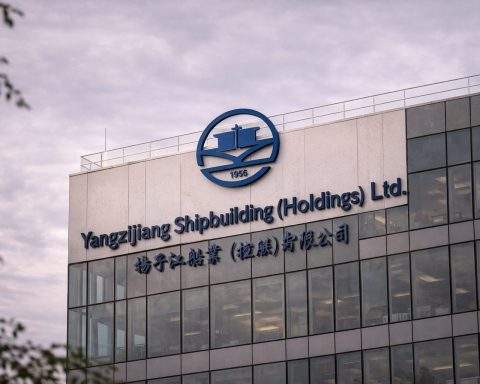
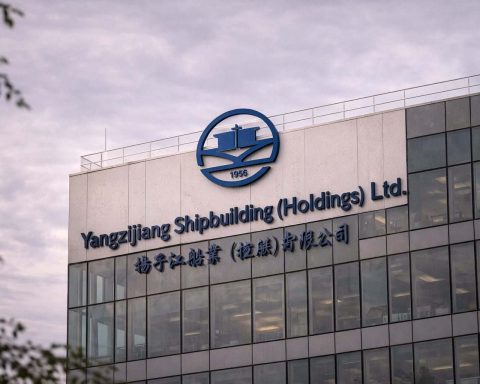
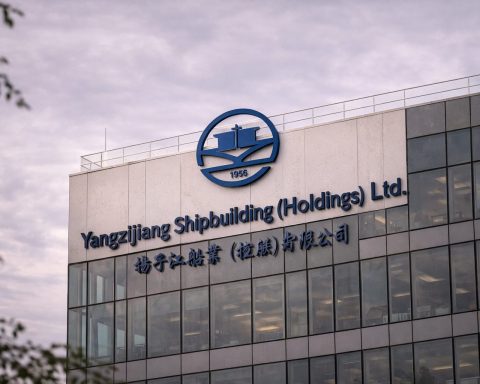
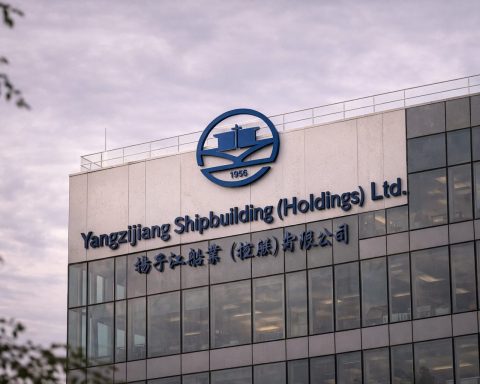
Yangzijiang Shipbuilding (Holdings) Ltd, one of China’s largest private shipyards and a heavyweight on Singapore’s Straits Times Index (STI), heads into the second week of December 2025 with three big storylines:
- record earnings and fattening margins,
- a multi‑year “green” order book,
- and increasingly bullish analyst targets.
All of that is happening while the share price digests a wild year of US port‑fee fears, a BlackRock exit, and shifting expectations for global trade.
Below is a structured look at where the stock stands as of 8 December 2025, drawing together the latest news, forecasts and broker analyses.
Share price snapshot on 8 December 2025
Yangzijiang’s primary listing on the Singapore Exchange trades under ticker BS6 in Singapore dollars, with a secondary RMB line (SO7).
- Last close (Fri, 5 Dec 2025): S$3.43, down 0.87% on the day.
- Intraday on Mon, 8 Dec 2025: data from Investing.com shows the stock trading around S$3.37, with the session’s range roughly S$3.37–S$3.43 and a daily move of –1.75% versus Friday’s close.
- Market capitalisation: about S$13.5 billion at S$3.43 per share.
- 52‑week range: roughly S$1.80–S$3.58.
On a longer view, monthly data suggests the stock has risen from around S$2.83 in December 2024 to about S$3.40 in December 2025 – roughly a 20% price gain over 12 months.Digrin Total‑return figures (including dividends and the US OTC line YSHLF) put the year‑to‑date gain closer to the high‑20s percentage range.
So, in plain English: Yangzijiang is trading near the top of its 52‑week band after a strong 2025 run, but short‑term volatility is very much alive.
Valuation snapshot
Most data providers converge on a fairly similar picture:
- Trailing P/E (TTM): about 9–10x.
- Forward P/E: around 8–8.5x based on 2025–2026 earnings forecasts.
- Price‑to‑book: roughly 2.3–2.7x.
- Price‑to‑sales: about 2.4–2.9x.
- Dividend yield (based on S$0.12 per share): around 3.5% at S$3.40–3.43.
Several broker notes argue that this puts Yangzijiang at a 50–70% valuation discount to regional shipbuilding peers, even as its return on equity and margins sit at the upper end of the sector.
A roller‑coaster 2025: from port‑fee panic to a fresh rally
The stock’s 2025 narrative so far reads like a market psychodrama in three acts.
Act I – US port‑fee scare and share‑price collapse
Early in 2025, the US Trade Representative floated steep port fees on Chinese‑built and operated vessels, sparking fears that shipowners would shun Chinese yards, including Yangzijiang.
- According to NextInsight, Yangzijiang’s share price slid from around S$3.30 in February to about S$1.88 within six weeks as panic about the potential impact swept through the market.
- A later, scaled‑back US proposal and clarifications from analysts helped calm things down. DBS pointed out that port fees targeted ship operators calling at US ports, not shipyards themselves, and that Chinese yards were still winning a majority of global newbuilding orders.
Act II – BlackRock in, then out
In January 2025, BlackRock disclosed that it had become a substantial shareholder by acquiring 10.8 million Yangzijiang shares.
Fast‑forward to early November:
- Filings show BlackRock sold about 37.8 million shares on 29 and 31 October, ceasing to be a substantial shareholder.
- On 5 November, Yangzijiang fell 2.9% to S$3.33, making it the biggest decliner on the STI that day.
This was followed by a sharp rebound: days later, as the STI hit a record high, Yangzijiang was the second‑biggest STI gainer, jumping about 3.9% to roughly S$3.46 and snapping a six‑day losing streak.
Act III – Early‑December wobble
On 1 December 2025, the Straits Times reported that Yangzijiang fell 2.1% to S$3.28, the worst performer on the STI that session, as local investors turned cautious ahead of the US Federal Reserve’s rate decision.
The subsequent days saw the stock grind back up to the S$3.40s before easing again on 8 December, in line with broader market jitters and some profit‑taking after a strong year.
Fundamentals: record profits and fat shipbuilding margins
For all the share‑price drama, the underlying business has been doing the opposite of panicking.
FY2024: a step‑change in earnings
Yangzijiang’s FY2024 results, released in February 2025, showed net profit surging roughly 62% year‑on‑year to around RMB 6.8 billion, a new record, driven by a richer vessel mix and margin expansion.
1H2025: high margins despite flat revenue
The momentum continued into the first half of 2025:
- 1H2025 revenue: about RMB 12.9 billion, slightly lower than a year earlier.
- Net profit: around RMB 4.2 billion, up 36–37% year‑on‑year and 17% higher than 2H2024.
- Shipbuilding gross margin: roughly 35%, up from around 26% in 1H2024 and ~30% in 2H2024 – a huge improvement in a capital‑intensive business.
- Vessel deliveries: 23 ships in 1H2025 (including four from a JV), with larger dual‑fuel containerships contributing strongly to profitability.
DBS attributes the margin expansion to a cocktail of locked‑in low steel costs, favourable contract pricing on orders secured in 2021–2023, and a shift towards high‑spec, higher‑value vessels.
Balance sheet: stuffed with cash
As of June 2025, DBS estimates Yangzijiang held about RMB 18.3 billion of net cash, equivalent to roughly S$0.86 per share, with about half of that made up of customer deposits on its long‑dated order book.
That kind of balance‑sheet firepower underpins:
- an ongoing share‑buyback mandate (though recent buybacks were done below S$2.20),DBS Bank
- and room for higher dividends without stressing the company’s finances.
Several broker models now assume a 2025 dividend per share of S$0.12–0.15, implying a forward yield somewhere in the 3.5–6% range depending on whose forecast you believe and which share price you plug in.
Order book: from order drought to US$22.8 billion backlog
The other big pillar of the Yangzijiang story is its order book.
Early‑2025 slump in new orders
In 1H2025, new orders virtually dried up:
- Yangzijiang booked 14 vessel contracts worth about US$540 million, a tiny fraction of the 126 vessels worth US$14.6 billion it secured in 2024.
- Global newbuilding orders fell about 48% year‑on‑year in the first half, according to Clarksons data cited by the Wall Street Journal.
The company itself warned of macroeconomic uncertainties and geopolitical tensions, including the US port‑fee saga, as key near‑term risks.
9M2025: rebound in orders and a “green” tilt
By the September quarter, the shipyard’s contract pipeline had shifted gears:
- For 9M FY2025, Yangzijiang reported new orders worth about US$2.17 billion (S$2.82 billion), roughly four times the value recorded in 1H2025 alone.
- Business Times and Lloyd’s List report year‑to‑date order wins of around US$2.2 billion, with management targeting a lower but still ambitious US$4.5 billion in annual orders after suspending a planned new yard expansion.
- The outstanding order book sits around US$22.8 billion, covering roughly four years of revenue at a maximum run‑rate of about US$4.5 billion per year.
- By late September, Yangzijiang had delivered 46 vessels out of a 56‑ship FY2025 target, or about 82% of planned deliveries.
The mix of that backlog is where the strategic story really lives:
- Around 70–74% of order‑book value is tied to “clean‑energy” vessels – LNG or methanol dual‑fuel containerships and gas carriers.TechStock²+3The Business Times+3martini.ai+3
- Container ships remain the workhorse, making up roughly US$16.2 billion of the backlog across 126 ships.
Analysts at DBS and CGS International estimate that Yangzijiang’s current order book provides revenue visibility into 2030, which is unusually long even by shipyard standards.
Dividends: decent now, possibly better later
On the income front:
- The company paid a S$0.12 dividend in 2024; the ex‑dividend date for the 2025 payout was 5 May 2025.
- At recent prices (~S$3.40–3.43), that translates into a current yield of roughly 3.5%, according to StocksGuide, Beansprout and Barron’s datasets.
DBS Research, running with higher earnings and cash‑flow assumptions, thinks final FY2025 dividends could rise to around S$0.15 per share, implying a mid‑single‑digit yield and still‑comfortable payout ratio in the high‑30s to about 40%.
Other data providers are more conservative, sticking with S$0.12 in their 2025 consensus models.
The takeaway: this is not (yet) a super‑high‑yield stock in cash terms, but there is clearly scope for dividends to grow if earnings and margins play out as analysts expect.
What are analysts saying now?
This is where things get spicy.
Local brokers: BUY / ADD with targets up to S$4.51
Recent notes from Singapore‑focused houses:
- DBS Research reiterates a BUY rating with a target price of S$3.80, based on 2.5x FY2025 book value and an implied 10x P/E. DBS expects an earnings CAGR of roughly 17% over the next two years, supported by the US$23.2 billion backlog, and highlights a potential dividend yield around 6% in its base case.
- CGS International (coverage picked up by NextInsight and Minichart) maintains an ADD call and recently raised its target price from S$3.90 to S$4.51, using a 10x CY2027F P/E multiple. The analysts argue that Yangzijiang still trades at about half the valuation of regional peers despite higher forecast gross margins (~35%) and a projected ROE in the high‑20s.
- UOB Kay Hian’s Adrian Loh upgraded his target to S$4.10 (from S$3.90) after the 3Q FY2025 business update, citing rebounding order momentum, green‑vessel demand and ongoing negotiations for additional contracts that could partly fill 2028–2030 delivery slots.
Most of these local broker notes explicitly flag:
- undemanding valuation versus Korean and Japanese peers,
- margin expansion on higher‑spec vessels and lower steel costs,
- four years of revenue coverage from the order book,
- and rising interest from ESG‑oriented funds thanks to the green tilt.
Global consensus: upside, but estimates vary
Global data aggregators paint a broadly positive, but not identical, picture:
- Beansprout (SGX data): consensus target price S$4.514, implying 31.6% upside from S$3.43, with most coverage in the Buy/Outperform zone.
- StocksGuide: average target S$3.88 (11 estimates), about 13% above the current share price; high‑end target S$4.20, low‑end S$1.62.
- ValueInvesting.io: average forecast S$3.66, about 11–12% upside.
- Simply Wall St: analyst table shows a current price of S$3.43 against an average 12‑month price target of S$3.80 (high S$4.51, low S$1.60).
- TipRanks: six analysts over the past three months produce an average target of S$3.91, with a range of S$3.55–4.51 and implied upside of about 13% from S$3.46.
- MarketWatch / Barron’s: the US OTC line (YSHLF) carries an “Overweight”‑style consensus with a dividend yield near 3.6% and trailing P/E just below 10x.MarketWatch+1
Put extremely bluntly: most analysts are bullish, clustering their 12‑month targets somewhere between S$3.80 and S$4.50, with the top end anchored by CGS’s S$4.51 call.
Technical models: cautiously optimistic
On the purely technical side, StockInvest.us currently labels BS6 as a “buy candidate”:
- It notes that the share has gained around 2–3% over the past two weeks, closing at S$3.43 on 5 December with a 52‑week range of S$1.80–3.58.
- Its short‑term model projects about 5.8% upside over the next three months, with a 90% probability band between S$3.45 and S$3.87, while emphasising low day‑to‑day volatility and good liquidity.
That’s one algorithm’s view, of course—not a guarantee of anything. But it does rhyme with the fundamental picture of a stock trending higher within a rising channel, rather than a meme‑stock roller coaster.
Key risks: why the story isn’t risk‑free
Even the most optimistic broker reports include a small forest of caveats. The main ones:
- US port‑fee policy and trade tensions The US proposal to levy fees on Chinese‑built ships calling at its ports has already shown how quickly sentiment can flip. While Yangzijiang doesn’t operate vessels, such fees could change where shipowners place orders over time, even if the current, scaled‑back version is less severe than the original scare.
- Global order cycle Clarksons data showing a 48% drop in global newbuilding orders in 1H2025 is a reminder that shipbuilding is brutally cyclical.The Wall Street Journal+1
Yangzijiang’s 9M rebound helps, but a prolonged lull in orders beyond 2026–2027 would eventually weigh on utilisation and margins. - Steel prices and FX Yangzijiang’s revenue is heavily US‑dollar‑denominated, while costs are largely in RMB. DBS estimates that both USD/RMB moves and steel price changes can have a material (if not catastrophic) impact on earnings.
- Competition from a consolidating China and aggressive Korea China is merging major state‑owned yards (CSSC and CSIC) into a shipbuilding giant with around 17% global market share, while Japan and Korea are pushing hard on high‑value tonnage.The Wall Street Journal+1
Yangzijiang’s private‑yard status and cost edge are advantages today, but the strategic playing field is moving fast. - Execution risk on green and LNG projects The pivot towards dual‑fuel and LNG carriers is central to the bull case. Delivering these complex ships on time and on budget – including the first LNG carrier the yard is building partly on its own account – is crucial to protecting margins and reputation.
So where does Yangzijiang stock stand on 8 December 2025?
Putting everything together:
- The share price around S$3.37–3.43 sits near the top of its 52‑week band, after recovering from both a spring port‑fee panic and a November block sale by BlackRock.
- The business fundamentals – record profits, structurally higher shipbuilding margins, a US$22.8 billion order book that is majority “green,” and a cash‑rich balance sheet – are the main reason why.TechStock²+4DBS Bank+4The Business Times+4
- Analysts are broadly bullish, with 12‑month targets mostly between S$3.80 and S$4.50, implying mid‑teens to low‑30s percentage upside from current levels, plus a 3–6% dividend yield depending on how generous the board feels.
- At around 9–10x trailing earnings and ~8x forward earnings, the stock still screens cheap versus many global peers, especially given its projected ROE and margin profile.
None of that makes Yangzijiang a sure thing, of course. The sector is cyclical, the geopolitics are noisy, and even the most elegant discounted‑cash‑flow model is still just a very polite guess.
But as of 8 December 2025, the market is looking at a private Chinese shipyard with multi‑year green‑vessel visibility, strong cash, and a valuation that many analysts argue hasn’t caught up with its earnings profile. That combination is exactly why the ticker BS6 keeps showing up at the top of Singapore research desks’ watchlists.
Related articles: SGX:BS6