Updated: 8 December 2025
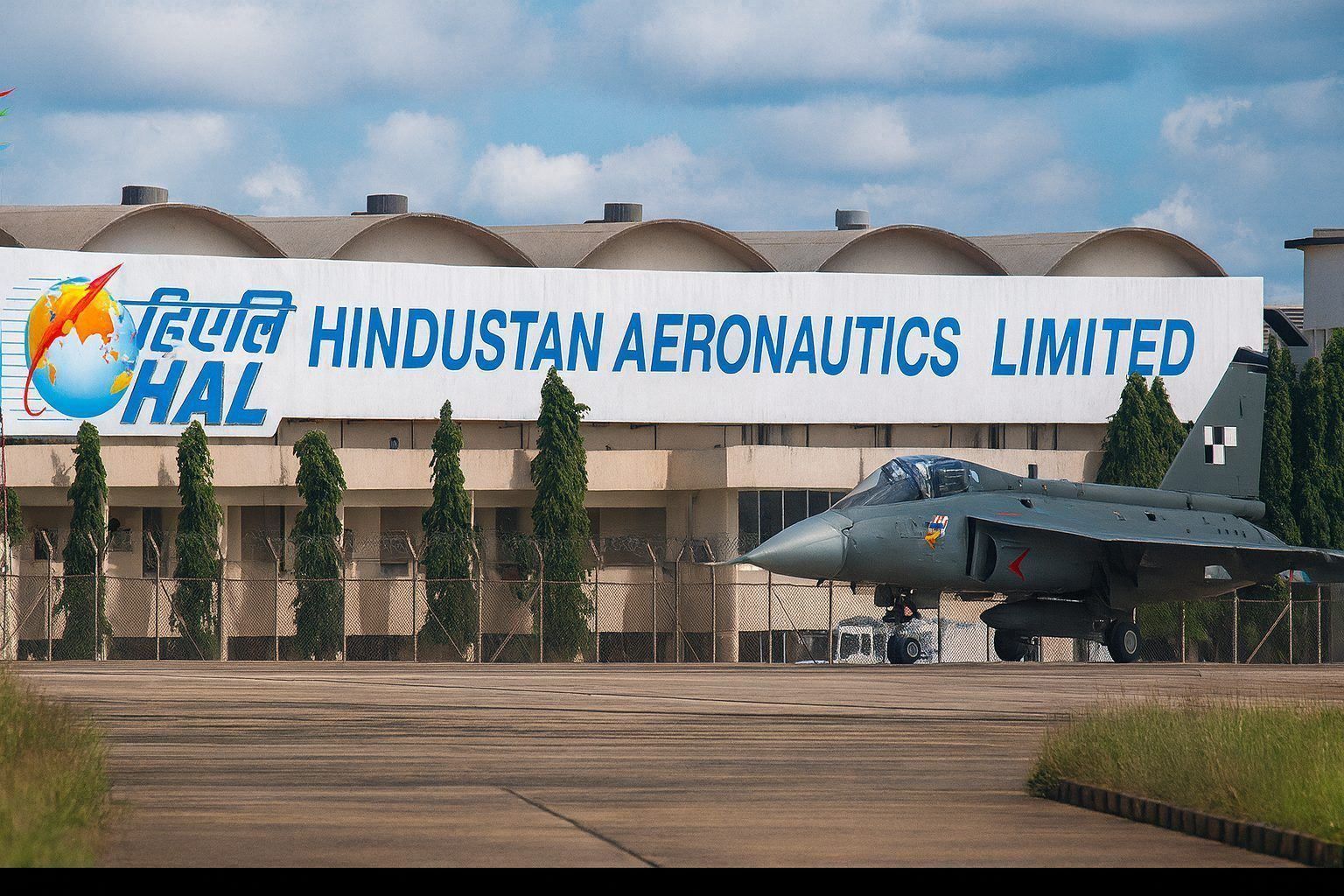
Hindustan Aeronautics Limited (HAL) remains one of the most closely watched defence PSUs on Dalal Street. Between a record order book, a recent Tejas fighter crash, and a flurry of analyst upgrades, the stock is sitting at the intersection of opportunity and execution risk.
This deep-dive pulls together the latest price action, news, forecasts, and expert commentary on HAL stock as of 8 December 2025.
HAL share price today: how the stock is trading
As of around 10:00 AM IST on 8 December 2025, HAL shares were trading near ₹4,347 on the NSE, down about 2.1% from the previous close of ₹4,443.
Key trading and valuation metrics today:
- Last traded price: ~₹4,350
- Day’s range: ₹4,342 – ₹4,448
- 52-week range: ~₹3,046 (low) to ~₹5,165 (high)
- Market cap: ~₹2.9–3.0 lakh crore
- P/E (trailing 12M): ~34–35x
- P/BV: ~8–8.5x
- Dividend yield: ~0.9%
- 6-month return: about –14%
- 1-year return: roughly –4% to –3%
So despite being a multi-bagger over the last five years, HAL has consolidated and corrected over the past year, even as its fundamentals and order book have strengthened.
Big picture: why HAL still matters so much
HAL isn’t “just another PSU” – it is the backbone of India’s military aviation ecosystem. It designs, manufactures and services:Angel One+1
- Tejas light combat aircraft (LCA)
- Light Combat Helicopter (LCH) Prachand
- Sukhoi-30MKI and other fighter upgrades
- ALH Dhruv and other helicopters
- A wide range of aero-engines, MRO and upgrade work
Its importance was underlined again this month when SIPRI’s Top 100 arms-producing companies list placed HAL at 44th globally, with arms revenue of about USD 3.8–4.0 billion, making it India’s largest defence producer by arms sales.
Order book and growth runway: stacked with work
The core bullish argument on HAL is straightforward:
- Order book explosion: As of March 2025, HAL’s order book stood at ₹1,89,300 crore, roughly double the ₹94,127 crore it had in April 2024.
- This includes major programmes like:
- 240 AL-31FP engines
- 156 LCH Prachand combat helicopters
- 12 additional Sukhoi-30MKI aircraft
- Multiple MRO, upgrade and export contracts
On top of that, the September 2025 Tejas Mk1A order turbocharged visibility further:
- India signed a ₹623.7 billion (₹62,370 crore) order for 97 Tejas Mk1A fighters, with deliveries slated over six years from FY 2027–28.
A recent independent analysis estimates HAL’s total order book at over ₹2.5 lakh crore after including the new Tejas order and other recent wins, but points out that revenue has grown only ~8% annually – a sign that execution, not orders, is now the bottleneck.
In short: HAL has years of revenue visibility baked in. The key question is how fast it can convert that backlog into sales and cash.
Financial performance: Q2 FY26 snapshot
For the quarter ended September 2025 (Q2 FY26), HAL reported:
- Revenue: ₹6,629 crore (up ~11% YoY from ₹5,976 crore)
- Net profit: ₹1,669 crore (up ~10–11% YoY from ₹1,510 crore)
- Operating margin (OPM): ~24%, down from ~27% in the year-ago quarter
- EPS (TTM): ~₹126.6
Brokerage commentaries on Q2 FY26 highlight:
- Topline growth is healthy, broadly in line with guidance (8–10% per year).
- Margins were pressured by higher provisions and other expenditure, leading to a modest decline in EBITDA margins vs last year.
- Strong other income helped cushion profit.
Longer-term data from Screener shows:
- 5-year profit growth around 24%
- 5-year ROE ~27%; latest year ROE ~26%
- Operating margins structurally elevated at ~30% on a full-year basis in recent years
So fundamentally, HAL is still a high-ROE, high-margin PSU – but quarterly earnings can be lumpy because defence revenues are milestone-based and back-ended.
Recent news driving HAL stock in late 2025
1. Tejas crash at Dubai and export jitters
On 24 November 2025, a Tejas Mk1 aircraft crashed during an aerobatic display at the Dubai Airshow, killing the pilot. HAL termed it an “isolated event” and pledged full cooperation with investigators in a regulatory filing.Outlook India
The episode had three market consequences:
- Stock reaction: HAL shares fell sharply – around 8% in the immediate aftermath – as investors priced in reputational and export risks.
- Armenia deal uncertainty: Reports suggest Armenia has suspended negotiations for Tejas Mk1A fighters following the crash, raising doubts about near-term export prospects.
- Perception risk: Defence analysts warn that even one high-profile crash can make cautious buyers look at alternatives like FA-50, Gripen or JF-17, at least in the short run.
For a stock that had been priced for near-flawless execution, this safety and export overhang is now a non-trivial risk.
2. GE engine deal locks in Tejas production capacity
To support the massive Tejas Mk1A order, India has signed a $1 billion contract with GE Aerospace for 113 F404 engines. These will power the 97 new Mk1A jets ordered in September, with deliveries expected between 2027 and 2032.
Why this matters for investors:
- It reduces execution risk around engine supply – a key bottleneck that delayed earlier Tejas deliveries.
- It increases confidence that HAL can actually ramp up Tejas production and start recognizing that order book as revenue over the next decade.
3. HAL steps into civil aviation with Russia’s SJ-100
In October 2025, HAL signed a Memorandum of Understanding with Russia’s United Aircraft Corporation (UAC) to produce the SJ-100 civil commuter jet in India.
Highlights of the deal:
- First fully manufactured passenger aircraft in India in over three decades, after the AVRO HS-748 programme ended in 1988.
- SJ-100 is a short-haul jet likely to be pitched as a UDAN-friendly regional aircraft for domestic carriers.
- Expands HAL’s profile from defence-only to civil aviation manufacturing, potentially opening a new long-term revenue stream.
Investors will watch:
- Certification timelines, sanctions-related complications (given UAC is under US sanctions), and whether SJ-100 sees actual orders from Indian airlines.
4. HAL among SIPRI’s Top 100 arms producers
The latest SIPRI fact sheet (released 1 December 2025) lists HAL as:
- Rank: 44th globally in arms revenue
- Arms revenue 2024: about USD 3.81–4.01 billion
- India’s overall arms revenue: USD 7.5 billion, up 8.2% YoY, with HAL the largest contributor
This reinforces HAL’s position as a systemically important defence company, both for India and in the global ecosystem.
5. Shareholding trends: small retail trim, PSU still dominant
An ET Markets analysis of Q2 FY26 shareholding showed:
- Retail holding in HAL slipped slightly from 6.66% to 6.59% in the September 2025 quarter.
- Despite this minor trim, HAL has still delivered about 14% return over the past year (from an earlier price base), underscoring its multi-bagger status over a longer horizon.
The government remains the dominant promoter, and institutional interest (especially domestic mutual funds) continues to be strong.
6. Derivatives and technical signals
Recent reports from derivatives trackers show:
- Heavy call option activity in HAL ahead of the 30 December 2025 expiry, particularly around the ₹4,500 strike.
- Elevated open interest suggests traders are positioning for heightened volatility, not a consensus one-way move.
The takeaway: the options market is very active in HAL, which can amplify short-term swings around newsflow.
Valuation: is HAL stock expensive?
Based on current prices and trailing fundamentals:
- P/E (TTM): ~35x
- 5-year average P/E: ~18x
- 5-year median P/E (FY18–FY22): ~10.25x
- ROE: ~26%
- P/B: ~8–8.5x
- 5-year stock CAGR: ~60%+ (HAL is one of the best-performing PSUs over this period)
Compared with other listed defence names:
- HAL’s P/E (~35x) is lower than some niche defence peers (many trade at 50–80x)
- But it still trades at a premium to its own history and to several large PSUs in other sectors.
Put bluntly:
- The market is no longer valuing HAL as a sleepy PSU.
- It is being priced as a high-growth, high-quality defence franchise, leaving less room for error on execution, safety and margins.
What analysts are saying on 8 December 2025
Across the street, coverage remains broadly constructive.
Consensus targets and ratings
Trendlyne’s consolidated view of broker research (as of 8 December 2025) shows:
- Consensus target price:₹5,622.89
- Upside vs latest price (~₹4,385 reference): ~28%
- Consensus recommendation:“Buy”
- Coverage from at least 14–20 analysts, including major houses like ICICI Securities, ICICI Direct, Motilal Oswal, Prabhudas Lilladher, Anand Rathi and others.
Recent individual reports highlight:
- ICICI Securities / ICICI Direct: Maintain Buy with targets in the ₹5,000–5,830 range, citing a robust order book, improving visibility on Tejas execution, and sustained 8–10% revenue growth guidance.
- Motilal Oswal: Buy with targets around ₹5,650–5,800; sees HAL “ticking all the right boxes” with a ₹1.8–1.9 trillion order book and a prospect pipeline of about ₹6 trillion over the next few years.
- Prabhudas Lilladher & Anand Rathi: Positive stances with targets around ₹5,500–5,950, pointing to strong positioning in India’s defence build-up, but flagging execution and margin risks.
The Economic Times’ “large-cap stocks with upside potential” screen published on 8 December 2025 also features HAL, noting:The Economic Times+1
- Current price: ~₹4,443 (reference at screening time)
- 1-year target: ₹5,623
- Implied upside: ~26.5%
- Mean recommendation: Buy from 19 analysts
So despite the recent pullback and Tejas-related concerns, the analyst community remains structurally bullish.
The execution problem: HAL’s biggest challenge
A widely circulated November 2025 analysis summed it up crisply: “HAL’s biggest challenge isn’t orders – it’s execution.”Finnovate+1
Key points from that and broker notes:
- Order book: ₹2.5 lakh crore+, but:
- Revenue growth: only ~8% annually, creating a gap between orders and execution.
- Delays in deliveries can attract penalties, dent margins, and push revenue into future years.
- Structural constraints:
- Capacity limits at key divisions
- Dependence on foreign suppliers (especially for engines), which exposes HAL to geopolitical and supply-chain shocks
- Manpower issues – retiring experts and difficulty attracting enough high-end aerospace engineers at PSU pay scales
For investors, this means:
- HAL already has the “quantity” of orders; the market is now obsessed with the quality and speed of execution.
- Any sustained slippage in delivery schedules or margins could compress the valuation multiple even if the order book stays huge.
Key opportunities and risks for HAL stock
Structural tailwinds (the bull case)
- India’s defence spend and import substitution
- India remains one of the world’s top defence spenders, with rising focus on indigenisation of platforms and subsystems. HAL directly benefits from this policy bias.
- Massive visibility from Tejas, LCH, engines and MRO
- The 97-jet Tejas order + earlier 83 Tejas Mk1A order, LCH helicopters, engine contracts and long-cycle MRO work give multi-year revenue visibility.
- High ROE, clean balance sheet
- HAL runs with minimal debt, strong cash flows and ROE north of 25%, rare for a PSU of this size.
- Optionality in exports and civil aviation
- Tejas exports (once credibility is re-established post-crash) and the SJ-100 civil aircraft programme could unlock new addressable markets.
Key risks (the bear case)
- Execution delays and penalties
- Slower-than-expected delivery of aircraft and helicopters can lead to revenue deferrals, penalties and margin hits – something already visible in recent quarters.
- Safety and reputation risk post Dubai crash
- The Tejas crash has already spooked at least one prospective buyer (Armenia). Further issues could hurt exports and invite scrutiny of the programme at home.
- Dependence on foreign engines and technology
- GE engine supplies, Russian collaborations and other foreign inputs remain critical. Any sanctions or supply disruptions could hit production schedules.
- Valuation risk
- At ~35x earnings – nearly double its historical average – HAL doesn’t have a large valuation cushion if growth or margins disappoint.
Bottom line: how does HAL stack up on 8 December 2025?
Putting it all together:
- Price & sentiment: The stock has corrected from its highs and is down over the last year, but derivatives activity and analyst targets suggest markets still expect a longer-term uptrend.
- Fundamentals: Order book, ROE and margins remain strong, with Q2 FY26 confirming steady, if not spectacular, growth.
- Valuation: HAL trades at a quality premium – it has graduated from PSU obscurity to a global-scale defence franchise, and the market is charging a higher multiple accordingly.
- Risk-reward: The upside case largely rests on smooth execution of a gigantic backlog and successful management of reputational and supply-chain risks.
For investors tracking HAL, the next 12–24 months will likely be decided less by new order announcements and more by a slower, less glamorous metric: how many aircraft, engines and helicopters actually roll out of HAL’s factories on time.