A new chapter for foldables
Samsung’s Galaxy Z TriFold is no longer just a sci‑fi concept. It’s real, it’s launching this week in South Korea, and as of December 8, 2025 the first wave of benchmarks, editorials and hands‑on reports is hitting the web.
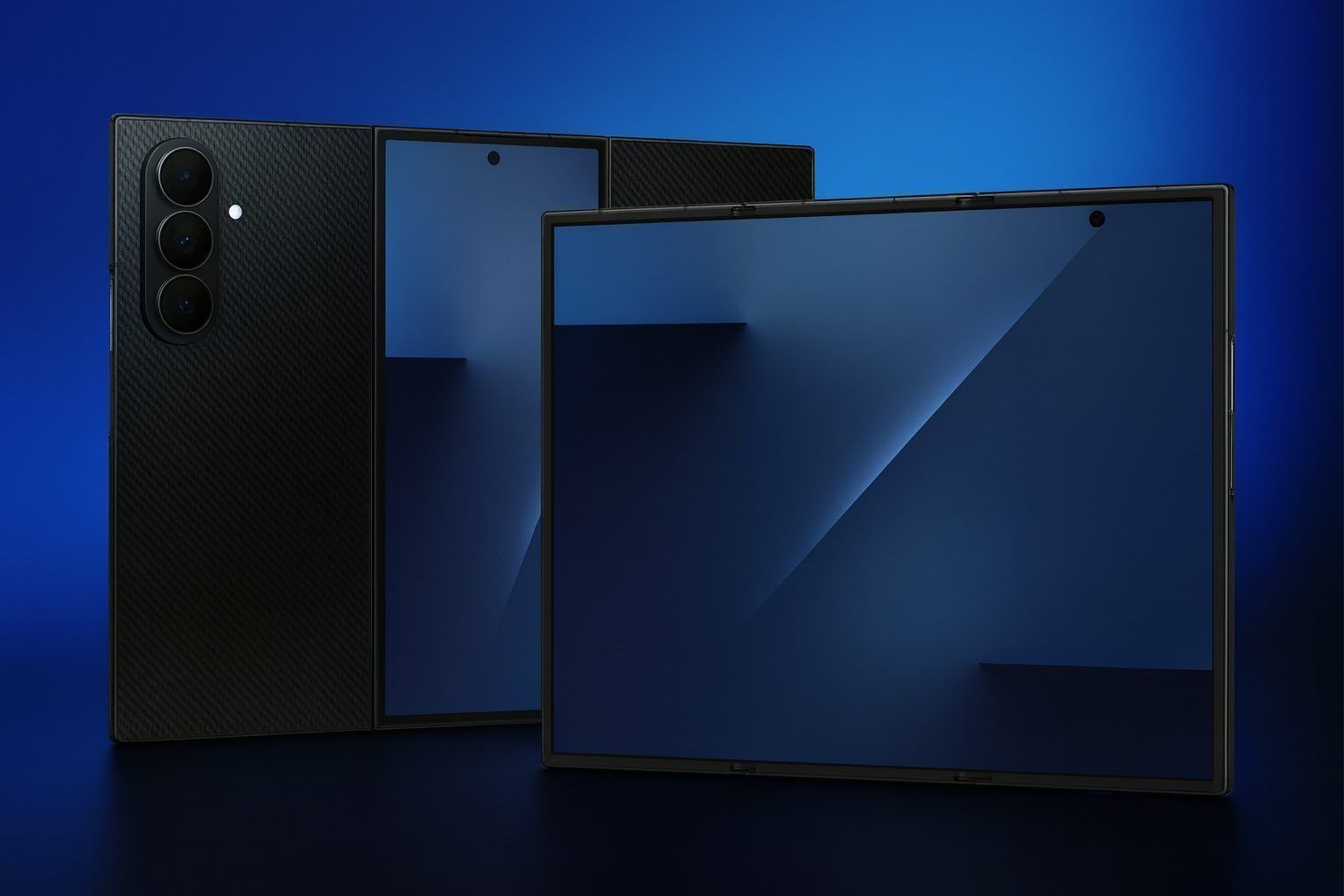
The Galaxy Z TriFold is Samsung’s first tri‑fold smartphone: a 6.5‑inch “normal” phone that unfolds twice into a 10‑inch tablet‑like display using two hinges and three panels.Samsung Global Newsroom+1 It’s also Samsung’s most expensive phone yet, sitting well above the Galaxy Z Fold 7 and firmly aimed at early adopters, mobile workers and creators.
Here’s everything you need to know today: release date, price, specs, AI features – plus the fresh headlines about benchmarks, missing software features and how it stacks up against both Huawei and Samsung’s own Fold 7.
Galaxy Z TriFold release date, price and availability
Launch schedule
Samsung announced the Galaxy Z TriFold on December 2, 2025, positioning it as the flagship device for the “mobile AI era.”Samsung Global Newsroom+1
Key dates and markets:
- South Korea retail launch: December 12, 2025
- Other 2025 markets: China, Taiwan, Singapore and the UAE later in December
- U.S. launch window: expected in Q1 2026, with exact timing still to be confirmed
Price and configurations
In Korea, the Galaxy Z TriFold starts at 3,594,000 KRW (around US$2,440–$2,500) for a configuration with 16 GB of RAM and 512 GB of storage.Reuters+1 A 1 TB storage option is also available for power users.
At this price, TriFold is clearly a halo product:
- It costs roughly $600–700 more than the Galaxy Z Fold 7, which starts at $1,799.99.
- Some outlets expect global pricing to land “around $2,500” once taxes and local duties are factored in.Android Authority+1
Samsung is reinforcing the premium positioning with perks like a six‑month Google AI Pro trial (including advanced Gemini features) and a one‑time 50% discount on display repair costs for TriFold buyers.
Design and hardware: how the tri‑fold actually works
Double hinges, three panels, one 10‑inch canvas
The Galaxy Z TriFold uses an inward‑folding, dual‑hinge design. Folded, you get a standard‑looking phone with a 6.5‑inch cover display. Unfolded, you reveal a 10.0‑inch Dynamic AMOLED 2X main screen with a 4:3‑ish aspect ratio, tuned for productivity and media.
Key display details:
- Main screen: 10.0″ QXGA+ (2160 × 1584), 120 Hz adaptive refresh, up to 1600 nits peak brightness
- Cover screen: 6.5″ FHD+ (2520 × 1080), 120 Hz adaptive refresh, up to 2600 nits peak brightness
Samsung’s Armor FlexHinge with a dual‑rail structure is used in two different sizes, allowing the three panels to close with a minimal gap while keeping the device surprisingly thin when open – just 3.9 mm at its thinnest point.
Dimension and weight highlights:
- Folded: 159.2 × 75.0 × 12.9 mm
- Unfolded: 159.2 × 214.1 × ~3.9–4.2 mm
- Weight: about 309 g
Hands‑on reports from early demos note that:
- The phone feels well balanced despite its weight, with mass spread evenly across the three panels.
- The two creases across the main display are clearly visible when the screen is off, but they tend to fade away when content is playing.
- The folded device is slightly uneven in thickness, something reviewers hope Samsung will refine in later generations.
To protect the complex mechanics, Samsung has built in a folding “auto‑alarm”: if you close the panels in the wrong order, the phone vibrates and shows on‑screen warnings so you don’t stress the hinges or display.Samsung Global Newsroom+1
The phone also carries an IP48 rating, providing limited dust resistance and protection against water immersion up to around 1.5 meters for 30 minutes – rare for such a complex foldable.
Specs: Snapdragon 8 Elite, big battery and serious cameras
Under the hood, the Galaxy Z TriFold is built like a top‑tier flagship:
- Processor: Snapdragon 8 Elite for Galaxy (3 nm custom variant)
- Memory: 16 GB RAM
- Storage: 512 GB or 1 TB UFS storage options
- Battery: 5,600 mAh three‑cell system, with one cell in each panel for better weight balance and power delivery
- Charging:
- 45 W wired fast charging (around 50% in ~30 minutes)
- 15 W wireless charging
- Wireless PowerShare for accessories
- Connectivity: 5G, Wi‑Fi 7, Bluetooth 5.4
Camera setup:
- 200 MP main camera with OIS and “optical quality” 2x zoom
- 12 MP ultra‑wide
- 10 MP 3x telephoto (up to 30x digital zoom)
- Dual 10 MP selfie cameras (one on the cover screen, one on the main display)
Several outlets note that this camera system is essentially shared with the Galaxy Z Fold 7 rather than the Galaxy S25 Ultra, meaning it’s very capable but not Samsung’s absolute best shooter.
Software, Galaxy AI and DeX: tablet and laptop modes on a phone
The Galaxy Z TriFold ships with Android 16 and One UI 8, heavily customized to exploit the tri‑fold form factor.
Multi‑window productivity
Samsung’s own description is that the 10‑inch display behaves like “three 6.5‑inch smartphones” side‑by‑side, and early hands‑on demos back this up: you can pin three portrait apps at once and even add a fourth in a floating pop‑up window.Samsung Global Newsroom+2HardwareZone Sing…
Key productivity features include:
- Advanced multi‑window: resize apps freely, snap them side‑by‑side, or stack them vertically like mini monitors.
- Taskbar recall: if you close the main screen for a call, you can quickly restore your multi‑window layout from a taskbar at the edge of the display.
Standalone Samsung DeX
The TriFold is the first Galaxy phone to offer standalone DeX directly on its own screen.
- You can run up to four virtual workspaces, each capable of hosting up to five apps simultaneously, effectively creating a mini desktop environment.
- Extended Mode lets you wirelessly cast DeX to an external display while still using the TriFold as a second screen, with keyboard and mouse via Bluetooth.
Hands‑on testers report that DeX on the TriFold genuinely feels like a small laptop experience, though they caution that it still won’t replace a full notebook for heavy workloads.
Galaxy AI and Gemini Live
Samsung is using the TriFold as a showcase for Galaxy AI and tight integration with Google’s Gemini:
- Features like Generative Edit, Sketch‑to‑Image and advanced Photo Assist make heavy use of the large canvas for side‑by‑side “before vs after” comparisons.Samsung Global Newsroom
- Gemini Live can see what’s on your screen (or through the camera) and answer questions in real time – think asking for design ideas while showing it a room, a shopping page and a paint palette all at once.
- Buyers receive a six‑month Google AI Pro trial with 2 TB of cloud storage, underlining the AI‑first positioning.
Today’s headlines (December 8, 2025): benchmarks, missing Flex Mode and Z Fold 7 pushback
As of December 8, 2025, several new stories are shaping the conversation around Galaxy Z TriFold. Here’s a snapshot of the most important ones and what they mean.
1. Early benchmark leak looks underwhelming
Tech site GizChina published leaked Geekbench 6 scores for the Galaxy Z TriFold today:
- Single‑core: 2,853
- Multi‑core: 8,501
On paper those numbers are strong, but they’re around 10–13% lower than what’s usually expected from devices powered by Qualcomm’s Snapdragon 8 Elite.
The article suggests:
- Samsung may have tuned the chip more conservatively for heat and battery life in such a thin, complex chassis.
- Some commentators argue cost control and development constraints may also have played a role in sticking with this specific configuration.
The takeaway: TriFold should still be faster than older Galaxy foldables, but if you were expecting it to top the charts versus every other Snapdragon 8 Elite phone, early benchmarks hint that it might not.
2. Galaxy Z TriFold lacks Flex Mode
In a separate piece today, SamMobile confirmed that the Galaxy Z TriFold does not support Samsung’s Flex Mode – the feature on the Z Flip and Z Fold that reflows app interfaces when the screen is partially folded (video at the top, controls at the bottom, and so on).
You can still partially fold the TriFold and stand it on a surface, but:
- The UI doesn’t adapt to the angled posture.
- That means no Flex‑Mode‑style dual‑pane YouTube or camera layouts, at least for now.
For a device that’s supposed to be the apex of Samsung’s foldable line, this omission is raising eyebrows – especially among users who rely on Flex Mode on their Z Flip or Z Fold.
3. Value debate: TriFold vs Galaxy Z Fold 7
A new editorial from Red94, published today, pits the Galaxy Z TriFold directly against the Galaxy Z Fold 7.
Key points from that piece:
- Samsung controls around 64% of the global foldables market in Q3 2025, mostly thanks to the Z Fold and Z Flip lines.
- Z Fold 7 starts at $1,799.99, roughly $600 cheaper than what most outlets expect the TriFold to cost globally.
- At 215 g vs 309 g and 8.9 mm vs 12.9 mm folded thickness, the Fold 7 is significantly more portable and comfortable for one‑handed use.
The article argues that while the Galaxy Z TriFold grabs headlines, the Fold 7 remains the more practical choice for most people, balancing price, portability and performance better than the ultra‑premium tri‑fold.
4. Unboxing and hands‑on impressions
Tech outlets and YouTubers are also going deeper with hands‑on coverage today:
- Android Central’s unboxing piece highlights the futuristic design, 10‑inch display and ~US$2,400 price, but notes that the box is minimalist – no bundled case or earbuds – continuing Samsung’s eco‑focused packaging trend.
- Regional hands‑on reports (such as HardwareZone’s Singapore preview) praise the precise hinge feel, balanced weight, and standalone DeX, while calling out the obvious dual creases and slightly uneven folded profile.
5. Opinion: “coolest gadget you probably don’t need”
A commentary at PhoneArena, updated late yesterday and still trending today, calls the Galaxy Z TriFold “the future” but questions who actually needs it:
- The device is praised for being extremely thin when unfolded and for offering true tablet‑class multitasking.
- At the same time, the writer points out that the screen isn’t as bright as Samsung’s best slab phones, the camera hardware is borrowed from the Fold 7, and the lofty price makes it a niche choice for power users rather than the average buyer.
How Galaxy Z TriFold compares to Huawei Mate XTs and other tri‑fold rivals
Samsung’s TriFold isn’t entering an empty field. Huawei’s Mate XTs, launched earlier this year, was the first commercially available tri‑fold phone.
Inward vs outward folding
According to a comparison by The Times of India and analysis from TechRadar:
- Galaxy Z TriFold
- Inward‑folding design with two internal hinges
- Main 10.0‑inch Dynamic AMOLED 2X display (2160×1584, 120 Hz)
- 6.5‑inch cover AMOLED (1080×2520)
- Better screen protection and IP48 water resistance
- Huawei Mate XTs
- Outward‑folding design that wraps a 10.2‑inch OLED panel around the outside
- Larger external display but leaves the foldable screen more exposed to scratches and damage
TechRadar’s take is that Samsung’s slightly thicker inward‑fold approach looks unusual but is probably the smarter long‑term design, avoiding some fragility risks of outward‑fold phones.
Specs at a glance
Based on current reporting:
- Both phones offer around 10‑inch main displays and 5,600 mAh batteries.
- Galaxy Z TriFold uses Snapdragon 8 Elite for Galaxy, while Mate XTs runs Huawei’s Kirin 9020.
- Samsung goes harder on camera resolution (200 MP vs 50 MP main), though real‑world quality will depend on image processing.
- Mate XTs charges faster on paper (up to 66 W wired and 50 W wireless), while TriFold focuses on balanced thermals and durability with its three‑panel cell layout.
Market context: Samsung’s strategy and the road to 2026
Samsung isn’t expecting the Galaxy Z TriFold to be a mass‑market blockbuster overnight.
Reporting from Reuters and DigiTimes indicates that:
- Foldables still account for only about 2.5% of global smartphone shipments, but that share hit a record high in Q3 2025 with a 14% year‑over‑year increase, helped by the Galaxy Z7 series.
- Samsung executives describe the TriFold as a strategic, brand‑defining product geared toward customers who specifically want it, rather than a volume driver.
- Competition is expected to intensify in 2026 as more brands – including Apple with a rumored first foldable – move aggressively into the premium foldables segment.
In short, the Galaxy Z TriFold is designed to:
- Lock in Samsung’s technology leadership in foldables and mobile AI.
- Give power users a “phone, tablet and DeX workstation in one” experience.
- Serve as a halo product that raises the profile of the entire Galaxy ecosystem, even if most consumers still gravitate toward cheaper Fold and Flip models.
Should you wait for Galaxy Z TriFold or pick something else?
From today’s news cycle, a nuanced picture is emerging:
Pros
- Truly unique 10‑inch tri‑fold display that transforms from phone to tablet.
- Serious multitasking and standalone DeX, with up to four virtual desktops and five apps per workspace.
- Top‑tier hardware: Snapdragon 8 Elite, 16 GB RAM, up to 1 TB storage, big 5,600 mAh battery, Wi‑Fi 7, IP48 rating.
- Deep Galaxy AI and Gemini integration, plus attractive AI Pro trial and display‑repair perks.
Cons / questions
- Very high price, with early editorials arguing that the cheaper Galaxy Z Fold 7 offers a better value/performance balance for most people.
- Early benchmarks show performance slightly below what the Snapdragon 8 Elite is capable of in other devices.
- No Flex Mode, which feels like a regression for fans of Samsung’s existing foldables.
- Weight and thickness remain noticeable; if you find current foldables bulky, a tri‑fold won’t change your mind.
For now, Galaxy Z TriFold looks like the ultimate “power‑user toy”: a glimpse into the future of mobile computing rather than the new default smartphone. If your workflow genuinely benefits from three apps at once, DeX desktops on the go and heavy AI‑powered multitasking, the TriFold might be worth the wait when it hits your region.
If you just want a reliable foldable that’s easier to pocket – and much easier on your bank account – the Galaxy Z Fold 7and other established foldables will likely remain the smarter buy through most of 2026.