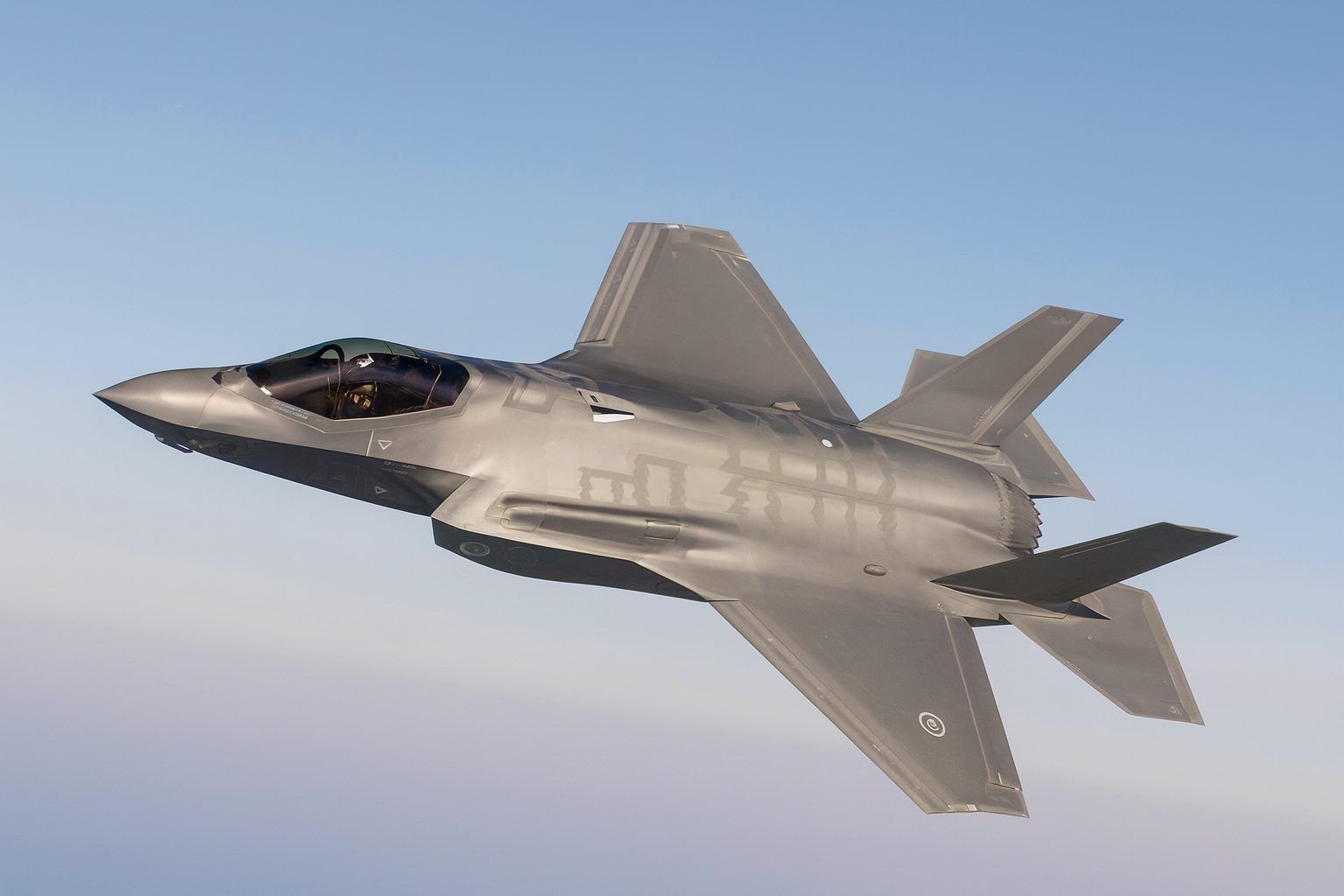

Canada’s long‑running fighter jet saga has erupted into a full‑blown political and industrial showdown as of December 8, 2025. A leaked Department of National Defence (DND) scoring chart strongly favoring the U.S.‑made F‑35, an aggressive push to turn Mirabel, Quebec into a major F‑35 maintenance hub, and a fresh wave of opinion pieces and lobbying on both sides of the F‑35–vs–Gripen debate are all converging just as Prime Minister Mark Carney edges toward a decision on the country’s next‑generation fighter fleet.
At stake: Canada’s air defence for the next 40 years, tens of thousands of jobs, and the country’s strategic balance between the United States and a newly courted Europe.
Mirabel, Quebec Pushes to Become North America’s Next F‑35 Maintenance Hub
One of the clearest developments this week is the sharpening focus on Mirabel, Que., as a potential regional maintenance, repair and overhaul (MRO) hub for the global F‑35 fleet.
In late 2024, Ottawa named L3Harris MAS of Mirabel as its “strategic partner” to work with the F‑35 Joint Program Office on plans for an F‑35 air vehicle depot in Canada. That facility would handle maintenance, repair, overhaul and upgrades for Canada’s future F‑35s.Canada+1
New reporting over the weekend, originating with CBC and republished by multiple outlets, reveals just how ambitious that plan has become. L3Harris executives say the Mirabel site could be ready to service not only Canadian CF‑35A jets but also American F‑35s as early as 2028–29, provided Ottawa completes the full order of 88 fighters and Washington agrees to route some U.S. aircraft north when other depots are at capacity.
Parliamentary testimony suggests the government’s goal is to build a “regional repository” in Mirabel capable of servicing more than 2,000 jets over the life of the program, plugging Quebec into the same global sustainment network that already includes regional depots in Italy, Japan and Australia.ourcommons.ca+2Grokipedia+2
According to industry reporting, upgrades to the Mirabel facility could cost up to $200 million, with L3Harris arguing that the investment would protect around 1,500 direct jobs and 3,500 indirect positions in the region. The company is lobbying both the federal and Quebec governments, stressing that the business case only works if Canada sticks with a full F‑35 fleet and if U.S. jets also pass through the site.
In other words, the industrial future of Mirabel is now tightly tied to Carney’s F‑35 decision. A smaller F‑35 buy or a pivot to a mixed F‑35/Gripen fleet would weaken the argument that Mirabel should become a major hub in the F‑35 global sustainment system.
Leaked DND Scoring Chart: F‑35 95%, Gripen 33%
If Mirabel is the industrial carrot, the leaked DND scorecard is the political stick.
On December 3, an internal 2021 DND technical evaluation comparing the F‑35 and Saab’s JAS 39 Gripen became public via reporting from Radio‑Canada and the Ottawa Citizen. A detailed analysis in the National Security Journal says the confidential chart shows the F‑35 scoring roughly 95% on military capability versus just 33% for the Gripen.
Compiled by Royal Canadian Air Force (RCAF) evaluators during the original Future Fighter Capability Project competition, the scoring reportedly covered areas like survivability, sensors, growth potential and interoperability. In almost every category, the F‑35 dominated.
For F‑35 advocates, the leak is proof that the debate should be over. The RCAF has clearly signalled what it believes it needs, they argue, and the government has already selected the F‑35 multiple times over the past decade.
Saab and its supporters see it very differently. They point out that the chart is four years old, predating both major problems with the F‑35’s Block 4 upgrade—now estimated to be billions over budget and years behind schedule—and significant enhancements to the Gripen E. They also stress that the evaluation was done before Carney and U.S. President Donald Trump took office, arguing that the geopolitical context has changed dramatically.
Critics also note long‑standing allegations that the competition was skewed toward the F‑35 from the outset, with earlier reporting questioning whether the procurement process was genuinely open to alternatives.
Regardless of where one stands, the leak has injected new urgency into Carney’s long‑delayed review of the F‑35 purchase, and it is fuelling a fresh wave of commentary across the media landscape.
Opinion Wars: “Just Buy the Damned F‑35” vs “Cancel the F‑35?”
The leak landed just as the opinion pages turned into a dogfight of their own.
A high‑profile column in the Toronto Star by Justin Ling, titled “Enough is enough, Canada. Just buy the damned F‑35 jets,” has been widely shared and amplified on social media and news aggregators. The piece channels frustration with years of reversals and reviews and argues that Ottawa should end the uncertainty and complete the F‑35 order.newsnow.com+1
At the same time, two detailed essays in the National Security Journal have sharpened the pro‑F‑35 case from a defence‑strategy standpoint. One, published this weekend under the headline “Cancel the F‑35? JAS 39 Gripen Fighter Would Cripple Canada’s Air Force,” warns that cutting the F‑35 fleet and buying Gripens would treat national defence “as a political toy.” The authors argue the RCAF needs all 88 F‑35s to fully integrate with NORAD and the Five Eyes intelligence network, particularly to detect and counter advanced cruise and hypersonic missile threats from Russia and China.National Security Journal+1
Another analysis, “F‑35 vs. JAS 39 Gripen Fighter Debate in Canada Might Already Be Decided,” leans heavily on the leaked scoring chart, noting that RCAF brass clearly favoured the F‑35 in 2021. At the same time, it echoes some concerns often heard from Gripen supporters: the F‑35’s high operating costs—citing U.S. estimates of over US$30,000 per flight hour versus Saab’s claimed US$7,500 for the Gripen—and dependence on U.S.‑controlled software and upgrade pipelines.National Security Journal+1
On the other side, commentary from Canadian and European outlets has highlighted the Gripen’s lower operating costs, its ability to operate from short or improvised runways, and the appeal of a fighter that could be built in Canada under Saab’s proposal. A fresh piece from FlyAJetFighter, “Gripen vs. F‑35: a tug‑of‑war for Canada’s aerial future,” frames the debate as a choice between an expensive but future‑proof 5th‑generation jet and a more affordable 4th‑generation‑plus aircraft that some say better suits Canada’s Arctic basing realities and quest for strategic autonomy from Washington.Fly a jet fighter+1
Meanwhile, rumours about a supposed F‑35 “kill switch” that would allow the United States to disable Canadian jets remotely continue to circulate online, even though defence analysts have repeatedly debunked them. National Security Journal’s latest piece calls the rumour “widely debunked” and warns that this narrative oversimplifies what is really a debate about data standards and interoperability within NORAD, not remote control of another country’s Air Force.National Security Journal+1
Industrial Benefits, Jobs and Canada’s Pivot Toward Europe
Underlying the technical and strategic arguments is a fierce fight over jobs and industrial benefits—especially in Quebec.
Industry Minister Mélanie Joly has openly complained that Canada “didn’t get enough” out of its original F‑35 procurement deal in terms of work for domestic firms. She has argued that the government wants more jobs and more production in Canada, and she has confirmed talks with Saab, which is dangling up to 10,000 aerospace jobs tied to a Canadian Gripen production line.National Security Journal+2Wings Magazine+2
At the same time, F‑35 backers point to the program’s existing footprint in Canada. Official figures from National Defence note that more than 30 Canadian companies are already involved in building components and providing services for the global F‑35 fleet, with over US$3.3 billion in contracts awarded as of January 2025 and more sustainment work expected over the life of the program.
Analysts warn that if Ottawa walks away from most of the F‑35 order, some of that work could migrate to other partner countries, shrinking the very industrial base the government says it wants to grow.
Mirabel’s proposed F‑35 depot is being pitched as part of the solution: a way to claw back more economic value by turning Quebec into a regional sustainment hub for both Canadian and allied jets. But that, too, depends on Ottawa’s willingness to stay in the program at scale—and on Washington’s willingness to route U.S. jets through a Canadian facility.
This tug‑of‑war over industrial benefits is playing out just as Carney executes a broader pivot towards Europe. Last week, Canada became the first non‑EU country to join the bloc’s €150‑billion Security Action for Europe (SAFE) defence fund, giving Canadian firms access to cheap EU‑backed loans for defence projects. Carney has framed the move as a way to diversify away from a situation where “over 70 cents of every dollar” of Canadian military capital spending flows to U.S. suppliers—a dynamic that is front and centre in the F‑35–versus–Gripen fight.AP News+1
Sweden, for its part, has used recent high‑level visits to pitch a Gripen E/F production and R&D hub in Canada, aligning its offer with Carney’s push for more European content in Canadian defence procurement.
What the RCAF Says It Needs
While politicians and industry argue over jobs and alliances, the RCAF keeps coming back to its operational requirements.
Under the Future Fighter Capability Project, Canada formally committed in 2023 to acquiring 88 F‑35A jets to replace the aging CF‑18 Hornet fleet, with a project value of roughly $27.7 billion, including aircraft, infrastructure and sustainment set‑up.
Government documentation emphasizes the need for an aircraft that can integrate seamlessly with NORAD and NATO, operate effectively in harsh Arctic conditions, and provide advanced sensor fusion and data‑sharing capabilities. The first Canadian F‑35s are scheduled to arrive in 2028, after infrastructure upgrades and secure facilities at Cold Lake and Bagotville are completed.
Senior and retired RCAF officers have repeatedly warned against moving to a mixed fleet—say, 16 F‑35s plus dozens of Gripens—arguing that duplicate training pipelines, supply chains and maintenance systems would add cost and complexity for a force that is already struggling with pilot shortages and tight budgets.
Northern allies offer another reference point. Finland, Denmark and Norway have all chosen the F‑35 for high‑north operations, a fact that F‑35 advocates cite as evidence that the aircraft can handle Arctic conditions and the long‑range patrol missions Canada faces.
Gripen supporters respond that the Swedish jet’s short‑takeoff performance, lower operating costs, and potential for domestic assembly could offset those disadvantages, especially if paired with Canadian‑operated airborne early‑warning assets.
The Global Context: Engines, Weapons and Alliances
Canada’s fighter choice isn’t happening in a vacuum.
On December 2, RTX (the parent company of Pratt & Whitney) announced a US$1.6‑billion sustainment contract for its F135 engines, which power all F‑35 variants. The deal covers depot‑level maintenance, repair and spare parts for U.S. and international operators and follows a US$2.8‑billion F135 production contract awarded in August.
For Canadian policymakers, those contracts underscore both the scale and long‑term nature of the F‑35 ecosystem: joining it provides access to a mature global supply and sustainment network, but also deepens dependence on U.S. industrial and policy decisions.
Just two days later, the U.S. State Department approved a potential US$2.68‑billion sale of air‑strike weapons and related equipment to Canada, with Boeing and RTX as prime contractors. While the Pentagon’s notice did not explicitly tie the package to the F‑35 program, the timing reinforces the impression that Washington still expects Canada to field a modern, U.S.‑compatible combat fleet.
At the same time, Canada’s participation in the EU SAFE fund signals that future procurement may tilt more toward European partners—giving extra momentum to Saab’s pitch, even as U.S. firms remind Ottawa of the industrial and operational risks of walking away from the F‑35.
Three Paths Ahead for Ottawa
As of December 8, 2025, Canada’s F‑35 decision space can be roughly divided into three scenarios:
1. Stay the Course: 88 F‑35s, Mirabel as a Full F‑35 Hub
In this scenario, Carney ultimately confirms the full 88‑jet F‑35 program, leveraging the leaked scorecard as political cover and extracting additional industrial concessions—such as a firm commitment to the Mirabel depot—from Lockheed Martin and its partners.
- Pros:
- Maximizes interoperability with NORAD, NATO and Five Eyes partners.
- Simplifies training and logistics with a single fighter type.
- Strengthens Canada’s case for long‑term sustainment work, including Mirabel and other depots.
- Cons:
- Locks Canada into high acquisition and operating costs.
- Deepens reliance on U.S. software, upgrades and export policy at a time of political friction.
2. Split the Fleet: F‑35 Plus Canadian‑Built Gripens
Here, Ottawa proceeds with the 16 F‑35s it is already contractually committed to and buys Gripen E/F fighters for the remainder, assembled in Canada under a Saab‑backed industrial package.
- Pros:
- Delivers a highly visible jobs and technology‑transfer win, especially if major work is based in Canada.
- Aligns with Carney’s desire to reduce dependence on U.S. defence suppliers and deepen ties with European partners.
- Cons:
- Creates a mixed fleet that the RCAF says will be more expensive and complex to operate.
- Risks shrinking Canada’s share of F‑35 industrial work just as the program moves into long‑term sustainment.
3. Pivot Hard: Cancel Most F‑35s and Go All‑In on a European Fighter
The most drastic option—cancelling most or all of the F‑35 buy and replacing it entirely with a European platform like the Gripen—has been floated by some commentators but is widely regarded as the riskiest path.
- Pros:
- Maximizes domestic industrial content if structured as a “build in Canada” program.National Security Journal+1
- Sends a clear signal about Canada’s intent to balance away from U.S. defence dominance.
- Cons:
- Could blow up existing F‑35 industrial participation, worth billions and thousands of jobs.
- Risks weakening NORAD integration and interoperability with key allies, especially if other Arctic nations continue to standardize on the F‑35.
A Decision That Will Define Canada’s Air Power—and Its Alliances
From L3Harris’s Mirabel plans and new engine sustainment contracts to the SAFE defence fund and a torrent of op‑eds and expert analyses, December 8, 2025 finds Canada’s F‑35 debate at a decisive moment.
The leaked scoring chart suggests the RCAF’s preference for the F‑35 has been clear for years. The new Quebec maintenance hub proposal shows how deeply the F‑35 program is already embedding itself in Canada’s industrial base. And the intensifying public argument—between those urging Ottawa to “just buy the damned jets” and those warning that a mixed or alternative fleet would either cripple the RCAF or squander Canada’s industrial leverage—highlights how much more than hardware is on the line.National Security Journal+4SSBCrack News+4National Security Journal+4
Related articles: NYSE:LHX