
Tesla, Inc. NASDAQ:TSLA is back in the spotlight as Wall Street recalibrates its expectations for the world’s most valuable automaker‑turned‑AI company.
As of midday Tuesday, December 9, 2025, Tesla shares trade around $439.58, giving the company a market capitalization of roughly $1.46 trillion.MarketBeat The stock is up single digits this year after a volatile run and sits about 10% below last year’s record high.
Yet that price implies a price‑to‑earnings ratio near 300 and a PEG multiple above 15, levels that leave very little room for error.MarketBeat+1 That stretched valuation is exactly why Tesla just got hit with a high‑profile downgrade—despite growing revenue, record cash generation and rapidly expanding AI and robotics ambitions.
Key Takeaways for TSLA on December 9, 2025
- Morgan Stanley cut Tesla to “Equal Weight” from “Overweight”, arguing that the stock already discounts much of the upside from robotaxis, AI and humanoid robots, even as it raised its price target from $410 to $425.Business Insider+1
- China is a mixed picture: November shipments from the Shanghai plant rose almost 10% year‑on‑year, but retail sales for 2025 remain below last year and Tesla may still record its first annual sales decline in the country.
- Q3 2025 delivered record revenue and free cash flow, but margins shrank as price cuts, higher AI / R&D spending and EV incentive changes hit profitability.
- Wall Street is split: consensus 12‑month price targets cluster around $385–$400, implying mid‑single‑digit to low‑double‑digit downside from current levels, even as a handful of bullish firms still see $600 or more.
- Institutional money remains heavily involved: roughly 66% of Tesla shares are held by institutions and hedge funds, with some big funds trimming positions while others aggressively add.
Tesla Stock Today: Price, Valuation and Trading Mood
On Tuesday, TSLA is changing hands just under $440, after sliding around 3–4% Monday on the Morgan Stanley downgrade that followed a strong run into early December.Barron’s Over the past year, the stock has traded between roughly $214 and $489, leaving it near the upper half of its 12‑month range.
Fundamentally, several points stand out:
- Market cap: about $1.46T.
- P/E ratio: around 250–300x trailing earnings, versus the S&P 500 in the high‑teens.
- Institutional ownership: ~66.2%.
That valuation rests on the belief that Tesla is less a carmaker and more an AI, software, robotics and energy platform—a framing increasingly echoed by both bullish and cautious analysts.
Why Morgan Stanley Just Downgraded TSLA
The biggest headline for Tesla stock this week is the Morgan Stanley downgrade.
Andrew Percoco, who just took over Tesla coverage from long‑time bull Adam Jonas, cut the rating from “Overweight” (Buy) to “Equal Weight” (Hold) while simultaneously lifting the price target to $425.Business Insider+2Barron’s+2
His logic in a nutshell:
- Valuation is “full”: Tesla trades at more than 200x projected earnings—second‑richest in the S&P 500—after a roughly one‑third rally over the last three months.Barron’s+2CBT News+2
- Core EV business is under pressure, with slowing global demand, waning subsidies and intensifying competition from Chinese brands in both China and Europe.
- AI and robotics upside is real but already largely priced in, from Full Self‑Driving (FSD) to the Optimus humanoid robot.
Percoco essentially decomposes Tesla into several pieces—EVs, network services (software and charging), energy, mobility (robotaxis) and humanoids—and estimates that about $60 per share of value already reflects Optimus, with additional value tied to Tesla’s robotaxi ambitions.
He outlines three scenarios:
- Base case: $425, roughly in line with where TSLA now trades.
- Bull case: up to $860, assuming Tesla successfully scales unsupervised FSD, rolls out a large robotaxi network and gets Optimus into meaningful production.
- Bear case: as low as $145, if EV competition and regulatory delays crush margins and the humanoid/robotaxi story fails to materialise.
Short‑term, Morgan Stanley expects “choppy” trading as EV demand cools and earnings remain volatile—but stresses that Tesla still deserves a premium multiple given its leadership in AI and manufacturing.Investopedia+2Barron’s+2
China: Rebound Month or Early Warning Sign?
China remains Tesla’s most important growth market—and also one of its biggest headaches.
November Numbers
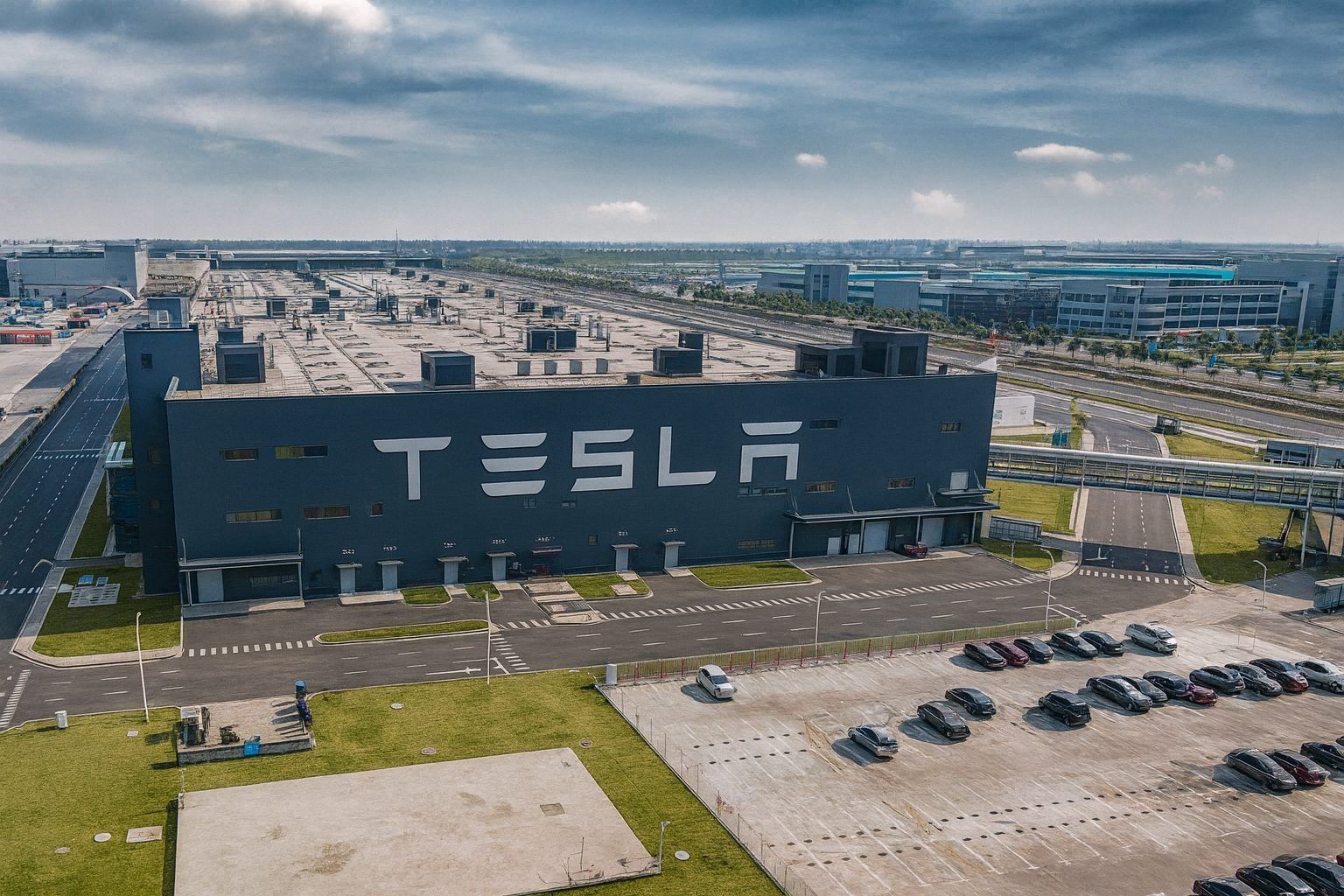
- China‑made shipments: November wholesale deliveries from Tesla’s Shanghai plant climbed 9.9% year‑over‑year and 41% month‑over‑month, helped by updated Model 3 and Model Y variants, including a new long‑range Model Y.
- Retail sales: Local registrations show 73,145 vehicles sold in China in November, Tesla’s strongest month since March and its second‑best of 2025, but still slightly below last year’s level.
From January through November, Tesla’s retail sales in China are down about 7% year‑on‑year, and exports from Shanghai have also fallen, underscoring how fierce domestic competition has become.
One analysis estimates Tesla would need to sell around 120,000 vehicles in China in December to avoid its first annual sales decline there—well above the plant’s typical monthly capacity of roughly 100,000 units.
Competitive Backdrop
At the same time, Chinese rivals continue to surge:
- BYD and other local brands are hitting record shipments, especially in Europe and emerging markets.
- Xiaomi and newer EV entrants are quickly grabbing share with aggressively priced sedans and SUVs.
The bottom line for investors: November shows Tesla can still generate bursts of growth in China, but its structural market share is slipping, and 2025 is likely to mark a second consecutive year of global volume decline.
Q3 2025: Record Revenue, Record Storage… and Thinner Margins
Tesla’s Q3 2025 results, released in late October, are central to the current debate over valuation.
Key numbers:
- Revenue: about $28.1 billion, up roughly 12% year‑on‑year and a quarterly record.
- GAAP EPS:$0.39; non‑GAAP EPS:$0.50, missing many analyst expectations.
- GAAP net income: about $1.37–1.4 billion; non‑GAAP net income around $1.8 billion.
- Operating margin: compressed to around 5.8%, down sharply from over 10% a year earlier, as Tesla leaned on price cuts and ramped AI and R&D spending.
- Free cash flow: nearly $4.0 billion, a company record, leaving Tesla with about $41.6 billion in cash, cash equivalents and investments.
Operationally, Q3 was Tesla’s strongest quarter ever:
- Production: more than 447,000 vehicles.
- Deliveries: over 497,000 vehicles worldwide.
- Energy storage deployments:12.5 GWh, a record quarter that pushed trailing‑12‑month deployments above 43 GWh—already more than all of 2024.
The energy segment contributed over $1.1 billion in gross profit in Q3, making it one of Tesla’s fastest‑growing, highest‑margin businesses.
Wall Street’s problem isn’t the top line—it’s that profitability is going backwards while the stock price keeps marching higher.
AI, Robotaxis and Optimus: The Narrative Driving the Multiple
If traditional auto metrics alone justified Tesla’s value, TSLA would likely trade much lower. Instead, the market is heavily focused on three long‑term growth pillars:
1. Full Self‑Driving and Robotaxis
Tesla is rapidly iterating its FSD (Supervised) software, recently rolling out version 14 to customers and integrating more of its robotaxi stack into consumer vehicles.
The company:
- Expanded its robotaxi pilot service in Austin and the Bay Area, gathering real‑world data under human supervision.
- Markets its “Robotaxi” rides via app waitlists in the U.S. and Canada, with a future Cybercab vehicle planned for full autonomy and targeted for volume production starting in 2026.Tesla Assets+2Tesla+2
Regulatory reality, however, is messy. Tesla has preliminary approvals in California and some U.S. cities but still faces pushback from local lawmakers and regulators, and recent coverage suggests its scaled‑back timeline is lagging behind earlier promises.
2. Optimus Humanoid Robot
Tesla’s Optimus robot has moved from concept to regular demo videos showing walking, object manipulation and, most recently, jogging.
- Pilot production lines for Optimus are already being installed, with Tesla targeting volume production in 2026, according to its latest quarterly deck.
- Morgan Stanley assigns about $60 per share of equity value to Optimus alone in its base‑case Tesla model.
Musk has gone as far as suggesting Optimus could one day “eliminate poverty”, comments that fuel investor excitement but also heighten skepticism about timelines and real‑world economics.Yahoo Finance+1
3. Energy Storage and AI Infrastructure
Tesla is evolving into a major grid‑scale battery company:
- Trailing‑12‑month energy deployments have grown over 80% year‑on‑year to more than 43 GWh, with Q3’s 12.5 GWh a new record.
- The company launched Megablock, a pre‑engineered storage solution built around Megapack 3, and is planning a high‑volume Megapack 3 factory in Houston with up to 50 GWh annual capacity starting 2026.
Tesla is also building its own AI infrastructure, including Cortex, an in‑house compute cluster now equivalent to about 81,000 Nvidia H100 GPUs, and is partnering with Samsung to manufacture advanced AI semiconductors in the U.S.
For bulls, this AI + energy + robotaxi flywheel is why Tesla might still be cheap even at a trillion‑plus valuation. For bears, it’s a story long on vision, short on near‑term earnings.
What Wall Street Thinks: Consensus Targets and Ratings
Across sell‑side research, Tesla remains one of the most polarizing megacap stocks.
Consensus Picture
- Average 12‑month price target:
- Around $399 across roughly 40 analysts on MarketBeat, implying about 9% downside from ~$440.
- StockAnalysis shows a similar $385–$386 target, also suggesting double‑digit downside.
- Rating mix: consensus is effectively “Hold”, with roughly a third to 40% of tracked analysts rating TSLA a Buy and the rest split between Hold and Sell.Investopedia+2Barron’s+2
Specific moves in recent weeks:
- Morgan Stanley: Downgrade to Equal Weight; PT $425 (bull: $860, bear: $145).
- Mizuho: Maintains Outperform, trims PT from $485 to $475, citing EV subsidy cuts in the U.S. and China but pointing to FSD v14, robotaxis and Optimus as key 2027 drivers.
- Stifel: Keeps Buy, recently boosting its target to $508.
- Wedbush: Remains firmly bullish with a long‑standing $600 target.
In other words, Wall Street’s average view is cautious, but a cluster of AI‑and‑robotics‑focused bulls still see substantial upside if Tesla executes on its long‑term roadmap.
Who Owns Tesla: Institutional Flows and Insider Moves
Despite the volatility, big money has not abandoned Tesla.
- Institutional and hedge‑fund ownership stands around 66.2% of outstanding shares.
- Recent 13F filings show a mixed but net‑positive trend:
- Gamco Investors increased its Tesla stake by just over 10% in Q2.
- M Holdings Securities boosted its position by 161.5%, making TSLA its fifth‑largest holding.
- Winslow Capital trimmed its holdings by roughly 14%, even as giants like Vanguard, Geode, Legal & General, Amundi and Norway’s Norges Bank either added or initiated large positions.
Insiders—including board member James Murdoch and senior executive Xiaotong Zhu—have sold shares into recent strength, though insiders still control nearly 20% of the company.
2026 and Beyond: Key Risks and Catalysts for TSLA
Looking ahead, Tesla’s stock path over the next 12–24 months will likely hinge on a handful of questions:
1. Can EV Margins Stabilize?
With the U.S. $7,500 EV tax credit removed for many buyers and global EV growth slowing, Tesla has warned of a “few rough quarters” before software and services revenues can meaningfully offset pressure on hardware.Reuters+1
Investors will be watching:
- Whether new lower‑cost models and updated Model Y trims restore volume without destroying margins.
- How quickly Tesla can convert today’s FSD and robotaxi beta programs into profitable, at‑scale services.
2. Will Robotaxis and Optimus Deliver Real Revenue?
Regulatory delays and public safety concerns could slow the rollout of autonomous services, even as Tesla ramps up its AI stack.Reuters+2Electrek+2 For Optimus, the big unknowns are:
- Production cost,
- Reliability in real‑world industrial settings, and
- Willingness of customers to adopt humanoid robots at scale.
Any commercial contracts or recurring‑revenue disclosures around Optimus and robotaxis in 2026 could be powerful catalysts—positive or negative.
3. Energy Storage as a Quiet Profit Engine
Energy is increasingly one of Tesla’s most scalable and less controversial businesses. If the company continues growing storage deployments 40–50% per year while maintaining strong margins, it could become a meaningful share of overall profit and support the valuation even if EV growth slows.
Should Investors Buy, Hold or Sell Tesla Stock Now?
There’s no single “right” answer—only a trade‑off between risk tolerance, time horizon and belief in Tesla’s long‑term AI and robotics story.
What the current setup suggests:
- Bull case: You believe Tesla can successfully build a massive robotaxi network, commercialise Optimus at scale, and keep dominating EVs and energy. In that world, targets like $600–$800+ over time are not impossible, as some analysts argue.
- Base case: The core EV business grinds through an “EV winter,” energy keeps growing, FSD remains supervised but profitable, and robotics remains mostly in pilot phase. In this scenario, Tesla’s current valuation might already be about right.Barron’s+2FinancialContent+2
- Bear case: EV competition intensifies, regulators slow or restrict robotaxis, Optimus proves harder to commercialise than expected, and margins keep tightening. Then the stock could de‑rate sharply toward more normal multiples, as the bear targets near $145–$200 imply.
For now, the consensus view is cautious—but Tesla’s unique blend of hype, execution and controversy means sentiment can swing quickly around any major AI or autonomy announcement.
Final Note
This article is for information and journalism purposes only and does not constitute financial advice. Tesla is a highly volatile stock. Before buying or selling TSLA—or any security—investors should do their own research, consider their financial situation and risk tolerance, and, if needed, consult a licensed financial adviser.
Related articles: NASDAQ:TSLA