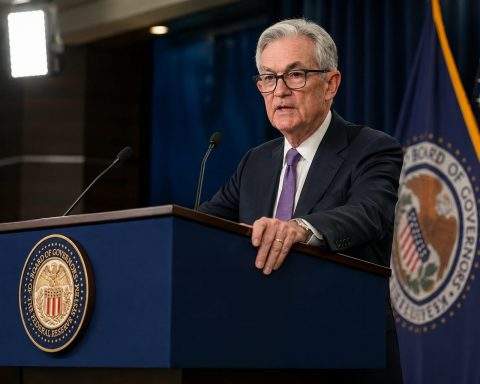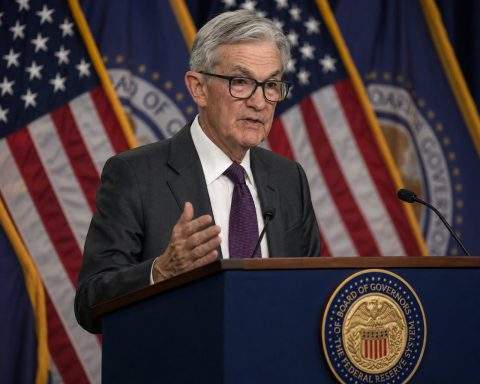

The U.S. Federal Reserve begins its final policy meeting of 2025 today, Tuesday, December 9, with investors overwhelmingly betting on another interest rate cut and watching just as closely for clues about what happens to borrowing costs in 2026. The two-day Federal Open Market Committee (FOMC) meeting runs December 9–10 and will conclude with a policy statement at 2 p.m. ET on Wednesday, followed by Chair Jerome Powell’s press conference.
Markets are treating a small cut as almost a done deal. Futures tracked by the CME FedWatch tool imply roughly a 90% probability that policymakers will trim the federal funds rate by 0.25 percentage point — a third straight reduction after cuts at the September and October meetings. That would move the target range from 3.75%–4.00% down to about 3.50%–3.75%.
Yet the decision is anything but straightforward. Official economic data are still distorted by a recent record‑long government shutdown, inflation remains stuck above the Fed’s 2% goal, and the job market looks softer but not clearly weak. Fed officials themselves are openly divided about whether they should keep cutting or pause.
Below is a full guide to what is happening at the December Fed meeting today, what markets are expecting, how the decision could affect your wallet, and the key phrases to listen for when Powell speaks tomorrow.
1. What is happening at the Fed today?
The December 9–10 gathering is the eighth and final scheduled FOMC meeting of 2025 and one of the most consequential, because it comes with an updated Summary of Economic Projections — the “dot plot” that shows where individual officials expect interest rates, inflation, growth and unemployment to go over the next few years. Federal Reserve+1
The FOMC is the Fed’s rate‑setting body. It typically comprises 12 voting members: the seven governors in Washington, the president of the New York Fed, and four of the remaining regional Fed bank presidents who rotate onto the committee each year.
Key logistics for this week’s meeting:
- Dates: December 9–10, 2025
- Decision time: Statement at 2 p.m. ET on Wednesday, December 10
- Press conference: Powell speaks shortly after the statement, streamed live on the Fed’s website and social channels, and carried by major financial outlets.
Today (Tuesday) is all about internal deliberations and incoming data. The decision — and the wording of the statement and projections — will not be known until Wednesday afternoon.
2. What markets expect: a third 0.25‑point cut
The Fed has already cut its benchmark rate by 0.25 percentage point at each of the last two meetings to avoid a slowdown in hiring from turning into a full‑blown unemployment spike. The current target range stands at 3.75%–4.00%, with the effective fed funds rate around 3.9%.
Most analysts and traders think the committee will repeat that move tomorrow:
- Multiple outlets report that futures markets assign roughly 89–90% odds to a 0.25‑point cut at this meeting.
- NDTV, summarizing FedWatch data, notes that such a move would push the target range down to 3.50%–3.75%, marking the third cut in a row.
- Reuters similarly highlights that traders see nearly a 90% chance of a December cut, even as inflation remains above 2% and labour indicators show a cooling but not collapsing job market.
In other words, the question markets are wrestling with is not “Will the Fed cut tomorrow?” but “What will Powell say about what comes next?”
Economists surveyed by outlets such as Investopedia and Business Insider broadly expect:
- One more cut now, mainly to shore up the labour market
- A more cautious tone on 2026, as officials try to keep inflation expectations anchored despite incomplete data
- Significant internal disagreement, with some hawkish members worried about cutting too far, too fast.
3. Why this decision is unusually tricky
Data gaps after a government shutdown
The backdrop to this Fed meeting is especially messy. A record‑long U.S. government shutdown that ended in November forced agencies such as the Bureau of Labor Statistics to delay or skip key reports on inflation and unemployment. That means Fed officials will go into tomorrow’s decision without fresh official readings for October CPI, October unemployment, or the usual November jobs and inflation reports.
Instead, they are relying more heavily on:
- Private‑sector indicators, which economists generally regard as less reliable than official BLS releases
- Alternative labour‑market data, including job‑cut announcements and surveys showing weaker hiring intentions Investopedia
- This week’s last‑minute reports, such as the Job Openings and Labor Turnover Survey (JOLTS) released today and an employment cost index due tomorrow Reuters+2Business Insider+2
A cooling job market, but stubborn inflation
According to recent analysis cited by Investopedia, total job cuts this year have reached their highest level since the pandemic, while hiring announcements are at their lowest since the aftermath of the Great Recession, and monthly payroll gains have slowed well below the post‑COVID trend.
At the same time, inflation has stopped falling. The latest available official reports suggest price growth is still running above the Fed’s 2% target and has remained “stubborn” in recent months, partly influenced by tariffs and other policy changes. Investopedia+1
That leaves the Fed squeezed between:
- The employment side of its mandate, which points toward more easing
- The price‑stability side, which argues for a slower or shorter cutting cycle
Commentary from Powell and other officials after the October meeting made it clear that the committee is split, with one camp pushing for steeper cuts to protect jobs and another advocating patience to avoid reigniting inflation.
4. How markets are trading ahead of the Fed meeting
Global markets spent today in classic “wait‑and‑see” mode.
- U.S. stocks: A Reuters market wrap shows the Dow and S&P 500 modestly higher while the Nasdaq edges slightly lower, leaving the S&P within about 1% of its record high. Small‑cap stocks have outperformed this quarter, helped by expectations of lower borrowing costs.
- Bonds: After a days‑long sell‑off that pushed U.S. yields to two‑month highs, government bonds steadied as traders shifted focus squarely to the Fed and its guidance for 2026.
- Overseas markets: Asian and European equities traded slightly lower or flat overnight, with STL News describing a global session marked more by caution than panic, as investors positioned ahead of the Fed decision.
- Gold and other metals: Spot gold ticked higher, with Reuters reporting that traders see another 25‑basis‑point cut as broadly bullish for precious metals. Silver has rallied toward record highs as investors look for hedge assets against policy uncertainty.
Bloomberg‑based analysis published via Swissinfo notes that options markets are pricing in about a 0.7% move in the S&P 500 in either direction after tomorrow’s announcement — larger than average for recent meetings — underscoring how much is riding on Powell’s tone and the Fed’s 2026 projections.
5. The Fed’s mandate — and why it cares about your borrowing costs
The Fed’s goals are often summarized as a “dual mandate”: maximum employment and stable prices. But legally, Congress has actually given the central bank three objectives: maximum employment, stable prices, and moderate long‑term interest rates. Cobb Courier
Recent analysis republished from The Conversation explains:
- The Fed mainly controls a short‑term rate — the federal funds rate — but its actions and communication strongly influence longer‑term borrowing costs such as 30‑year mortgages, auto loans, and corporate bonds via market expectations.
- When inflation is believed to be under control, markets tend to keep long‑term rates lower; when inflation pressures look persistent, long‑term yields rise as investors anticipate future Fed hikes.
With the current target range at 3.75%–4.00%, long‑term borrowing costs have eased from their peaks but remain higher than many households and businesses grew used to during the ultra‑low‑rate era.
This is why the December Fed decision matters far beyond Wall Street: it feeds directly into how much you pay on mortgages, car loans, credit cards and small‑business borrowing — and how much you earn on savings accounts and certificates of deposit.
6. What a December rate cut could mean for your wallet
Business Insider’s consumer‑focused preview highlights several practical impacts if the Fed cuts rates for a third time tomorrow.
Mortgages and housing
- Fixed mortgage rates typically move with longer‑term Treasury yields, which in turn reflect expectations for future Fed policy.
- Anticipation of cuts has already helped cool mortgage rates from their recent highs; another cut could provide incremental relief for would‑be homebuyers and homeowners considering refinancing, especially if markets interpret the Fed’s guidance as friendly to further easing in 2026.
Credit cards and personal loans
- Many credit cards and adjustable‑rate loans are directly or indirectly tied to short‑term benchmarks that closely follow the fed funds rate.
- A 0.25‑point cut will not slash monthly payments overnight, but over a few months it can trim interest costs for revolving balances and make it slightly cheaper to consolidate or refinance high‑rate debt.
Auto loans and small‑business borrowing
- Lower policy rates reduce funding costs for banks, which can trickle down into more competitive rates on auto loans, equipment financing and small‑business credit lines, especially if lenders believe future cuts are coming.
Savers and money‑market funds
- The flip side: yields on savings accounts, money‑market funds and short‑term CDs could gradually drift lower as banks adjust deposit rates and as Treasury bill yields fall.
For job seekers, a continuation of the cut cycle would be a tentative positive sign: it signals that the Fed is actively trying to prevent further labour‑market deterioration, which could support hiring and wage growth into 2026 if inflation continues to slowly cool.
(Standard reminder: this is general economic information, not personalized financial advice. Individual situations differ, so it’s worth speaking with a qualified adviser before making major money decisions.)
7. Three key things to watch in Wednesday’s Fed statement
1. The “dot plot” and 2026 rate path
Economists at major banks expect the new projections to show fewer cuts pencilled in for 2026 and beyond than markets currently assume, with some forecasts calling for only about one additional quarter‑point cut per year through 2027.
If the median “dot” implies a shallower path than what futures markets price in, that would be a hawkish surprise — even if the Fed cuts tomorrow.
2. Language around inflation versus employment
Watch the balance of phrasing on “inflation” and “employment”:
- Stronger emphasis on sticky inflation and upside price risks would suggest the Fed is preparing to pause after December.
- More emphasis on labour‑market softening and downside growth risks would hint that officials remain open to further easing if data allows.
Commentary from Bloomberg, via Swissinfo, notes that markets are especially wary of a “hawkish cut”: a move where the Fed lowers rates but signals that it is now done cutting for a while. SWI swissinfo.ch
3. Powell’s tone on uncertainty and politics
This meeting also comes against a political backdrop: Powell’s term as Fed chair ends in May 2026, and reporting suggests President Donald Trump is likely to nominate a new chair in early 2026, which could shift the committee’s internal balance in the years ahead.
Markets will parse Powell’s comments for hints about:
- How much weight he places on data gaps from the shutdown
- Whether he stresses “optionality” — keeping all future moves on the table — or leans more clearly in favour of pausing after this cut Investopedia+1
8. Scenario analysis: How markets might react
While nobody can predict markets with certainty, current pricing and analyst commentary suggest a few broad scenarios.
Scenario A: 0.25‑point cut + clearly dovish tone
- What it looks like: Fed cuts as expected, dot plot shows room for more easing in 2026, and Powell stresses downside risks to growth and employment.
- Likely reaction:
- Stocks, especially rate‑sensitive sectors (small caps, real estate, tech), could rally.
- Treasury yields may fall across the curve, supporting further declines in mortgage and corporate borrowing costs.
- Dollar could weaken, while gold and other metals continue to benefit from lower real‑yield expectations.
Scenario B: 0.25‑point cut + hawkish guidance
- What it looks like: Fed cuts but dot plot shows very few further cuts; Powell emphasizes sticky inflation and warns that the easing cycle may be nearing its end.
- Likely reaction:
- Equities could wobble or sell off, especially if markets had priced a longer cutting cycle. 瑞
- Front‑end yields might drop on the cut itself, but longer‑term yields could stay elevated or rise if investors think inflation will remain higher for longer.
- Dollar might strengthen; gold could initially struggle despite the cut if real yields stay firm.
Scenario C: Surprise “no cut”
This is seen as low probability given current pricing, but not impossible given the Fed’s data constraints and internal divisions.
- Likely reaction:
- Sharp repricing across risk assets; stocks and high‑yield credit would likely fall, while short‑term yields jump.
- The Fed’s credibility on forward guidance would be questioned, at least in the short run.
9. How and when to follow tomorrow’s Fed decision
If you’re tracking the Fed meeting in real time, here are the key timings (all Eastern Time):
- Wednesday, December 10 – 2:00 p.m.:
The FOMC releases its interest‑rate decision, policy statement and updated economic projections on the Fed’s website. - Around 2:30 p.m.:
Powell’s press conference begins, streamed live on the Fed’s official channels and carried by major financial media worldwide. NDTV, among others, has announced it will relay the event live for international audiences.
For households and investors alike, the headline move — likely a 0.25‑point cut — will matter. But in many ways, the words may matter more than the numbers. With inflation not yet at target, the job market cooling, and politics in the background, the December 2025 Fed meeting is set to define expectations for interest rates, borrowing costs and market volatility well into 2026.
Related articles: Interest Rates