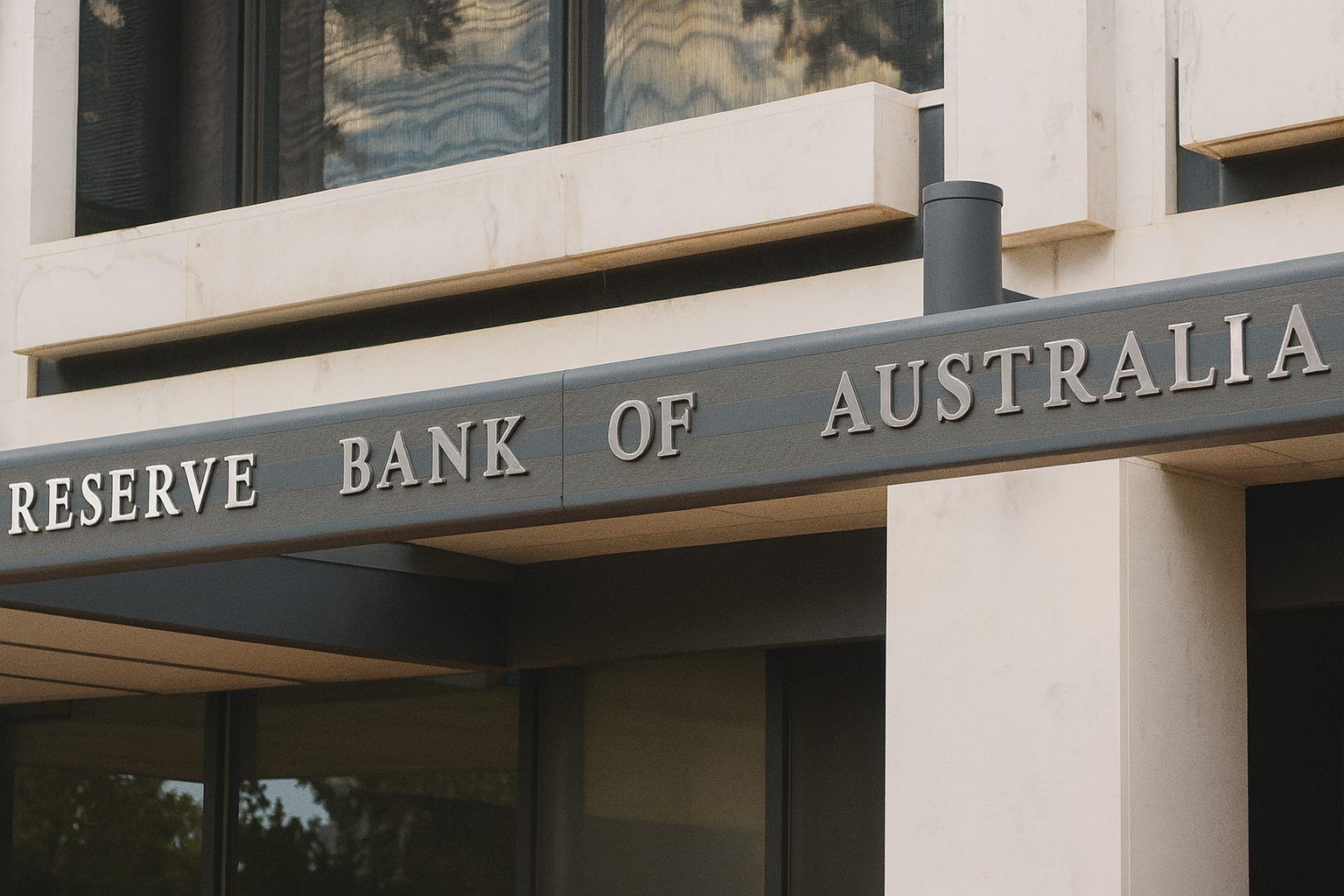

The Australian stock market spent Wednesday treading water, weighed down by a hawkish Reserve Bank of Australia (RBA), rising bond yields and bail ahead of a key US Federal Reserve rate decision.
The S&P/ASX 200 – Australia’s main benchmark of the top 200 listed companies, covering around three-quarters of local equity market value – finished slightly lower, around 8,577 points, down about 0.1% after trading between roughly 8,560 and 8,610 during the session.
Losses were modest but extended Tuesday’s 0.45% fall to 8,585.9 , which followed the RBA’s clear signal that rate cuts are off the table and further hikes in 2026 are possible if inflation stays sticky .
Market recap: ASX 200 drifts lower after early bounce
Futures had pointed to a mildly positive open, with ASX 200 SPI futures up about 0.18% before the bell , tracking a mixed Wall Street lead and record‑high silver prices.
That optimism quickly faded:
- Midday snapshot from the ABC’s markets live blog showed the ASX 200 down 0.1–0.2% around 8,565–8,573 , with the broader All Ordinaries also off 0.2% near 8,854 .
- By the close, exchange data indicate the ASX 200 had slipped to about 8,577 , a decline of roughly 0.10% on the day , adding to Tuesday’s heavier drop.
Turnover was lighter than in Tuesday’s RBA‑driven sell‑off, suggesting investors were reluctant to take big positions ahead of the Fed announcement early Thursday (AEDT).
On a year‑to‑date basis , the ASX 200 is still up around 5% , but the index has pulled back from recent highs and is trading under its 200‑day moving average – a level many technical traders watch as a signal of momentum.
Sectors: gold miners shine while rate‑sensitive stocks lag
Sector performance told the story of the day:
- Materials & gold miners were the stand‑out winners.
- Market Index’s live blog noted large‑cap gold names around session highs as spot gold traded above US$4,200/oz after a fresh surge in precious metals.
- Ramelius Resources, Northern Star, Newmont, Westgold and Bellevue Gold were among the better performers, many up 3–7% intraday .
- Health care and basic materials were the least negative sectors on the day according to the ABC’s sector summary, even as most others remained in the red.
- Information technology, growth names and REITs struggled as bond yields climbed.
- Market Index highlighted the Australian 10‑year government bond yield breaking above 4.8% , its highest weekly level since 2011 – a move that typically pressures long‑duration sectors like tech and property trusts.
By mid‑afternoon, Market Index described the ASX 200 as “flat” and sitting just below its 200‑day moving average , with the tone “rather bearish” given the persistent rise in yields.Market Index
Top movers: gold, defense tech and a battered retailer in focus
Winners
1. Ramelius Resources and the gold cohort
- Ramelius topped ASX leaderboards , jumping more than 6% after announcing a $250 million on-market buyback and a higher minimum dividend policy , further turbo-charging sentiment towards the already hot gold space.
- Northern Star, Westgold, Newmont and other gold producers also logged strong gains, riding both the buyback news and record‑breaking silver and elevated gold prices .
2. DroneShield
- The ABC reported DroneShield up about 10% intraday , making it one of the best performers on the ASX 200 as investors continued to favor defense and security names in a volatile macro environment.
3. Virgin Australia and Bell Financial Group
- Virgin Australia shares climbed nearly 7% off near‑record lows, according to Market Index’s live update of top gainers, suggesting short‑covering and bargain‑hunting interest.
- Bell Financial Group surged about 8–10% intraday after flagging unaudited pre‑tax profit of $48.2 million for the 11 months to November 2025 , a 17% year‑on‑year increase and a sharp turnaround from a weak first half.
Losers
1. Pro Medicus, Iluka and other quality growth names
- Pro Medicus and Iluka Resources were among the day’s worst performers, with Pro Medicus down around 4–5% and Iluka off about 3% by early afternoon, according to ABC trading data and Market Index’s losers list.
- Other notable underperformers included GQG Partners, Neuren Pharmaceuticals, Lynas Rare Earths, Meridian Energy, Amcor, Zip and Summerset Group , all down roughly 2–3% as investors rotated away from rate‑sensitive and richly valued stocks.
2. Cogstate’s 30% collapse (All Ords)
- Outside the top‑200 benchmark but still closely watched, Cogstate shares plunged about 30% to $1.75 after a trading update flagged weaker revenue and profitability, knocking confidence in the stock’s growth trajectory.
3. The Bapcor overhang
- Tuesday’s dramatic 21% slide in Bapcor – after the auto parts group slashed FY26 guidance and flagged structural challenges in its Trade business – continued to hang over the small‑cap retail and automotive space. Analysts at Canaccord Genuity and Morgans have cut price targets and warned of execution and balance‑sheet risks, even while maintaining hold ratings.
4. Corporate Travel Management’s looming exit from the ASX 200
- Sentiment towards travel names remained fragile after S&P Dow Jones Indices confirmed that Corporate Travel Management (CTM) will be dropped from the ASX 200 in the December quarterly rebalance , following accounting irregularities in its UK operations. The removal takes effect later this month and could prompt further passive‑index selling.
RBA’s hawkish turn: the main headwind for Aussie shares
The RBA’s December meeting on Tuesday is still driving the local market narrative.
Key points:
- The RBA kept the cash rate at 3.6% , as widely expected.
- Governor Michele Bullock made it clear rate cuts are “unlikely in the near term” , and that the Board discussed circumstances under which a rate increase in 2026 might be necessary .Reuters+ 2The Guardian+ 2
- Inflation has re‑accelerated , with headline CPI at 3.8% year‑on‑year in October and core inflation around 3.3% , above the 2–3% target band.
Local analysts and global houses are now largely aligned on a “higher for longer” outlook for Australian rates:
- Janus Henderson notes that Australia’s labor market is softening but still relatively tight, and that higher‑than‑expected monthly CPI readings justify the RBA’s bond.
- AMP chief economist Shane Oliver , in a weekly market update, argues that the RBA will likely stay on hold for now but keep the door open to a hike as early as February if trimmed‑mean inflation doesn’t cool .
- Vanguard’s Australia outlook highlights supply‑side constraints and weak productivity as structural issues, meaning even modest GDP growth is enough to stall disinflation – another reason rates may need to stay restrictive.
The immediate result for equities has been:
- All 11 ASX sectors finished in the red on Tuesday , with technology, energy and telecoms hardest hit , and the ASX 200 dropping 0.45% to 8,585.9 .
- Bond yields in both Australia and overseas have continued to grind higher, tightening financial conditions and undercutting enthusiasm for growth and high‑multiple stocks.
Global backdrop: all eyes on the Fed
Wednesday’s trade unfolded against a nervous global backdrop :
- Wall Street closed mostly lower overnight, with the S&P 500 down ~0.1%, Dow off ~0.4% and Nasdaq marginally higher , as investors waited for the Fed’s December decision.
- The Fed is widely expected to cut rates by 25 basis points , but futures pricing and commentary suggest a hawkish tone , with limited follow-up cuts signaled for 2026.
- Asian markets mirrored the ASX’s cautious tone: the ABC reported Japan’s Nikkei down 0.5%, South Korea’s Kospi off 0.4%, and similar declines in Hong Kong and Singapore during morning trade.
Commodities and currencies were another key theme:
- Gold rose about 0.5% overnight to just above US$4,210/oz , while silver surged 4.4% to a record US$60.70 , supporting Australian gold miners.
- Copper slipped nearly 2% , weighing on some base-metals names.
- The Australian dollar traded around US$0.664 , slightly firmer after the RBA’s hawkish tilt widened the interest‑rate differential vs. other major economies.
Outlook: what analysts see for the ASX 200 into 2026
Despite the recent wobble, the consensus view is not outright bearish on Australian equities – but it is more selective and valuation‑sensitive.
Valuations and sector rotation
An updated ASX 200 2026 outlook from IG highlights that:
- The index is trading on a 12‑month forward P/E of ~18.1x , well above the long‑term average near 14.8x.
- Materials (+24.5%), industrials (+11.4%) and utilities (+9.2%) are among 2025’s best‑performing sectors , while health care (-20.4%) and IT (-15.4%) are the only major sectors negative year‑to‑date.
- IG argues that materials look best‑placed to outperform in 2026 , helped by improving commodity prices and signs that China is exiting its brief flirtation with deflation.
This sector skew is already visible in daily trade: gold and diversified miners have been consistently attracting flows , while high‑multiple IT and health names remain under pressure whenever yields rise.
Macro forecasts
Across major institutional outlooks:
- Growth : Houses like Vanguard and Janus Henderson see Australian GDP growing at around 1.5–2% over the coming year , supported by solid capital expenditure (particularly on data centers and infrastructure) but constrained by weak productivity and soft consumer spending.
- Inflation and rates :
- Inflation is expected to hover somewhat above target through mid‑2026 , especially in services and housing.
- Earlier in 2025, BlackRock and others had expected perhaps one more 0.25% rate cut and then a gradual easing , but the latest CPI and RBA messaging have shifted the conversation firmly towards a possible renewed hiking cycle if inflation stays sticky .
- Equities : AMP’s weekly update suggests that, despite valuation risks and higher yields, a return to profit growth should allow Australian shares to deliver reasonable gains on a 6–12 month view , albeit with greater volatility and stock-picking importance than in the early-year rally.
Short‑term, a seasonal “Santa rally” is still on the radar. A recent technical note from Forex.com observes that the ASX often firms from mid‑December into the new year , though this pattern is far from guaranteed and could be challenged if yields keep rising or the Fed delivers a sharper‑than‑expected hawkish message.Forex+ 1
What investors are watching next
For traders and longer‑term investors alike, the following catalysts are front of mind:
- US Federal Reserve decision (tomorrow AEDT)
- The size of the cut (if any), updated “dot plot” and tone of Fed chair Jerome Powell’s press conference will shape global risk appetite and bond yields – and by extension, Australian equities.ABC+ 2Market Index+ 2
- Australia’s Q4 inflation data (late January)
- The RBA has effectively flagged this as make‑or‑break for whether a 2026 hike is needed early in the year. A surprise on the upside would put banks, REITs and high‑growth names back under pressure .
- Labor‑market and housing indicators
- Janus Henderson and AMP both point to a slowing but still tight labor market , rising house prices and constrained housing supply as critical to the inflation story – and therefore to the path of interest rates and equities.
- China and commodity demand
- With materials a key driver of the ASX, any signs of stronger or weaker Chinese demand for iron ore, copper and other commodities will quickly feed back into local miners and the index overall.
Takeaways for Australian investors
For now, the Australian stock market today looks less like a broad bull or bear trend and more like a tug‑of‑war :
- Supportive forces : high commodity prices, a still‑growing economy, strong balance sheets at many large caps and robust profits in select sectors.
- Headwinds : a hawkish RBA, rising bond yields, elevated index valuations and global uncertainty around the Fed’s next steps.
For readers, the practical implication is that stock and sector selection matter more than ever . Broad index exposure may still benefit from long‑term earnings growth, but today’s trade once again underlined how gold miners, defensive earnings streams and companies with clear catalysts are outperforming a choppy benchmark, while expensive growth, leveraged balance sheets and structurally challenged stories (like Bapcor and Cogstate) are being punished.
Related articles: Stock Market