
Published: 10 December 2025
Yangzijiang Shipbuilding share price today: where the stock stands
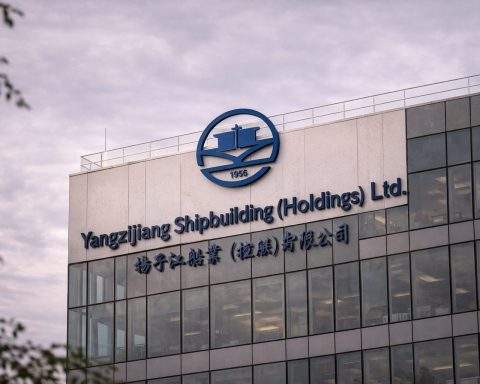
Yangzijiang Shipbuilding (Holdings) Ltd, one of China’s largest private shipyards and a key constituent of Singapore’s Straits Times Index, is trading around S$3.37 per share at mid‑day on 10 December 2025. That puts its market capitalisation at about S$13.3 billion, up roughly one‑third over the past 12 months.
Over the past year, Yangzijiang’s share price has gained about 24–26%, outpacing the STI, as investors re‑rated the stock on the back of record earnings and a reinforced order book.FT Markets+1 However, the last couple of weeks have been choppy: the stock slipped from the mid‑S$3.40s to about S$3.37–3.39, with data providers noting three straight down days into 9 December, even though it remains marginally higher over the last two weeks.
On a trailing basis, Yangzijiang trades at around 9.6× earnings, with trailing 12‑month revenue of roughly S$4.7 billion and a market cap of S$13.26 billion.StockAnalysis+1 For a stock with high margins and a net‑cash balance sheet, that valuation is a big part of why analysts continue to frame it as “under‑appreciated” despite the strong run since 2023.
Business profile: a private Chinese yard listed in Singapore
Yangzijiang Shipbuilding is headquartered in Jiangsu, China, but listed on the Singapore Exchange (ticker BS6). It is primarily a shipbuilder and offshore engineering group, with three main segments:
- Shipbuilding – construction of containerships, bulk carriers, gas carriers and other vessels (by far the largest contributor to revenue).
- Shipping – charter income from vessels owned by group entities.
- Others – ancillary marine and investment activities.
Listed in Singapore since 2007, Yangzijiang has grown into China’s largest privately owned shipyard, competing against state‑owned giants such as CSSC, which itself is consolidating into an even larger entity through a state‑driven merger.
Fundamentals: record earnings and very fat margins
FY2024: a step change in profitability
Yangzijiang’s FY2024 results, released in early 2025, marked a structural jump in profitability:
- Revenue grew to roughly RMB 26.5 billion, up about 10% year‑on‑year.
- Net profit surged to around RMB 6.8 billion, an increase of roughly 60%+ versus the prior year, driven by a richer mix of high‑spec vessels and stronger shipbuilding margins.
This performance set the base for the current re‑rating: the company demonstrated it could convert a super‑cycle order book into very high returns on equity, not just volume growth.
1H 2025: margins stay high despite a slower order intake
In the first half of 2025, Yangzijiang continued to print strong results even as global newbuilding orders slowed sharply:
- 1H 2025 revenue was about RMB 12.9 billion, slightly below the previous year.
- Net profit for the half rose to roughly RMB 4.2 billion, up about 36–37% year‑on‑year.
- Shipbuilding gross margin climbed to around 35%, versus the mid‑20% range a year ago.
Analysts attribute the margin expansion to a combination of locked‑in low steel costs, contracts signed in 2021–2023 at attractive pricing, and a shift toward larger, dual‑fuel and gas‑related vessels that command better pricing.
Balance sheet: stacked with net cash
Data compiled by StockAnalysis and broker models show:StockAnalysis+1
- Revenue (last 12 months): ~S$4.7 billion
- Net income: ~S$1.4 billion, implying net margins near 29%
- Net cash: about S$3.3 billion (cash well in excess of debt)
- Debt‑to‑equity ratio around 0.2 and interest coverage above 60×
For equity investors, this “fortress balance sheet + high margins” combination is a big part of the bull case: the company can absorb cyclical noise in orders, fund yard expansion and still pay dividends.
Orders in 2025: from early‑year drought to US$2.17 billion rebound
1H 2025: a sharp slowdown
Global shipbuilding cooled notably in the first half of 2025. Clarksons data cited in international press suggest worldwide new orders fell almost 50% year‑on‑year over that period, amid macro uncertainty and trade tensions.
Yangzijiang felt that chill:
- In 1H 2025, it secured contracts for just 14 vessels worth about US$540 million, a tiny fraction of the US$14.6 billion of new orders it landed in 2024.
- Management cautioned that macro uncertainties and geopolitics—especially US–China trade friction and proposed port fees on Chinese‑built ships—could weigh on near‑term ordering.
9M 2025: order momentum roars back
By the third quarter of 2025, the picture changed dramatically. A cluster of contracts pushed year‑to‑date order wins sharply higher:
- For the nine months ended 30 September 2025 (9M FY2025), Yangzijiang reported new orders of about US$2.17 billion (S$2.82 billion), roughly four times the value booked by mid‑year.
- The 2025 tally so far covers 50 vessels: 38 containerships, 10 bulk carriers and 2 gas carriers, according to company and media summaries.
- “Green” ships – primarily LNG or methanol dual‑fuel vessels and gas carriers – now represent over 70% of the order‑book value.Singapore Business Review+2Tiger Brokers+2
A giant, long‑dated order book
Those wins feed into an already‑large backlog:
- The outstanding order book stands at roughly US$22.8 billion–US$23.2 billion, depending on the source and FX assumptions.
- Social media posts and trade‑press summaries from November point to 224 ships on order, including around 95 container ships, 38 bulk carriers and 27 gas carriers, with the rest in other segments.
- Delivery slots are largely filled through 2028, with more limited capacity left in 2029. Management is now prioritising higher‑value green tonnage rather than chasing volume.
Analysts at DBS and CGS International estimate that the current backlog provides revenue visibility well into 2029–2030—a long runway even by shipyard standards.
Operationally, Yangzijiang had delivered 46 vessels year‑to‑date by late September against a full‑year target of 56 ships, hitting 82% of its 2025 delivery plan.
Green strategy and new projects: yards and LNG infrastructure
Order‑book composition and infrastructure investments show how Yangzijiang is trying to position itself for the decarbonisation era.
Green and alternative‑fuel vessels
With more than 70% of order‑book value in “clean‑energy” tonnage, Yangzijiang is heavily skewed toward:Singapore Business Review+2Tiger Brokers+2
- LNG‑ and methanol‑dual‑fuel containerships
- LPG / gas carriers
- Other higher‑spec designs aimed at meeting tightening IMO and customer emission requirements
That “green tilt” is a big reason ESG‑oriented funds have started to look more closely at the name, according to local broker commentary.TechStock²+1
Project Hongyuan and LNG terminal (target: 1H 2027)
To support future growth, Yangzijiang is in the middle of two significant capex projects:TechStock²+1
- Project Hongyuan: expansion of its yard footprint to roughly 866,700 square metres, or about 17% larger than today, scheduled for completion in 1H 2027.
- LNG terminal and storage tanks: a new LNG terminal and associated storage facilities, also targeted for 1H 2027, which pushes Yangzijiang slightly up the LNG value chain and supports handling of LNG‑powered vessels.
Taken together, these moves suggest management is planning for sustained demand for complex, higher‑value ships, even if the “standard” bulk and tanker cycles stay more volatile.
The sanctions episode: cancelled US$180m tanker contracts
Not everything in 2025 has been smooth sailing.
In late September, Yangzijiang disclosed that three subsidiaries had terminated contracts for four 50,000 DWT medium‑range oil tankers with a combined value of about US$180 million. The decision followed due‑diligence findings that the buyer’s sole shareholder was allegedly involved in a scheme to circumvent US sanctions, prompting the group to walk away from the business.
Market reaction was swift: the shares fell as much as 6–7% intraday on 29 September before closing down about 1.5% at S$3.23, with more than 50 million shares changing hands—one of the most actively traded counters on SGX that day.
Subsequent commentary from trade press and company statements stressed that:
- Deposits and instalments of roughly US$22 million had already been collected under the cancelled contracts.
- The revenue at risk is small compared with the US$22–23 billion order book, and management expects no material impact on 2025 financial performance.
Interestingly, several analysts framed the episode as a governance positive: sacrificing a small block of revenue to avoid sanctions entanglement may bolster Yangzijiang’s standing with regulators, lenders and blue‑chip shipowners.
Dividends and buybacks: income with room to grow
Yangzijiang is not a high‑yield play yet, but cash returns are rising.
- For FY2024 (paid in 2025), the company declared a dividend of S$0.12 per share, with an ex‑dividend date of 5 May 2025.
- At recent prices around S$3.37–3.40, that implies a trailing yield of roughly 3.5%–3.6%.
- Marketscreener and SGX filings show that between April and early May 2025, Yangzijiang completed a share buyback programme amounting to about 11 million shares, or 0.28% of outstanding shares, at a cost of roughly S$23 million.
DBS and CGS International both model higher dividends ahead, with some scenarios pencilling in S$0.15 per share for FY2025, which would push the forward yield into the 4–5% range if earnings follow forecasts.
Analyst views and Yangzijiang stock forecasts
Local broker calls: mostly BUY with higher targets
Recent research from major Singapore houses remains overwhelmingly positive:
- DBS Group Research
- Rating: BUY
- Target price: S$3.80
- Thesis: strong 3Q FY2025 operational performance, rebounding order wins (US$2.17b YTD), robust ~US$23b order book, and sustained high margins from dual‑fuel and gas carriers.
- CGS International
- Rating: ADD
- Target price: S$4.51, up from S$3.90
- Approach: values Yangzijiang at about 10× 2027F P/E, arguing that the stock still trades at roughly half the multiple of Korean and Japanese peers, despite superior forecast margins and ROE in the mid‑20s.
- UOB Kay Hian
- Rating: BUY
- Target price: S$4.10, raised from S$3.90 on 19 November after the 3QFY2025 business update
- Rationale: renewed order momentum, a four‑year orderbook providing earnings visibility, and expectations of additional contracts being signed by year‑end.
Global consensus: still room for double‑digit upside
Data aggregators differ slightly but point in the same direction:
- TipRanks reports that six analysts covering Yangzijiang have an average 12‑month target price of about S$3.91, with a high of S$4.51 and a low of S$3.55. From a reference price of S$3.39, that implies around 15% upside.
- Beansprout (SGX data) shows a higher consensus target of S$4.52 as of 10 December 2025, implying roughly 34% potential upside from about S$3.38.
Across these sources, Yangzijiang sits firmly in “BUY / ADD” territory, with only minor differences in how far the re‑rating might go. The common threads in almost every note are: high margins, long‑dated green order book, and a valuation still below regional shipyard peers.TechStock²+2TechStock²+2
Key risks investors are watching
Despite the bullish backdrop, several risks hang over the story.
1. Shipbuilding cycle and order‑intake volatility
- Global newbuilding activity remains cyclical and policy‑sensitive. 1H 2025 already showed how sharply orders can fall when owners delay decisions.
- CGS has trimmed its order‑intake assumptions for Yangzijiang to around US$3 billion in 2025 and US$3.5 billion in 2026, below the margin‑era boom years, partly because smaller Chinese yards now have spare capacity and are competing more aggressively.
If global freight rates or financing conditions worsen, new orders could slow again, even with a strong order book.
2. Sanctions and compliance risk
The US$180 million tanker cancellation highlighted the regulatory minefield around oil‑related tonnage and Chinese yards:
- The episode proved Yangzijiang is willing to sacrifice revenue to stay onside of sanctions regimes.
- It also underscored the risk that other contracts could be disrupted if counterparties become entangled in sanctions disputes.
3. Concentration in containerships and green fuels
While “green” orders are a positive, they also concentrate exposure:
- A large portion of the order book is tied to containerships and LNG / methanol dual‑fuel technology.
- If shipping lines delay fleet renewal or alternative‑fuel economics shift unexpectedly, some of that pipeline could be pushed out or repriced.
4. Policy and trade tensions
Tariff proposals and port‑fee debates in the US targeting Chinese‑built ships, as well as broader US–China trade frictions, inject uncertainty into long‑term demand and financing costs for Chinese yards.
Yangzijiang Shipbuilding outlook: what to watch after 10 December 2025
Putting it together, Yangzijiang Shipbuilding enters the final weeks of 2025 with:
- Share price: about S$3.37
- Market cap: ~S$13.3 billion
- Valuation: ~9.6× trailing earnings, below many regional peers
- Order book: ~US$22.8–23.2 billion, heavily weighted to green vessels, with visibility into 2029–2030
- Balance sheet: net cash, double‑digit ROE and very high margins
Most broker and data‑provider forecasts imply double‑digit upside over the next 12 months, with target prices clustered in the S$3.80–S$4.50 range, plus a growing dividend that could lift yields toward the mid‑single digits if earnings track expectations.
From here, investors and traders will be watching closely for:
- Additional order announcements to fill 2028–2030 delivery slots.
- Updates on Project Hongyuan and the LNG terminal build‑out as 2027 approaches.
- The final FY2025 dividend decision and any tweaks to the capital‑return policy.
- Further developments on sanctions enforcement and any impact on tanker or gas‑carrier demand.
Related articles: SGX:BS6