Singapore – 10 December 2025
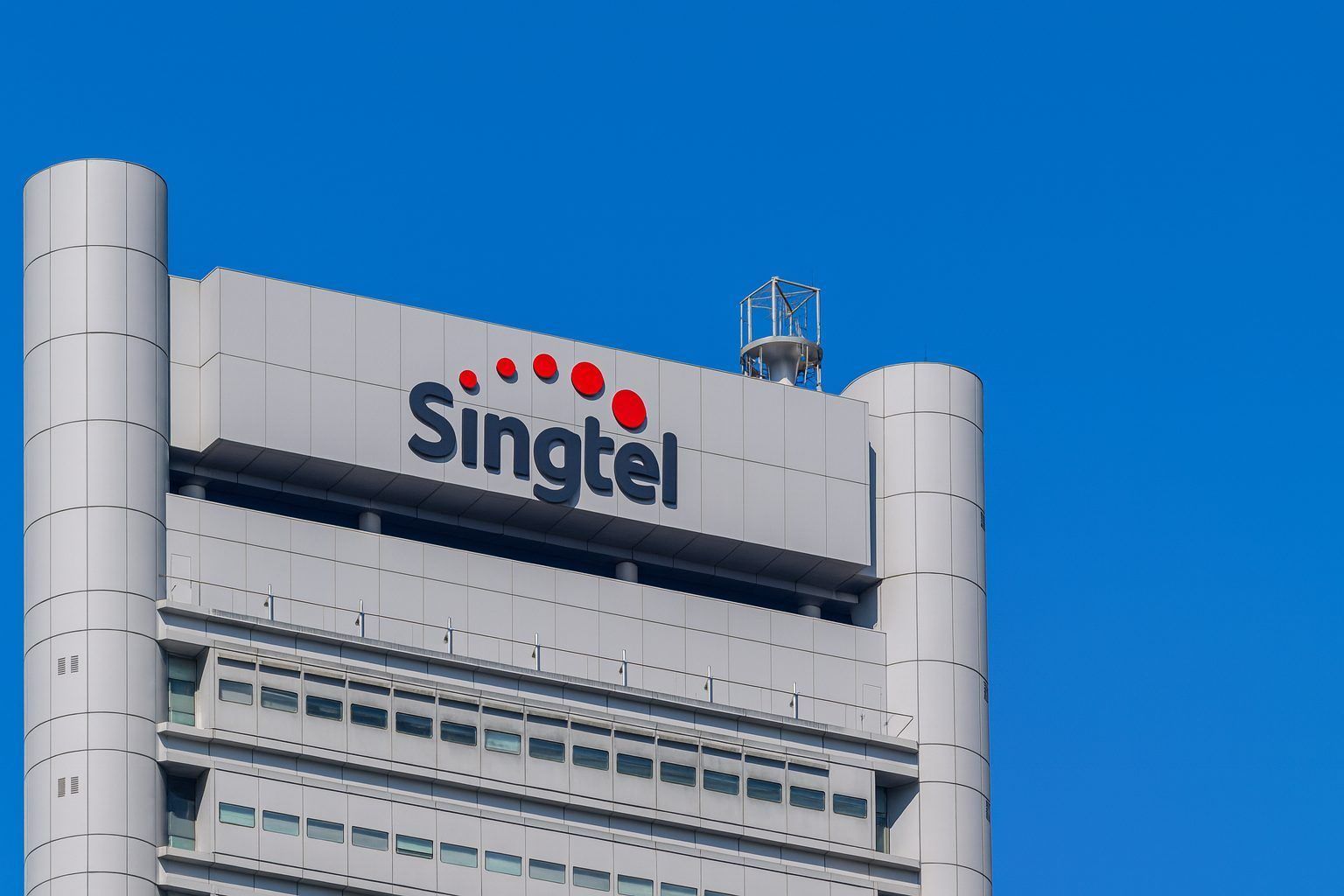
Singapore Telecommunications Limited (Singtel, SGX: Z74) heads into mid‑December 2025 as one of the standout performers on the Singapore Exchange – but also as a stock sitting at the crossroads of powerful tailwinds and very public risks.
After a year‑long rally of roughly 50–55%, Singtel’s share price is hovering just below record highs, supported by a S$2 billion share buyback programme, a higher interim dividend, and stronger underlying earnings. At the same time, its Australian unit Optus faces regulatory and reputational fallout from multiple network failures and a record court fine.
Below is a structured look at the latest price, news, forecasts and analyst views on Singtel stock as of 10 December 2025.
Singtel share price today: still near record territory
As of the latest quote on 10 December 2025, Singtel is trading around S$4.58 per share, slightly below the previous close of S$4.59. The intraday range is about S$4.55–S$4.60, with a 52‑week range of roughly S$3.04–S$4.92.
Independent market data and recent coverage show:
- Over the past 12 months, Singtel has delivered a 50–55% total return, materially outperforming the Straits Times Index.
- The stock’s 12‑month trading range is about S$3.01–S$4.92, with the 52‑week (and effectively all‑time) high of S$4.92 hit in mid‑November 2025.
That means Singtel today trades just a few percentage points below its recent peak, and well above levels seen even in the early 2010s and 1990s, according to historical data.
From a valuation standpoint, Singtel currently changes hands at around:
- 12–13x trailing earnings (P/E ~12.2–12.3x),
- c. 2.8x price‑to‑book, and
- around 5.4x price‑to‑sales,
with a dividend yield close to 4%.
These are not “deep value” levels, but they are still moderate compared with global telco peers, especially given the scale of the group’s data‑centre and digital‑infrastructure ambitions.
Earnings momentum: strong H1 FY26, upgraded guidance
Singtel’s re‑rating in 2025 rests heavily on a sharp improvement in profitability and clearer long‑term guidance.
For the half‑year ended 30 September 2025 (H1 FY26), Singtel reported:
- Underlying net profit up 14% year‑on‑year to S$1.35 billion
- Reported net profit of S$3.40 billion, up 176%, boosted by S$2.05 billion of exceptional gains
- Mainly from the partial sale of its stake in Bharti Airtel and the merger involving Thai associate Intouch Holdings
- Operating company (OpCo) EBIT (excluding regional associates) up about 13%
- Reported revenue down 1–2%, but up nearly 2% in constant currency, held back by a strong Singapore dollar
Crucially, management raised guidance for the core operating business:
- Singtel now expects OpCo EBIT for FY26 to grow in the “high single to low double digits”, compared with earlier guidance of just high‑single‑digit growth. Reuters+2Bloomberg+2
The profit uplift is broad‑based:
- Optus (Australia) delivered a 27% rise in operating earnings on the back of mobile growth.
- Regional associates such as Bharti Airtel, AIS (Thailand) and Telkomsel (Indonesia) increased post‑tax contributions by around 12%.
- The technology services arm NCS continued to grow earnings, supporting the group’s diversified profile.
Earlier, for the financial year ended 31 March 2025 (FY25), Singtel had already reported:
- Underlying net profit up 9% to S$2.47 billion
- Reported net profit of S$4.02 billion, boosted by one‑off gains from asset sales
- EBIT (excluding associates) up about 20%
- An increased final dividend of 10 cents per share
Taken together, investors are seeing not just a one‑off uplift, but a multi‑year earnings upgrade story anchored in Optus’ recovery, regional associate growth, and new digital infrastructure platforms.
Dividends: fatter interim payout, yield near 4%
Dividends remain central to Singtel’s investment case.
For H1 FY26, the board approved an interim ordinary dividend of 8.2 Singapore cents per share, up about 17% from 7.0 cents a year earlier.
That 8.2‑cent payout is made up of:
- 6.4 cents “core” dividend, and
- 1.8 cents “value realisation” dividend, funded by capital recycling.
The interim dividend was paid on 9 December 2025, meaning investors buying after that date are now looking toward the eventual FY26 final dividend.
On a trailing basis, Singtel’s dividend yield is roughly 3.9–4.0%, compared with a 5‑year average yield around the mid‑3% to 4% range, according to multiple data providers.
The yield has compressed slightly in 2025 because the share price rallied faster than dividends. But the combination of:
- a higher interim dividend,
- a clear “core + value‑realisation” framework, and
- an active share buyback
has reinforced Singtel’s positioning as a defensive, income‑oriented blue chip with growth optionality.
S$2 billion share buyback: capital returns go into high gear
The other crucial plank of Singtel’s capital‑management story is its S$2 billion share buyback programme.
On 22 May 2025, the board authorised its first large‑scale share buyback programme, allowing up to S$2 billion of repurchases over roughly three years (to FY2028). The buyback is explicitly framed as a “value realisation” measure and is funded by asset recycling. Reuters+3Singtel+3RTTNews+3
Since then, Singtel has been an active buyer of its own shares:
- In the five sessions to 27 November 2025, Singtel led the Singapore market’s buyback tally, repurchasing 10.87 million shares at an average price of about S$4.75, bringing total repurchases under the current mandate to 16.82 million shares, or roughly 0.1% of outstanding shares.
- SGX filings show daily buyback notices continuing into early December 2025, reinforcing management’s willingness to support the stock around current levels.
The buyback comes on top of an expanded asset‑recycling target of S$9 billion, up from S$6 billion previously, under which Singtel monetises stakes in associates and infrastructure assets to fund growth and shareholder returns.
Strategic moves: Bharti Airtel stake sale and data‑centre push
Bharti Airtel stake sale
On 7 November 2025, Singtel announced that its unit Pastel had sold 51 million shares in Bharti Airtel, equivalent to about 0.8% of the Indian operator, for gross proceeds of around S$1.5 billion.
Key points:
- The deal is expected to deliver a gain of roughly S$1.1 billion.
- Singtel’s effective stake in Airtel has fallen to around 27.5%, from 31.4% in 2022.
- Management frames this as part of the broader S$9 billion asset‑recycling programme, freeing up capital for digital and infrastructure investments.
Despite the sale, Airtel remains a core associate and a key earnings contributor, especially as Indian mobile tariffs and 4G/5G adoption continue to rise.
Nxera and the data‑centre megatrend
Singtel is also leaning heavily into data centres and digital infrastructure through its Nxera platform:
- The group expects Nxera’s EBITDA to grow by more than 20% annually over the next four years, supported by new data‑centre capacity in Singapore and the region.
- Reuters and other outlets report that KKR and Singtel are in advanced talks to acquire over 80% of ST Telemedia Global Data Centres (STT GDC) in a deal valued at more than S$5 billion, which would give them full control of the company.
Specialist equity research and independent analysis have highlighted Nxera and the group’s RE:AI cloud platform as a credible way for Singtel to participate in AI‑driven workloads, with multiple industry awards cited in recent commentary.
In effect, Singtel is trying to reposition itself as a hybrid of classic telco and digital‑infrastructure platform, with dividends and buybacks funded partly by recycling stakes in “old economy” telecom holdings into data centres and AI‑ready infrastructure.
Other developments: GXS digital bank trims staff
Not all of Singtel’s newer ventures are friction‑free.
GXS Bank, the Singapore digital bank backed by Grab and Singtel, announced in early December that it is cutting about 82 jobs, or around 10% of its workforce, as it shifts from a heavy “build” phase to running steady‑state operations across Singapore, Malaysia and India. Magzter+3The Business Times+3The Straits T…
Management has described the move as a “rightsizing” after a strategic review, and reports indicate that the bank remains loss‑making but growing, with higher net interest income. Fintech Singapore+1
For Singtel shareholders, GXS is still small in group profit terms, but the layoffs underline the execution risk in scaling new businesses beyond the core telco and data‑centre franchises.
Optus: the biggest overhang on the investment story
The largest shadow over Singtel’s otherwise upbeat narrative remains Optus, its Australian subsidiary.
Emergency call failures and regulatory scrutiny
In September 2025, Optus suffered a 13‑hour failure in the Triple Zero (000) emergency call service during a network upgrade. The outage disrupted hundreds of emergency calls and has been linked in official statements to four deaths.
- Singtel’s shares fell more than 2% on the news, closing around S$4.31 that day.
- Australian authorities have launched investigations, and Optus acknowledged lapses in established protocols.
Separately, in October 2025, an Australian court fined Optus A$100 million (about US$66 million) for “unconscionable conduct” in selling phone and internet services to vulnerable customers, including Indigenous Australians outside coverage areas. AP News
The fine relates to mis‑selling between 2017 and 2023 and is one of the largest penalties ever imposed on an Australian telco.
Continuing outages
On 3 December 2025, Optus also experienced a significant National Broadband Network (NBN) outage in Brisbane and parts of Queensland, affecting around 95,000 customers. While emergency mobile services remained largely intact, the incident added to criticism of the subsidiary’s reliability and governance.
Local media and commentators have questioned whether Singtel’s relatively “remote‑control” oversight from Singapore has contributed to the pattern of failures, intensifying calls for deeper reforms or even a potential sale of Optus, though recent reporting suggests buyer interest is limited given the operational and regulatory baggage. Australian Financial Review+2The Australia…
In short, Optus is both a profit engine and a headline‑risk machine. Investors must weigh strong earnings contributions against the possibility of further fines, mandated investments or structural changes.
Analyst ratings and price targets: mostly bullish, with pockets of caution
Across brokers and data platforms, the tone on Singtel remains constructive.
Consensus snapshot
Recent compilations of analyst views show:
- On Investing.com, 17 analysts covering Singtel have an overall rating of “Buy”, with 15 Buys, 1 Hold and 1 Sell. The average 12‑month price target is about S$5.14, with estimates ranging from roughly S$4.36 to S$6.20 – implying around 12% upside from current levels. Investing.com+1
- Beansprout’s latest update (10 December 2025) cites a consensus target of S$5.21, implying about 14.3% upside from a spot price of S$4.56.
- TradingView similarly reports an average target of around S$5.20, with a high of S$6.20 and low near S$4.40.
- SG Investors, aggregating recent local broker research, puts the average target at about S$5.22 (median S$5.14), with the latest 3‑month‑old reports showing a range of S$4.86–S$5.75.
TipRanks, which tracks international broker coverage, shows:
- 7 analysts, all with Buy ratings, giving Singtel a “Strong Buy” consensus
- An average price target of S$5.01, roughly 9–10% above the latest price
Other rating aggregators such as GrowthInvesting also classify Singtel as a “Buy”, reinforcing the picture of broad positive sentiment. GROWTH Investing+1
Short‑term nuance: UBS downgrade, Citi upgrade
Despite the strong consensus, not every broker is unreservedly bullish:
- A widely‑discussed note from early December highlighted a UBS downgrade to Neutral after the stock’s ~50% year‑to‑date rally, citing stretched near‑term valuation even as it acknowledged improved fundamentals.
- On the other hand, Citi recently resumed coverage with a “Buy” and a higher target price of S$5.08, arguing that the recent pullback to around S$4.56 has restored “better value” after the run‑up. The Edge Singapore+2LinkedIn+2
In essence, most analysts still see high‑single‑ to mid‑teens upside, but some caution that the easy gains may already be behind investors after the 2025 surge.
Quant and AI forecasts: upside, but more muted
Algorithmic and AI‑driven models add another layer of perspective:
- TradersUnion’s long‑term forecast projects modest gains in the near term, with an average Singtel price of S$4.65 for December 2025, rising through 2026 to around S$5.35 by mid‑year, within a projected monthly range of roughly S$4.2–S$5.9.
- Simply Wall St estimates that while Singtel’s revenue could grow about 3% annually, earnings per share may decline at roughly 16% per year over the next few years as one‑off gains normalise, implying a fade in net margins from 2025’s exceptional levels.
- TipRanks’ AI analysis notes a striking improvement in net profit margin from about 5.6% in 2024 to over 28% in 2025, driven in large part by disposals and exceptional items – again highlighting that 2025’s profitability is unlikely to be a “new normal” on its own. TipRanks+1
These models tend to validate the broad upside case, but with more conservative trajectories than the most optimistic sell‑side targets, especially once extraordinary gains and currency effects are stripped out.
Key opportunities and risks for Singtel stock into 2026
Bringing the various threads together, the Singtel investment story heading into 2026 can be boiled down to a few core themes.
Bullish factors
- Earnings upgrade cycle: Underlying profit growth of 14% in H1 FY26 and upgraded guidance for OpCo EBIT support the idea that Singtel is in a genuine earnings upcycle, not just enjoying one‑off wins.
- Capital returns: A S$2 billion buyback and rising dividends (including value‑realisation components) underpin a shareholder‑friendly capital‑allocation framework.
- Digital infrastructure leverage: Nxera and potential full ownership of STT GDC position Singtel to benefit from data‑centre and AI infrastructure growth across Asia, a structurally higher‑growth segment than legacy mobile voice.
- Regional associate strength: Bharti Airtel, AIS and Telkomsel are delivering higher profits and tariff‑driven growth, while asset‑recycling from these stakes unlocks cash to fund buybacks and dividends.
Bearish / cautionary factors
- Optus risk: Multiple outages, a record A$100 million court fine and ongoing regulatory scrutiny leave significant tail‑risk in Australia, including potential for further fines, mandated capex or reputational damage affecting customer churn.
- Earnings quality: A large part of the 2025 profit surge comes from exceptional gains (Airtel stake sale, Thai merger). As those fade, EPS growth will rely more on core operations and data‑centre execution, making some valuation multiples look fuller.
- Rally fatigue: After a 50–55% run‑up and a move to near all‑time highs, it is natural for some brokers (like UBS) to flag that the stock may be near fair value in the short term, even if the multi‑year story remains attractive.
- Execution in new ventures: The GXS bank layoffs highlight how scaling digital banks and new platforms can be costly and complex, with long payback periods and evolving regulatory frameworks.
Bottom line
As of 10 December 2025, Singtel is:
- Trading near record highs around S$4.58,
- Yielding roughly 4%,
- Backed by a S$2 billion buyback and rising dividends,
- Supported by double‑digit underlying profit growth and upgraded guidance, and
- Carrying a consensus analyst price‑target band of about S$5.0–S$5.2, with upside in the high single to mid‑teens percentages.
The core debate is whether Optus‑related risks and the normalisation of one‑off gains will derail that thesis, or whether data‑centre growth, regional associates and disciplined capital returns will be enough to sustain earnings and share‑price momentum.
For investors tracking Singapore blue chips, Singtel in late 2025 is no longer the sleepy incumbent of old. It is a high‑profile test case of whether a legacy telco can reinvent itself as a cash‑generative, AI‑era infrastructure and platforms company while still paying a reliable dividend.