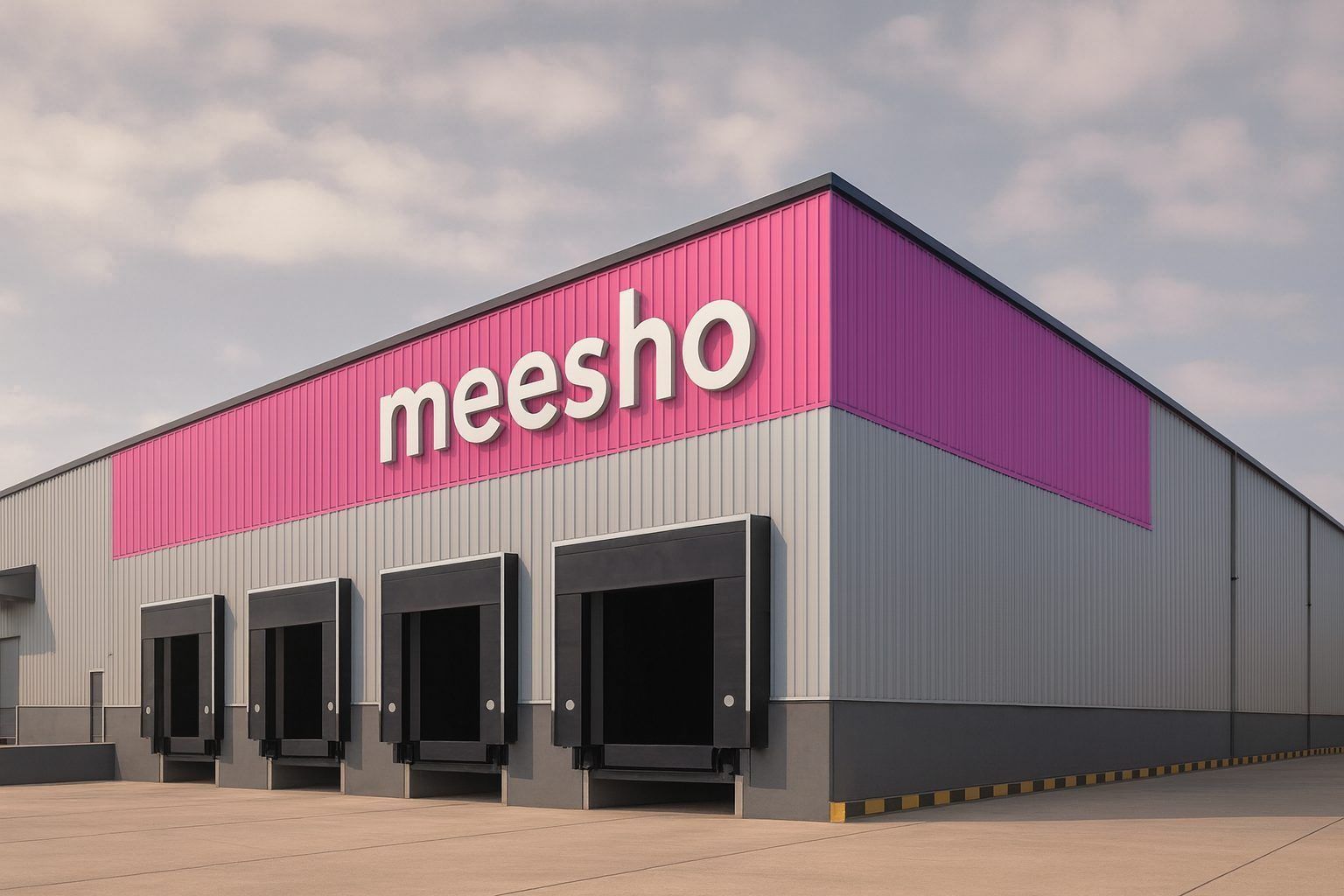

On 10 December 2025, Meesho Limited (NSE: MEESHO) made one of the most closely watched stock market debuts of the year, listing at around ₹162 per share against an IPO price of ₹111, a premium of roughly 46% on both NSE and BSE. Intraday, the stock surged further towards the ₹172–177 range, valuing the company at about ₹77,000 crore on listing day.
By early afternoon on listing day, Meesho was trading around ₹170 per share on NSE, about 53% higher than the issue price and roughly 5% above its listing level, with a one‑day traded value of over ₹6,000 crore and volumes above 35 crore shares on the exchange.
Below is a structured look at Meesho’s debut, fundamentals, analyst calls and early stock forecasts based on research and coverage published on 10 December 2025.
Meesho Share Price Today: How the Stock Is Trading on Listing Day
- NSE listing price: ₹162.50 per share
- BSE listing price: ₹161.20 per share
- IPO issue price: ₹111 per share
- Listing premium: ~46% over issue price
- Intraday high (so far): around ₹177.5 Samco+2Business Standard+2
- Last traded (mid‑session snapshot): ~₹170.07 on NSE, up 53.22% versus IPO price Groww
Grey market indicators had suggested a listing near ₹150–151 based on a grey market premium (GMP) of ₹39–40, implying roughly 35% upside versus the issue price. Meesho comfortably beat those expectations, opening well above the implied GMP-based range.
A PTI report pegs Meesho’s market capitalisation on debut at roughly ₹77,000 crore on both the BSE and NSE, placing it firmly among the larger listed consumer‑internet plays in India.
IPO Details: Price Band, Issue Size and Subscription
Meesho’s IPO was notable not just for the debut pop, but for the ferocity of demand ahead of listing.
Key IPO terms
- Price band: ₹105–₹111 per share (face value ₹1) JM Financial Services+2Samco+2
- Total issue size:₹5,421.2 crore
- Fresh issue: ₹4,250 crore
- Offer for sale (OFS): ₹1,171.2 crore JM Financial Services+2Samco+2
- IPO window: 3–5 December 2025 JM Financial Services
- Lot size: 135 shares, with minimum retail application around ₹14,985 at the upper band JM Financial Services
Subscription
Depending on the data source, overall subscription came in around 79–82 times, with institutional investors driving demand:
- Overall subscription: ~79–81.8×
- QIB (Qualified Institutional Buyers): ~120–123×
- NII (Non‑institutional): ~38–40×
- Retail (RII): ~19× Free Press Journal+3Business Standard+3The Economic Times+3
Ahead of the issue, Meesho also raised about ₹2,439 crore from anchor investors on 2 December, allotting nearly 22 crore shares to a mix of global long‑only funds, domestic mutual funds and sovereign wealth funds – an early signal of strong institutional confidence.
What Meesho Actually Does: Value Commerce at Massive Scale
Meesho is positioned as a “value commerce” marketplace: a low‑price, mass‑market e‑commerce platform focused heavily on Tier‑2 and Tier‑3 India, selling mostly unbranded, affordable products across fashion, home, electronics, beauty and more. Moneycontrol+1
According to Prosus and other disclosures as of listing day, Meesho’s platform has reached remarkable scale: Business Standard+2Moneycontrol+2
- Annual transacting users: ~234 million
- Annual orders (12 months to Sept 2025): ~2.3 billion
- Annual transacting sellers:700,000+
- Net merchandise value (NMV/GMV): about ₹701.6 billion over the last twelve months – higher than many existing listed peers in Indian e‑commerce.
Meesho runs an asset‑light, zero‑commission model, monetising mainly via:
- Advertising and sponsored listings
- Logistics / fulfilment services
- Emerging areas such as Meesho Mall, fintech offerings and value‑added services
Its in‑house logistics arm Valmo reportedly handled about 67% of shipments in Q2 FY26, helping keep per‑order costs in the ₹32–34 range and improving unit economics.
The company also pushes a technology‑first, AI‑heavy strategy: advanced recommendation engines, fraud detection, catalogue management and dynamic pricing tools are cited as core levers to handle billions of low‑ticket transactions efficiently.
Financial Performance: High Growth, Heavy Losses, Improving Cash Flows
Revenue and losses
Data from Meesho’s DRHP and brokerage summaries show a classic high‑growth, loss‑making platform narrative: JM Financial Services+2The Economic Times+2
- Total income FY25: ~₹9,900.9 crore, up about 26% year‑on‑year
- Revenue from operations FY25 (commission slice):₹5,735 crore Moneycontrol+1
- Net loss FY25: around ₹3,941–3,942 crore, sharply wider than FY24, partly due to increased fulfilment, technology and marketing spends The Economic Times+2JM Financial Services+2
- Loss in H1 FY26: roughly ₹700 crore, indicating that the company remains in investment mode.
JM Financial’s analysis notes that while revenues grew 26% between FY24 and FY25, profit after tax (PAT) declined over 1,100% over the same period, underscoring the impact of scaling costs and one‑offs on the bottom line.
Unit economics and free cash flow
Several recent reports point to improving unit economics, even as headline losses remain large: Moneycontrol+2bwdisrupt.com+2
- Contribution margin improved from 2.9% in FY23 to about 4.95% in FY25.
- Customer acquisition costs have trended down over the last three years.
- Meesho has generated positive free cash flow (FCF) for at least the last two years, with some analyses ranking it ahead of listed peers such as Nykaa on FCF in FY25.
- Adjusted EBITDA margins (excluding ESOP and certain one‑offs) remain slightly negative (around –0.4%), but are improving.
Moneycontrol points out that FY25 losses include a one‑time tax item related to a business combination; excluding this, Meesho would have reported an underlying profit, suggesting that the operational engine is closer to break‑even than top‑line numbers indicate.
Where the IPO Money Will Go: Cloud, AI and Marketing
According to the RHP and brokerage breakdowns, Meesho plans to deploy its fresh issue proceeds in a concentrated way: The Financial Express+3Business Standard+3JM Financial Services+3
- ~₹1,390 crore to upgrade cloud infrastructure via its tech subsidiary
- ~₹480 crore to expand AI/ML and technology teams
- ~₹1,020 crore for marketing and brand building
- Remaining funds for inorganic growth, strategic initiatives in logistics/fintech and general corporate purposes
The spending roadmap reinforces the thesis that Meesho is still in the “growth and moats” phase – willing to absorb near‑term losses to deepen its network effects, technology stack and user base.
Analyst Ratings and Target Prices: Mostly Positive on Day One
Choice Equity Broking: BUY, ₹200 target (≈80% upside vs IPO price)
Meesho’s first published rating post‑listing comes from Choice Institutional Equities, which has initiated coverage with a “BUY” rating and a target price of ₹200 per share. The Economic Times+2Business Standard+2
Key points from their initiating coverage:
- Target implies ~80% upside versus the IPO price of ₹111 and ~24% upside versus the BSE listing price of ₹161.20.
- Meesho is expected to deliver around 31% revenue CAGR between FY25 and FY28.
- EBITDA is projected to turn positive by FY27, driven by operating leverage and logistics efficiencies through Valmo.
- Meesho is valued at 4x FY28E EV/Revenue in their model, while they estimate it trades around 2.4x FY28E EV/Revenue today, versus a peer average near 5.4x, suggesting potential room for valuation re‑rating as fundamentals strengthen.
Choice also flags several risks: heavy dependence on cash‑on‑delivery (COD) – around 77% of orders, logistics execution complexity, and competition from players like Amazon Bazaar and Shopsy.
InCred, Motilal Oswal, ICICI Direct: “Subscribe” with caveats
Other domestic brokerages had largely recommended Subscribe ahead of listing and reiterated constructive views on debut day: The Economic Times+2BizzBuzz+2
- InCred Equities:
- “Subscribe” for near‑term gains
- Sees valuations at around 5.3× market‑cap‑to‑sales as attractive but warns that sustaining EBITDA breakeven will be challenging given supply‑chain complexity and the need to scale monetisation.
- Motilal Oswal:
- “Subscribe”, highlighting Meesho’s zero‑commission, asset‑light model, strong Tier‑2/3 presence and fast‑scaling ad‑led commerce engine
- Considers valuations reasonable at roughly 4.5× Price/Sales, compared with sector peers around 7×.
- ICICI Direct:
- “Subscribe”, emphasising Meesho’s efficient business model, consistent free cash flows over the past two years and valuation of about 5× FY25 revenues, at a discount to peers. The Economic Times
Differing views: “Overpriced or long‑term buy?”
A Financial Express round‑up of four market experts framed the core debate as “overpriced or long‑term buy?”: The Financial Express+1
- Some analysts argue the issue is sensibly priced at around 5.7× FY25 price‑to‑sales, especially given Meesho’s scale, improving unit economics and underpenetrated e‑commerce opportunity.
- Others worry about margin volatility, dependence on discounting and the risk that growth expectations are already embedded in the price.
Swastika Investmart, for example, describes the strong listing as a sign of robust appetite for digital commerce but suggests that early allottees could consider partial profit‑booking while holding a core position for the medium term – a reminder that broker opinions are not unanimous.
Retail sentiment: more cautious
On Moneycontrol’s Meesho stock page, a community poll as of listing day shows only about 33% of users voting “BUY”, against roughly 67% voting “SELL”, highlighting that retail traders may be more inclined to lock in listing gains than to treat Meesho as a long‑term core holding at current levels. Moneycontrol+1
Valuation Snapshot: How Expensive Is Meesho After the Pop?
Based on DRHP numbers and pre‑listing research: The Economic Times+3Moneycontrol+3JM Financial Services+3
- At the upper IPO band, Meesho was targeting a post‑money valuation of roughly ₹52,500–53,000 crore (~US$5.6–6 billion), translating to a high single‑digit price‑to‑sales multiple on FY25 revenue.
- Moneycontrol estimates:
- Price‑to‑NMV (Net Merchandise Value): ~1.7×
- Post‑issue Price‑to‑Sales: ~5.3× at IPO pricing Moneycontrol
- Several brokerages highlight that these multiples are lower than earlier “new‑age tech” listings in India that debuted at much higher revenue multiples, suggesting Meesho has left “some money on the table” for secondary‑market investors. Moneycontrol+2The Financial Express+2
Post listing‑day rally, Meesho naturally trades at richer multiples than the IPO band implied, but still within the 5–7× sales corridor that analysts consider plausible for scaled Indian consumer‑internet platforms – especially those with visible paths to positive EBITDA and cash flow.
Structural Growth Drivers Behind the Bullish Case
Across brokerage notes and investor commentary, several recurring themes underpin the optimistic view on Meesho stock: bwdisrupt.com+5Business Standard+5PL Capital+5
- Underpenetrated Indian e‑commerce
India’s online retail penetration remains well below global averages. Meesho’s focus on value‑conscious, non‑metro consumers positions it squarely in the fastest‑growing segment of the market. - “Bharat‑first” user and seller base
With over 234 million annual transacting users and more than 700,000 sellers, many of them micro and small businesses, Meesho has built a network effect that’s difficult to replicate quickly. - Improving unit economics and free cash flow
Rising contribution margins, declining CAC and positive FCF over the last two years indicate that scale is starting to translate into healthier economics, even if accounting losses remain elevated. - In‑house logistics leverage
Valmo’s rising share of shipments (around 67%) and low per‑order cost metrics are seen as key to managing thin margins in value commerce. - Diversified monetisation runway
Advertising, fintech, “Meesho Mall” and other adjacent services provide optionality beyond simple take‑rate on GMV. - Deep‑pocketed backers staying in
Investors like Prosus, SoftBank, Peak XV and others have retained sizeable stakes, with Prosus alone holding about 11.2%, valued near US$1 billion at listing prices – a signal of long‑term conviction from strategic capital.
Key Risks: Why Some Analysts Urge Caution
The bullish story comes with a non‑trivial list of risks that frequently appear in DRHP summaries and analyst notes: The Financial Express+5The Economic Times+5JM Financial Services+5
- High dependence on cash‑on‑delivery (COD)
Around three‑quarters of orders are COD, which inflates operational risk, returns and working‑capital friction. Any disruption in COD processes or tightening of payment rules could hit conversion metrics. - Intense competition and discount wars
Meesho’s low‑AOV, value‑driven niche puts it head‑to‑head with deep‑pocketed rivals like Flipkart, Amazon Bazaar, Shopsy and various regional players. Sustained discounting to defend market share can delay profitability. - Execution complexity in logistics and quality control
Serving millions of small sellers and long‑tail products across India increases the risk of quality issues, delays, counterfeit goods and higher customer service costs. - Regulatory and tax overhang
Policy changes around deep discounting, marketplace liabilities, data protection, GST rules or small‑seller protections could alter unit economics for the entire sector. - Still a loss‑making business
Despite positive cash flow and improving margins, Meesho’s headline losses remain large, and any growth slowdown could destabilise the path to profitability. - Technology outages and contingent liabilities
Past platform outages and contingent liabilities flagged in notes (under Ind AS 37) underline that Meesho’s model is heavily dependent on technology resilience. - Valuation risk in a volatile tech tape
Even if Meesho looks cheaper than prior new‑age listings, it still trades at premium multiples to traditional retailers. Market sentiment towards tech or any broader sell‑off could compress multiples quickly.
Meesho vs Other Indian E‑Commerce Stocks
Analysts repeatedly stress that Meesho is not a clean comparable to other listed names like Zomato, Nykaa or Paytm: Moneycontrol+2Business of Apps+2
- Business mix: Meesho is heavily tilted toward value, unbranded, non‑metro categories, whereas Nykaa, for instance, is more premium‑beauty and fashion focused.
- Monetisation model: Zero‑commission plus ad & logistics monetisation is structurally different from commission‑heavy models.
- Cash flow profile: Some reports note Meesho’s FY25 free cash flow compares favourably with other Indian e‑commerce names, even while many peers continue to burn cash.
As a result, brokerages prefer to value Meesho via discounted cash flow (DCF) and proprietary EV/Revenue frameworks rather than simple peer multiple benchmarking.
What the Listing-Day Pop Means for Investors
The combination of:
- Oversubscribed IPO,
- Substantial listing gains, and
- Largely positive, but nuanced, analyst commentary
means Meesho enters the public markets with momentum – but not without debate.
On one side, the bull case is anchored in structural growth: mass‑market e‑commerce penetration, Meesho’s outsized user base, improving unit economics and a management team willing to invest in AI, logistics and new revenue streams.
On the other, the bear (or at least cautious) case highlights the reality that Meesho is still deeply loss‑making, operates in hyper‑competitive categories and is highly exposed to COD, regulatory shifts and sentiment swings in “new‑age tech” stocks. Business Standard+3The Economic Times+3JM Financial Services+3
Brokerages have generally leaned toward BUY / SUBSCRIBE with a multi‑year view, while explicitly warning about volatility and the need to track the company’s execution closely over FY26–FY28. Retail sentiment, at least on listing day polls, appears more inclined toward locking in quick gains.
Related articles: NSE:MEESHO