
Boeing NYSE:BA ended Thursday, December 11, 2025, on a firmer note, closing at $200.71—up about 1% on the day—before trading largely flat in the immediate after-hours session.
For investors heading into Friday’s open (December 12, 2025), the “what changed after the bell?” story isn’t about a dramatic after-hours price swing. It’s about fresh headline risk around certification timelines—especially the 737 MAX 7—arriving right as Boeing’s broader 2026 narrative has been trying to pivot from damage control to delivery cadence + cash flow recovery. Reuters+1
Boeing stock after-hours check: where BA stood after the close
- Regular-session close (Dec. 11):$200.71 (about +1.0%) MarketWatch
- After-hours (shortly after the bell): quoted around $200.71, essentially unchanged, with after-hours volume reported around ~1.11M shares on a delayed feed MarketWatch
- Day’s range (Dec. 11): roughly $198–$202 StockAnalysis
Boeing’s move also happened in a broadly constructive tape for industrials/defense: major U.S. benchmarks finished green on Dec. 11, with the Dow notably stronger.
The biggest Boeing headline from Dec. 11: MAX 7 certification now seen around August 2026
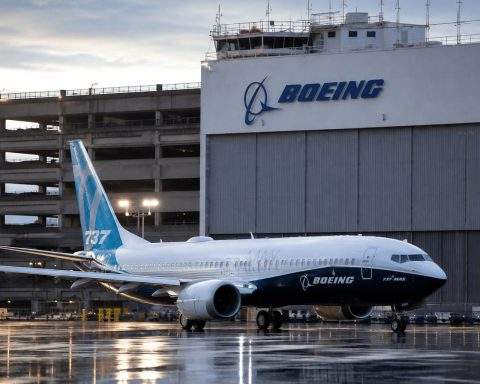
Late Thursday brought a meaningful data point for Boeing’s narrowbody roadmap: Southwest Airlines CEO Bob Jordan told Reuters he expects the 737 MAX 7 to be certified around August 2026, and that Southwest would aim to start flying it in Q1 2027.
Why this matters to BA stock heading into Friday:
1) The MAX 7 is not just “another variant.”
Southwest is the launch customer for the MAX 7, and the program’s certification timeline has become a recurring “tell” for how quickly Boeing and regulators can work through remaining technical and process hurdles. Reuters
2) It reinforces that certification remains a gate—even as production improves.
Boeing has been working through an engine de-icing issue affecting certification progress for the MAX 7 and MAX 10, and Reuters’ report underscores that the market is still living in the world where factory rhythm is improving, but paperwork and proof still decide what can be delivered when.
3) Southwest’s planning signal is a subtle pressure point.
Jordan indicated the MAX 7 is not part of Southwest’s current 2026 fleet planning—which is the kind of sentence equity investors notice because it hints at how airlines are adapting schedules around uncertainty (and, by extension, how Boeing’s delivery mix could shift).
Boeing CEO Kelly Ortberg has previously pointed to certification for the MAX 7 and MAX 10 in 2026, without a tighter window; Thursday’s Southwest comments effectively put a sharper (and later) pin in the calendar for at least the MAX 7.
A same-day positive: Boeing advances a key B-52 radar modernization milestone
Also on Dec. 11, Boeing announced it delivered the first B-52 Radar Modernization Program (RMP) flight test aircraft to the U.S. Air Force for testing at Edwards Air Force Base, featuring the APQ-188 AESA radar.
This isn’t usually a “move-the-stock-tonight” type of catalyst, but it matters in a different way:
- Boeing’s defense business is often treated as the stabilizer while commercial executes its recovery plan.
- Clear milestones help reinforce the idea that Boeing is still a critical prime contractor across major U.S. platforms—useful when investors are balancing commercial certification risk against defense program momentum.
Independent aerospace outlets also highlighted the milestone and the aircraft’s arrival/testing context on Dec. 11.
The “setup” heading into Friday: orders strong, deliveries watched, supply chain still a story
Even though your focus is after the bell on Dec. 11, traders typically price BA using a rolling bundle of “most recent” Boeing narratives from the past several sessions. Here are the ones most likely to frame premarket conversations on Dec. 12:
Boeing vs. Airbus order momentum (tailwind)
A Reuters report this week quoted Airbus CEO Guillaume Faury saying Boeing is likely to win the order race this year, noting Boeing’s reported 908 net orders (Jan–Nov) versus Airbus’ 700, helped by strong demand for the 787 and a burst of widebody deals tied to broader trade dynamics.
The important equity angle: strong orders support backlog and long-cycle revenue visibility—but investors still demand proof that backlog converts into on-time deliveries and cash.
November deliveries (reality check)
Boeing reported 44 deliveries in November, down from 53 in October, and trailing Airbus’ November total—an immediate reminder that the recovery is still uneven month-to-month.
Spirit AeroSystems acquisition closing (structural shift)
Boeing recently completed its Spirit AeroSystems acquisition, a major supply-chain and quality-control move that Boeing has framed as central to stabilizing production—especially on the 737 program.
Investors generally like the logic (“bring it back inside, control quality”), but integrations are never free: they introduce execution risk, costs, and labor complexity even as they aim to reduce defects and rework over time. Reuters
Government/contract headline (incremental, but noisy)
Reuters reported the Department of Homeland Security planned to spend close to $140 million to buy Boeing 737s for deportation operations, citing a Washington Post report. It’s not huge financially for Boeing, but it’s a headline that can raise political temperature—and political temperature sometimes spills into sentiment.
Airline demand signal on Dec. 11: United financing 20 incoming Boeing 737 MAX 9s
A noteworthy Dec. 11 datapoint from the aviation trade press: United Airlines agreed to sale-leaseback transactions covering 20 incoming Boeing 737 MAX 9 aircraft with lessor SMBC Aviation Capital, applying to deliveries in late 2025 and 2026.
This doesn’t automatically mean “new Boeing orders” (these planes are described as incoming/delivering), but it does matter for sentiment because it suggests:
- airlines and lessors are still actively arranging financing around the MAX delivery stream, and
- the market is still building around Boeing aircraft availability in 2025–2026.
Forecasts and analyst stance as of Dec. 11: the Street still leans bullish, but the debate is about timing
Analyst consensus snapshots continue to imply meaningful upside versus the ~$200 level, though targets vary widely.
For example, MarketWatch’s analyst estimates section around Dec. 11 showed an average target price in the mid-$240s with an “overweight” style consensus. MarketWatch
The key practical takeaway before Friday’s open:
- Bull case: production stability + delivery ramp + cash flow recovery into 2026.
- Bear case: certification slippage (MAX 7/MAX 10/777X), supply-chain constraints, and quality escapes extend the timeline and raise costs.
Thursday’s MAX 7 timeline commentary arguably feeds the bear side on timing, even if it doesn’t automatically break the bull thesis on direction.
What to watch before the Dec. 12, 2025 market open
Here’s what’s most likely to matter in the premarket “BA tape” on Friday:
1) Any follow-through on the MAX 7 certification headline
The Reuters item is the kind of news that gets re-quoted in morning notes, because it’s a clean, calendar-based statement from Boeing’s most exposed MAX 7 customer. Expect BA commentary to reference “August 2026” repeatedly. Reuters
2) Pre-market liquidity (don’t overread tiny moves)
After-hours trading was indicated as essentially flat shortly after the close, but after-hours and premarket can be thin. Watch for volume-backed moves rather than single prints.
3) Macro mood: rates and growth expectations still shape industrial multiples
On Dec. 11, headlines around the labor market and policy expectations continued to push and pull on rate-cut outlooks for 2026. That matters for Boeing because BA often trades like a “reopening/industrial recovery” proxy when the market is in that mood. Reuters+1
4) Economic calendar: not a major data-heavy Friday (based on Fed calendars)
The New York Fed’s December 2025 calendar lists model/nowcast updates on Dec. 12 (rather than a marquee inflation/employment release). That can leave company-specific aerospace headlines with more room to drive single-stock attention.
Bottom line for BA heading into Friday
Boeing stock finished Dec. 11 higher and didn’t show meaningful immediate after-hours volatility—but the news flow did.
Going into the Dec. 12 open, Boeing bulls and bears are likely to spar over the same core question they’ve been arguing about all year: Is 2026 the year Boeing’s recovery becomes measurable in deliveries and cash—or is it still a year of “almost, but not yet,” because certification and quality gates keep moving? Thursday’s MAX 7 timing commentary pushes that debate back into the foreground. Reuters+1
Related articles: NYSE:BA