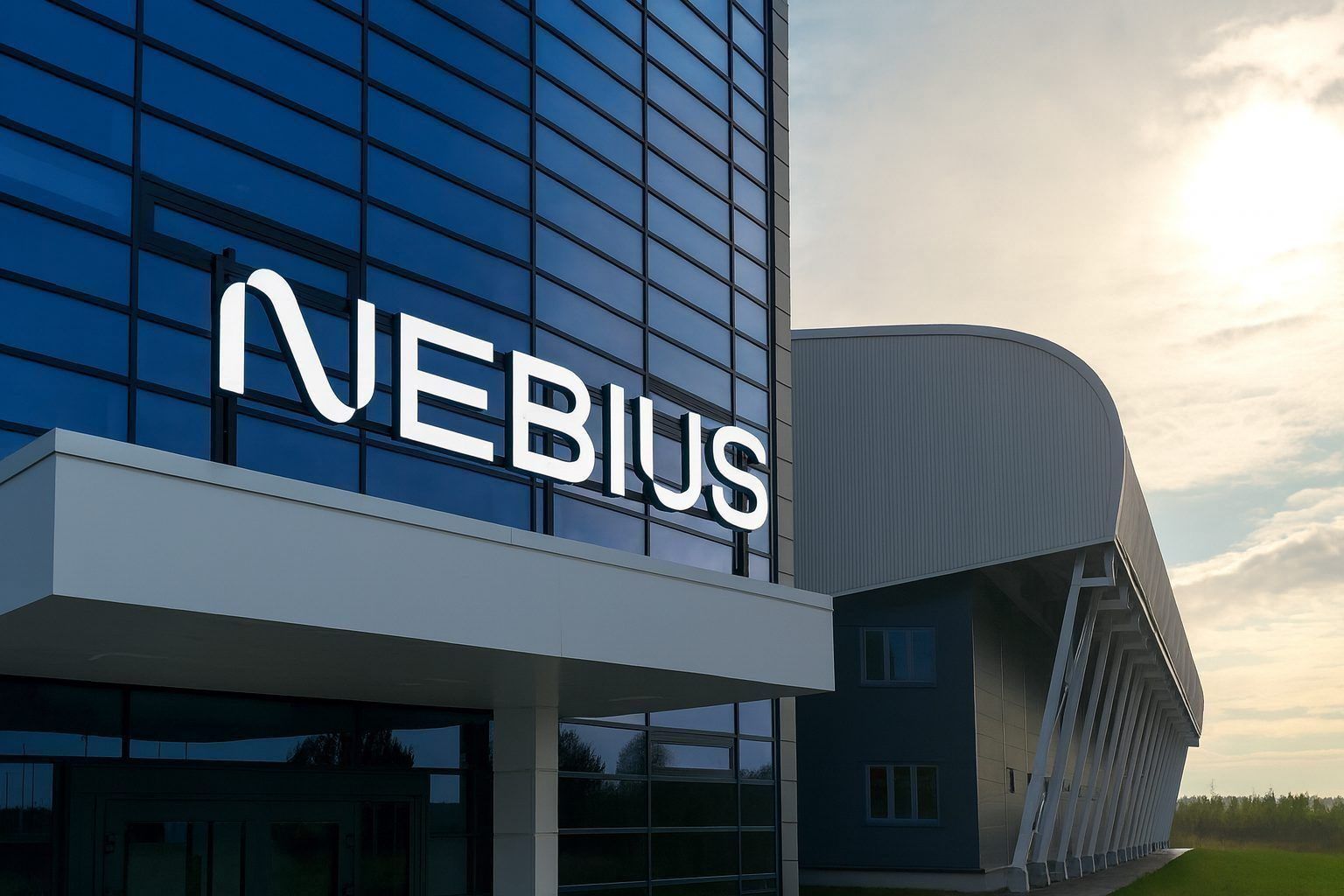
Dec. 12, 2025 — Nebius Group N.V. (NASDAQ: NBIS) is trading around $94 on Friday, a level that captures the market’s current mood toward one of the most closely watched “AI infrastructure” names: optimistic about demand, anxious about the bill.
The company sits in the “neocloud” lane—selling access to high-end GPU compute (and the software layer around it) for AI training and inference—at a moment when hyperscalers and enterprises are racing to secure capacity. That has translated into blockbuster contract headlines, surging revenue growth, and equally dramatic capital spending. The result: a stock that can feel less like a calm valuation exercise and more like a physics experiment involving electricity, GPUs, and investor patience.
Below is a roundup of the latest news, forecasts, and analysis available as of 12/12/2025, plus the key catalysts and risks likely to shape NBIS into 2026.
NBIS stock today: price action and why it still matters
As of the latest available trading update on Friday, Dec. 12, NBIS was indicated around $94.28, up modestly on the day, with a wide intraday range—another reminder that volatility is part of the package with fast-scaling AI infrastructure plays.
That volatility is not a footnote in Nebius’s story—it’s structurally connected to how this business grows: long-term contracts and multi-year buildouts on one side; rapid funding needs, equity programs, and enormous capex cycles on the other.
What Nebius actually does (and why “neocloud” is the keyword to know)
Nebius is a Netherlands-based AI infrastructure provider that positions itself as a specialized alternative to traditional hyperscale cloud platforms—focused on delivering GPU access plus the tooling required to run AI workloads efficiently.
In a Dec. 3 Reuters interview, co-founder Roman Chernin described Nebius’s strategy as building longer-term, higher-margin services and relationships so the company can endure downturns if an “AI winter” arrives—while still pushing hard during today’s demand surge. Reuters
The two mega-deals that reshaped the NBIS narrative: Microsoft and Meta
1) The Microsoft agreement: ~$17.4B through 2031 (with upside)
A pivotal disclosure in Nebius’s SEC filing describes an agreement where GPU services are deployed in several tranches during 2025–2026, with a total contract value about $17.4 billion through 2031. The filing also notes Microsoft may purchase additional services/capacity, potentially increasing the total to about $19.4 billion.
This deal has been one of the biggest single “credibility upgrades” for Nebius in public markets: it signals that a hyperscaler is willing to outsource meaningful AI infrastructure needs—at scale—to a specialist.
2) The Meta order: ~$2.9B (deployed Dec 2025 + Feb 2026)
Nebius also disclosed in an SEC filing that GPU services for Meta are planned in two tranches—December 2025 and February 2026—and that the order has a total contract value of approximately $2.9 billion (often rounded in coverage to ~$3B).
Crucially, the filing states that cash flow from the Meta agreement is expected to help finance part of the capital expenditures associated with the deal—an important detail because “who funds the buildout?” is one of the central questions for NBIS investors. SEC
The latest company news as of Dec. 12: no “new deal” headline, but strategic signaling continues
Nebius’s own newsroom shows the latest press release dated Dec. 10, 2025, announcing the Robotics & Physical AI Awards and Summit, including $1.5 million in compute credits to support startups.
This isn’t an earnings-driving announcement in the near term—but it’s consistent with the company’s broader strategy: embed Nebius infrastructure into emerging AI ecosystems (especially “physical AI” and robotics), creating future customers that scale with the platform.
Q3 2025 results: growth exploded, losses persisted, capex ballooned
Nebius reported Q3 2025 results in mid-November. The headline mix that investors keep circling back to:
- Revenue jumped 355% year-over-year to $146.1 million (Q3 ended Sept. 30, 2025).
- The company posted a quarterly loss over $100 million, widening versus the year-ago period, in reporting highlighted by Reuters.
- Capital expenditures surged to $955.5 million in the September quarter (from $172.1 million a year earlier, per Reuters).
This is the “Nebius trade” in one paragraph: demand is real and growing quickly, but the company is spending aggressively to build capacity fast enough to deliver.
The capex question got bigger: $5B for 2025?
One of the more pointed pieces of analysis circulating in early December focuses on capex escalation. A Nasdaq.com article published by Zacks notes Nebius lifted its 2025 capex plan to $5 billion, up from earlier guidance referenced as $2 billion, raising investor focus on whether the company can still hit a “slightly EBITDA-positive” year-end ambition. nasdaq.com
For shareholders, this is not just an accounting detail. Capex is the throttle for future revenue, and also the engine of near-term dilution and balance sheet risk.
Financing and dilution: the “growth isn’t free” section
To scale at hyperscaler speed, Nebius has leaned into multiple financing channels:
A major post-Microsoft financing wave
Reuters reported that following the Microsoft deal, Nebius raised $4.2 billion through a public share offering and convertible notes.
Nebius’s own press release archive also references closings tied to offerings and convertible notes, aligning with that broader financing timeline.
The at-the-market (ATM) equity program: up to 25 million shares
Nebius disclosed an at-the-market offering structure allowing the company to sell up to 25,000,000 Class A shares from time to time, with proceeds intended for business growth including additional compute/hardware and data center expansion.
This structure is common in capital-intensive growth stories, but it’s also why NBIS can sell off on “good news”: investors are constantly modeling not only future revenue, but also future share count.
Nebius’s own prospectus language explicitly warns that the share price “has been and is likely to be volatile,” and that equity issuance can create dilution pressure. SEC
Analyst forecasts for NBIS: price targets cluster wide, but skew bullish
Analyst target data differs by platform (coverage lists and update timing vary), but the broad picture as of Dec. 12, 2025 is:
- MarketBeat shows an average 12‑month target around $144.71 (with targets ranging $84 to $211).
- TipRanks shows an average target around $164.20 (high $211, low $130), implying substantial upside versus prices around the mid‑$90s.
- MarketWatch lists an average target around $163.14 and an average recommendation labeled Overweight.
- Zacks summarizes a target range from $84 to $211, with an average target implying material upside from recent closes.
A notable counterweight: Morningstar’s fair value view
Morningstar initiated coverage with a reported $70 fair value estimate and a “No Moat” rating (per its published summary). Morningstar
The takeaway isn’t “believe one number.” It’s that NBIS currently lives in a high-disagreement zone: bulls model a capacity-driven revenue step-change; skeptics focus on capital intensity, competition, and execution risk.
What the most-cited bull case looks like heading into 2026
Across recent reporting and investor commentary, the bullish thesis for NBIS typically rests on five pillars:
- Hyperscaler validation
Microsoft and Meta don’t solve every risk—but they heavily de-risk the “is this real?” question. SEC+1 - A market growing faster than supply
Reuters describes surging demand for high-performance compute, noting that even the biggest cloud providers have faced capacity constraints—creating an opening for neoclouds like Nebius. - A credible scale plan (power is destiny)
Nebius told Reuters it plans to secure 2.5 gigawatts of contracted power capacity by end‑2026—a key metric because power availability is a gating factor for GPU data centers. - A deliberate move beyond hyperscalers
The same Reuters report emphasizes Nebius’s push into legacy sectors (manufacturing, retail, banking) and AI-forward software companies, which could reduce customer concentration over time. - Operational momentum despite losses
The Q3 growth profile (triple-digit YoY revenue growth) fuels the belief that Nebius is in the “land grab” phase where profitability comes later—if execution holds. Reuters
The bear case: why skeptics keep pointing at capex, tenants, and dilution
The bearish framing is equally coherent—and tends to focus on these pressure points:
1) Capital intensity and the “financing treadmill”
If capex really is moving toward multi‑billion annual levels (and Zacks flags a $5B 2025 figure), shareholders must ask: how much of the future upside accrues to today’s share count?
2) Customer concentration risk
Big hyperscaler contracts are great—until a small number of customers represent a large share of demand. Some market coverage has explicitly raised concentration as a concern in the AI infrastructure space.
3) “Shaky tenants” and credit durability in the data center boom
A Reuters Breakingviews column this week warned that weaker data center tenants could become a choke point for the broader AI boom—particularly in an environment requiring enormous infrastructure investment and power buildout.
Nebius is not singled out as “the problem” there—but it operates in that same ecosystem, which means investor confidence can swing with the perceived strength (or fragility) of AI infrastructure demand.
4) Execution and timing risk (the silent killer)
The Meta deployment schedule (Dec 2025 + Feb 2026) is concrete—but delivery timelines, GPU supply, interconnect, and power are notoriously unforgiving.
Near-term catalysts: what to watch next for Nebius stock
Heading into year-end and early 2026, NBIS investors will likely focus on:
- Delivery milestones for the Meta deployment tranches (December 2025 and February 2026).
- Updates on power procurement and new capacity buildouts (2.5 GW target by end‑2026, per Reuters).
- Any changes to funding strategy (share issuance pace, convertible activity, and ATM usage).
- Evidence that enterprise adoption is real (not just hyperscaler outsourcing).
- Profitability trajectory vs. capex reality, especially if the market internalizes a “higher for longer” rate environment or if AI infrastructure sentiment cools again. nasdaq.com
Bottom line on Dec. 12, 2025
Nebius Group’s stock story is currently defined by a high-wire act: lock in gigantic AI infrastructure demand while financing one of the most capex-heavy ramps in the market.
As of Dec. 12, the news flow remains anchored by the Microsoft and Meta contract disclosures, the Q3 2025 surge in revenue and spending, and a forecasting landscape where Wall Street targets often imply major upside—while at least one major research house frames the valuation more conservatively.
That tension is why NBIS keeps showing up in both momentum conversations and risk memos: it’s a bet on AI compute scarcity—but also on management’s ability to build, fund, and deliver at hyperscale speed without drowning shareholders in dilution.