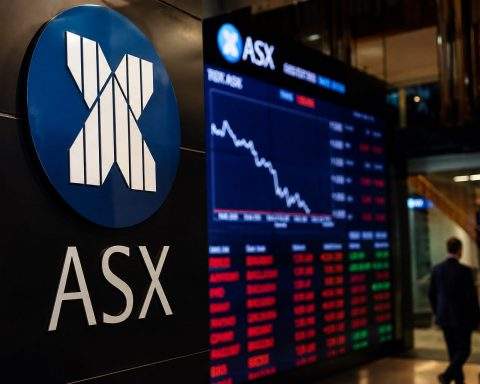

SEEK Limited ASX:SEK ended the week under pressure, trading around A$22.82 on 12 December 2025, as technical analysts flagged a worsening downtrend even while broader sell-side targets continue to imply meaningful upside into 2026. The stock’s slide comes amid a market that’s increasingly sensitive to “growth” valuations and to any hint that hiring demand is cooling—an issue that matters a lot for a company whose core engine is job advertising and recruitment marketplace activity. SEEK+2MarketScreener+2
Below is a full, up-to-date wrap of today’s SEEK share price action, the freshest market commentary, and the latest analyst targets and forward expectations available as of 12.12.2025.
SEEK share price today: where the stock stands on 12 December 2025
On SEEK’s own investor centre, the company showed SEK at A$22.82 on 12 Dec 2025, down 0.35% on the day, with an open of A$22.75, day high A$22.89, day low A$22.59, and volume ~1.55 million shares.
Other market data providers were broadly consistent, also placing SEK around A$22.82 with a day range ~A$22.59–A$22.90 and a 52‑week range of A$18.88–A$29.84.
Zooming out, Intelligent Investor data highlighted just how far the stock has retreated from its highs: SEEK’s 52‑week high was A$29.18 (23 Sep 2025), making the current price roughly 22% below that peak. It also lists SEEK’s market cap at roughly A$8.15bn and notes a current-year dividend yield of ~1.90% (with the last dividend listed at A$0.22, paid 2 Oct 2025, fully franked).
The short-term tape hasn’t been kind, either. Historical pricing shows a sharp drop into mid-December, including a -2.22% move on 11 Dec 2025 (close A$22.90) following declines earlier in the week.
The headline market story: SEEK appears in a “dangerous downtrends” technical screen
If you’re wondering why SEEK is suddenly popping up more often in trading conversations, today provided a clue: Market Index’s ChartWatch ASX Scans (published Fri 12 Dec 2025) flagged SEEK among names showing sustained technical weakness. In the scan list, SEEK was shown around A$22.90, down roughly -11.5% over one month and about -11.1% over one year at the time of the screen.
That kind of “screen signal” doesn’t tell you anything magical about intrinsic value—but it does matter in the real world because:
- it can pull in short-term traders (momentum strategies love clean trends), and
- it can spook long-only holders who use trend filters to manage risk.
The important nuance: technical commentary like this is about price behaviour, not necessarily about SEEK’s competitive position or long-run earnings power.
Labour market cross-currents: why macro data still matters for SEEK stock
SEEK is unusually tethered to labour market reality. When employers post fewer roles (or negotiate harder on ad pricing), SEEK’s marketplace economics can feel it. So even broad employment headlines can move sentiment around SEK.
Australia’s labour market: still tight enough to complicate the rate outlook
Australian labour market reporting today suggested unemployment held steady at 4.3% in November 2025, with a sharp drop in full-time jobs (-57,000) offset by part-time gains (+35,000). The same coverage noted that some economists see this “still-tight” labour market as potentially keeping the Reserve Bank in a hold-or-even-hike posture into early 2026 depending on inflation data. The Australian
For SEEK shareholders, the second-order effect is key: a higher-for-longer rate backdrop can compress valuation multiples for growth-leaning businesses, even if the underlying company is executing fine.
Job ads data: cooling, but not collapsing
Separate official commentary from Jobs and Skills Australia said online job ads fell 1.3% in November 2025, and were down 7.2% over the past year, with declines stronger in cities than regional areas.
That’s not a SEEK-specific metric—but it’s part of the same ecosystem investors watch when they’re trying to answer the blunt question: Is hiring rebounding, flatlining, or rolling over again?
SEEK’s own job ads dataset: methodology changes investors should know about
SEEK also maintains its own employment and salary datasets and updated its reporting approach in 2025. On SEEK’s newsroom data page (last updated 25 Nov 2025), SEEK explains it moved to trend estimates in the Employment Report from August 2025, and began including company listings in the index from November 2025 to better reflect the full range of ad sources on the platform.
If you’re comparing “job ads” headlines across sources, this kind of methodological change can be the difference between a real turning point and a measurement mismatch.
Company filings: what SEEK disclosed this week (and what it likely means)
The cleanest “hard” news around SEEK in the past 24–48 hours has been regulatory and market disclosure activity.
Market Index listed two SEEK-related ASX filings on 11 Dec 2025:
- “Notification regarding unquoted securities – SEK” (10 pages, published 3:17pm AEST) Market Index
- “Appendix 3Y – Ian Narev” (change of director’s interest notice, 5 pages, published 3:20pm AEST) Market Index
Filings like these are often administrative rather than operational: they can relate to equity incentives, vesting, conversions, or routine director interest updates. They’re worth scanning because they can change the conversation around dilution or insider alignment—but they are not automatically a “good news / bad news” signal without the underlying details.
Separately, auto-generated market coverage also pointed to SEEK issuing unquoted equity securities as part of an employee incentive scheme around this timeframe.
Analyst forecasts and price targets: why the Street still sees upside
Here’s the central tension in the SEK debate right now:
- The chart looks heavy.
- The consensus target prices still lean optimistic.
Consensus target price clusters around ~A$30
Both Investing.com and MarketScreener show 15 analysts covering SEEK with:
- Consensus rating:BUY
- Average 12‑month target price:A$30.34
- High target:A$33.50
- Low target:A$22.60
That A$30.34 average implies roughly +32% upside from a last-close area around A$22.9.
TradingView’s compiled sell-side snapshot is directionally similar, showing:
- Target price: about A$30.59
- Max estimate:A$33.50
- Min estimate:A$26.00
- Overall rating:buy, based on recent analyst opinions it aggregates TradingView
Near-term forward numbers investors watch
TradingView also surfaces forward-looking consensus-style expectations, including:
- Next quarter revenue estimate: ~A$575.69m
- Next quarter EPS estimate: ~A$0.28 (after a recent quarter around A$0.22) TradingView
Treat these as directional expectations, not promises. But they help explain why targets can remain elevated even when the stock is sliding: analysts may be underwriting a normalisation in hiring volumes (or sustained yield improvements) into 2026.
What SEEK actually is (and why that matters for the investment thesis)
At a business-model level, SEEK is an employment marketplace—a platform business where revenue is ultimately tied to (1) the number of job ads and (2) the economics per ad (pricing/yield, product mix, employer demand, etc.). Some broker research has also emphasised SEEK’s footprint across ANZ and multiple Asia-Pacific markets, along with the company’s investment interests (including references to SEEK’s Growth Fund structure in past research).
That mix gives SEEK multiple levers—but it also makes the stock emotionally reactive to macro signals:
- When job ads soften, investors worry about volume pressure.
- When rates stay high, investors discount future cash flows more aggressively.
- When the stock breaks chart support levels, momentum selling can add fuel.
This is how you end up with a stock that can look “cheap versus targets” and still fall—because price is a voting machine in the short run, and a weighing machine only when the dust settles.
The bull case vs. bear case: the real questions investors are pricing right now
The bull case
The “optimistic” interpretation of today’s setup looks like this:
- SEK is down hard from its highs (roughly -22% from the 52‑week high) and sentiment is washed out.
- Sell-side targets cluster around A$30+, implying the market is pricing in a recovery scenario.
- If hiring stabilises and SEEK continues improving monetisation (yield), earnings can recover faster than headline job ad volumes suggest.
The bear case
The “skeptical” read is equally straightforward:
- The technical trend is deteriorating, and SEEK is being flagged alongside other high-quality names in downtrend screens.
- Job ads indicators have softened year-on-year, and the rate outlook remains uncertain—conditions that historically make investors cautious on cyclical ad-driven platforms.
- Even with a consensus BUY, the low target (~A$22.60) sits uncomfortably close to where the stock is trading—suggesting the “floor” scenario is not theoretical. MarketScreener
What to watch next (the practical catalyst checklist)
If you’re tracking SEEK Limited stock into the turn of the year, the market’s likely to focus on a few practical “proof points”:
- Job ads directionality
Not just month-to-month noise—investors will want to see whether hiring demand is stabilising in trend terms (and how SEEK’s own reporting methodology changes affect comparisons). - Rates narrative in Australia
If inflation surprises and the RBA leans hawkish, valuation pressure can persist. If the opposite happens, beaten-up growth names can bounce violently. - Next investor/event milestones
SEEK’s published key dates show the cadence of major updates (AGM, full-year, half-year) even if exact upcoming dates aren’t always filled in far ahead. - Any further ASX filings tied to equity incentives or director holdings
These are usually routine—but in a nervous tape, they can influence “dilution” and “alignment” narratives quickly. Market Index+1
Bottom line
On 12 December 2025, SEEK Limited stock ASX:SEK is trading around A$22.8—a level that has technical analysts calling out a persistent downtrend, even while mainstream consensus targets still sit near A$30.34 and maintain a BUY stance.
That gap between “what charts are saying” and “what targets are implying” is exactly where the opportunity—and the danger—live. If hiring stabilises and SEEK’s marketplace monetisation holds up, this can turn into a classic oversold rebound story. If job ad volumes remain sluggish and rates stay restrictive, the market may keep compressing the valuation until the fundamentals force a re-rating.
Related articles: ASX Updates