
Updated: December 12, 2025
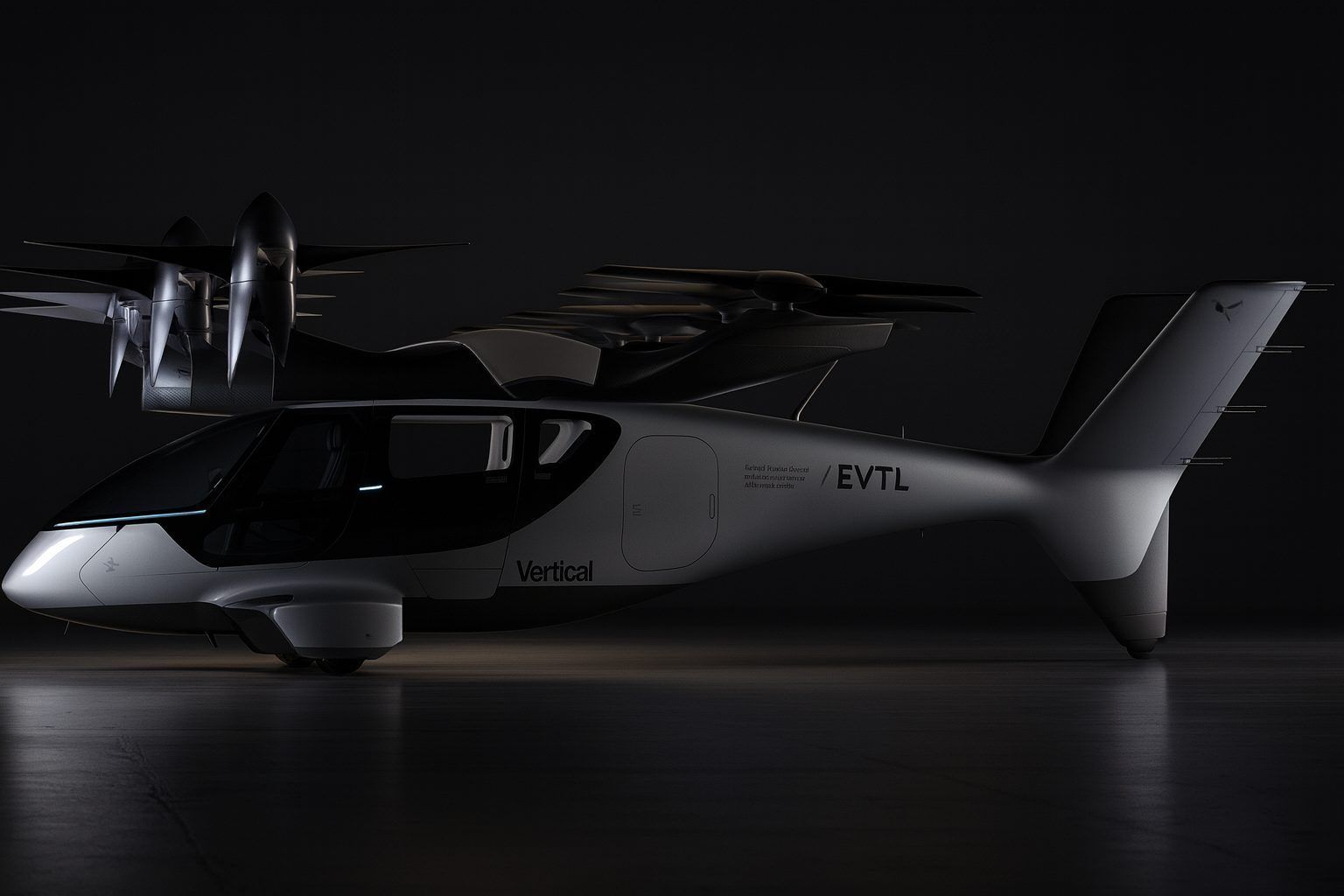
Flying taxis in the UK are edging closer to reality after a flurry of announcements this week put firmer dates and routes on a concept that has long felt just out of reach. British startup Vertical Aerospace has revealed its latest electric vertical take-off and landing aircraft (eVTOL), named Valo, and outlined plans for airport-to-city and regional connections—including a headline journey time of about 12 minutes from Canary Wharf to Heathrow once services begin.
The big milestone, however, is regulatory. The UK Civil Aviation Authority (CAA) has stated an ambition to have the regulatory frameworks and operational systems in place to allow initial commercial passenger eVTOL flights by the end of 2028—a target echoed in industry timelines and this week’s reporting.
What comes next will determine whether “flying taxis” become a niche premium transfer for business travellers—or a scalable urban transport layer that can compete on price and convenience.
What’s new this week: Valo, a London network plan, and a clearer 2028 regulatory target
Vertical Aerospace’s announcements focus on two things: the aircraft and the ecosystem around it.
1) The aircraft: Valo is positioned as the successor to Vertical’s earlier VX4 prototype, with a revised design shaped by test programme learnings and customer feedback. The company says it is targeting type certification in 2028 ahead of entry into service.
2) The network: Vertical says it is working with Skyports Infrastructure and Bristow Group to launch what it describes as the UK’s first electric air taxi routes, with an initial focus on high-demand corridors around London. The partnership’s first phase is planned from Q1 2029, after expected regulatory approval.
Sky News, reporting on the plans, said the aircraft could carry passengers at speeds up to 150 mph from Canary Wharf to destinations including Heathrow, Gatwick and Cambridge, with the company arguing that—at scale—fares could eventually be comparable to ride-hailing.
The first likely flying-taxi routes in the UK
The early UK concept is built around short hops that are frustratingly slow by road—especially at peak times.
Vertical’s proposed launch routes from Canary Wharf include:
- Heathrow
- Gatwick
- Cambridge
- Oxford
Sky News also reported Bicester among the early destinations cited by the company.
The headline example repeatedly used is the Canary Wharf–Heathrow transfer: Vertical says that can be reduced from 60–90 minutes on the ground to around 12 minutes in the air once operations begin.
If this approach sounds familiar, it’s because it mirrors how helicopter transfers have been marketed for decades—only now the pitch is electric propulsion, lower noise, and an eventual path to mass-market economics.
Valo at a glance: speed, range, seating, luggage, and “airliner-level” safety targets
Vertical and its partners are marketing Valo as an eVTOL designed for frequent, short missions—more like a high-cycle shuttle than a boutique aircraft.
Here are the specifications and features described across company materials and reporting this week:
- Range and speed: Designed for up to 100 miles and up to 150 mph.
- Noise: The company’s target specs cite quiet performance (including a target of <50 dBA in cruise in technical notes).
- Cabin: Expected to launch with a four-seat cabin, with a configuration that allows expansion to six seats; the firm argues higher capacity could support lower per-seat fares over time.
- Luggage: Vertical’s materials emphasize “class-leading” luggage volume; technical notes describe capacity for six cabin bags and six checked bags. Vertical Aerospace+2Vertical Aerospace+2
- Safety and redundancy: Technical notes cite design targets aligned with airliner-level safety expectations, including “full certifiable redundancy” and a target safety standard referenced as UK/EU 10⁻⁹ alongside CAA/EASA certification context. Vertical Aerospace+2Vertical Aerospace+2
- Charging/recharge concept: Technical notes describe eight liquid-cooled under-floor battery packs and a target of ~12-minute short-mission recharge.
The company also says it plans to build seven certification aircraft in the UK to support final testing with the UK CAA and EASA ahead of targeted certification in 2028.
Inside the cockpit: why “fighter jet” ideas matter in an eVTOL
One challenge for eVTOL aircraft is the transition between vertical hover and forward flight—an area where pilot workload can spike if controls feel different across phases.
Business Insider’s reporting from inside Valo highlights the aircraft’s fly-by-wire approach and a control philosophy described as “unified control,” which the company links to concepts developed for fighter jets capable of vertical take-off (such as the Harrier and F-35). The goal is consistent pilot inputs across different parts of the flight envelope. Business Insider+1
The article also describes the use of tilting propellers for manoeuvrability, and notes a physical divider between cabin and cockpit—positioned as a safety and privacy feature for early services where passengers may be strangers sharing a small cabin.
“As cheap as an Uber”? How operators say flying taxis could reach mass-market pricing
The biggest claim in the current UK debate is cost: can an air taxi ever be priced like a familiar ground option?
Sky News reported that Vertical Aerospace believes the service could eventually reach a similar cost to hiring an Uber, though it also expects the first wave to be a premium product (initially focused on airport transfers) before costs fall as production ramps up and utilisation increases.
This is the economic bet behind nearly every eVTOL programme:
- High-frequency operations (many flights per day)
- Lower maintenance burden than helicopters, by design
- High load factor (filling seats consistently)
- Scale manufacturing to drive down unit costs and increase fleet availability
Whether those assumptions hold depends less on marketing and more on real-world dispatch reliability, turnaround time, charging/energy logistics, and the cost of meeting commercial aviation safety standards.
The UK regulatory runway: why 2028 is the make-or-break year
If 2025 has been about prototypes and partnerships, 2028 is the year being treated as the regulatory “go/no-go” moment.
The CAA’s eVTOL Delivery Model states an ambition to have frameworks and operational systems ready by end-2028 so initial commercial passenger eVTOL flights can take place in the UK.
That goal sits within a broader government narrative that has been building for years. The Department for Transport’s Future of Flight action plan (published in 2024) set out a roadmap that included:
- a first piloted flying taxi flight by 2026
- regular services by 2028
- demonstrations of autonomous flying taxis without pilots on board by 2030
Government funding has also been framed as part of clearing barriers. A 2025 government press release announced over £20 million aimed at supporting drone and flying taxi operations, including support for the regulatory pathway that could see air taxis in use from 2028.
The less glamorous hurdles: airspace, noise, and community acceptance
Flying taxis don’t just need an aircraft and a landing pad—they need permission to operate safely and predictably in crowded, complex airspace.
A 2025 letter published through the CAA outlines several regulatory and operational areas the government and regulator were working through—such as longer airspace-change approvals, approaches to noise requirements during trials (to gather real-world data), and moves related to Electronic Conspicuity to support safe scaling of beyond-visual-line-of-sight operations.
While that letter focuses on uncrewed systems (drones), the themes—airspace integration, noise perception, and proportional, data-driven regulation—are directly relevant to how the public will judge low-altitude aircraft operating near homes, offices, and sensitive infrastructure.
In short: the decisive test won’t just be “can it fly?” It will be “can it fly often, quietly enough, safely enough, and acceptably enough for communities and regulators?”
The global race is accelerating: China’s pilotless approvals raise the stakes
Even as the UK targets piloted passenger services later this decade, other regions are moving in parallel—sometimes with different risk tolerances and regulatory structures.
Sky News noted that Chinese company EHang has been approved to offer commercial passenger services in Guangdong province using pilotless, low-altitude electric aircraft, highlighting how quickly the global regulatory landscape is shifting.
For the UK, that matters in two ways:
- It increases pressure to create workable certification and operating rules without compromising safety.
- It raises the competitive stakes for UK-based manufacturers and infrastructure providers hoping to lead—not follow—in advanced air mobility.
What to watch next between now and 2028
As of December 12, 2025, the UK’s flying taxi story is no longer just an idea—it’s a set of targets, proposed routes, and regulatory milestones. The next three years will likely revolve around five concrete developments:
- Transition flight and flight-test progress on piloted prototypes, including the move from hover to forward flight as a repeatable, certifiable manoeuvre.
- Certification aircraft builds and test campaigns, as companies prepare evidence for regulators.
- Vertiport/skyport build-out, including operational processes for passenger handling, charging, emergency response, and integration with existing hubs.
- CAA rulemaking and operational frameworks, aligning aircraft certification, pilot training, and low-altitude route structures with commercial aviation safety expectations.
- The economics, including whether early premium services can create enough demand to justify scaling—without sparking public backlash over noise, visual clutter, or perceived “luxury transport” optics.
If the UK hits its end-2028 regulatory ambition—and if aircraft like Valo meet their certification and reliability targets—2029 could be the year when Londoners first see electric air taxi routes move from renderings and press events into scheduled services.