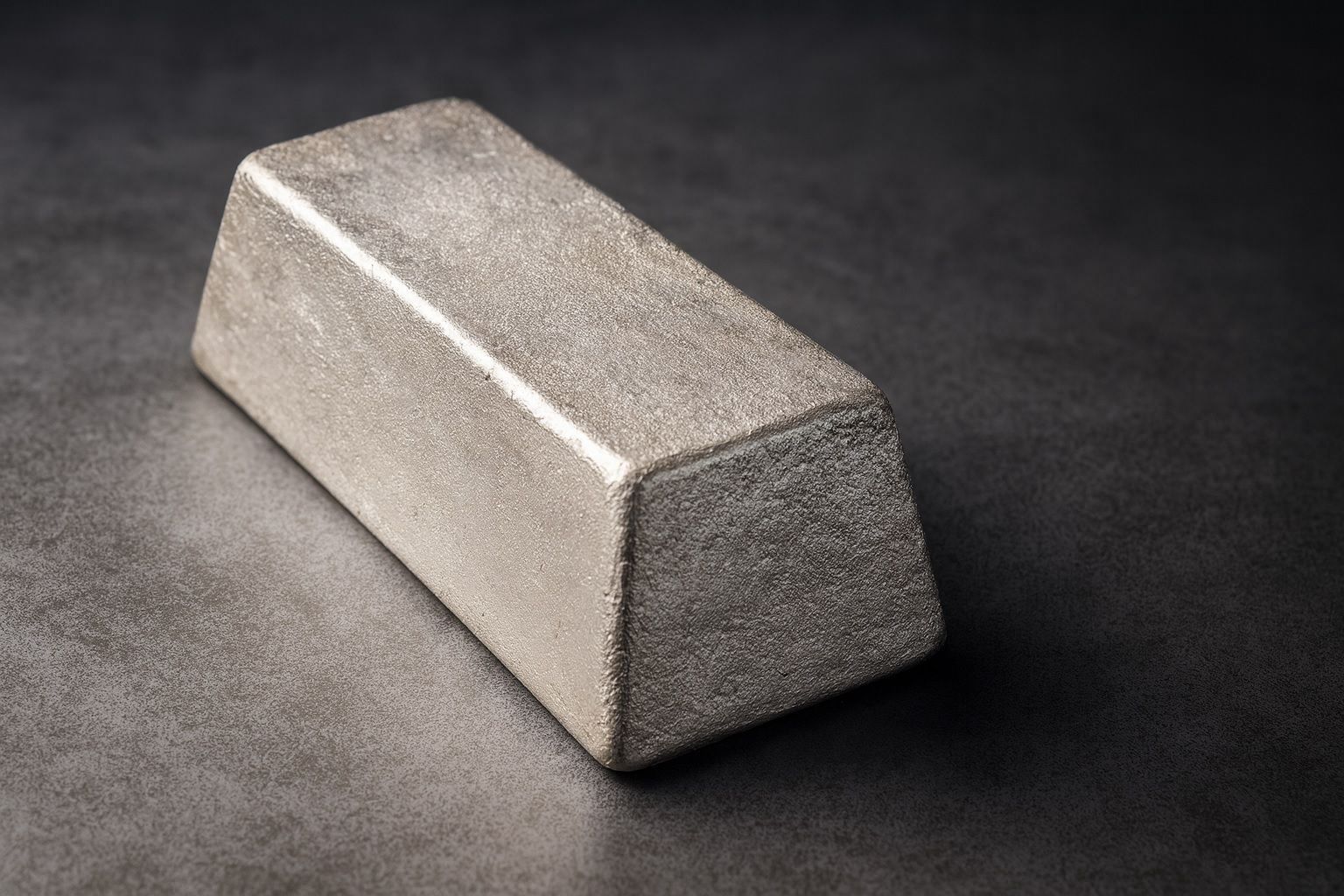

Silver price today is holding near record territory on Friday, December 12, 2025, as a powerful mix of macro tailwinds and physical-market narratives keeps the “grey metal” in focus. Spot silver hit a fresh record high at $64.32 per ounce before easing back, with Reuters quoting spot at $63.87/oz by 09:45 GMT. Reuters
On widely followed retail pricing feeds, silver was still trading around the $64.20–$64.32/oz area in the U.S. morning, with intraday ranges pushing into the mid-$64s.
Silver price today in the headlines
Here are the dominant themes across today’s coverage and market commentary:
- New record highs: Spot silver set a record at $64.32/oz and is on track for roughly a 9.5% weekly gain, according to Reuters.
- Fed-driven tailwinds: The Federal Reserve’s latest rate cut and the start of Treasury-bill purchases (a liquidity operation starting Dec. 12) are pressuring the U.S. dollar and supporting metals.
- Tightness and “shortage” narrative: Markets continue to price in constrained inventories and a multi-year supply deficit story. Reuters+1
- Policy risk premium: Silver’s inclusion on the final 2025 U.S. critical minerals list has added a strategic/political layer, including tariff and supply-chain speculation.
Silver price today: spot vs futures levels
Because “silver price today” can mean different instruments, here are the most-cited reference points from today’s market feeds:
- Spot silver: Reuters reported spot at $63.87/oz after touching $64.32/oz (record high).
- Spot feed snapshot: Kitco showed spot around $64.20 bid / $64.32 ask in its live pricing table, with a day range reaching into the $64.3–$64.4 area.
- Silver futures: Investing.com listed silver futures around 64.650, with a daily range of 63.125 to 64.705 and a 52‑week range up to 64.720.
A quick conversion for searchers: at roughly $64/oz, that’s about $2.06 per gram (using 31.1035 grams per troy ounce), before premiums, taxes, or local currency effects.
Why silver is up today: the Fed, the dollar, and liquidity
Silver is benefiting from the classic precious-metals setup: lower-rate expectations + a softer dollar + risk hedging.
Reuters noted the U.S. dollar hovering near a two‑month low and pointed to expectations of further rate cuts as a support pillar for bullion.
But the bigger “December 2025 twist” is liquidity.
The Fed’s bill-buying program is in play
This week the Fed not only cut rates, it also announced it would begin reserve management purchases of short‑dated Treasuries. Reuters reported an initial pace of around $40 billion per month in Treasury bills, starting Friday, December 12, describing the move as “technical” (aimed at keeping reserves ample and maintaining control over the policy rate system). Reuters
The New York Fed’s markets desk confirmed the first schedule: about $40 billion in Treasury-bill purchases, with purchases starting Dec. 12, and a pace expected to remain elevated for a few months.
Chair Jerome Powell also described the program in his press conference transcript, emphasizing it is intended to maintain an ample supply of reserves and may stay elevated for a few months before slowing.
In plain English: regardless of whether markets label it QE or not, traders often treat “more liquidity” as supportive for commodities—especially ones already in momentum mode.
The real driver behind the rally: silver’s hybrid identity
Silver is not only a precious metal. It’s also a strategic industrial input used in electronics and energy applications. That dual identity is what makes silver rallies so intense—and also so volatile.
Reuters framed the latest run as being supported by strong industrial demand, dwindling inventories, and the metal’s inclusion on the U.S. critical minerals list.
Saxo Bank’s Ole Hansen summed up the market tone as a mix of industrial demand and “tight market” fears, with speculative participation also boosting ETF flows. Reuters
Supply deficit and inventories: the “tight market” debate
A sustained supply deficit story helps explain why silver has reacted so explosively to marginal changes in investor flows and policy headlines.
The Silver Institute has highlighted that the market has remained in deficit in 2025, marking the fifth consecutive year, with an estimated deficit of 95 million ounces and a cumulative deficit approaching 820 million ounces across 2021–2025.
Even when demand softens at high prices, silver supply can be slow to respond because much of silver output is a byproduct of other mining (lead-zinc, copper, gold). That makes rapid supply increases difficult—one reason why the market can tighten quickly when investment demand surges.
ETF inflows are back in the driver’s seat
A Business Standard trading note cited known global silver ETF holdings at 845.09 million ounces as of Dec. 10, the highest since July 2022, and said holdings were up 18.02% year‑to‑date, rising for four straight weeks.
That matters because in a tight physical market, ETF inflows can pull metal out of circulation and reinforce “shortage” psychology—feeding momentum.
Critical minerals designation adds a new risk premium
One of the most important 2025 developments is that silver is no longer being discussed only as an investment metal—it is now being framed as a strategic mineral in U.S. policy.
The U.S. Geological Survey (via the Department of the Interior) said the final 2025 List of Critical Minerals adds 10 new minerals, including silver, based on updated methods and interagency input.
The Federal Register notice for the Final 2025 List of Critical Minerals also references silver’s inclusion.
Market commentary has linked this designation to potential future trade tools. Euronews noted that the new critical mineral status can place silver within the scope of possible Section 232 investigations, which have been used in the past to justify tariffs (notably in other metals).
Even if no immediate policy changes occur, the “critical mineral” label can influence expectations around stockpiling, supply-chain security, and domestic sourcing—factors that can add a premium in price discovery.
Silver price forecast and technical outlook for December 12, 2025
With silver at record highs, forecast language is now dominated by momentum and “price discovery” rather than mean reversion. But analysts are also waving the usual silver warning sign: overbought conditions.
Short-term technical levels traders are watching
- FXStreet said XAG/USD was consolidating above $64 after hitting a fresh all‑time high around $64.62, noting the rally appears overstretched on momentum gauges.
- FXEmpire flagged a near-term resistance area around $64.26; a breakout could open the path toward $65.66 and $67.27, while support was noted around $62.65 and $60.47.
- Investing.com’s futures page labeled the daily technical signal as “Strong Buy”, while also showing a daily range up to 64.705 and a 52‑week high near 64.720—a reminder that silver is pushing the top of its recent volatility envelope. Investing.com
A practical way to frame the near-term setup
With silver this extended, the market often becomes “headline sensitive.” Two scenarios matter most:
- Continuation: If the dollar stays soft and ETF inflows remain positive, the market can push through resistance and keep printing fresh highs.
- Cooling phase: Even in bull runs, silver frequently retraces sharply when traders take profits—especially if the dollar rebounds or risk sentiment shifts.
Longer-term forecasts: where analysts see silver going in 2026
Today’s forecasts are increasingly bold—but they also come with more caveats about volatility.
In India-focused strategy coverage, Axis Securities argued silver has broken out of a multi‑year consolidation and projected a 2026 target of ₹240,000 per kilogram, suggesting corrections could be used for staggered accumulation.
Axis also described key technical milestones in USD terms—saying silver broke the $50 neckline, sees resistance around $65–$67, and that a sustained monthly close above $67 could open a longer-term target zone around $76–$80.
Meanwhile, Reuters noted that silver’s surge has been tied to shortages fears and tightness, and highlighted the role of speculative participation in pushing ETF inflows—conditions that can propel rallies, but also raise the odds of sharp pullbacks.
Silver price today in India
India is one of the world’s largest retail markets for precious metals, and today’s silver story has a strong domestic angle.
- Moneycontrol reported silver around ₹216 per gram and roughly ₹2,16,100 per kilogram (pure silver), with relatively small differences across major cities.
- Business Standard reported silver hitting the ₹200,000 per kilogram milestone in India on Friday, which helped push new 2026 forecasts into mainstream coverage.
Local prices can vary materially versus USD spot because of currency moves, import costs, taxes, and premiums—especially during periods of fast momentum.
What to watch next: catalysts that could move silver
If you’re tracking “silver price today” for the next move, these are the near-term drivers most likely to matter:
- U.S. data and rate expectations: Reuters pointed to the next U.S. nonfarm payrolls report as a key clue for the Fed path.
- Dollar direction: A sustained dollar slump has been a major tailwind for metals; any rebound could cap gains.
- Liquidity operations: Watch how markets interpret the Fed’s bill-buying program once it begins on Dec. 12 and whether it affects funding conditions and risk appetite.
- ETF flows and positioning: Rapid ETF accumulation can amplify both rallies and pullbacks in a market as thin as silver versus gold.
- Policy headlines: The critical minerals designation and any talk of trade reviews or tariffs can add volatility—and premiums—to a tight market.
Bottom line
Silver price today is being driven by a rare alignment: record-setting momentum, easier-policy expectations, fresh liquidity operations, and a tight supply narrative now reinforced by silver’s critical minerals status. That cocktail can keep prices elevated—but it also tends to produce the hallmark feature of silver markets: big, fast swings.
This article is for informational purposes only and is not financial advice.
Related articles: Precious Metals