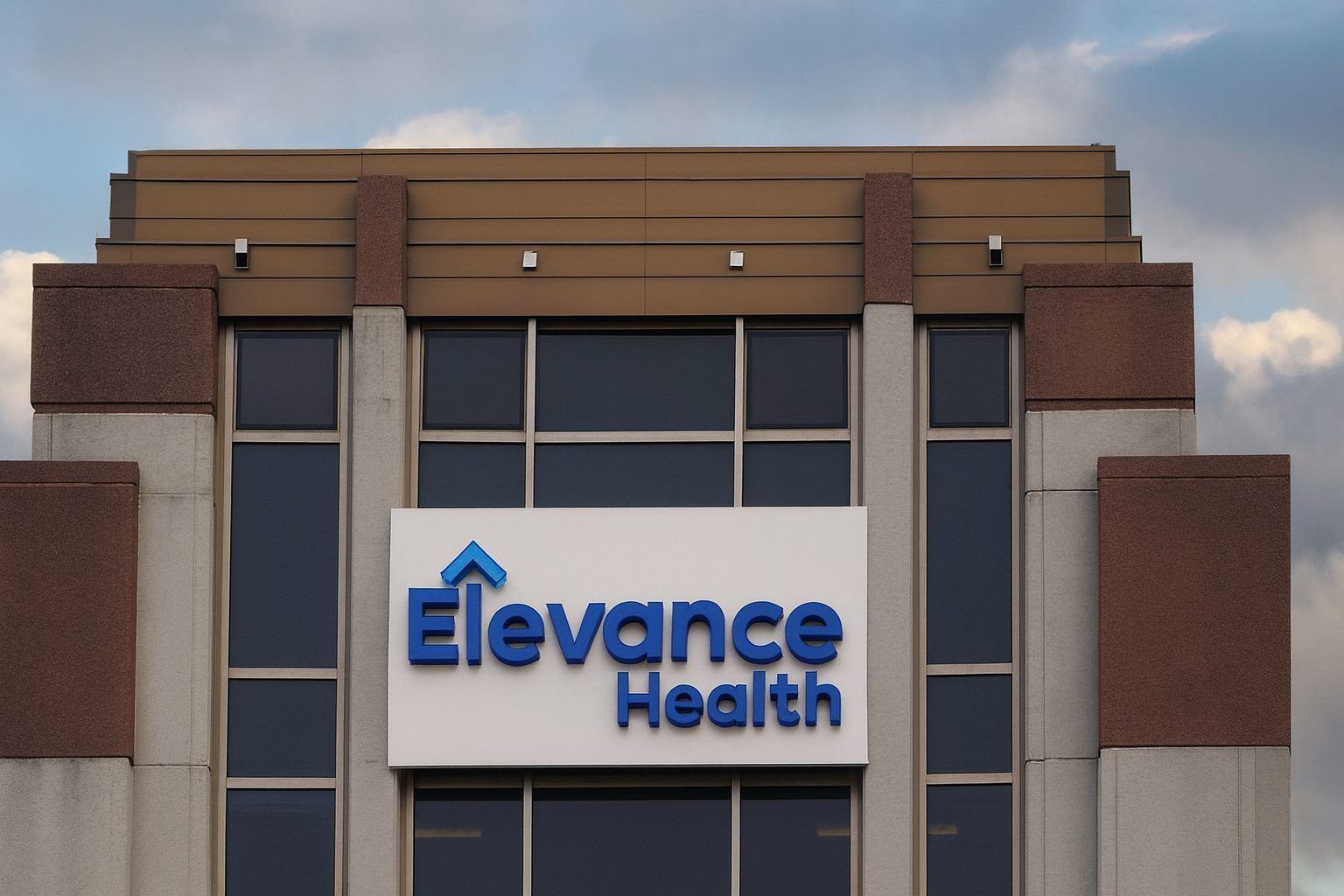

Elevance Health, Inc. NYSE:ELV is drawing fresh investor attention on December 12, 2025 as credit-rating updates and U.S. policy headlines collide with a stock that has recently rebounded sharply. The latest developments arrive at a sensitive moment for managed-care names, with Wall Street weighing medical-cost trends, Medicaid rate dynamics, and the looming Affordable Care Act (ACA) subsidy deadline.
As of Friday’s latest trade, ELV stock was around $360, after swinging between the day’s high and low in moderately active trading.
What’s moving Elevance Health stock on Dec. 12, 2025
Key drivers investors are tracking today:
- AM Best announced multiple credit rating actions across Elevance Health and its subsidiaries on Dec. 12, including affirmations and upgrades, with a stable outlook.
- Fitch Ratings affirmed Elevance’s core ratings this week, highlighting a very strong business profile while also noting margin pressure across the sector tied to utilization and government programs.
- In Washington, the U.S. Senate rejected competing proposals to address an expiring ACA subsidy—an event that raises uncertainty for 2026 exchange pricing, enrollment, and insurer risk management.
- Analysts’ price targets and consensus ratings remain broadly constructive, though not uniform, reflecting the push-and-pull between valuation, policy risk, and cost trends.
ELV stock price check: where Elevance shares trade now
On Dec. 12, Elevance shares traded near $360, with an intraday range spanning roughly the high $350s to low $360s.
That level matters for two reasons:
- Sentiment reset: Elevance stock recently posted a notable one-day surge (as reported by technical and market commentary outlets), forcing short-term traders to reassess momentum.
- Valuation vs. forecasts: Many analyst target clusters sit above current levels, but not by a huge margin—meaning near-term headlines can still dominate the tape.
Credit ratings in focus: AM Best actions on Elevance Health
A major stock-specific headline on Dec. 12 came from AM Best, which said it took “various credit rating actions” on Elevance and most subsidiaries.
Highlights from AM Best’s statement include:
- Affirmation of the Financial Strength Rating (FSR) of A (Excellent) and Long-Term ICRs of “a+” for core Blue Cross Blue Shield–branded insurance subsidiaries and most non-Blue subsidiaries. AM Best News+1
- Upgrades for Wellpoint Life and Health Insurance Company and Wellpoint West Virginia, Inc., moving their FSR to A (Excellent) from A-, and Long-Term ICR to “a+” from “a-”. AM Best News+1
- AM Best described the (collectively referenced) Anthem Health entities as supported by very strong balance sheet strength, strong operating performance, a favorable business profile, and appropriate enterprise risk management, assigning stable outlooks in the actions it detailed.
AM Best also pointed to liquidity and funding flexibility: it referenced access through the holding company to a $5 billion revolving credit facility and a $5 billion commercial paper program (with a combined maximum capacity referenced), along with access to Federal Home Loan Bank program borrowings through insurance subsidiaries.
Why it matters for ELV stock: Credit ratings don’t typically move a large managed-care stock by themselves, but they can reinforce (or undermine) the market’s confidence in capital flexibility—particularly when investors are nervous about medical cost trends and government program margin pressure.
Fitch affirmation: strong profile, but margins still under pressure
While Fitch’s direct web page is difficult to access in full, the widely carried rating-action summary this week says Fitch affirmed:
- ‘A+’ Insurer Financial Strength ratings on insurance subsidiaries
- ‘A-’ Long-Term Issuer Default Rating for Elevance
- ‘BBB+’ senior debt rating
- Stable outlook TradingView+1
Fitch’s rationale (as reported) is nuanced:
- It emphasized Elevance’s scale and positioning—including membership of roughly 45 million medical members (as of Sept. 30, 2025) and leading BCBS market shares in many of the states where it operates.
- It also highlighted leverage metrics, including debt-to-total-capital and debt-to-EBITDA ratios around the low 40% / ~3x area at Sept. 30, 2025, while noting recent debt redemptions and upcoming maturities.
- At the same time, Fitch noted operating margin pressure over the last two years, pointing to sector-wide utilization dynamics and, specifically for Elevance, Medicaid payment rate adequacy and ACA marketplace utilization pressures in 2025.
Bottom line for investors: Fitch’s message is essentially “strong franchise, manageable balance sheet,” but with a reminder that underwriting conditions in government-linked lines remain challenging.
Washington policy headline: Senate vote heightens ACA subsidy uncertainty
A major macro catalyst for health insurers—and potentially for Elevance Health stock—hit this week when the U.S. Senate rejected competing Republican and Democratic proposals aimed at preventing a looming healthcare affordability shock tied to expiring federal support.
According to Reuters:
- The Senate votes left roughly 24 million Americans potentially exposed to significantly higher premiums beginning Jan. 1, as a federal subsidy expires.
- Reuters reported Congress could head into recess and not return until Jan. 5, after new premiums are effectively locked in for many consumers—raising the risk of a “late” legislative outcome. Reuters
Separate analysis from KFF, a health policy organization, has estimated that if the enhanced premium tax credits expire, Marketplace premium payments could rise sharply on average (KFF’s calculator and supporting materials cite an average increase figure).
Why this matters to Elevance specifically
Elevance participates in multiple lines of business, including employer-sponsored coverage and government-backed programs. But ACA policy uncertainty can still influence:
- Individual exchange membership levels
- Pricing assumptions for 2026
- Medical cost mix, as consumers adjust plan selection and utilization patterns
Reuters previously reported that Elevance has flagged uncertainty around policy changes and indicated it would wait for clearer visibility before issuing a formal 2026 forecast (with expectations around providing more clarity in January).
Elevance Health fundamentals: latest results and guidance
For investors trying to separate noise from signal, Elevance’s latest quarterly update still anchors the fundamental story.
In its third-quarter 2025 results, Elevance reported:
- Operating revenue of $50.1 billion, up 12% year over year
- Adjusted diluted EPS of $6.03
- Reaffirmed full-year 2025 benefit expense ratio guidance of about 90% and adjusted diluted EPS guidance of about $30.00 www.elevancehealth.com
Management commentary emphasized efforts around affordability, member experience, value-based care partnerships, and AI-enabled solutions.
Segment detail: Carelon continues to be watched closely
One of the market’s recurring questions is how Elevance’s services and pharmacy-related operations can balance volatility in regulated insurance lines.
In the Q3 earnings release materials, Elevance’s Carelon segment showed (for the quarter ended Sept. 30, 2025):
- Operating revenue of $18.3 billion (vs. $13.8 billion a year earlier)
- Operating gain of $0.8 billion (flat year over year)
- Reported operating margin of 4.2% (down from 5.8% a year earlier) s202.q4cdn.com
Those figures suggest scale growth, while profitability metrics remain sensitive to mix and investment pace.
Dividend update: December payment on the calendar
Elevance declared a $1.71 per share dividend for Q4 2025, payable Dec. 19, 2025, to shareholders of record at the close of business on Dec. 5, 2025.
Analyst forecasts for ELV stock: price targets and ratings
Wall Street’s view of Elevance Health stock remains generally positive—but the spread of estimates highlights ongoing debate about near-term risk.
Here’s where major consensus trackers sit as of Dec. 12:
- StockAnalysis: 15 analysts, consensus rating “Buy,” average price target $392.47 (range $297–$485), implying high-single-digit upside from current levels. StockAnalysis
- MarketScreener: mean consensus “Outperform” with an average target around $389.42, versus a recent close near $360. MarketScreener
- Investing.com: 19 analysts, average target about $387.16, with a reported mix of buy and hold recommendations and a wide high/low range.
Recent target changes
Analyst updates have been active into December. For example, coverage summaries show Baird raised its price target to $340 from $297 while maintaining a neutral stance.
How to interpret this: The overall Street still sees upside, but many firms appear to be calibrating targets to reflect (1) policy uncertainty, and (2) the reality that medical-cost trends can swing quarterly results.
Technical and trading narrative: the 200-day moving average moment
From a market-structure standpoint, ELV also entered the technical conversation this week after commentary noted shares moved above the 200-day moving average (a level often watched by systematic traders and technical analysts).
Technical signals don’t change cash flows, but in a stock with heavy institutional ownership, they can influence near-term flows—especially when combined with headline catalysts like credit rating actions and Washington policy news.
What investors are watching next: Medicare Advantage rates and 2026 cost pressures
Beyond the ACA subsidy cliff, investors are also tracking how 2026 program changes could shape profitability.
CMS’s 2026 Medicare Advantage and Part D Rate Announcement projected an average increase of 5.06% in MA payments to plans for 2026 (over $25 billion), though the details include offsets tied to risk model revisions and star rating impacts.
For Elevance and peers, 2026 debate points include:
- Whether payment increases will outpace utilization trends
- How risk adjustment and model changes influence revenue
- How Part D dynamics evolve under ongoing policy changes
Meanwhile, both rating agencies and prior company commentary have repeatedly pointed to Medicaid and exchange dynamics as key margin swing factors—particularly where rate updates lag medical cost inflation.
Other company headlines in December: governance and “digital front door”
Two additional December items may be on longer-term investors’ radar:
- Board appointment: Elevance announced the appointment of Amy Schulman as an independent director, effective Jan. 12, 2026, with service on the Audit and Finance Committees.
- AI-enabled member tools: Elevance said it expanded access to its Virtual Assistant through the Sydney Health app and affiliated plan websites, citing early pilot results in which nearly 9 out of 10 users found answers to their questions.
These aren’t “tomorrow morning” stock catalysts, but they fit a broader narrative: big insurers are trying to improve member navigation and reduce friction—partly as a response to rising utilization and administrative complexity.
The takeaway for Elevance Health stock on Dec. 12, 2025
Elevance Health stock enters mid-December with a rare combination of company-specific balance-sheet validation (AM Best actions; Fitch affirmation) and sector-wide policy volatility (the ACA subsidy vote fallout).
At roughly $360, ELV is trading below many consensus price targets—but not far enough below to ignore near-term risks.
Over the coming weeks, investors are likely to focus on:
- Whether Congress revisits the ACA subsidy issue before premiums and enrollment dynamics fully reset for 2026 Reuters+1
- How Elevance frames 2026 outlook and cost trend as it approaches its next guidance cycle Reuters
- The durability of credit and liquidity confidence as medical-cost debates continue AM Best News+1