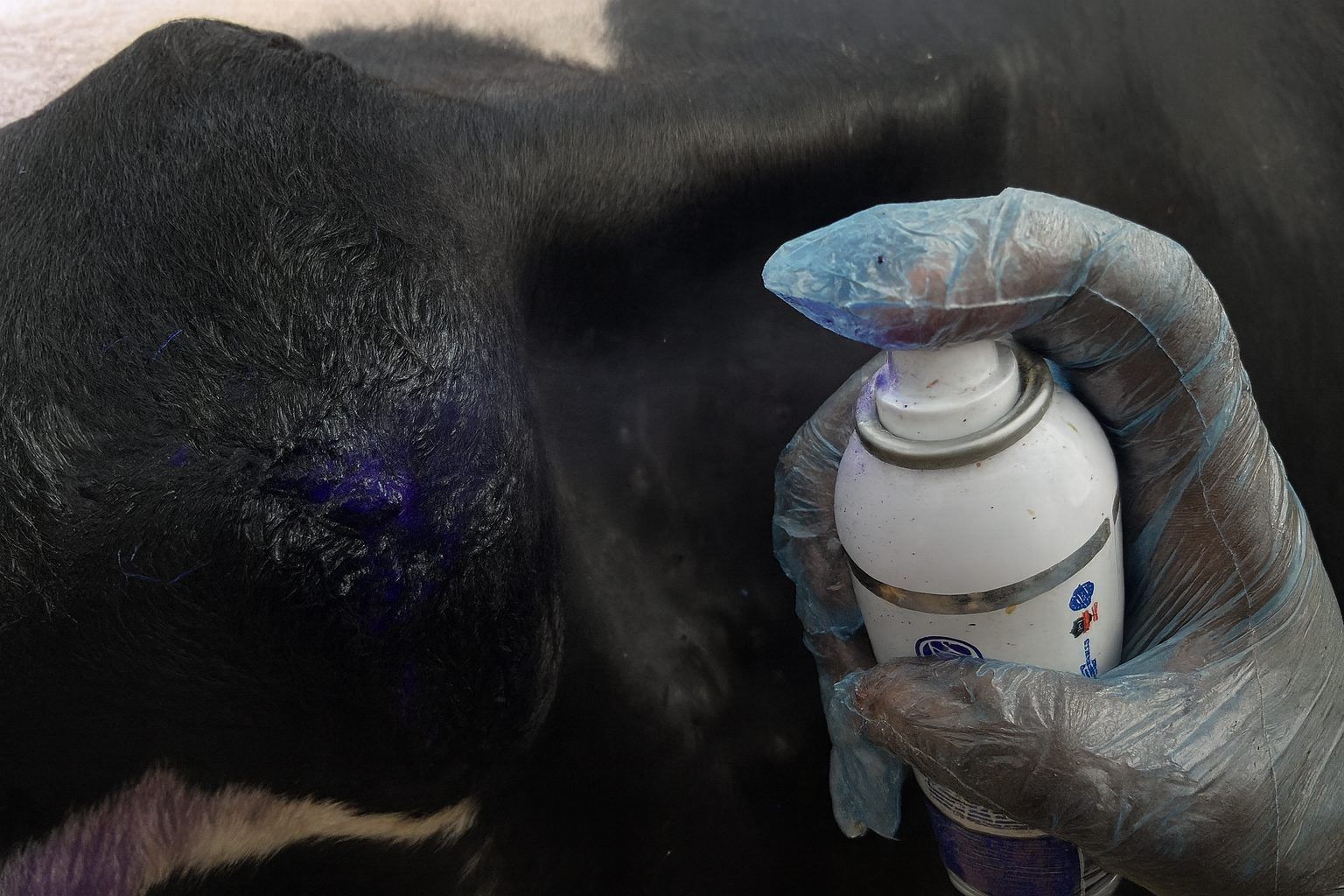
France’s battle against lumpy skin disease—a fast-spreading viral infection that affects cattle but does not infect humans—took a dramatic turn on Friday, December 12, 2025, as police clashed with farmers trying to prevent the slaughter of entire herds and tractor convoys blocked major roads across the southwest.
At the center of the tension is a government “stamping-out” strategy: when a single case is detected in a herd, authorities can order the culling of all animals on the farm to stop the disease from spreading and to protect export markets. Farmers’ unions say the approach is economically devastating, emotionally traumatic, and—crucially—unnecessary when vaccination could be scaled faster. The Connexion+2Ministère de l’Agriculture+…
What happened on December 12: tear gas, culling, and motorway blockades
A farm in Ariège becomes the flashpoint
In Ariège, veterinarians began slaughtering a herd after security forces moved in late Thursday to clear protesters who were blocking access to the farm. French media reports described hundreds of farmers gathered to stop the euthanasia of around 207 bovines at a site near Les Bordes-sur-Arize, with police using tear gas as tensions escalated.
French outlet TF1 also reported that the Interior Ministry cited up to 500 demonstrators attempting to block the operation, with four arrests and no injuries publicly confirmed at that stage.
Tractors block the A75 and disruptions spread
As the farm operation moved forward, protests widened into broader transport disruption across the region. In Lozère, at least 100 tractors blocked the A75 motorway near Buisson, with farmers reportedly cutting down nearby trees to fuel a large bonfire and vowing to continue blockades for days.
Additional disruption was reported on the A9 and on multiple roads around Toulouse, while clashes between farmers and police were recorded across Occitanie, including the use of tear gas.
A64 shut down near Toulouse as new case emerges
By mid-afternoon, Le Monde’s live updates reported the A64 motorway closed in both directions between Carbonne and Lafitte-Vigordane, with vehicles and tractors blocking lanes and police organizing mandatory exits for motorists. The same live coverage reported a new suspected/announced outbreak area in Haute-Garonne, near the Ariège border.
The latest outbreak picture: cases rise and new areas are put under restrictions
France’s Agriculture Ministry said the epidemiological situation had been stabilized in Auvergne-Rhône-Alpes, but remained “preoccupying” in Occitanie, where two new outbreaks were confirmed on December 9 and 10 in Ariège and Hautes-Pyrénées. Ministère de l’Agriculture+1
In response, authorities announced a new regulated zone—ZR6—covering all or part of Ariège, Hautes-Pyrénées, Haute-Garonne, Gers, Aude, and Pyrénées-Atlantiques, with tighter movement restrictions. The ministry said the zone includes:
- a 20 km protection area around outbreaks, with strict movement limits
- a 50 km surveillance area with reinforced veterinary checks and insect control measures
Separately, France’s official “situation update” page said 110 outbreaks were detected nationally between June 29 and December 11, 2025, impacting 75 farms across nine departments (including Savoie, Haute-Savoie, Ain, Rhône, Jura, Pyrénées-Orientales, Doubs, Ariège, and Hautes-Pyrénées). Ministère de l’Agriculture
Reuters, citing the ministry’s figures, reported 109 outbreaks as of December 9, with around 3,000 cattle already slaughtered—and noted that officials believe the strategy is essential to keep trade routes open.
Why France is culling entire herds—according to the government
French authorities argue that rapid eradication is the only path to preventing the disease from becoming entrenched and triggering wider trade restrictions that could hit the cattle, dairy, and cheese sectors.
Agriculture Minister Annie Genevard has publicly defended the approach, telling the French daily Le Parisien that “Slaughter is the only solution,” according to Reuters. Reuters
The government’s argument rests on three pillars:
1) The export and trade risk is immediate
Reuters reported that French officials have warned that failing to apply the protocol could lead to a “lockdown” effect on agricultural exports—impacting animals and dairy products. Reuters
2) Movement controls are crucial—and officials suspect illegal transfers
In the ministry’s December 12 press release, officials stressed that the outbreaks in Ariège and Hautes-Pyrénées were more than 100 km from the nearest previously affected department, far beyond the typical travel range of insect vectors (described as under 5 km). The ministry said this pattern makes strict movement restrictions and stronger road controls essential.
Reuters also reported the ministry has repeatedly pointed to illegal animal movements as a likely factor behind spread.
3) Officials say the disease could devastate the national herd
Euronews reported Genevard warning the disease must be eradicated or it could cause the death of a significant share of livestock. euronews
Reuters quoted Genevard warning that continued spread could kill at least 1.5 million cattle.
What farmers say: “exaggerated and cruel” vs. “scientific consensus”
The protests are being driven by multiple strands of anger: the loss of animals, financial uncertainty, distrust in the “cull-first” approach, and a belief that vaccination should replace mass slaughter.
Reuters reported that the Coordination Rurale union criticized the strategy as ineffective, while rallies and blockades spread across several regions.
Local reporting in Occitanie described farmers trying to prevent veterinarians from reaching the Ariège farm, followed by clashes and tear gas—then a shift toward regional motorway blockades like the A75 as the operation proceeded.
At the same time, divisions are visible within the farm sector itself. Euronews reported that the main union FNSEA urged restraint, with its president Arnaud Rousseau supporting the government’s approach while emphasizing the need to avoid restrictions that would destabilize prices.
Le Monde’s live coverage also noted that multiple unions called for escalating mobilization in the coming days—including rallies and intensifying blockades—showing how quickly the dispute may broaden beyond the initial farm.
France expands vaccination and tightens national rules through January 1
Alongside culling and restrictions, France is leaning heavily on vaccination—especially in the southwest where outbreaks have multiplied.
A wider vaccination zone in the southwest
The Agriculture Ministry announced an expanded vaccination zone covering Aude, Haute-Garonne, Gers, Pyrénées-Atlantiques (with exceptions for areas already regulated), and Landes. Measures include:
- mandatory vaccination for all cattle, fully funded by the state
- a ban on cattle leaving the vaccination zone except for transport to slaughterhouses
TF1 similarly reported that vaccination is mandatory in the relevant zones and is state-funded.
National measures tightened until January 1
The ministry also set temporary nationwide steps through January 1, including:
- banning “festive gatherings” of cattle
- requiring movement notifications within 24 hours (instead of seven days)
- requiring cattle transport to be disinsectized for movements outside France
Compensation and support—plus psychological help
The December 12 government communication also emphasizes financial and human support: vaccination costs covered, strengthened compensation (including rapid advances), and even psychological support for farmers facing herd depopulation. The ministry said nearly €6 million had already been paid to affected farmers since the first outbreak.
What is lumpy skin disease and is it dangerous to people?
Lumpy skin disease (known in France as dermatose nodulaire contagieuse, DNC) is a viral disease affecting cattle and related bovines. It causes fever, skin nodules/lesions, and can sharply reduce milk production—often leading to severe economic losses and trade restrictions.
Crucially for consumers: it is not transmissible to humans. France’s Agriculture Ministry explicitly states it is not transmitted by contact with infected cattle, by consuming products such as meat, milk, or cheese, or through insect bites.
France’s public health and food safety agency Anses also describes DNC as a disease that can cause major economic harm to farms, with the virus primarily carried by biting insects (certain flies and mosquitoes), and notes that warm and humid conditions can increase spread risk.
How the disease reached France—and why Europe is watching closely
European authorities have been tracking lumpy skin disease as it re-emerged in parts of Europe. The European Commission notes France notified its first outbreak on June 29, 2025 in Chambéry (Savoie) and that EU emergency measures include establishing restricted zones and deploying vaccination plans in affected regions.
In France, the recent flare-up in the southwest—particularly in Occitanie—has raised fears of a wider geographic spread, especially given official concerns about animal movements.
What to expect next: more protests, more controls, and a race to vaccinate
As of December 12, the situation is moving fast in three directions:
- Disease control is tightening, with expanded regulated zones, movement bans, and stricter reporting rules.
- Vaccination is scaling, particularly across a broadened zone in the southwest.
- Farmer protests are expanding, with blockades already affecting major routes (A75, A64) and unions signaling further actions over the coming days.
Le Monde also reported legal attention turning toward protest tactics in some areas—for example, an investigation opened in Agen after waste was dumped in front of administrative buildings during overnight actions tied to union calls to demonstrate.
For the government, the priority is to stop the virus before it spreads into additional departments and triggers deeper trade impacts. For farmers, the priority is to avoid what they see as preventable mass slaughter—while securing compensation that reflects the true cost of losing productive herds and months of output.
Either way, December 12 marks a turning point: lumpy skin disease has shifted from a veterinary emergency into a national political test—played out not only on farms, but on France’s motorways and in the balance between public health rules and rural livelihoods.