
Updated: December 12, 2025
Goldman Sachs Group, Inc. (NYSE: GS) ended the week on a volatile note, but the bigger picture for investors remains clear: Wall Street’s deal-and-capital-markets comeback narrative is still driving the tape into year-end, and Goldman sits near the center of it.
After pushing to fresh highs midweek, GS shares slipped with the broader market on Friday. Still, the stock closed at $887.96 on Dec. 12, leaving it up about 2.45% for the week (Dec. 8–12) based on Monday-to-Friday closes.
Below is what moved Goldman Sachs stock this week, what the latest headlines and analyst notes are signaling, and the catalysts traders and long-term investors are watching for the week ahead.
Goldman Sachs stock price action this week
GS delivered a classic “strong start, late-week pullback” pattern:
- Mon (Dec. 8) close: $866.69
- Thu (Dec. 11) close: $911.03 (a sharp rally day)
- Fri (Dec. 12) close: $887.96 (down 2.53% on the day) Yahoo Finance+1
Friday’s decline came during a broadly weaker session for U.S. equities, with multiple financial stocks lower and Goldman among the larger declines in the group on the day.
Even with the pullback, Goldman’s stock has been a standout in 2025. Reuters reported GS shares were up nearly 54% year-to-date as of the CFO’s comments earlier this week.
The big GS stock story this week: “Deals are back” — and Goldman says momentum can run into 2026
The most market-moving Goldman-specific headline in the last few days came from the firm’s leadership on the deal pipeline.
At a Goldman-hosted investor conference, CFO Denis Coleman said he expects M&A momentum to continue into 2026, pointing to a supportive environment tied to a resilient economy, easing financing conditions, and improving corporate confidence.
Coleman’s remarks were notable for the scale of the rebound he described:
- He said 2025 could become the second-largest year in history for announced M&A.
- He highlighted a stronger equity underwriting calendar and said financial-sponsor-led deal volume jumped ~40%.
- Reuters also noted his discussion of mega-deals (deals of $10 billion+), with 63 such deals announced in 2025, surpassing the previous record year.
For a stock like GS—where advisory, underwriting, and market activity are core earnings drivers—comments like these tend to matter as much as (or more than) day-to-day tape action. They feed a forward-looking thesis: if fee pools keep rebuilding, Goldman’s earnings power can remain elevated going into 2026.
A second deal tailwind: Goldman spotlights “private finance structures” powering Japan M&A
Another Goldman-linked headline this week came from Asia, where the firm pointed to financial engineering as a catalyst for big-ticket transactions.
In a Reuters report focused on Japan, Goldman executive David Dubner described how private finance structures—mixing equity/debt with long-term private capital (including insurers)—are helping investment-grade companies preserve ratings while lowering costs of capital, enabling larger and more complex deals.
Reuters cited 2025 Japan deal activity as historically strong, and pointed to the $7.4 billion Air Lease Corp buyout as an example of the structure, with Goldman advising.
For GS stock watchers, the key takeaway is less about any single transaction and more about how financing innovation can widen the addressable universe of M&A—especially if rate cuts continue to ease the cost of capital into 2026.
Goldman’s own corporate move investors are still digesting: the $2B Innovator acquisition
While the market’s attention often gravitates to M&A advisory and trading, Goldman has also been reshaping its asset-management footprint. A major recent announcement:
Goldman agreed to buy Innovator Capital Management—best known for “defined outcome” ETFs—in a cash-and-stock deal worth about $2 billion, with closing expected in Q2 2026. Reuters+1
Reuters described Innovator as having about $28 billion in assets across 159 “defined outcome” ETFs, and noted Goldman’s view that the actively managed ETF market has scaled rapidly in recent years. Reuters+1
Why this matters to GS stock:
- Asset & wealth management is central to Goldman’s longer-term goal of building a more durable, fee-based revenue mix.
- Defined-outcome ETFs can be “sticky” products in wealth channels—potentially helpful if the market cycle turns more volatile.
The operational efficiency angle: Goldman’s AI push and job-cut headlines
Another GS-related narrative that resurfaced this week: AI-driven productivity.
Reuters reported that major U.S. banks expect AI to lift productivity and may lead to job reductions. In that context, Reuters said Goldman had informed employees in October about potential job cuts and a hiring slowdown through year-end as part of a productivity effort tied to AI initiatives.
The direct earnings impact is hard to quantify from headlines alone, but for GS shares, this connects to a theme investors tend to reward late-cycle: operating leverage (the ability to grow revenues faster than expenses).
Macro backdrop: the Fed cut rates—what it can mean for GS
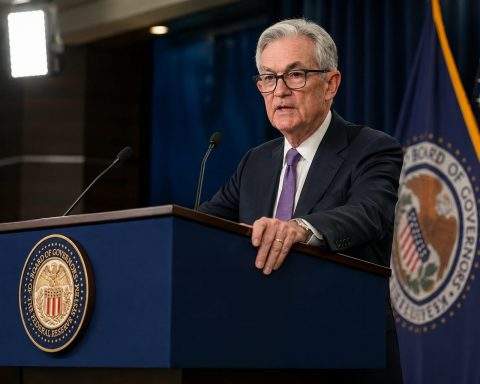
The other major “this week” driver for all financial stocks was the Federal Reserve.
On Dec. 10, the Fed lowered the federal funds target range by 0.25 percentage point to 3.50%–3.75%, citing a shifting balance of risks and an intent to remain data-dependent.
Lower policy rates can influence Goldman in multiple ways:
- Positive: Lower financing costs can support leveraged buyouts, refinancing activity, and overall risk appetite—often a constructive mix for advisory and underwriting.
- Mixed: Rates and yield-curve moves also affect trading conditions and, for banks more broadly, interest income dynamics.
The most important point for the week ahead is that rate expectations will remain highly sensitive to incoming labor and inflation data, which can quickly change the market’s view of the 2026 path.
Wall Street backdrop: a strong year for banks and dealmakers
A broader industry tailwind is that 2025 has been widely framed as a strong year for Wall Street, as investment banking and trading conditions improved. The Wall Street Journal described 2025 as shaping up as one of Wall Street’s best years, pointing to strengthening deal flow and upbeat commentary at an industry conference hosted by Goldman.
This “cycle” context matters for the stock: when investors believe the capital-markets rebound is durable, GS often trades more like a high-beta play on markets confidence than a traditional deposit bank.
Analyst forecasts and price targets: the Street is lifting targets, but consensus still varies by provider
As GS pushed to new highs, analyst target activity picked up—though “consensus” still depends heavily on the data source and update timing.
Recent target changes reported this week
- BofA Securities reportedly raised its price target to $900 from $850 and kept a Buy rating, citing growth momentum.
- A market note circulated Friday indicated RBC raised its target to $900 from $843.
- Another note indicated Rothschild & Co Redburn lifted its target to $748 from $608 while maintaining a Neutral stance.
Where consensus sits
One widely followed compilation (MarketBeat) lists:
- Average 12‑month target: $787.06
- Range:$600 to $900
- Implication: a forecasted downside vs. the current price area (reflecting how fast the stock has moved).
Another provider (Investing.com) shows a similar “high target near $900” picture, though with a different average/coverage set. Investing.com+1
How to interpret this: When a stock sprints to fresh highs late in the year, price targets can lag. The key is not the average target alone, but whether the analyst community continues to raise forward estimates—especially into earnings season.
Fundamentals checkpoint: what Goldman last reported
Goldman’s most recent quarterly update (Q3 2025) reported:
- Net revenues: $15.18 billion
- Net earnings: $4.10 billion
- EPS: $12.25
- ROE: 14.2% Goldman Sachs
On the shareholder-return front, Goldman’s board declared a $4.00 per share dividend, payable Dec. 30, 2025 to holders of record Dec. 2, 2025 (as noted in Q3 earnings coverage).
Technical levels traders are watching (no chart, just the levels)
From the week’s tape:
- Near-term resistance area: the $910–$920 zone (where the stock rallied midweek before reversing).
- Near-term support area: roughly $865–$870, around the week’s early closes and prior consolidation area.
This isn’t a prediction—just a map of where buyers and sellers recently showed up.
Week ahead: key catalysts for Goldman Sachs stock (Dec. 15–19, 2025)
With the Fed decision now absorbed, the next set of potential market-moving inputs is economic data—and the rates and risk appetite reactions that follow.
Kiplinger’s calendar highlights a data-heavy week (Dec. 15–19), including:
- Mon (Dec. 15): Empire State manufacturing; NAHB Housing Market Index; Fed speaker events Kiplinger
- Tue (Dec. 16):Nonfarm payrolls (Nov, delayed) and retail sales plus flash PMIs Kiplinger
- Thu (Dec. 18):CPI and core CPI (Nov, delayed) and weekly jobless claims Kiplinger
- Fri (Dec. 19): consumer sentiment (revised) and existing home sales Kiplinger
Why this matters for GS shares:
- Bond yields and rate-cut expectations: GS often trades with the market’s confidence level. If CPI/jobs data shifts the rate path, financials can react quickly.
- Trading environment: Volatility can lift market-making activity, but sharp risk-off moves can pressure financial stocks overall.
- Deal sentiment: Data that supports “soft landing + easing rates” tends to reinforce the M&A/underwriting narrative Goldman emphasized this week.
One more calendar item: next major company catalyst is earnings
Goldman is scheduled to report fourth-quarter 2025 earnings on Thursday, Jan. 15, 2026 (7:30 a.m. ET).
That’s the next hard, company-specific checkpoint where the market will test the “capital markets rebound” thesis with actual segment results and management tone.
Risks and watchpoints (what could derail the GS bull case into year-end)
Even with supportive headlines, GS stock has real late-cycle risks to monitor:
- Macro whiplash: If inflation surprises higher, markets could reprice the 2026 rate path quickly—often a problem for high-multiple, high-momentum financial names.
- Dealmaking disappointment: Goldman leadership is bullish on 2026 deal momentum; if pipelines stall, sentiment can turn fast.
- Execution risk in asset management: Big acquisitions like Innovator take time to integrate; investors will watch whether these deals translate into durable inflows and earnings.
- Cost and headcount headlines: AI-driven efficiency is a potential long-run tailwind, but restructuring stories can also introduce uncertainty about near-term execution.
Bottom line: GS enters the final stretch of 2025 with momentum—and a crowded catalyst calendar
Goldman Sachs stock ends the week higher overall despite Friday’s pullback, supported by a powerful year-end narrative: dealmaking is accelerating, underwriting windows are open, and the firm is positioning asset management for longer-run growth.
For the week ahead, GS investors should focus less on day-to-day noise and more on two drivers:
- How the market reprices Fed expectations after key labor and inflation data, and
- Whether analysts keep lifting targets and estimates as the stock consolidates near highs.
Related articles: NYSE:GS