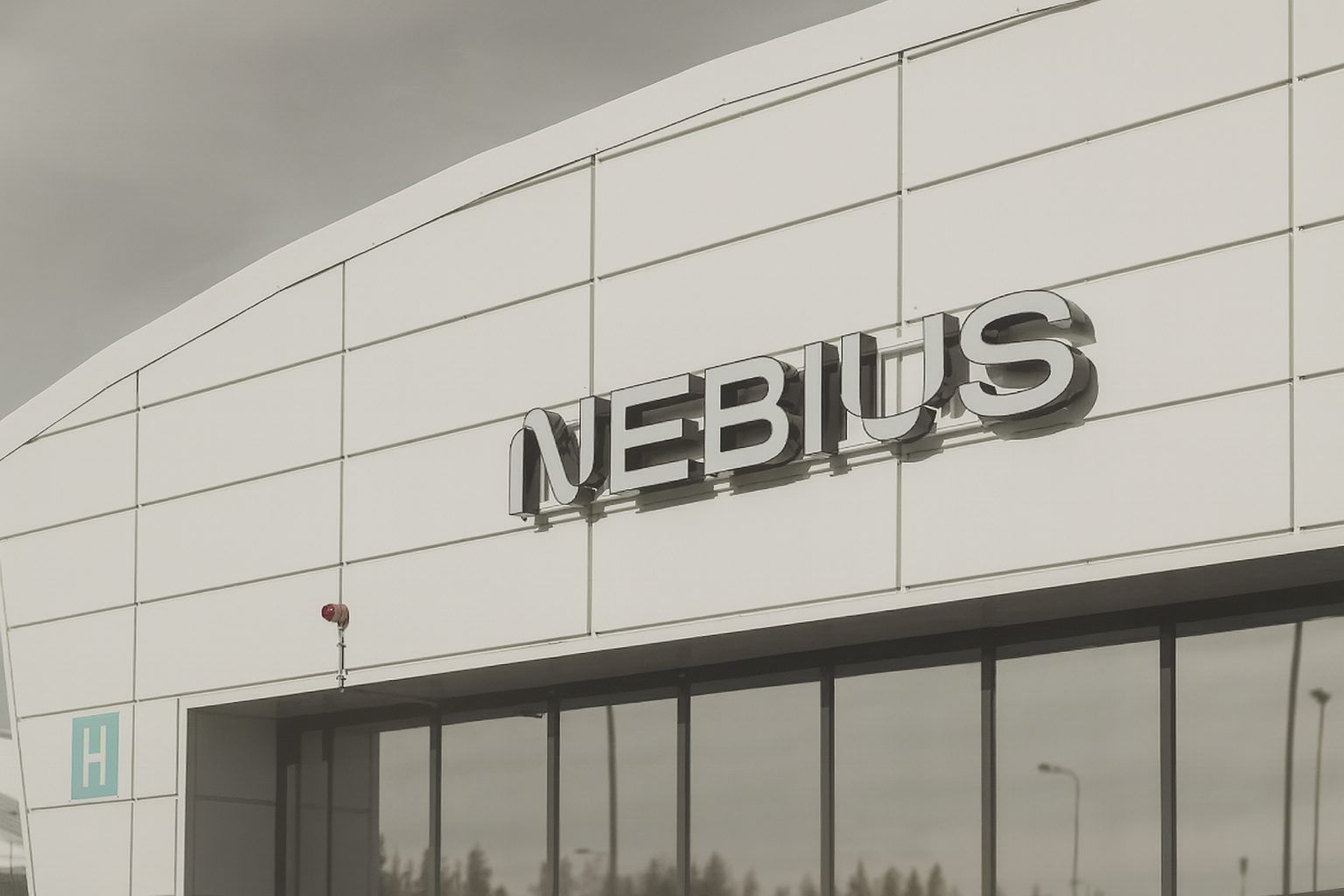
Nebius Group N.V. (NASDAQ: NBIS) is living in the part of the market where the laws of physics and the laws of finance arm‑wrestle daily. On one side: surging demand for GPUs and AI cloud capacity. On the other: the brutal reality that you have to build that capacity—fast—while markets keep asking, “Cool story, but who’s paying for all this silicon and power?”
As of December 15, 2025, NBIS stock is still digesting a sharp late‑week selloff. Shares last closed at $87.69 on Friday, Dec. 12 after falling 6.99% on the day, with trading that ranged from $95.65 down to $86.20 on heavy volume.
That pullback comes after a year dominated by enormous “hyperscaler” contracts (Microsoft and Meta) and rapid revenue growth—paired with equally enormous investment spending and dilution/financing questions that keep volatility elevated. Reuters+2Reuters+2
NBIS stock today: a volatile AI infrastructure name after a steep Friday drop
Nebius stock has been swinging like a pendulum lately, and the numbers show it. In the last several sessions, NBIS has posted large daily moves (both up and down), culminating in Friday’s slide to $87.69 (Dec. 12 close). Pre‑market indications early Monday (Dec. 15) showed a modest bounce near the high‑$80s, underscoring how quickly sentiment can shift around high‑beta AI infrastructure names.
One analysis note published today (Dec. 15) framed the recent weakness as the market re‑pricing “capital intensity” risk—essentially, the idea that the company’s growth opportunity is real, but expensive. Simply Wall St
What Nebius actually does (and why the market cares)
Nebius is often grouped into the “neocloud” category: companies that specialize in GPU‑heavy infrastructure and AI‑optimized cloud services, competing in a lane adjacent to hyperscalers like Amazon and Google. Reuters has described Nebius as Europe’s biggest neocloud firm, offering both access to high‑end GPUs and the software needed to run AI workloads effectively. Reuters
Nebius’s story is also unusual in public‑market terms. It previously traded as Yandex N.V., then re‑emerged as Nebius after selling Russian assets and refocusing the business, according to Nasdaq’s overview.
That context matters because NBIS investors aren’t just buying “AI demand.” They’re buying the company’s ability to:
- secure chips and power,
- build data center capacity,
- sign long‑duration contracts,
- and finance that buildout without blowing up shareholders.
The headline catalysts: Microsoft + Meta mega‑deals
Microsoft: multi‑year dedicated capacity, starting in New Jersey
On September 8, 2025, Nebius announced a multi‑year agreement to deliver AI infrastructure to Microsoft, with capacity expected from a new data center in Vineland, New Jersey starting later in the year.
Reuters has pegged the Microsoft contract at $17.4 billion over five years, with the possibility of rising to about $19.4 billion if Microsoft takes additional services capacity.
Strategically, this matters because hyperscaler contracts can validate demand and improve financing options—if the economics work and the buildout arrives on time.
Meta: about $3 billion over five years, but capacity was tight
On November 11, 2025, Reuters reported Nebius signed a deal worth about $3 billion with Meta to provide AI infrastructure over five years—Nebius’s second hyperscaler contract after Microsoft.
Two details in Reuters’ reporting are especially telling:
- Nebius said it would deploy the capacity needed for the Meta contract over the next three months.
- Demand was so strong that the contract’s size had to be limited to available capacity.
That’s the bull case in one sentence: “we’re capacity‑constrained because demand is insane.” It’s also the bear case in one sentence: “we must spend aggressively to expand.”
Q3 results: explosive revenue growth, but losses widen and spending surges
Nebius’s third quarter 2025 results (ended Sept. 30) captured the core tension in the NBIS story.
From the company’s Q3 release:
- Revenue:$146.1 million, up from $32.1 million a year earlier (+355%)
- Adjusted EBITDA:– $5.2 million (improving from – $45.9 million a year earlier)
- Net loss from continuing operations:– $119.6 million
- Adjusted net loss:– $100.4 million
- Cash and cash equivalents (and restricted cash) end of period:$2,278.7 million (about $2.28B)
But the spending ramp is what grabbed investors’ attention. Reuters reported Nebius’s capital expenditures ballooned to $955.5 million in the September quarter (from $172.1 million a year earlier).
And in an earnings-call transcript summary published by Investing.com, Nebius was described as having raised 2025 CapEx guidance from $2 billion to $5 billion, alongside full‑year revenue guidance of $500–$550 million and an annualized run‑rate revenue figure around $551 million.
This is the trade in its raw form:
- Growth is accelerating fast.
- Profitability is improving in some operating metrics.
- But the capex curve is steep, and funding strategy becomes the main plot.
Financing and dilution: the part everyone reads twice
Nebius has been explicit that growth requires capital—and has already tapped markets heavily.
The $4.2B raise (shares + converts)
Reuters reported on September 10, 2025 that Nebius planned to raise $3 billion via a $2B private offering of convertible notes plus a $1B public offering of Class A shares, to fuel expansion after the Microsoft contract.
By September 15, 2025, Nebius announced it had closed:
- a public offering of 10,810,811 Class A shares priced at $92.50, and
- a private offering of convertible notes totaling about $3.16B across two series (2030 and 2032 notes),
with aggregate gross proceeds of about $4.2B.
The ATM program (more potential supply)
In its Q3 release, Nebius also disclosed plans for an at‑the‑market (ATM) equity program for up to 25 million Class A shares, explicitly noting it intended to remain “dilution‑sensitive” while preparing to finance future growth. Business Wire+1
This is why NBIS can rally hard on “demand is huge” headlines and then drop hard on “funding needs are huge” reality. Same engine, different camera angle.
Expansion strategy: power, capacity, and the 2026 “North Star”
If you want the forward narrative Nebius is selling, it’s basically: secure power → deploy GPUs → sign long contracts → build higher‑margin services.
In a Dec. 3 Reuters interview, Nebius co‑founder Roman Chernin said the company aims to widen its client base beyond AI‑native startups toward traditional industries (manufacturing, retail, banking), while also staying close to fast‑moving AI companies that could become future giants.
Two forward‑looking metrics from that Reuters piece stand out:
- Nebius plans to secure 2.5 gigawatts of contracted power for facilities across the U.S. and Europe by the end of 2026.
- It prioritizes margins, not revenue, when negotiating large hyperscaler deals—because those big contracts are also meant to help finance broader growth.
Meanwhile, a Nasdaq analysis article highlighted Nebius’s ambition to reach $7–$9 billion in annualized run‑rate revenue (ARR) by the end of 2026, and said Nebius was on track for 2025 ARR guidance of $900M–$1.1B. The same piece discussed infrastructure scaling plans tied to power capacity expansion.
Those are enormous goals—especially relative to current revenue—so investors will naturally interrogate execution risk and funding.
The “software moat” angle: Token Factory and the push beyond raw GPU rental
Nebius is also trying to convince the market it’s not just a GPU landlord.
On November 5, 2025, Nebius launched Nebius Token Factory, positioning it as an enterprise inference platform for deploying and optimizing open‑source and custom models at scale, with features like fine‑grained access controls, post‑training workflows, and performance/uptime claims (Nebius cited 99.9% uptime and “sub‑second latency”). Nebius
The company also highlighted early customer use cases, including a claim that Prosus achieved “up to 26x cost reductions compared to proprietary models,” presented as a customer quote. Nebius
This matters for NBIS stock because software + managed services can (in theory) improve margins and reduce pure commodity pressure versus “rent GPUs at whatever the market price is this quarter.”
Recent operational buildout: UK and Israel NVIDIA deployments
Beyond contracts, Nebius has been announcing new deployments tied to NVIDIA’s latest architectures.
- On Nov. 6, 2025, Nebius announced a UK deployment featuring NVIDIA Blackwell Ultra GPUs and NVIDIA Quantum‑X800 InfiniBand networking, describing it as part of its broader global buildout.
- On Oct. 20, 2025, Nebius announced an Israel AI data center deployment housing one of the country’s first publicly available NVIDIA Blackwell GPU deployments, including a configuration described as 4,000 NVIDIA HGX B200s (per the company).
Investors typically view these announcements through two lenses:
- Capacity and credibility (good), and
- Capex intensity and execution complexity (stressful).
The latest “softer” news: startups and ecosystem bets
On Dec. 10, 2025, Nebius announced a robotics/physical AI awards and summit, including $1.5 million in Nebius AI Cloud compute and inference credits awarded to selected startups.
This isn’t likely to move near‑term revenue like a hyperscaler contract, but it does signal a strategic focus: courting developers and vertical AI companies that could become long‑term customers—especially if Nebius wants to be more than a behind‑the‑scenes infrastructure vendor.
Analyst forecasts and price targets: bullish consensus, but not unanimous
Analyst coverage around NBIS remains broadly optimistic, but it’s not a monoculture.
A MarketBeat roundup published Dec. 13 described:
- a consensus view skewing toward Buy, with an average target price of $144.71, and
- individual targets ranging as high as $211 (while noting some downgrades).
MarketBeat also noted examples of divergent stances:
- CICC initiated with an outperform and a $143 target (per MarketBeat’s summary of recent notes).
- DA Davidson reiterated buy with a $150 target.
- Northland raised a target to $211 and kept outperform (again per MarketBeat’s reporting).
- Wall Street Zen downgraded from “hold” to “sell,” and Weiss maintained a hold‑type view. MarketBeat+1
The takeaway: the Street largely believes the demand story is real, but debate centers on how much of that upside survives dilution, capex, and financing costs.
Institutional positioning: new stakes show interest, not certainty
Recent 13F‑related writeups suggest institutional participation is building, though these filings reflect past quarters rather than real‑time trades.
For example, MarketBeat reported Gilder Gagnon Howe & Co. disclosed a new stake of 891,693 shares (valued about $49.3 million) in Q2, and stated that institutional investors and hedge funds owned about 21.90% of the stock (per its summary).
That can support liquidity and credibility, but it’s not a guarantee of future performance—institutions rotate too, sometimes violently.
The biggest risk investors keep circling: “AI demand is real, but credit gets tight”
Even if AI demand remains strong, the infrastructure buildout depends on financing—often debt‑heavy financing.
A Reuters Breakingviews commentary published Dec. 10 warned that shakier data center tenants and rising debt costs could threaten parts of the AI data center boom, pointing specifically to smaller “neo‑cloud” firms like CoreWeave and Nebius as examples of less financially robust middlemen in the ecosystem. Reuters
That doesn’t mean Nebius is “doomed.” It means NBIS is a stock where macro conditions (rates, credit spreads, funding windows) can matter almost as much as product execution.
Bottom line for Dec. 15, 2025: Nebius has momentum—and a big bill to pay
Nebius Group (NBIS) sits at the intersection of three powerful forces:
- Demand for AI compute is exploding, and Nebius has credible proof points (Meta and Microsoft contracts).
- Execution is capital‑intensive, and both guidance and reported capex show the spending curve is steep.
- Financing strategy is part of the product, with major raises completed and additional equity capacity (ATM) disclosed—supporting growth, but raising dilution sensitivity.