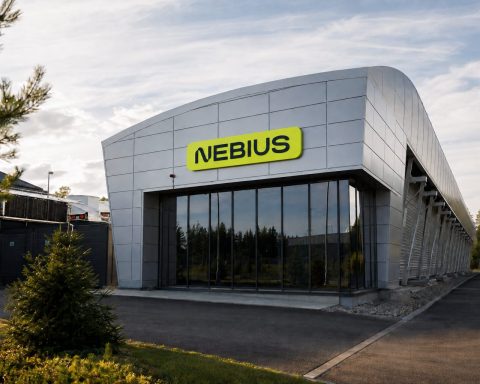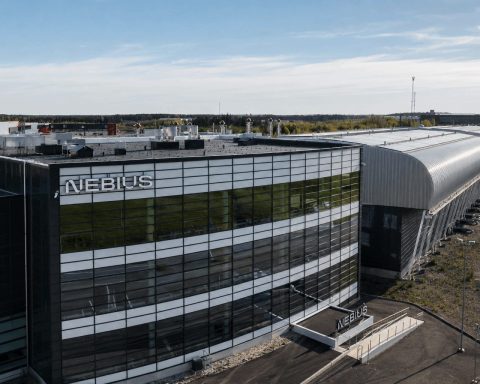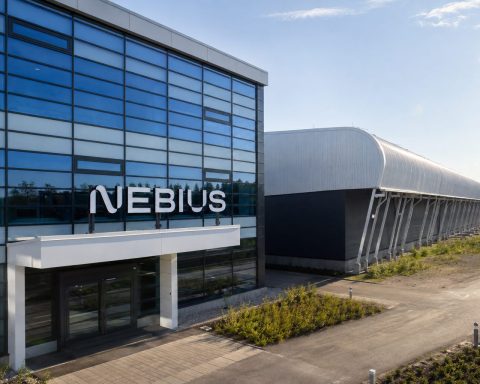

Nebius Group N.V. (NASDAQ: NBIS) ended Monday, December 15, 2025, sharply lower and then slipped a bit more in after-hours trading—an important setup for investors heading into Tuesday’s open.
NBIS closed at $81.14, down 7.47%, and was last shown around $80.15 in after-hours trading at 6:38 p.m. ET, down another 1.22% from the regular-session close.
The day’s action was volatile: NBIS traded roughly $80.06 to $88.24 during the session, with about 17 million shares changing hands.
Below is what mattered most after the bell today and what to know before the stock market opens Tuesday, Dec. 16—including the freshest forecasts and analysis published today.
NBIS stock after the bell: where it stands tonight
Nebius stock’s decline wasn’t just a quiet drift lower—it was a high-volume move that pushed the shares toward levels technical traders often watch:
- Close: $81.14 (–7.47%) Benzinga
- After-hours: ~$80.15 at 6:38 p.m. ET (–1.22% after hours) Benzinga
- Day range: $80.06–$88.24 Benzinga+1
- 50-day vs. 200-day context: MarketBeat flagged NBIS as trading well below its ~50-day moving average (around $106.72) and nearer its ~200-day average (around $79.95).
That last point matters because many momentum-driven growth stocks can see “reflex” buying or selling near longer-term moving averages—even when there’s no new headline.
Was there breaking company news today? Not from Nebius’ own newsroom
A key detail for Monday’s selloff: there wasn’t an obvious, fresh Nebius press release dated Dec. 15 on the company’s newsroom page during the evening check. The most recent newsroom item visible was dated Dec. 10.
That doesn’t prove “no news exists anywhere,” but it does suggest today’s move may have been driven more by positioning, valuation debate, and macro sensitivity than by a single company announcement.
The three big NBIS narratives published today (and why they conflict)
Today’s coverage of Nebius split into three lanes:
1) The “big run, big risks” take (Nasdaq/Zacks)
A Zacks-written analysis on Nasdaq highlighted how strong NBIS has been over time—up about 73.8% over the past six months—but argued near-term risks are rising.
Key concerns raised in that analysis included:
- Valuation stretch (with Zacks citing a pricey setup using valuation metrics like price-to-book and a weak “Value Score”) Nasdaq
- Rising costs and execution risk, including commentary on expanding operating expenses as the company scales infrastructure Nasdaq
- Higher capex expectations and cash burn tied to the buildout pace Nasdaq+1
- A cautious stance reflected in its Zacks Rank (Sell) framing Nasdaq
Importantly, this isn’t a claim that the business is “bad”—it’s the market’s classic question for AI infrastructure names: how much are you paying today for growth that requires massive spending first?
2) The “Street still sees major upside” forecast (TipRanks)
A TipRanks article published this morning took the opposite view: that Wall Street’s average target implies more than 85% upside from recent levels, supported by demand, large contracts, and capacity expansion.
TipRanks’ summary emphasized:
- Strong growth figures from 2025 results and improving EBITDA trends TipRanks+1
- The strategic value of hyperscaler-scale deals (including Microsoft and Meta) TipRanks+1
- A “Strong Buy” consensus view and an average price target around $164.20 (with a high target of $211) TipRanks+1
The big takeaway: even after Monday’s drop, at least one major read of the analyst landscape remains bullish on longer-dated upside—as long as Nebius executes.
3) The “today’s drop + what analysts say” snapshot (MarketBeat)
MarketBeat focused on the day’s tape: NBIS down ~7.5%, heavier-than-normal volume, and a reminder that analysts’ views range widely but “lean positive” overall. MarketBeat
MarketBeat also highlighted the same core tension investors keep circling:
- High beta / high volatility characteristics MarketBeat
- Shares sitting far below shorter-term averages but near longer-term support zones MarketBeat
- Consensus price target meaningfully above current price (MarketBeat cited ~$144.71 consensus) MarketBeat
The fundamentals investors keep coming back to: growth is real, spending is huge
Even though today’s move didn’t appear tied to a new earnings release, Nebius’ most recent reported results still anchor the debate.
From Nebius’ published Q3 2025 financial materials:
- Q3 2025 revenue:$146.1 million (up 355% year over year) Nebius+1
- Nine-month 2025 revenue:$302.1 million (up 437% year over year) Nebius+1
- Adjusted EBITDA loss: narrowed sharply versus the prior year period Nebius+1
But the same documents (and subsequent reporting) underscore the tradeoff: scaling AI cloud is capital intensive. Nebius disclosed very large investment levels, including $955.5 million in Q3 purchases of property, plant and equipment (capex-related spending), reflecting the infrastructure ramp.
This is the context behind both:
- bullish arguments (“demand is outsized; scarcity value is real”), and
- bearish arguments (“execution + financing risk is the story, not just revenue growth”).
Why Microsoft and Meta still dominate the NBIS narrative (even on a down day)
Even though those deals aren’t “new today,” they remain the core reason NBIS is widely watched across the AI infrastructure trade.
Reuters has reported that:
- Nebius signed a $3 billion, five-year agreement with Meta for AI infrastructure and previously announced a hyperscaler-scale deal with Microsoft.
- The company has emphasized aggressive scaling goals (including ambitious run-rate targets) and has been investing heavily to meet demand.
For investors reading Monday’s selloff, the key question isn’t whether those contracts exist—it’s whether the market is repricing how difficult (and expensive) it will be to deliver at scale, on schedule, while managing dilution and debt.
What to watch before the market opens Tuesday, Dec. 16
1) Macro risk is unusually high tomorrow morning: jobs + retail sales at 8:30 a.m. ET
Tuesday’s premarket is not just about company news. The U.S. economic calendar is unusually consequential this week because of disrupted data releases.
- The U.S. Employment Situation report is scheduled for Tuesday, Dec. 16 at 8:30 a.m. ET.
- The Census Bureau’s Advance Monthly Sales for Retail and Food Services (delayed) is also scheduled for Dec. 16, after being rescheduled.
Why it matters for NBIS: high-beta AI infrastructure stocks can react sharply to interest-rate expectations, and those expectations can move fast when major data hits.
2) Heads-up: the data itself may be “messier” than usual
Reuters reported today that a historic U.S. government shutdown disrupted economic data collection, creating gaps—particularly around labor market statistics—and complicating the inflation picture.
BLS has also noted that October 2025 CPS (household survey) estimates were not produced due to the shutdown.
In plain English: markets may not just trade the numbers—they may trade the uncertainty around the numbers.
3) Volatility conditions: NBIS is already acting like a “macro lever”
Today’s drop plus after-hours weakness reinforce that NBIS remains a volatility-prone name (as reflected by high-beta commentary and the large daily range).
If Tuesday morning’s data surprises, NBIS could move quickly in either direction—especially given how crowded the AI infrastructure theme has been in 2025.
A practical premarket checklist for NBIS investors
Before Tuesday’s opening bell, here are the most actionable things to monitor:
- After-hours stability: Does NBIS hold around the low-$80s into the evening, or does liquidity-driven selling continue? Benzinga
- Premarket reaction to 8:30 a.m. ET data: watch index futures and rate-sensitive growth baskets alongside NBIS.
- The ongoing Street split: Zacks-style caution on valuation/capex vs. TipRanks’ bullish price-target framing.
- Execution and financing narrative: the bull case assumes capacity expansion and delivery; the bear case focuses on the cost of getting there.
Bottom line: NBIS enters Tuesday with a clear battleground—growth versus the cost of growth
Nebius Group stock is ending Dec. 15 in a weak technical posture after a steep regular-session decline and modest after-hours follow-through.
But “what happens next” may be less about a single company headline and more about:
- whether investors keep rotating away from capital-intensive AI infrastructure names, and
- how the market digests Tuesday morning’s unusually important macro releases.
Related articles: NASDAQ:NBIS