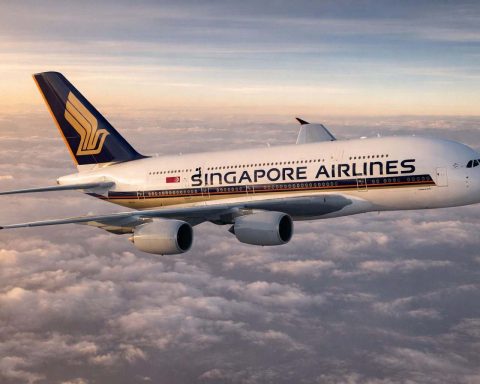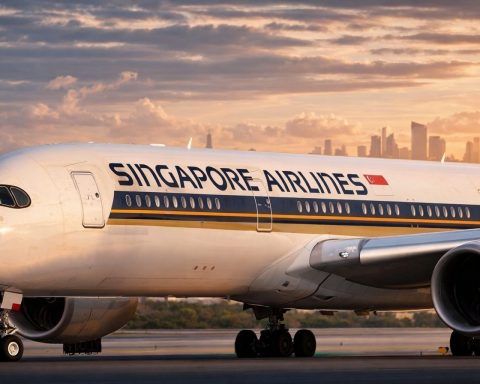

SINGAPORE (17 December 2025) — Singapore Airlines Limited (SIA) shares were hovering around S$6.27 on Wednesday, down about 0.48%, as investors digested a fresh set of operational data pointing to steady travel demand — while keeping one eye on lingering profit headwinds tied to competition, costs, and the airline’s exposure to Air India.
That tension is basically the SIA stock story right now: the planes are full, the network is busy, and demand is resilient — but the market is still debating how durable margins will be as yields soften and cost pressure refuses to retire politely.
Stock snapshot: where Singapore Airlines shares stand today
Market pricing on 17 December shows SIA trading around the mid-S$6 range, with data services indicating the stock has been slightly negative year-to-date.
While day-to-day movement can look small, airline equities tend to behave like mood rings for half the planet’s macro variables — fuel, FX, geopolitics, consumer confidence, and “what did capacity do this season?” all jammed into one ticker.
The latest operating update: November 2025 traffic held up, cargo improved
The most current company operating datapoint in the market this week is SIA Group’s November 2025 operating results, released on 15 December.
Highlights that investors are focusing on:
- Group passenger traffic increased 2.6% year-on-year, while passenger capacity rose 2.2%.
- Group passenger load factor came in at 87.3% (up 0.3 percentage points y/y).
- Cargo and mail carried increased 12.4% y/y, and cargo load factor improved to 60.2%.
Under the hood, the split between the full-service carrier and Scoot is also telling:
- Singapore Airlines (mainline) load factor was 86.4% in November.
- Scoot load factor was 90.7% in November — strong, and notably higher than its year-ago level in the month.
If you’re trying to translate that into “stock language,” it reads as: demand is present, capacity is being added, and the group is not struggling to fill seats — but the bigger profit question is what price those seats are being sold at (yield), and what it costs to fly them (fuel + non-fuel unit costs).
Earnings context: operating profit held up, but net profit took a hit
SIA’s last major financial disclosure (and the one shaping most medium-term analyst models right now) was its first-half FY2025/26 result (half-year ended 30 September 2025).
Key numbers from the company’s release:
- Total revenue:S$9.675 billion (up 1.9% y/y) Singapore Airlines
- Operating profit:S$803 million (roughly flat, up 0.9% y/y) Singapore Airlines
- Net profit:S$239 million, down 67.8% y/y Singapore Airlines
The company attributed the net profit decline primarily to lower interest income and a weaker contribution from associated companies, notably reflecting losses from Air India (which began being equity-accounted after the Vistara integration period).
Separately, Reuters highlighted that the profit decline also came amid rising costs, inflationary pressure, and intensifying competition, and noted SIA’s 25.1% stake in Air India as a key moving part for investors.
Dividend in focus: payment coming, plus a longer capital return plan
For income-focused investors (and yes, Singapore has plenty), the near-term calendar matters.
According to SIA’s dividend information:
- Interim dividend:5 cents per share (1H FY2025/26)
- Interim special dividend:3 cents per share (1H FY2025/26)
- Ex-date:5 December 2025
- Payment date:23 December 2025 Singapore Airlines
Beyond the near-term payment, SIA also disclosed a capital return plan comprising a special dividend of 10 cents per share to be paid annually over three financial years (subject to conditions and approvals as described by the company).
In plain terms: cash returns are part of the equity story, but the market still tends to price airline dividends with a skeptical eyebrow — because airline profitability is famously allergic to calm seas.
Analyst forecasts and targets: consensus leans cautious around current levels
On the sell-side view, the headline is: targets cluster close to the current share price, implying limited upside in the consensus view.
Data services tracking analyst consensus show:
- Number of analysts:14
- Average target price: about S$6.17
- Consensus view: flagged as “Underperform”
- Last close referenced: around S$6.30 (with the target implying a small downside) MarketScreener
A separate compilation of local broker notes and targets published as of 17 December lists recent targets in a relatively tight band, roughly S$6.03 to S$6.40, with multiple houses sitting around “hold/neutral” territory and some “sell/reduce” stances. SG Investors
What’s driving the caution? It’s not that demand is collapsing — it’s more that competition and yield pressure can compress margins even while planes look busy. SIA itself noted passenger yields declining in the first half, driven by increased competition.
Today’s macro backdrop: exports strength helps sentiment, fuel remains a wild card
Airlines don’t trade in a vacuum; they trade in a soup.
Two macro signals on 17 December that matter (at least around the edges) for Singapore Airlines sentiment:
- Singapore exports beat expectations. Reuters reported Singapore’s non-oil domestic exports rose 11.6% y/y in November, beating a poll forecast, with the trade ministry expecting GDP growth around 4.0% for the year. A firmer macro backdrop can support both premium leisure and corporate travel, as well as parts of the air cargo complex.
- Oil prices moved higher. Reuters reported Brent crude rising over 1% on the day (around US$59–60/bbl levels in early pricing), amid geopolitical headlines. Fuel is one of the biggest swing factors for airline profitability, so oil volatility tends to leak directly into airline stock volatility.
SIA has already flagged that while fuel prices were lower in the first half, non-fuel unit costs faced inflationary pressure, and the industry continues to deal with macro and geopolitical uncertainty.
A Singapore Airlines-adjacent headline today: Air India expands reach via Scoot interline
A notable airline-network item dated 17 December 2025: Air India announced a unilateral interline partnership with Scoot, SIA’s low-cost subsidiary, aimed at expanding connectivity via Singapore into a broad set of regional destinations.
For SIA investors, this lands in the same mental folder as “India strategy,” because:
- SIA has framed its Air India stake as part of a long-term multi-hub strategy tied to growth in one of the world’s fastest-growing aviation markets.
- At the same time, Air India’s losses have been a meaningful drag on SIA’s bottom line in recent reporting periods.
So even when the headline is about Scoot network connectivity, the market tends to interpret it through the bigger lens: will India become a compounding advantage, or a persistent earnings dent while the transformation plays out?
What long-term investors are watching next
SIA’s own outlook commentary is fairly clear-eyed: demand is resilient into the year-end peak, cargo is uncertain, and the industry is dealing with cost, geopolitics, and supply chain constraints.
From a stock perspective, the next few “tell me the truth” signals are likely to be:
- Passenger yield trend: full planes are nice; strong yields are nicer. (SIA has already noted yield pressure from competition.
- Cargo yield durability: volumes can grow while pricing weakens; investors will care about mix and margins, not just tonnage.
- Air India contribution: whether associate losses narrow (or widen) will continue to sway net profit optics.
- Fuel and hedging outcomes: oil can be tame for months and then turn feral in a week.
- Dividend follow-through: the 23 December payment is near-term, while the multi-year special dividend plan shapes the longer shareholder return narrative.
Bottom line: SIA stock is balancing “solid demand” vs “margin debate”
As of 17 December 2025, Singapore Airlines stock sits in a familiar airline-equity tug-of-war: operational momentum and dividends on one side, margin and associate-risk questions on the other.
If upcoming updates show that SIA can defend yields, contain non-fuel cost creep, and see Air India’s drag moderate, the valuation conversation could change quickly. If not, the market may keep treating the stock as a “good airline, tricky earnings quality” situation — the kind investors hold for dividends and stability, not for fireworks.