
International Consolidated Airlines Group (IAG), owner of British Airways and Iberia, is rated “Outperform” by Bernstein—here’s what’s driving the 2026 thesis on Dec 17, 2025.
International Consolidated Airlines Group S.A. (IAG)—the airline holding company behind British Airways, Iberia, Vueling and Aer Lingus—is back in the spotlight today after a new analyst note put it at the top of the European airline pecking order heading into 2026.
At a glance, the market is also balancing two macro cross-currents that matter directly to airlines: cooling UK inflation (supportive for rate-cut expectations and consumer spending) and rising oil prices (a potential headwind through jet fuel costs).
Below is what’s actually new for IAG on 17.12.2025, plus the context investors are watching into year-end and early 2026.
What’s new on 17 December 2025: Bernstein puts IAG at the top
In a report published today, Bernstein’s European airlines ranking places IAG in the number-one slot with an “Outperform” rating. Investing.com UK
The core argument: yield resilience + constrained supply + tech-driven upside
Bernstein’s call rests on three main building blocks:
- 2025 long-haul unit revenue resilience: Bernstein says long-haul unit revenues were broadly stable in 2025 (at constant exchange rates). Strength in premium cabins and Latin American markets helped offset weaker demand in the U.S. main cabin, where tariff-related pressure hit confidence.
- A still supply-constrained market into 2026: Looking forward, Bernstein forecasts ~5.4% capacity growth in 2026 and argues the market remains materially tighter than pre-pandemic levels, supporting expectations for revenue per available seat kilometre to be flat to modestly higher.
- IAG-specific execution levers: Bernstein highlights IAG’s mix of premium exposure, Latin America strength, and (crucially) technology transformation—including a new booking flow and an upgraded revenue management system—as key factors behind expected yield outperformance.
In other words: today’s “new” IAG headline isn’t about a single route launch or aircraft order—it’s about why analysts think IAG can defend pricing power and expand revenue quality even as the industry normalises after a very strong 2024–2025 cycle.
Where IAG shares stand today
IAG’s own investor website showed the group’s indicative trading levels this morning at around 421.55 in London and €4.79 in Madrid (as displayed on the site at the time of capture).
IAG is traded in Spain and also in London (with London investors typically holding CDIs/CREST Depositary Interests rather than the Spanish line).
The bigger IAG story heading into 2026: what could move the shares
Even though today’s IAG-specific news is analyst-driven, it lands in a period where the group has several real operational and strategic swing factors.
1) Premium demand and long-haul pricing are the heartbeat of the thesis
Bernstein’s note leans heavily on the idea that premium cabin strength can continue to offset softer leisure/main-cabin conditions on some routes, especially across the Atlantic.
For IAG, that matters because British Airways’ network economics tend to be highly sensitive to:
- premium load factors and yields
- corporate travel recovery patterns
- the competitive intensity on core transatlantic city pairs
If the “premium stays firm” thesis holds, it can support margins even if economy cabin pricing becomes more promotional.
2) Latin America remains an important differentiator
Bernstein explicitly calls out Latin America as a source of strength for 2025 unit revenues and as part of why it prefers IAG in the European peer set.
That is consistent with how many investors view IAG’s portfolio: Iberia’s network and Madrid hub are often seen as structurally advantaged for Europe–Latin America connectivity.
3) Tech transformation is increasingly “real” in airline earnings
Airlines don’t usually get valued like software companies—but revenue management systems and digital booking flows can materially impact:
- conversion rates and ancillary revenue
- pricing precision by cabin and route
- disruption management and customer servicing costs
Bernstein is effectively saying IAG has identifiable, company-specific “execution upside” rather than relying only on a favourable industry cycle. Investing.com UK
4) M&A optionality: TAP Air Portugal keeps coming up
One of the most closely watched strategic angles around IAG in recent weeks has been the privatisation process for TAP Air Portugal.
Reuters previously reported that Portugal said only Europe’s three largest airline groups—including IAG, Air France-KLM and Lufthansa—showed interest in the TAP process.
Spanish press has also described IAG as joining the contest while signalling it had not yet made a binding offer, with the process structured around a partial sale.
Whether or not TAP turns into a transaction, it matters because the market tends to reprice airline groups quickly when:
- regulators might weigh in on competition concerns
- synergy narratives emerge (hubs, fleets, loyalty programs)
- the implied leverage/capital allocation changes
Corporate actions context: IAG recently completed an incentive-plan share purchase programme
While not a “today” headline, it’s part of the near-term shareholder-return backdrop.
IAG disclosed earlier this month that it completed a share purchase programme announced on 27 November, buying a total of 9.4 million ordinary shares (about 0.2% of share capital) to satisfy awards under employee and executive incentive plans.
This matters for two reasons:
- it signals continued use of equity incentives (normal for large listed groups), and
- it keeps investor attention on IAG’s broader capital return posture after a period of large post-pandemic balance-sheet repair.
Today’s macro backdrop: rates look friendlier, fuel looks trickier
Even if you only care about IAG-specific fundamentals, today’s macro headlines are hard to ignore.
UK inflation surprise increases rate-cut expectations
Reuters reported UK inflation fell to 3.2% in November from 3.6% in October, boosting expectations for a Bank of England cut.
For airlines, easier monetary policy can be supportive in two ways:
- demand: consumers and businesses are generally more willing to spend on travel when financing conditions improve
- valuations: lower expected rates can lift the valuation framework for cyclical equities
Oil price jump is an immediate sensitivity
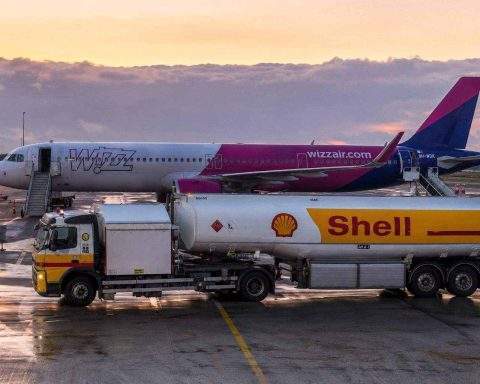
The same Reuters market report noted energy stocks moved higher as oil prices rose after the U.S. ordered a blockade involving sanctioned Venezuelan tankers.
For IAG, higher oil doesn’t automatically mean a margin collapse (airlines hedge, and fares can adjust over time), but it does raise the temperature on:
- near-term cost guidance
- the sustainability of ticket pricing if demand softens
- how quickly airlines can pass fuel costs through without hurting load factors
What to watch next for IAG
1) FY-2025 results date
IAG’s investor calendar lists 27 February 2026 for FY-2025 results.
2) Any formal updates on TAP
If the privatisation process advances, investors will watch for clarity on structure, valuation, governance, and regulatory pathway.
3) Brand-level network and policy shocks
Operational headlines can still matter at subsidiary level—recently, for example, Spanish outlet Economía Digital reported Iberia would end flights to Venezuela amid political tensions and safety concerns.
Bottom line
On 17 December 2025, the main IAG-specific “fresh” development is Bernstein’s call placing IAG at the top of its 2026 European airline rankings, anchored on premium exposure, Latin America strength and the earnings potential of IAG’s technology transformation. Investing.com UK
At the same time, the macro picture is sending mixed signals for airline equities: cooler inflation and rising rate-cut expectations are supportive, while higher oil keeps pressure on the cost side of the story.
Related articles: LSE:IAG