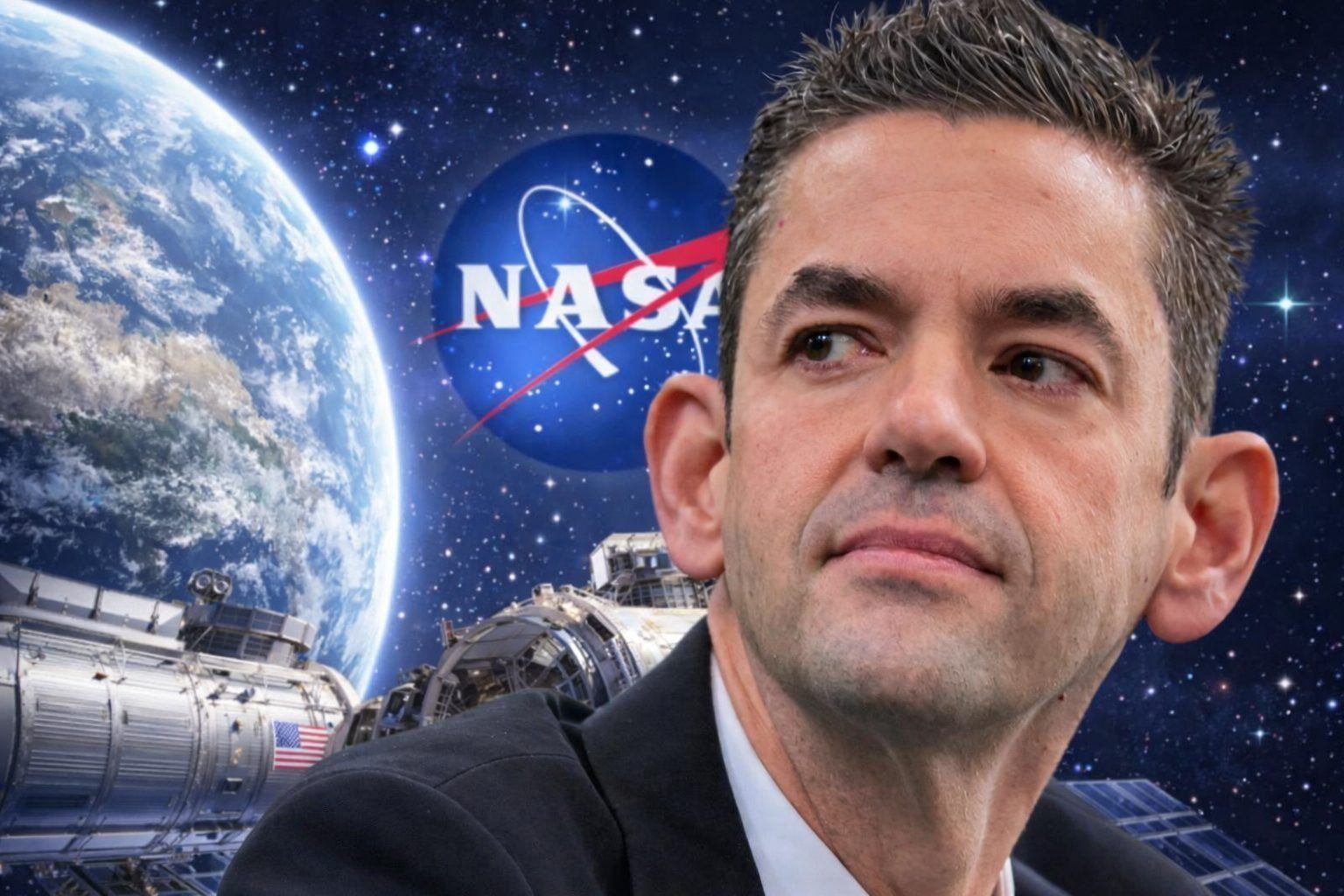

WASHINGTON — Jared Isaacman, the billionaire entrepreneur and private astronaut best known for commanding the all-civilian Inspiration4 mission and SpaceX’s Polaris Dawn, was confirmed by the U.S. Senate on Wednesday, December 17, 2025, to lead NASA. The confirmation vote was 67–30, elevating Isaacman to the role of NASA administrator at a moment when America’s civil space program is juggling high-profile Moon and Mars ambitions, intense geopolitical competition with China, and renewed political scrutiny over budgets and contracting.
Isaacman’s ascent is more than a headline about a famous space tourist taking a government job. It also signals how central commercial space has become to NASA’s future—especially as the agency faces workforce strain and pressure to move faster on Artemis, the Moon-to-Mars strategy, and major science missions that could be delayed or reshaped in the year ahead.
What happened today: A 67–30 confirmation that ends months of uncertainty
The Senate’s Wednesday vote makes Isaacman NASA’s 15th administrator, following a year in which the agency operated without a Senate-confirmed leader and relied on interim leadership. Reuters reported Isaacman will lead an agency of roughly 14,000 employees as NASA pushes forward with its most expensive human exploration roadmap in decades—returning astronauts to the Moon to build a sustained presence and, ultimately, sending crews to Mars.
Multiple outlets emphasized the bipartisan nature of the final vote—while opposition was concentrated among Democrats, some Democrats joined Republicans in supporting Isaacman’s confirmation. Reuters specifically reported that 16 Democrats voted in favor, alongside 51 Republicans, with all 30 “no” votes coming from Democrats. Reuters
Who is Jared Isaacman, and why NASA’s top job is different with him in it
Isaacman, 42, made his fortune in payment processing as the founder of Shift4 and has become a prominent figure in commercial human spaceflight after personally funding and flying on private astronaut missions. Space.com and other reports recapped his leadership of Inspiration4 in 2021 and Polaris Dawn in 2024—the latter notable for featuring a milestone private spacewalk.
That background matters because NASA is increasingly dependent on commercial partners for critical infrastructure—from astronaut transportation to deep space systems—while simultaneously trying to preserve a government-led strategy for exploration, science, and national goals. Reuters reported Isaacman has argued for a larger role for private companies as NASA pursues Artemis and a stronger push toward Mars, framing commercialization as a way to control costs and spark competition.
The political drama behind “Jared Isaacman NASA today”: Withdrawn, renominated, confirmed
Isaacman’s path to confirmation was unusually turbulent. President Donald Trump initially selected him in 2024, withdrew the nomination in May 2025, and then renominated him in November—setting up the “do-over” confirmation process that culminated in today’s vote. AP News+2Scientific American+2
The back-and-forth occurred against the backdrop of broader political tensions involving Trump’s relationship with tech leaders, including Elon Musk. The Associated Press described the nomination saga as intertwined with those shifting alliances and internal disputes, while The Guardian highlighted how the politics around Isaacman’s candidacy intersected with arguments about the direction and governance of NASA itself.
Why Isaacman’s ties to Elon Musk and SpaceX are central to the story
A major theme across today’s coverage is concern—especially from Democratic lawmakers—about Isaacman’s proximity to Elon Musk and the possibility of conflicts of interest, given NASA’s reliance on SpaceX. Reuters reported that SpaceX holds about $15 billion in NASA contracts, and noted that some senators raised alarms that certain policies Isaacman has advocated could benefit Musk’s company.
In the confirmation debate, Isaacman pushed back on characterizations of a close personal relationship with Musk. Roll Call quoted Isaacman stressing that there are no real-world signs of a social friendship—pointing out there aren’t pictures of them together at dinner or traveling—while acknowledging that SpaceX has been the provider capable of flying U.S. astronauts since the Space Shuttle era ended.
The Associated Press also reported that Isaacman told lawmakers he would avoid conflicts of interest and had committed to severing certain private-sector ties if confirmed.
NASA’s immediate mission pressure: Moon by 2028, China by 2030
The urgency around Artemis was repeatedly underscored today. Reuters reported that NASA faces a “shaky” target of 2028 for a return to the Moon, while China is aiming to put its astronauts on the lunar surface by 2030—helping frame the Moon program as both exploration and geopolitical competition. Reuters+1
Acting NASA chief Sean Duffy publicly congratulated Isaacman and framed the mission in competitive terms, wishing him success as NASA works to return to the Moon in 2028 and “beat China,” according to Reuters and additional industry reporting. Reuters+2Via Satellite+2
For Isaacman, Artemis is also where promises meet reality. In AFP coverage syndicated via SpaceDaily, Isaacman was quoted emphasizing that the U.S. will return to the Moon before its “great rival” and establish an enduring presence to realize scientific, economic, and national security value on the lunar surface. (Any future schedule changes will be closely watched in Congress, especially if major milestones slip.) SpaceDaily
Budget cuts and workforce strain: The hardest part of the job may be on Earth
Today’s news about leadership comes as NASA faces harsh fiscal and staffing headwinds.
Reuters reported that the White House’s government-efficiency push reduced NASA’s workforce by 20% and sought to cut NASA’s 2026 budget by roughly 25% from its usual $25 billion—changes that, according to Reuters, could imperil dozens of space-science programs that scientists and some officials view as priorities.
Scientific American framed the moment as “pivotal,” noting NASA is under pressure from budget cuts and technical hurdles that could threaten major missions—specifically pointing to risks affecting Mars sample return efforts and the potential delay of NASA’s push to return astronauts to the Moon before the decade’s end. Scientific American
This is where Isaacman’s “business-minded” approach—often cited by supporters—will be tested quickly. Leading NASA isn’t just choosing bold destinations; it’s managing a complex portfolio where small budget shifts can cascade into multi-year delays across human exploration, Earth science, astrophysics, planetary missions, and aeronautics.
Congress and stakeholders react: Bipartisan support, but real skepticism remains
Supporters in Congress framed Isaacman as a leader who understands both the inspirational pull of human spaceflight and the practical need for urgency. Reuters reported Sen. Maria Cantwell, the top Democrat on the Senate Commerce Committee, backed Isaacman while also criticizing broader efforts to cut NASA’s science unit—signaling an uneasy “yes” vote shaped by workforce and pipeline concerns. Reuters
Outside government, trade and industry groups moved quickly to welcome the confirmation. The National Business Aviation Association (NBAA) issued a statement on Dec. 17 congratulating Isaacman and arguing his blend of aviation and commercial space experience makes him well suited to lead NASA. NBAA also highlighted Isaacman’s role commanding Inspiration4 and Polaris Dawn, and pointed to his support for commercial partnerships in emerging technologies.
In the satellite sector, Via Satellite reported statements from the Satellite Industry Association and Space Foundation leadership praising Isaacman’s commercial experience and emphasizing Artemis momentum, reflecting optimism among space-industry stakeholders who want NASA to lean further into public-private collaboration.
The Sean Duffy factor: A power struggle over who “owns” NASA
Another subplot in today’s reporting: how NASA was managed during the long stretch without a Senate-confirmed administrator.
The Guardian reported that Sean Duffy—serving as acting NASA administrator while also leading the U.S. Transportation Department—had pushed to bring NASA under his department’s purview, an effort that effectively ends with Isaacman’s confirmation. The Guardian also described tensions involving Duffy’s criticisms of SpaceX’s contract performance and his openness to alternatives such as Jeff Bezos’ Blue Origin.
That history matters because it sets the stage for decisions Isaacman will inherit immediately—especially those involving lunar landing strategy, contracting tempo, and whether NASA’s exploration architecture becomes more diversified or more tightly anchored to a small number of major commercial suppliers.
What to watch next: The first decisions that will define Isaacman’s NASA
With “Jared Isaacman NASA today” now a confirmed headline, attention shifts to what changes in practice—starting with a handful of high-stakes choices:
1) How NASA balances Artemis and Mars without hollowing out science.
Reuters reported Isaacman envisions a stronger focus on Mars alongside Artemis. But Scientific American underscored that science priorities—including a Mars sample return effort—face pressure from budgets and technical hurdles. The first budget cycle under Isaacman could clarify whether NASA can pursue a Moon-to-Mars strategy while protecting flagship science missions.
2) Contracting and ethics guardrails around SpaceX.
With SpaceX holding an estimated $15 billion in NASA contracts, Reuters reported concerns about perceived favoritism, while AP noted Isaacman’s assurances on severing ties and avoiding conflicts. Expect intense scrutiny of procurement decisions, recusals, and transparency—especially on lunar systems and human spaceflight.
3) Whether NASA can realistically hit 2028 for a Moon return.
Reuters reported NASA’s 2028 target, set against China’s 2030 goal, and noted the central role of systems like NASA’s Space Launch System and SpaceX’s Starship as a lander under development. The schedule—already politically charged—will likely become even more central as Isaacman tries to align engineering reality with Washington deadlines.
4) Workforce rebuilding after a 20% cut.
Reuters reported a 20% workforce cut as part of the administration’s efficiency push. The biggest operational question is whether NASA can maintain safety and reliability while accelerating timelines—particularly for human spaceflight—without rebuilding critical expertise.
Bottom line
Jared Isaacman’s confirmation on December 17, 2025 ends a prolonged leadership gap at NASA and puts a high-profile commercial astronaut in charge at a uniquely volatile moment: geopolitical pressure to land Americans on the Moon before China, internal debates over how much NASA should rely on private industry, and major budget and workforce constraints that could reshape science and exploration for years.
How Isaacman navigates the contradictions—move faster but spend less, lean on commercial partners but avoid conflicts, prioritize the Moon but keep Mars and science moving—will determine whether today’s Senate vote becomes the start of a new era or simply another chapter in NASA’s increasingly political fight over the future of U.S. space leadership.