
Europe’s central banks closed out 2025 with a clear message: the era of rapid rate cuts is fading, but the next phase won’t look the same everywhere.
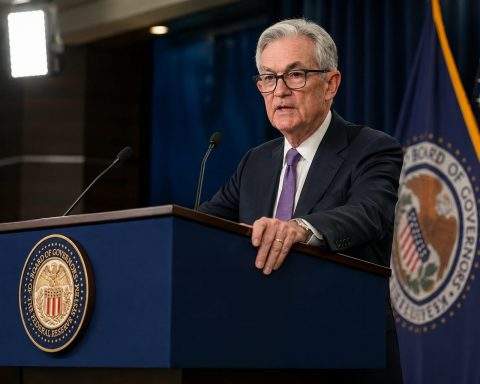
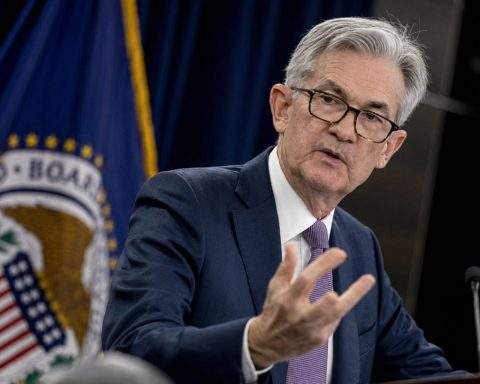
On Thursday, the European Central Bank (ECB) held interest rates steady, leaning on upgraded growth forecasts and a view that inflation is settling close to target. The Bank of England (BoE) delivered a quarter-point rate cut to 3.75%, but a tight 5–4 split and cautious language underscored just how contested further easing could become. In the Nordics, Sweden’s Riksbank and Norway’s Norges Bank both kept policy rates unchanged, signalling patience as inflation cools but uncertainty—especially around trade and geopolitics—remains elevated.
Today’s key decisions at a glance
- ECB: Rates unchanged (deposit facility 2.00%; main refinancing 2.15%; marginal lending 2.40%) European Central Bank
- BoE: Bank Rate cut to 3.75% (vote 5–4) Bank of England+1
- Riksbank: Policy rate held at 1.75%, expected to stay there “for some time” Riksbank
- Norges Bank: Policy rate held at 4.0%, with guidance pointing to gradual cuts in 2026 if the economy evolves as expected Norges Bank
ECB holds interest rates at 2% and upgrades the growth story
The ECB kept its three key rates unchanged and reiterated that it is not “pre-committing” to any path—a phrase markets read as a firm commitment to staying data-dependent after an extended easing cycle that ended earlier this year. European Central Bank+1
What changed wasn’t the rate decision itself, but the tone and the forecasts.
ECB’s new projections: inflation near target, growth firmer than expected
The ECB’s updated staff projections continue to paint a “near-target” inflation picture—but with services inflation still doing the heavy lifting:
- Headline inflation:2.1% (2025), 1.9% (2026), 1.8% (2027), 2.0% (2028)
- Inflation excluding energy and food:2.4% (2025), 2.2% (2026), 1.9% (2027), 2.0% (2028) European Central Bank+1
Growth was revised higher, with the ECB explicitly pointing to domestic demand:
- GDP growth:1.4% (2025), 1.2% (2026), 1.4% (2027), 1.4% (2028) European Central Bank+1
That combination—firmer growth plus inflation expected to hover around target—helps explain why investors are increasingly treating the ECB’s next move as a distant question, not a near-term debate. Reuters reported that the updated projections are reinforcing market bets that further ECB cuts may not be coming, with some longer-dated pricing even drifting toward the idea of a hike further out.
Lagarde’s message: resilient economy, sticky services, and “meeting-by-meeting” policy
In her press conference statement, ECB President Christine Lagarde described an economy that is growing modestly but steadily, led by services—while industry and construction remain comparatively subdued.
A few lines stood out for what they reveal about the ECB’s framework going into 2026:
1) Growth is being carried by consumers, investment, and public spending
The ECB cited 0.3% quarterly growth in the third quarter, driven by stronger consumption and investment, with a notable export contribution from chemicals. It also pointed to government spending on infrastructure and defence as an increasingly important pillar in the years ahead.
2) The labour market is still doing the heavy lifting
Unemployment was cited at 6.4% in October, close to historical lows, even as labour demand has cooled and job vacancies have fallen to the lowest level since the pandemic.
3) Services inflation is the problem that won’t go away
Headline inflation has been in a narrow range since spring and stood at 2.1% in November, but services inflation was 3.5%, while goods inflation was only 0.5%—a split that highlights why policymakers remain wary of declaring victory.
The ECB also noted compensation per employee rising at 4.0% annually, though it flagged forward-looking indicators suggesting wage growth should ease and stabilize below 3% toward late 2026.
4) A key climate-policy detail moved in the forecast horizon
One of the more technical—but important—changes: the ECB’s statement said inflation returns to target in 2028 partly because of higher energy inflation, and that this reflects the EU’s ETS2 emissions trading system now expected to start in 2028, a year later than previously assumed.
Bank of England cuts to 3.75%—but the split vote screams “caution”
While the ECB paused, the Bank of England cut Bank Rate by 0.25 percentage points to 3.75%—a decision made by a 5–4 margin, underscoring how finely balanced the UK outlook remains.
Why the BoE cut now
The BoE’s official summary pointed to:
- CPI inflation down to 3.2%
- Easing in pay growth and services price inflation
- “Building slack” in the labour market, consistent with subdued growth Bank of England
But it also stressed that inflation is still above target and that future moves depend on incoming data—language designed to prevent markets from sprinting ahead of the Bank.
Governor Andrew Bailey summed up the tone in a line that quickly became the market’s anchor:
“We still think rates are on a gradual path downward… But with every cut we make, how much further we go becomes a closer call.” Reuters
A “Christmas cut” with hawkish edges
Reuters reported that the BoE’s staff now expect zero growth in the final three months of 2025, and noted that Bailey’s vote in favour of the cut effectively tipped the decision.
The minutes show a committee split not just on the decision, but on the diagnosis:
- The majority argued the disinflation process is on track and slack is building.
- The minority worried that services inflation, wage dynamics, and expectations still look too persistent—and questioned whether policy is meaningfully restrictive.
Sweden’s Riksbank holds at 1.75% as the recovery “gets under way”
In Sweden, the Riksbank left the policy rate unchanged at 1.75%, citing brighter prospects and inflation that has “approached 2%.” It also signalled the rate is expected to remain at this level for some time if the outlook holds. Riksbank
The Riksbank’s statement balanced optimism with a long list of risks—many of which will sound familiar across Europe:
- geopolitical conflict and broader global uncertainty
- uncertainty about US foreign and trade policy
- high asset valuations and weak public finances in multiple countries
- uncertainty about Swedish household consumption and the impact of more expansionary fiscal policy next year Riksbank
For markets, the key takeaway was that Sweden appears to be entering a pause phase rather than preparing for imminent cuts—or a near-term tightening cycle.
Norges Bank holds at 4.0% and signals gradual cuts ahead—“not in a hurry”
Norway’s central bank kept the policy rate unchanged at 4.0%, with the decision tied to its assessment that inflation is still too high even as the economy cools.
Norges Bank stressed:
- inflation remains above target, with underlying inflation close to 3%
- unemployment has risen somewhat and capacity utilisation is near normal
- the policy rate had already been reduced earlier this year, from 4.5% to 4.0% Norges Bank
The guidance, however, points to easing ahead if the economy evolves as projected. The Bank’s press release stated that the policy rate would likely be reduced further “in the course of the coming year.” Norges Bank
Governor Ida Wolden Bache delivered one of the day’s clearest signals of pacing:
“We are not in a hurry to reduce the policy rate.” Norges Bank
Norges Bank also warned that a weaker krone could push inflation prospects higher—arguing for patience even if cuts are still pencilled in.
Market reaction: sterling firms, euro dips, Nordic currencies steady
Markets treated Thursday as a “central bank bonanza” day—and the currency moves reflected the divergence.
Reuters reported:
- Euro: down around 0.2% to roughly $1.1718
- Pound sterling: up around 0.1% near $1.3383
- Swedish krona: little changed near 10.904 per euro
- Norwegian krone: slightly stronger near 11.958 per euro Reuters
Two pricing shifts mattered:
- BoE cut expectations moved out. After the 5–4 vote and Bailey’s cautious message, markets pushed back the next fully priced cut toward mid-2026.
- ECB hike bets cooled—but didn’t vanish. A Reuters-republished bond-market update showed that traders trimmed the implied probability of a tightening move by late 2026 and early 2027 compared with last week, even as the broader narrative has shifted away from “more cuts.” TradingView+1
What this means for households and businesses heading into 2026
Europe’s rate picture now looks less like a synchronized cycle and more like a patchwork—driven by domestic inflation dynamics, wage behaviour, and how much each economy can lean on demand without re-accelerating prices.
- Eurozone borrowers: The ECB’s hold keeps borrowing costs stable, with the central bank describing relatively steady bank lending rates and mortgage rates in recent data.
- UK households with variable-rate debt: The BoE cut offers incremental relief, but policymakers are signalling that further easing will be slow and contested.
- Nordic mortgages: Sweden and Norway are signalling “steady for longer” as inflation normalizes—yet both remain sensitive to currency moves and global shocks. Riksbank+1
The big question: are Europe’s rate cuts over—or just paused?
The most important takeaway from December 18 is that the conversation has shifted.
- For the ECB, upgraded growth forecasts, near-target inflation projections, and persistent services inflation point to a prolonged hold—though officials still insist policy is not on autopilot.
- For the BoE, easing inflation opened the door to another cut, but the narrow vote and cautious messaging suggest the UK is nearing the part of the cycle where each step is harder to justify—and easier to reverse if inflation proves sticky.
- For Sweden and Norway, the message is patience: the recovery is improving, inflation is closer to target, but global risks—from geopolitics to trade—remain too large to ignore.
As 2026 begins, investors will be watching the same signals across all four central banks: services inflation, wage growth, and whether demand stays resilient without reigniting price pressures. Thursday’s decisions suggest Europe is stepping into a new phase—less dramatic than the last two years, but potentially more complex.
Related articles: Interest Rates