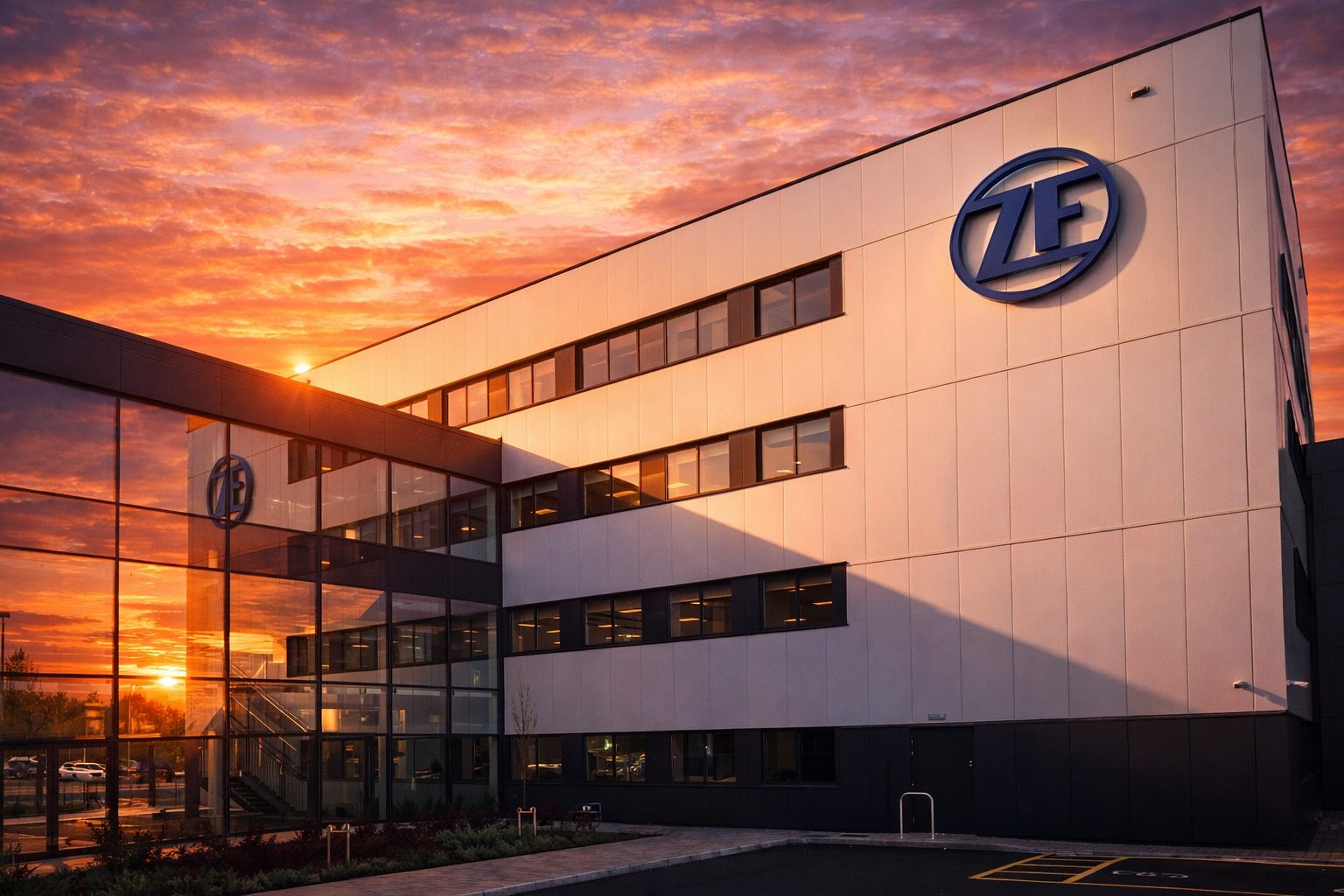

ZF Commercial Vehicle Control Systems India Limited (NSE: ZFCVINDIA | BSE: 533023) was on investors’ radar on Friday, December 19, 2025, trading around the ₹15,1xx–₹15,2xx zone after a strong run-up and a string of company developments through November–December. Intraday, the stock moved in a band of roughly ₹14,922 to ₹15,258, staying near its 52-week high of ₹15,297 (52-week low: ₹9,561).
The short version: the stock’s recent narrative is being shaped by (1) a high-visibility ADAS (Advanced Driver Assistance Systems) business nomination tied to upcoming safety regulation, (2) Q2 FY26 results showing steady topline but margin pressure, and (3) a valuation that the market continues to price at a premium—suggesting investors expect the “safety-tech + content-per-vehicle” story to keep compounding.
What ZF CVCS India does (and why the market cares)
ZF Commercial Vehicle Control Systems India Limited is primarily known for commercial-vehicle braking and control systems, including air brake actuation systems, plus related advanced braking and air-assisted technologies; it also provides software development and services. The company positions its offerings across the “ACE” themes—autonomous, connected, and electric—for India’s commercial vehicle ecosystem. MarketScreener+1
That matters because commercial vehicles are moving from “hardware only” toward software + sensor + compliance-driven safety stacks. If regulations push mandatory safety features, suppliers that are ready-to-ship can see a meaningful lift in content per vehicle (the value of components supplied per truck/bus).
ZFCVINDIA share price check on 19 December 2025
As of early afternoon on Dec 19, the stock was indicated around ₹15,193 with a day range near ₹14,922–₹15,258.
A few context points investors often track:
- 52-week range: ₹9,561 to ₹15,297
- Market cap (reported by some market trackers around midday): about ₹28,808 crore
- Valuation multiples (varies by source and timestamp): roughly high-50s to ~60x trailing P/E, and ~8–10x P/B
Those valuation levels are a clue: the market is not paying “plain auto-ancillary” multiples here—it’s paying for a business that could gain from regulation-driven adoption and higher technology content.
The biggest recent catalyst: ADAS nomination tied to GSR 184e (December 2025)
The most prominent company-specific development in the December newsflow was a disclosed business nomination from an Indian e-mobility commercial vehicle OEM to develop and calibrate an ADAS suite aligned to the upcoming safety regulation GSR 184e—with the company stating the solution is certified by ARAI (Automotive Research Association of India) for compliance.
What’s in the ADAS package (as described in reports)
Coverage described in December includes systems and functions such as:
- ZF’s OnGuardMAX and short-range radar tech
- Safety functions including AEBS (automatic emergency braking), blind spot, driver drowsiness/attention warning, lane departure warning, and moving-off information (alerts for pedestrians/cyclists), among others—reported as a suite of 16 functions
- Application coverage spanning 13.5m coaches, heavy-duty trucks (including references to 55-ton), tractor-trailers, and buses (7m/9m/12m)
- Reported real-world validation of 300,000+ km on Indian roads plus 65,000 km with customers
Why investors treat this as “bigger than one order”
A widely-followed bullish interpretation is that ADAS adoption can materially increase ZFCVINDIA’s content per vehicle, especially in medium & heavy commercial vehicles. One research note framed potential content-per-vehicle expansion from roughly ~US$600/unit to >US$1,000/unit over time, implying a meaningful revenue/profitability runway if adoption scales with regulation.
Important nuance: a “business nomination” is not always the same thing as full-rate mass production at peak volumes tomorrow. It’s a strong signal of customer intent and technical readiness, but investors typically watch follow-on milestones—SOP (start of production), platform rollouts, and steady-state volumes.
“Quiet but important” update: institutional investor meeting outcome (18 December 2025)
Ahead of Dec 19 trading, the company’s disclosure stream showed an Outcome of Institutional Investor Meeting dated December 18, 2025 (under SEBI LODR Regulation 30).
These filings don’t always contain blockbuster details in the headline itself, but they matter because:
- they signal active institutional engagement, and
- they often cluster around periods when the market is trying to price the next leg of growth (in this case, the ADAS/regulatory narrative).
Q2 FY26 results: stable demand, but margins did the limbo
The latest quarterly performance that markets have been digesting into late 2025 is Q2 FY26.
From published result summaries:
- Total income (Q2 FY26): ~₹958.21 crore (reported), slightly up YoY but down sequentially
- PAT (Q2 FY26): ~₹108.28 crore; down about 11.5% QoQ and roughly flat to slightly down YoY depending on the comparison set
- One analysis highlighted margin compression in Q2 FY26 versus the prior quarter, despite relatively steady revenue—pointing to cost pressures as a key near-term issue.
What investors typically infer from this setup:
- The growth story is being priced as structural (safety + electronics + regulation), but
- Near-term earnings can still swing on input costs, operating leverage, and mix (OE vs aftermarket), especially when the stock is valued at a premium.
Regulatory and litigation/claims watch: GST demand order (November 2025)
A significant compliance headline in recent filings/news coverage: the company reported receiving a demand order from the Joint Commissioner, CGST & Central Excise (Jamshedpur).
Reported details include:
- demand of ₹4,65,90,929 under Section 74(1), plus a penalty of ₹4,65,90,929 under Section 74(9), plus applicable interest—linked to issues around Input Tax Credit for FY2018–FY2023; date of receipt reported as Nov 7, 2025.
This is one of those “not a thesis-breaker by itself, but don’t ignore it” items:
- It can affect sentiment, headline risk, and near-term focus, especially when a stock is priced for excellence.
Analyst targets and market forecasts: what “consensus” is implying
12-month price targets (as tracked by analyst aggregators)
A commonly cited consensus snapshot (based on a small set of covering analysts) indicated:
- Average 1-year target: about ₹16,194
- Range: roughly ₹14,450 (low) to ₹18,200 (high)
- Implied upside in the high single digits versus a reference price around ₹15,0xx at the time of that snapshot.
Two important caveats for readers:
- Coverage is listed as limited (not dozens of analysts), so consensus can move sharply with a single revision.
- Targets can lag price—especially during momentum phases.
Forward financial estimates (MarketScreener consensus-style calendar)
Market forecast tables tracked for coming fiscal periods showed estimates such as:
- FY2026 net sales around ₹39.6 billion (≈₹3,961 crore)
- FY2026 net income around ₹4.486 billion (≈₹449 crore)
with higher numbers projected for later years (FY2027/FY2028) in the same dataset.
Treat those as directional: useful for understanding what the market is implicitly pricing, not as guaranteed outcomes.
Technical and momentum signals: what price-based models are saying
If you’re scanning the tape rather than the balance sheet, technical dashboards were broadly constructive into mid/late December:
- One technical summary page reported an overall “strong buy” bias from moving averages for the stock (with oscillators closer to “buy”). TradingView
- A market tracker also showed the stock trading above key moving averages, supporting the idea that momentum remained positive around Dec 19.
Technical signals are not fundamentals—but they do help explain why a stock can stay elevated even when near-term margins wobble. When the market is convinced a structural demand wave is forming (e.g., regulation-driven safety tech), momentum can become a self-fulfilling short-term force.
Valuation reality check: premium pricing is part of the story now
By multiple market-data sources in mid-December:
- Trailing P/E: commonly shown around ~58–60x
- Some valuation commentary also flagged the stock as expensive versus an estimated “fair” P/E in one framework. Simply Wall St
In plain English: the market is already pricing in a lot of good news. That doesn’t mean the stock can’t rise further—but it does raise the bar for execution. For premium-multiple stocks, “good results” often aren’t enough; the market demands good results + confident forward commentary + clean margins.
Dividend snapshot (for long-term holders tracking payouts)
For investors who track shareholder returns beyond price appreciation, reported corporate action history includes a final dividend of ₹19 per share announced in May 2025 with an ex-dividend date in August 2025 (per market action trackers).
Dividend yield is small relative to the share price, so ZFCVINDIA is typically approached as a growth/technology-content story rather than an income stock.
What to watch next (the practical checklist)
Heading into the next few months after Dec 19, 2025, the key swing factors for ZF Commercial Vehicle Control Systems India stock typically cluster into five buckets:
- ADAS rollout milestones
Watch for confirmations around production timelines, platform wins, and adoption pace—because the bull case is largely about scaling content-per-vehicle. - Margins and operating leverage
Q2 FY26 showed how quickly margins can compress even with stable revenue; future quarters will be watched for normalization. - Regulatory calendar and compliance
The GSR 184e-linked narrative is central; any clarity on implementation timelines can swing sentiment. - GST demand order developments
The size is quantifiable, but markets will track legal/process updates and the probability of additional liabilities. - Next earnings date expectations
Market calendars already point to the next earnings window ahead (projected timelines on market calendars can vary by source).
Bottom line for 19 December 2025
On Dec 19, 2025, ZFCVINDIA is trading close to record territory for the year, with price action reflecting optimism around regulation-driven ADAS adoption and the possibility of a structural upgrade in the company’s revenue mix.
At the same time, the stock’s premium valuation and the margin sensitivity seen in Q2 FY26 create a “high expectations” setup: execution matters, and surprises (good or bad) can hit harder than they would for a cheaper stock. Companies Market Cap+2MarketsMojo+2
Related articles: Stock Market