
On Friday, Dec. 19, 2025, Georgia’s utility regulators are poised to make one of the most consequential energy decisions the state has faced in years: whether to approve Georgia Power’s plan to rapidly expand electricity supply to meet a surge in demand from data centers and AI-driven computing.
The stakes are immediate and personal—monthly bills, grid reliability, and how much new fossil-fueled generation Georgia locks in for decades—but they’re also national. In the last 24 hours, federal regulators moved to clarify how Big Tech can connect massive data centers directly to power plants in the country’s largest grid region, reflecting how quickly electricity has become the next bottleneck in the AI race.
Below is what’s happening today in Georgia, why it matters, and how the fight over “who pays” is reshaping energy policy across the U.S.
What Georgia’s PSC is deciding today—and why data centers are driving the urgency
The Georgia Public Service Commission (PSC) is scheduled to vote today on whether to green-light Georgia Power’s proposal to add roughly 10,000 megawatts of new electricity resources over the next five years—an expansion aimed largely at powering data centers tied to AI growth.
Axios reports Georgia Power’s plan totals more than $15 billion and includes a mix of:
- new methane gas-burning units (including at Plants Bowen, McIntosh, and Wansley),
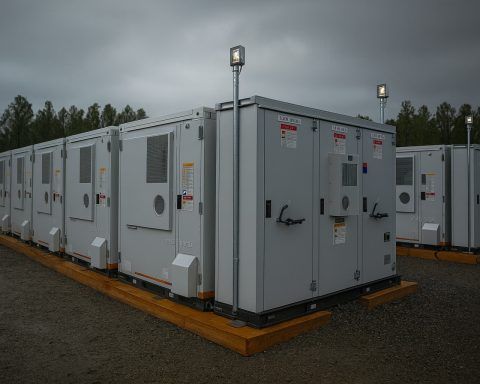
- battery storage (“stored energy”),
- solar, and
- purchased electricity from other power plants.
Supporters argue the pace of data center development leaves little time for incremental planning. Critics counter that moving too fast could leave ordinary customers paying for power plants built to serve demand that may not fully materialize.
One of the sharpest political flashpoints: opponents have urged regulators to delay the vote until two newly elected Democratic commissioners—Peter Hubbard and Alicia Johnson—take office next month, which would mark the first Democrats on the five-member PSC in about two decades, according to Axios.
The central question: Will data centers lower bills—or raise them?
Georgia Power’s pitch is built around a promise that new, large customers (especially data centers) can bring in revenue that helps keep rates in check. The company has said it intends to use data-center-related revenue to put “downward pressure” on bills. ajc+1
But two competing warnings are dominating today’s debate:
1) Bill relief is uncertain—and may take years
Axios notes that critics dispute whether the touted benefit—often framed as about an $8.50/month bill impact—will materialize at all, and says it wouldn’t arrive for several years.
The Atlanta Journal-Constitution (AJC) has reported that under the tentative agreement framework, Georgia Power agreed to structure its next major rate adjustment (slated for 2028) to put at least $8.50 in “downward pressure” on a typical residential bill—but emphasized this is not the same as a guaranteed rate cut, and any impacts may not be felt until 2029. ajc
2) PSC analysts warn bills could rise—especially if demand falls short
In the most direct warning cited in recent coverage, analysts associated with the PSC cautioned that a full buildout could push residential bills up by $20 or more per month under certain scenarios—particularly if data center load projections don’t pan out and customers are left with “stranded” investments. The Cool Down+1
The Cool Down, summarizing the regulatory dispute, highlighted a blunt line from testimony: “no guarantee those costs will not be passed on to existing customers.” The Cool Down
This tension—utilities building ahead of demand vs. building only once demand is contractually secured—has become a defining policy fight in states chasing data center investment.
Climate and community concerns: gas plants, emissions, and a new “bring your own power” model
The vote today is not only about economics. It’s also about what kind of power Georgia will build—especially the role of new gas generation.
An AJC opinion column published ahead of the vote argues that the plan prioritizes data centers over households and could lock Georgia into decades of greenhouse gas pollution, describing the buildout as tied to “roughly five new gas plants and other fossil-dependent infrastructure.” ajc
Meanwhile, today’s reporting also shows how the data center boom is changing the shape of infrastructure—not just its fuel.
A Georgia first: a data center powered by 33 on-site gas engines (RICE)
In a major new development reported by the AJC today, a Houston-based firm called VoltaGrid is seeking permits to install 33 reciprocating internal combustion engines (RICE) near a data center site in Covington, about 35 miles east of Atlanta. The engines would deliver up to 90 megawatts and—crucially—be permitted to run 24/7 as baseload power for a data center being built next door by Serverfarm.
Georgia’s Environmental Protection Division is taking public comments on the permit until Friday afternoon, and state officials told the AJC there are no other facilities in Georgia currently permitted to use large numbers of RICE units as a primary power source in this way.
Experts quoted in the AJC raised concerns about:
- carbon emissions (natural gas combustion),
- methane leakage in gas extraction/transport,
- local air pollutants, including PM2.5, and
- potential noise impacts on nearby residents.
Why it matters: If data centers increasingly “bring their own generation,” regulators may face a new set of questions—how these projects affect air quality, how they interact with the grid, and whether they genuinely protect regular ratepayers from infrastructure costs or simply move impacts into communities.
Georgia’s fight is part of a national shift: FERC moves on data center “colocation” in PJM
While Georgia debates building new power plants to serve data centers, federal regulators are simultaneously trying to clarify a faster pathway: letting data centers connect directly to power plants, a practice often called colocation.
On Dec. 18, the Federal Energy Regulatory Commission (FERC) directed PJM Interconnection—the country’s largest grid operator—to establish more transparent rules for serving AI-driven data centers and other large loads located alongside generating facilities. FERC framed the move as necessary to protect consumers and grid reliability across a region serving over 67 million Americans in 13 states and Washington, D.C.
Associated Press reporting from Harrisburg described the order as a way to allow tech companies to “plug” massive data centers into power plants while attempting to prevent cost-shifting onto regular customers, especially as demand surges faster than new power supply. AP News
The AP report also notes the order grew out of disputes around a proposed colocation deal involving Amazon’s cloud business and the Susquehanna nuclear plant in Pennsylvania—an example of how Big Tech is seeking electricity faster than conventional grid expansion can deliver it.
Reuters, covering the same regulatory action, emphasized the push-and-pull at the heart of colocation: supporters say it avoids expensive new transmission lines and accelerates deployment, while opponents warn it can reduce power available to the public grid and raise surrounding communities’ costs if rules aren’t airtight.
The price signal is flashing red: PJM capacity prices hit a fresh record
The regulatory scramble is happening for a reason: power markets are signaling tightening supply.
Reuters reported that PJM’s latest capacity auction produced record-high capacity prices, reaching $333.44 per megawatt-day, and said data center demand has contributed to capacity prices rising by roughly 1,000% over about two years. The report also described a shortfall of about 6,600 megawatts versus PJM’s reliability requirement in the latest auction results.
Utility Dive’s coverage adds nuance, noting capacity costs are only one component of bills, but also underscoring that the latest auction was driven in part by a significant demand forecast increase that was “almost entirely driven by data centers.” Utility Dive
Together, these developments explain why states like Georgia are being asked to approve enormous new buildouts quickly: electricity planning cycles are colliding with AI investment cycles.
Texas provides another model: disconnect data centers first in emergencies
Different states are experimenting with different answers to the same question: how do you keep the grid stable when a new class of mega-customers arrives?
In Texas, the ERCOT region is moving toward rules requiring data centers to disconnect during severe grid emergencies before outages spread more widely. The Houston Chronicle reports the shift is tied to rapid data center growth and formalized under Texas Senate Bill 6, which creates a framework for phased shutdowns and emphasizes protecting residential customers during emergencies.
For Georgia—and other states chasing data center jobs and tax base—Texas’ approach is a reminder that welcoming large loads often comes with new obligations and new political pressures when reliability is at stake.
Politics is catching up: from state elections to national backlash
The Georgia vote also lands in a charged political moment.
Axios points to last month’s Georgia PSC election results as evidence that voters are increasingly focused on electric bills—and that utility regulation can become an electoral issue.
Nationally, WIRED reports growing political organizing against data centers, including recruitment efforts tied to community concerns about rising electricity bills, climate impacts, and local quality-of-life issues.
And investor-focused coverage today highlights that backlash risk—community opposition, rate concerns, and environmental scrutiny—could become a meaningful constraint on the speed and location of data center expansion, even as Big Tech continues building at scale.
What to watch next in Georgia after today’s vote
Regardless of the PSC’s decision today, several follow-on battles are already taking shape:
- Contract transparency and cost allocation: Whether Georgia can design rules that ensure large-load customers pay their full share—and don’t leave residential customers holding the bag if projected demand changes.
- Timing and governance: The continued controversy over whether the vote should occur before new commissioners take office—and whether ratepayer advocates pursue additional procedural challenges.
- Permitting fights and local impacts: As “bring your own generation” proposals like the Covington RICE project emerge, expect more scrutiny of local pollution, noise, and cumulative impacts from thousands of generators and new gas infrastructure. ajc
- The national rulebook: FERC’s PJM action is likely to influence how other regions address colocation and large-load interconnections—potentially reshaping where and how data centers get built.
For now, all eyes are on Georgia’s PSC proceedings today—because the outcome won’t just determine how fast Georgia can grow its AI-era infrastructure. It will also signal how the state plans to balance economic development against affordability and climate risk in the decade ahead.
Related articles: NYSE:SO