
London’s stock market is closed today (Saturday, 20 December 2025), but investors are heading into the final pre-Christmas trading week with plenty to digest: a Bank of England rate cut, a data-heavy UK week that delivered fresh warnings from retail surveys, and a FTSE 100 that finished Friday within touching distance of record territory.
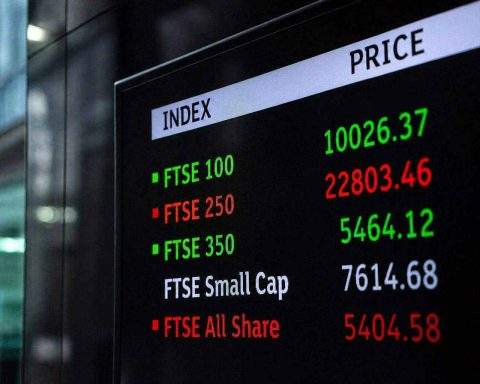
By the close on Friday, 19 December, the FTSE 100 ended at 9,897.42 (+0.6%), while the FTSE 250 slipped to 22,312.71 (-0.1%), underscoring a familiar late-2025 pattern: large-cap London names (especially financials, miners and defence-adjacent stocks) continuing to do the heavy lifting, even as parts of the more domestically sensitive mid-cap universe remain choppier.
The UK stock market “today”: what changed heading into the weekend
With no cash equity trading in London on Saturday, the most accurate “UK stock market today” snapshot is the latest close and the themes dominating weekend briefings.
1) The FTSE 100 logged its strongest week since mid-October
The blue-chip index rose 2.6% on the week, buoyed by strength in mining and aerospace & defence, even as UK economic data sent mixed signals about household spending and the public finances.
2) The Santa-rally narrative is building — but it’s not one-way traffic
Market commentary on Friday repeatedly referenced the “push toward 10,000,” reflecting upbeat seasonal positioning and hopes that falling inflation and lower rates can support risk appetite into year-end. MarketScreener+1
3) UK macro headlines are pulling in opposite directions
The BoE cut Bank Rate to 3.75% in a 5–4 vote, but official data showed retail sales volumes dipped again in November and borrowing stayed uncomfortably high versus expectations — keeping the debate alive over whether lower rates will translate into a cleaner growth re-acceleration in early 2026.
Where the FTSE 100 and FTSE 250 finished — and why it matters for next week’s open
FTSE 100: 9,897.42 (+0.61% Friday; +2.6% week) MarketScreener+1
FTSE 250: 22,312.71 (-0.1% Friday) MarketScreener+1
This matters because Monday, 22 December is set up as a mechanically important session: the FTSE Russell December quarterly review changes take effect at the start of trading, which can generate index-tracking flows and short-term volatility in the names involved.
FTSE reshuffle: the headline change investors are watching
FTSE Russell confirmed that British Land will join the FTSE 100, while WPP will leave the FTSE 100 and enter the FTSE 250, with changes implemented at the close on Friday, 19 December and effective from Monday, 22 December.
In practice, that can mean temporary demand from passive funds for the inclusion and temporary selling pressure for the deletion — a dynamic that often matters more in thin holiday liquidity.
The biggest drivers behind Friday’s move: miners, defence, banks — and a US inflation assist
Friday’s advance wasn’t just a UK story. European equities ended the week upbeat too, with the STOXX 600 closing at a record high on Friday, helped by aerospace & defence and banks, and supported by shifting expectations for global rate cuts after softer inflation signals in the US.
London’s leadership groups mirrored that tone:
- Precious metals and miners outperformed as silver hit a record high, lifting names such as Fresnillo and other commodity-linked stocks.
- Aerospace & defence was also strong on the day and across the year, matching a broader European trend that has kept defence exposure in focus.
- Banks remained a key pillar of UK outperformance in 2025, and European equity managers continued to argue that bank valuations still look discounted versus history.
One more important tailwind: market wrap coverage on Friday attributed part of the risk-on tone to lower-than-expected US inflation data, which boosted the view that the Federal Reserve could have more room to cut in 2026 than previously thought.
Key UK stock movers: winners, losers, and the stories behind them
Even without Saturday trading, “UK stock market today” coverage is dominated by the company-specific headlines and sector rotations that shaped the latest session.
Standout gainers: Fresnillo, Rolls‑Royce, Shell — plus a Carnival surge in mid-caps
A late-session push lifted parts of the market, and the winners list had a clear theme: global cyclicals, commodities, and select defensives.
- Fresnillo stood out as precious metals strength fed through to London listings.
- Rolls‑Royce was among notable blue-chip gainers in the Friday tape.
- In the FTSE 250, Carnival jumped sharply after reporting record full-year revenue and profit, reinstating a dividend, and issuing an upbeat 2026 growth outlook.
Weak spots: housebuilders and retail-linked names
The biggest drag came from housebuilders, a sector that tends to react quickly to any change in the rate-cut narrative. Reuters noted homebuilders fell as a group, with Barratt Redrow among the notable decliners, partly linked to a broker downgrade.
Retail-linked names were also sensitive to the day’s data flow after UK retail sales disappointed, and parts of the retail complex moved lower in the session wrap.
The headline corporate stumble: WH Smith under FCA investigation
One of the most consequential single-stock stories going into the weekend was WH Smith.
- Reuters reported that WH Smith shares fell sharply after disclosure problems and accounting issues in its North America division, and that the Financial Conduct Authority opened an investigation into potential breaches of listing and disclosure rules.
- The FCA itself publicly confirmed it has opened an investigation into WH Smith, referencing potential breaches of UK Listing Principles/Rules and Disclosure and Transparency Rules related to matters announced in November.
For investors, this story matters beyond one company: it lands at a moment when London is highly sensitive to debates about market credibility, governance, and listings competitiveness.
The economic backdrop: rate cuts, soft retail data, and fiscal strain
Bank of England: Bank Rate cut to 3.75% — but it was close
The BoE’s December decision is a major anchor for current UK equity narratives:
- The Monetary Policy Committee voted 5–4 to reduce Bank Rate by 0.25 percentage points to 3.75%.
- The BoE’s consumer-facing explainer also noted inflation has fallen substantially from its peak and stated that Bank Rate is expected to fall “gradually” — conditional on further easing in pay growth and services inflation. Bank of England
For equities, lower rates can support valuations and rate-sensitive sectors — but the narrow margin also reinforced the idea that the easing cycle may not be smooth or rapid.
Retail sales: November fell again, despite the Black Friday period
Official UK data showed household demand is still not firing consistently:
- The Office for National Statistics estimated retail sales volumes fell 0.1% in November 2025, following a 0.9% fall in October (revised).
- The ONS highlighted that non-store retailers dipped as demand for gold slowed, and supermarkets fell for a fourth consecutive month.
That backdrop helps explain why retail and consumer-facing shares can struggle to keep pace with the commodity/bank-led rally in the headline index.
Retail sentiment surveys: December looks tough, with a weaker start to 2026 implied
Alongside official sales figures, the survey picture looked grim:
- Reuters reported the CBI’s retail sales gauge dropped further in December (to -44) and that expectations for the next month fell to -57, described as the weakest since March 2021.
Public finances: borrowing was lower than last year — but still above forecasts
On the fiscal side:
- ONS data showed UK public sector borrowing was £11.7bn in November 2025, the lowest November figure since 2021 (not inflation-adjusted).
- Reuters noted the same £11.7bn print exceeded economists’ expectations and that borrowing has repeatedly come in above forecasts across the fiscal year to date, keeping pressure on the government’s fiscal arithmetic.
Consumer confidence: a small improvement — still subdued
Sentiment has improved at the margin:
- GfK’s long-running consumer confidence index rose to -17 in December (from -19 in November), according to a release carried by NielsenIQ.
It’s a modest step, but one that markets have used to argue the UK consumer isn’t collapsing — just cautious.
The “today” angle on 20 December: retailers bet on a last-minute surge
Saturday itself is a key date for UK high streets — and that matters for the UK market because many London-listed names are closely tied to discretionary spending.
The Guardian reported retailers are hoping this weekend delivers a “panic weekend” boost, with forecasts suggesting consumers could spend £3.4bn across the weekend, and “Super Saturday” (20 December) expected to bring tens of millions of shoppers into stores. The Guardian
For investors watching UK retail exposure (directly or through landlords, payments, logistics and advertising), the key point is timing: any spending surge may arrive late, and it will be January trading statements — not weekend headlines — that ultimately settle the debate.
Big corporate narrative shifts: BP’s CEO change and what it signals for UK energy stocks
Energy is a heavyweight part of the FTSE 100, and BP’s leadership change is a major strategic story investors are still calibrating.
Reuters reported BP appointed Meg O’Neill as CEO effective April 2026, following an abrupt leadership transition, with Carol Howle as interim CEO. Reuters framed the move as part of a renewed focus on boosting returns and a pivot back toward oil and gas after stepping back from a more ambitious renewables push.
A separate Reuters analysis also argued the shake-up could open multiple strategic paths (“build, buy or be bought”), highlighting how leadership changes can reshape merger expectations around a major UK-listed energy name. Reuters
Forecasts and outlook: why strategists think UK equities could stay resilient into 2026
A defining 2025 theme has been the gap between pessimism about the UK market (listings, sentiment, growth) and the reality of strong index performance.
An AJ Bell-linked analysis published by Trustnet made a detailed case for why momentum could persist, citing:
- Rising profits and consensus forecasts of record aggregate pre-tax profits in 2025 and further growth in 2026, Trustnet
- Dividends forecast to reach £85.6bn with a forward yield around 3.4%, Trustnet
- And a sustained role for share buybacks, producing an overall “cash yield” argument for UK blue chips. Trustnet
The key takeaway for a “UK stock market today” reader is not a single point forecast, but the composition of support: income, buybacks and profits, rather than pure valuation re-rating.
What to watch next week in London: index changes and holiday liquidity
1) FTSE Russell changes take effect Monday (22 December)
As noted, British Land’s move into the FTSE 100 and WPP’s move out are the headline changes — and Monday’s open is when the market often sees the cleanest expression of index-related flows.
2) Holiday trading conditions
With Christmas approaching, market participants often highlight the risk of outsized moves on smaller volumes, especially around half-days and closures. (This is also why “Santa rally” narratives can feel stronger — or break faster — late in December.) Hargreaves Lansdown
3) The macro tension that won’t go away
The UK is heading into year-end with three big forces pulling against each other:
- Lower rates that can support valuations, Bank of England+1
- Still-soft consumer demand in the official retail numbers, Office for National Statistics
- And fiscal constraints highlighted by borrowing data.
How those balance out will shape whether the FTSE 100 finally breaks convincingly above the psychological 10,000 threshold in the final sessions of 2025 or needs to “reset” into early 2026.
Related articles: FTSE 100