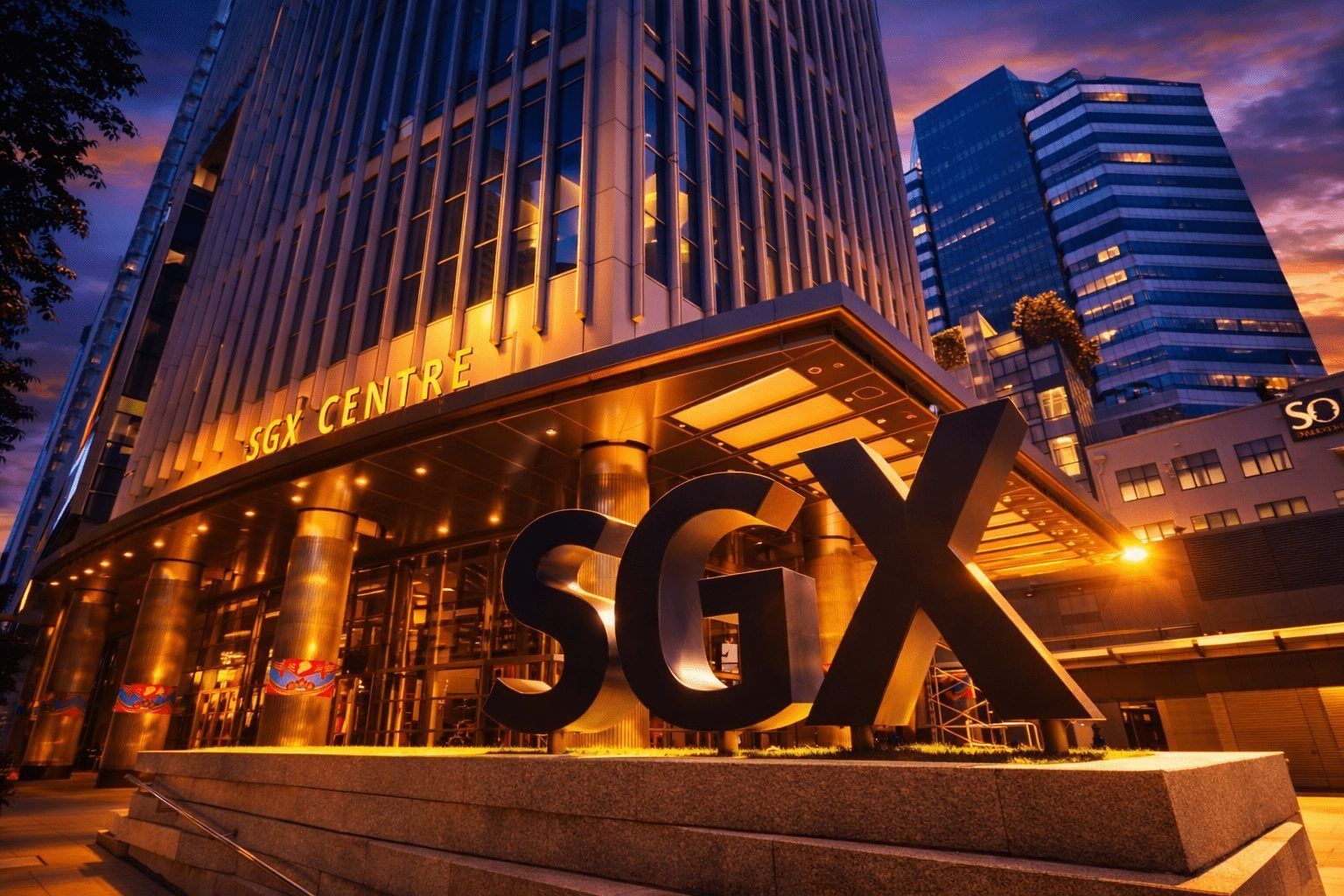
SINGAPORE — 20 December 2025 — Singapore Exchange (SGX Group) is heading into 2026 with an unusually busy checklist for a “mature” market operator: rising cash equities activity, a push to reboot the IPO pipeline, sweeping listing-rule changes aimed at reducing friction, and an ambitious dual-listing framework with Nasdaq designed to pull global growth companies into Singapore’s capital markets orbit. classic.shareinvestor.com+4Reuters+4Reuter…
The through-line is simple: liquidity attracts listings, listings attract liquidity, and SGX is trying to spin that flywheel faster—without dropping regulatory standards in the process. The last few weeks delivered fresh data points on whether that strategy is working (and where the risks are hiding).
SGX trading momentum: November set the tone into year-end
The most concrete “here and now” signal for SGX is trading activity. In November, SGX reported total securities market turnover up 18% year-on-year to S$35.5 billion, with securities daily average value (SDAV) rising to around S$1.8 billion. The Business Times+1
What’s notable isn’t just the headline growth—it’s where it came from:
- Index heavyweights and REITs (real estate investment trusts) drove a large share of flows, with retail investors described as particularly active in REIT counters.
- The Straits Times Index (STI) gained 2.2% month-on-month and hit a fresh high of 4,575.91 during November (Nov 13), underscoring how the benchmark’s rally helped pull turnover higher.
- STI constituents represented 83% of total trading volume in November, with DBS the most traded stock by volume share, followed by OCBC and UOB, according to SGX data cited by local reporting.
That mix matters for SGX because cash equities turnover doesn’t just boost headline market vibrancy; it supports a broader ecosystem—ETFs, futures, structured products, and market-making economics—that can make Singapore “feel” more liquid to prospective issuers.
Derivatives and risk management: SGX leans into what it already wins at
SGX is not only a stock exchange; it’s a multi-asset venue where equity index, FX, and commodity derivatives are core to its regional role. November’s update reinforced that positioning, especially in products tied to major Asian markets.
China, India and Taiwan contracts stayed central
SGX highlighted:
- FTSE China A50 Index Futures open interest rising to 1.07 million contracts (about US$16.2 billion notional) in November.
- China H50 Index Futures setting another record daily average volume figure of 10,810 contracts (about US$388 million notional).
- A surge in India-related positioning, with GIFT Nifty 50 Futures and Options open interest reported at a record US$16.5 billion notional, and SGX INR/USD futures traded volume up 43% year-on-year to 2.4 million contracts.
- FTSE Taiwan Index Futures volume rising to 1.63 million contracts in November.
A parallel Reuters report out of India underlined why the India-linked complex is strategically sensitive: Indian regulators are discussing whether to reassess strict rules around exchange-traded currency derivatives after volumes migrated offshore, with Reuters citing turnover for dollar/rupee futures rising at SGX while the onshore Indian market shrank.
That is both an opportunity and a risk for SGX: offshore flow can grow SGX volumes, but a regulatory reopening onshore could pull activity back.
Commodities: geopolitics and hedging demand drove participation
SGX reported commodity derivatives volume up 6% year-on-year to 5.3 million contracts, with growth in iron ore, freight, and petrochemical contracts tied to risk management activity amid geopolitical developments.
This is the less glamorous but highly durable side of SGX’s business: when uncertainty rises, hedging demand can rise too—and that tends to benefit an exchange with established institutional clearing and risk frameworks.
Crypto derivatives: SGX’s “institutional-only” perpetual futures start to bite
In late November, SGX launched Bitcoin and Ethereum perpetual futures for institutional-only trading. In its November activity commentary, SGX said the contracts saw a “warm reception,” with average weekly traded notional around US$100 million in the first week and participation from both traditional finance and crypto-native players. classic.shareinvestor.com
One of the more important market-structure details: Marex disclosed it served as a day-one clearer for the product, framing the contracts as exchange-cleared perpetual futures intended to meet institutional demand for transparent, regulated access to crypto derivatives, and describing a funding-rate mechanism tied to iEdge CoinDesk Crypto Indices.
Translation: SGX is not trying to out-meme offshore crypto venues on leverage and chaos. It’s trying to turn crypto perps into something boring enough for big institutions to touch.
IPOs and listings: UltraGreen.ai spotlights a higher-stakes SGX reboot
If trading activity is the “heartbeat,” IPOs are the “growth hormone.” Singapore’s equities market has spent years fighting a narrative of thin pipelines and higher-profile companies choosing overseas listings. The last quarter of 2025 shows how aggressively policymakers and SGX are trying to change that.
UltraGreen.ai and the “non-REIT” listing test
One of the most watched deals is UltraGreen.ai, a surgical technology firm. Business Times reported:
- nearly 112.1 million shares offered at US$1.45 (about S$1.892) per share,
- with the international offering ~14.1 times subscribed and the overall offering ~13.6 times subscribed,
- leading to ~US$400 million in gross proceeds when combined with US$237.5 million in cornerstone commitments from 16 global investors.
Large non-REIT IPOs have been relatively rare in Singapore in recent years, so deals like this carry symbolic weight: if post-listing liquidity is healthy, it strengthens the argument that SGX can again host sizable growth-oriented floats.
SGX’s earlier signal: record profit and a “strongest IPO pipeline in years”
Back in August, SGX reported its highest annual earnings since its 2000 listing, with adjusted net profit up 15.9% to S$609.5 million and revenue up 11.7% to S$1.30 billion, driven by higher trading volumes across asset classes.
Crucially, SGX leadership said more than 30 companies were actively preparing IPOs and described the pipeline as “the strongest in years.” Reuters+1
For investors, SGX also outlined a dividend trajectory: a final quarterly dividend of 10.5 Singapore cents (up from 9 cents), and a plan to increase dividends by 0.25 cents each quarter from FY2026 to FY2028.
Regulation and market structure: SGX shifts toward a more disclosure-based regime
The most structural change in late 2025 is regulatory. SGX’s regulator subsidiary, SGX RegCo, implemented measures aligned to the Equities Market Review Group’s direction: less prescriptive gatekeeping, more investor-decision-useful disclosure—while keeping core safeguards.
Key changes (effective 29 Oct 2025) included:
- lowering the Mainboard profit test threshold from S$30 million to S$10 million, aligning with other major exchanges and widening potential eligibility, including pathways for certain pre-revenue companies in emerging industries;
- removing the financial watch-list, citing unintended negative effects on issuer confidence and financing access, while still requiring disclosure for issuers with multiple consecutive years of losses;
- clarifying that trading suspensions would be considered primarily where there’s clear evidence of going concern issues, paired with a more structured “trade-with-caution” alert approach; SGX Links
- consulting on further rule changes tied to a proposal for consolidating listing review functions under SGX RegCo, so prospective issuers engage a single frontline regulator through the process.
This is the “make it easier to list, but still hard to mislead” philosophy. Whether it succeeds depends on execution: disclosure-based regimes work best when enforcement is fast, predictable, and credible.
The SGX–Nasdaq dual-listing bridge: Singapore’s big 2026 swing
The headline-grabber is the SGX–Nasdaq initiative. Reuters reported MAS plans to make it easier for companies to establish dual listings on SGX and Nasdaq via a regulatory framework enabling a single set of offering documents, targeting Asian companies with market cap ≥ S$2 billion and global ambitions, with the bridge expected to go live around mid-2026.
This sits inside a broader “whole-of-ecosystem” package. Reuters pointed to components such as a S$30 million “Value Unlock” programme and allocations under MAS’s equity programme reaching nearly S$4 billion. Reuters
On the exchange-operator side, Nasdaq’s release described a Global Listing Board concept designed to reduce friction, complexity, and cost for cross-border listings, again emphasizing one set of documents and a simplified review process, with a planned mid-2026 go-live.
Why this matters for SGX: if it works, Singapore becomes not just a “secondary venue” but a co-equal platform for Asian growth companies that want U.S. depth and Asian investor familiarity—without duplicating every compliance step.
Index updates: STI unchanged, reserve list refreshed; iEdge Next 50 rebalances
For investors watching Singapore benchmarks (and the passive flows tied to them), December brought a cluster of index-related updates effective 22 December 2025.
STI quarterly review: no constituent changes
FTSE Russell/LSEG said there were no changes to STI constituents after the December 2025 quarterly review. But it updated the STI reserve list, with CapitaLand Ascott Trust and Sheng Siong Group entering, while Olam Group and Yangzijiang Financial Holding exit. Changes take effect at the start of business on 22 December 2025, with the next review in March 2026.
iEdge Singapore Next 50: additions and deletions
SGX Indices announced the iEdge Singapore Next 50 Index (and the Liquidity Weighted variant) will add Golden Agri-Resources, Yangzijiang Maritime Development, and Centurion Accommodation REIT, while removing Nanofilm Technologies, Samudera Shipping Line, and Aztech Global (effective at the start of trading on 22 December 2025).
These “plumbing” changes can influence near-term flows via index-linked products—one more reason December often feels like a quiet month that still moves money.
Strategic posture check: SGX says “no” to Cboe Australia rumours
Not all headlines are about expansion. In early December, SGX denied market speculation that it was considering buying Cboe Australia, with a spokesperson saying the reports were inaccurate.
Reuters separately noted SGX said it was not interested in Cboe Australia after local media reports, in the context of other potential buyers showing interest.
Read this as a strategic signal: SGX is prioritizing ecosystem reforms, new products, and connectivity plays over splashy cross-border acquisitions—at least for now.
Forecasts and analyst outlook: what 2026 could look like for SGX
Forecasts are always probabilistic (finance is allergic to certainty), but the directional consensus in December looks like this: momentum is real, yet sustainability depends on follow-through.
IPO funding outlook: “could double next year”
A key forecast came via Reuters: DBS investment banking head Clifford Lee said full-year IPO funds raised were likely to exceed S$2.5–S$2.6 billion, and the figure “could be close to double” next year. Reuters
That’s a big claim—and it implicitly assumes more than one UltraGreen-sized deal, plus steadier mid-cap issuance.
Trading outlook: strong, but growth rates may cool
The Edge Singapore highlighted that some analysts see SGX entering a “new phase of growth,” pointing to elevated average daily value and broader participation—while also noting expectations that growth could moderate from a higher base as 2026 progresses. The Edge Singapore
Macro backdrop: MAS “breathing room” is a tailwind—if shocks don’t land badly
On the macro side, Business Times reported economists expect low inflation to give MAS “breathing room” to loosen policy in 2026 if growth is unexpectedly hit, with current settings keeping the S$NEER policy band on a modest and gradual appreciation path. The Business Times
Lower rates and supportive policy conditions can help equities valuations and IPO appetite—but sudden external shocks (energy, geopolitics, global growth downdrafts) can flip sentiment fast.
The risks SGX can’t regulate away
Even with strong reform momentum, SGX faces a few “non-negotiable” external variables:
- Regulatory shifts in other markets: If India eases derivatives restrictions meaningfully, some offshore volume could migrate back onshore, potentially pressuring parts of SGX’s India-linked franchise.
- IPO execution risk: The real test is not just getting companies listed, but sustaining healthy post-IPO trading and research coverage—especially for tech and healthcare names that need long-duration investor narratives. (UltraGreen.ai’s aftermarket performance, for example, will be watched closely because it’s a rare large non-REIT deal.)
- Global volatility: SGX itself has framed its multi-asset platform as positioned to capture shifting flows during volatility—true, but volatility can also pause IPO windows.
Bottom line: SGX ends 2025 with momentum—and a very measurable 2026 test
As of 20 December 2025, the Singapore Exchange story is no longer “can Singapore revive its equities market?” but “can it turn a reform burst into a durable pipeline?”
The scoreboard for 2026 is pretty clear and very public:
- Does turnover stay elevated beyond a single strong month?
- Do more non-REIT IPOs clear at meaningful size—and trade well after listing?
- Can the disclosure-based regime reduce friction while maintaining trust and enforcement credibility?
- Does the SGX–Nasdaq Global Listing Board actually go live around mid-2026—and attract the caliber of issuers it’s designed for?
For a market that has often been described as steady, conservative, and dividend-heavy, SGX is attempting something quietly radical: making Singapore feel like a growth-market hub again—without pretending it’s Silicon Valley.