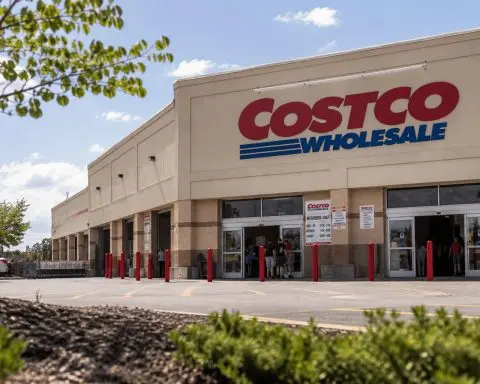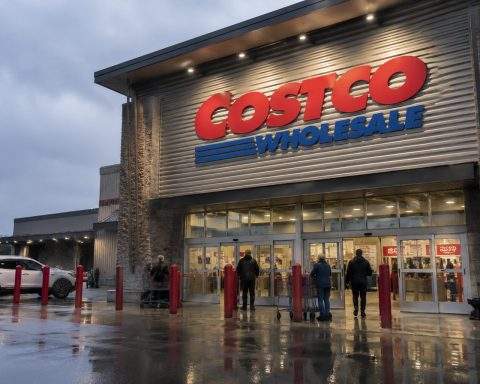

Costco Wholesale Corporation NASDAQ:COST is heading into the final stretch of 2025 with a familiar story—and an unfamiliar debate. The wholesale giant just delivered a strong fiscal first-quarter report, yet the stock is hovering near its one-year low as investors weigh a premium valuation against early signs of softening in the membership metrics that power Costco’s business model.
As of the latest available quote on Dec. 20, 2025, Costco stock traded around $855.62, putting shares about 1% above the 52-week low and more than 20% below the 52-week high—a notable pullback for a market darling that has often traded like a “defensive growth” name. MarketBeat
Below is a full roundup of the latest Costco stock news, analyst forecasts, and market analysis relevant to Dec. 20, 2025, including what’s driving sentiment, where Wall Street stands now, and what catalysts matter next.
Why Costco stock is under pressure despite a strong quarter
The core reason COST is struggling to regain momentum is simple: expectations were already sky-high. Recent analysis across major outlets has converged on the same tension—Costco is executing, but the stock’s valuation leaves little room for error.
That tension intensified after an unusual move on Wall Street: Roth/MKM issued a rare downgrade to “Sell,” cutting its price target to $769 from $906, pointing to weakening “under-the-hood” membership trends and slowing traffic growth. Investing.com+2MarketWatch+2
At the same time, other firms have remained constructive or neutral, arguing the membership engine is still healthy by historical standards—just not accelerating the way the market got used to.
The headline catalyst: Roth/MKM’s rare “Sell” rating on Costco
Roth/MKM’s downgrade made waves because “Sell” ratings are uncommon for Costco, a company widely viewed as one of retail’s most consistent operators.
According to Investing.com’s report on the note, Roth/MKM flagged:
- Fading renewal rates
- Slowing paid membership growth (potentially negative quarter-over-quarter when adjusted for store openings, per the note)
- Decelerating comparable traffic
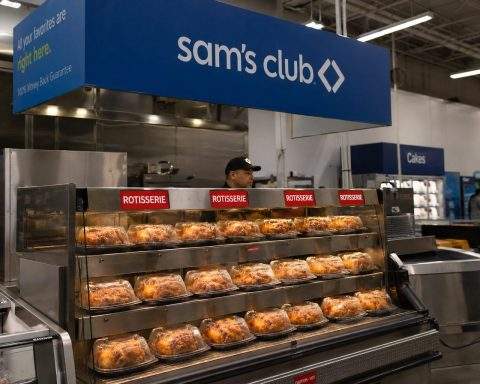
- Rising competitive pressure from Sam’s Club (Walmart) and BJ’s
- High valuation multiples that could “re-rate” sharply if Costco misses even slightly Investing.com+1
MarketWatch and Investor’s Business Daily echoed the same key idea: investors are now being asked to price Costco like a premium compounder at a time when certain membership/traffic indicators appear to be cooling at the margin.
What that implies for the stock: with COST around $856, the Roth/MKM target of $769 suggests roughly 10% downside from current levels if that bearish thesis plays out.
The counterpoint: Guggenheim stays Neutral as “softening metrics” emerge
Another influential read comes from Guggenheim, which reiterated a Neutral rating and highlighted “softening metrics”—including a modest step down in renewal rates and slowing traffic growth. Investing.com+1
Importantly, Guggenheim’s framing is less alarmist than Roth/MKM’s. The note (as summarized by Investing.com) focuses on the idea that:
- Costco remains an elite operator,
- but the valuation premium is harder to justify if growth normalizes,
- and renewal rates, while still high, are no longer improving.
This “great company, tougher stock setup” argument is a recurring theme across recent analysis, including Barron’s coverage of the quarter and the market’s muted reaction. Barron’s+1
Costco earnings recap: Q1 fiscal 2026 beat on profit and topped key sales expectations
Costco’s latest quarterly results were not weak—far from it.
For Q1 fiscal 2026 (ended Nov. 23, 2025), Costco reported:
- Net sales: $65.98B (+8.2% YoY)
- Total revenue: $67.31B
- Membership fees: $1.329B (+14% YoY) Costco Investor Relations
Reuters reported the company also beat consensus on earnings:
- EPS: $4.50 vs. $4.27 expected
- Revenue: $67.31B vs. $67.14B expected Reuters+1
A key operational highlight: same-store sales (excluding gas) rose 6.4%, beating analyst expectations cited by LSEG.
So why didn’t the stock surge? In short, the market appears to be looking beyond the quarter and asking whether Costco can keep delivering “premium growth” outcomes while cycling a membership fee increase and navigating shifting consumer behavior. Barron’s+1
The metric Wall Street is watching most: renewal rates
Costco’s membership model is the foundation of its moat—and right now it’s also the center of the debate.
From the company’s earnings call transcript, Costco reported:
- U.S. & Canada renewal rate: 92.2%
- Worldwide renewal rate: 89.7%
- Both down 10 basis points quarter-over-quarter The Motley Fool
Management attributed the slight decline to mix shift toward online sign-ups, which renew at a somewhat lower rate than warehouse sign-ups, while noting targeted retention communications helped limit the drop.
Why this matters for COST stock:
When a company trades at a premium multiple, investors tend to focus less on whether growth exists and more on whether growth is accelerating or decelerating. A 10-basis-point move is small in absolute terms, but it becomes a big narrative lever when the stock is priced for near-perfection.
Membership growth is still solid—especially at the high-value tier
Even with the renewal-rate conversation, Costco’s membership base continues to expand.
From the earnings call transcript:
- Total paid members: 81.4 million (+5.2% YoY)
- Executive memberships: 39.7 million (+9.1% YoY)
- Total cardholders: 145.9 million (+5.1% YoY) The Motley Fool
This matters because Executive members are typically higher-spending and more loyal, and they help drive recurring fee income growth—one reason many analysts remain bullish even after the recent pullback.
Digital strength: e-commerce momentum remains a bright spot
A consistent positive note across multiple reports is Costco’s digital trajectory.
Roth/MKM’s downgrade acknowledged Costco beat earnings, and its report referenced e-commerce sales rising 20.5% in the quarter.
Barron’s coverage also highlighted strong e-commerce performance around Black Friday, reinforcing the narrative that Costco is not standing still operationally even as the stock consolidates.
For investors, the digital angle is important because it offers a potential path to:
- better engagement with younger households,
- more frequent purchasing behavior,
- and incremental growth without relying solely on new warehouse openings.
Tariffs and merchandising shifts: Costco adjusts shelves to protect value
Beyond earnings and analyst notes, one of the most-discussed operational stories this week has been Costco’s response to tariffs.
The Wall Street Journal reported Costco made selective adjustments to its holiday assortment (affecting a small portion of SKUs) to maintain value—shifting away from some tariff-exposed imported items and leaning more into U.S.-produced goods and Kirkland Signature where possible.
For COST stock watchers, the takeaway is twofold:
- Costco appears willing to adjust product mix rather than simply pass along price increases.
- That strategy can protect member trust—but may create margin and sourcing complexity depending on how tariff pressures evolve.
Dec. 20, 2025 news roundup: institutional flows add color, not a thesis
Two MarketBeat “instant alert” filings dated Dec. 20, 2025 spotlighted routine institutional positioning changes:
- Voya Investment Management reported trimming its Costco stake in Q3 (per the filing summary).
- Addenda Capital reported increasing its stake in Q3, buying additional shares (per the filing summary).
These are not fundamental catalysts on their own, but they reflect a broader reality: institutions continue to actively rebalance COST as the stock trades near its yearly lows, especially after the mid-December analyst downgrade wave.
Costco stock forecast: price targets are split, but the “average” still implies upside
Despite recent caution, broader Wall Street sentiment remains more positive than negative.
MarketBeat’s consensus snapshot (as cited in its Dec. 20 filing-style posts) indicates:
- Consensus: “Moderate Buy”
- Average price target: $987.58 MarketBeat+1
From ~$856, that implies about 15% upside to the average target—though the dispersion is wide because the current debate is about whether Costco should trade as a “premium compounder” or a “great retailer at a stretched multiple.” MarketBeat
Some firms remain notably bullish. Investing.com’s summary of recent analyst actions referenced:
- TD Cowen raising its target to $1,175
- UBS raising its target to $1,205 Investing.com
Using today’s ~$856 level, those targets would imply roughly +37% to +41% potential upside—but they also assume Costco can sustain premium growth and stabilize the membership narrative.
Next earnings and near-term catalysts: dates are now confirmed
If you’re tracking Costco stock into early 2026, the calendar is unusually clear—because Costco’s Investor Relations site has already posted key upcoming events.
1) December sales results (next major “check-in”)
Costco is scheduled to release December Sales Results on Jan. 7, 2026 (1:15 PM PT).
The earnings-call transcript (as summarized by Investing.com) also points to the same timing, noting December sales results for the five weeks ending Jan. 4 would be announced Wednesday, Jan. 7, after market close.
2) Q2 fiscal 2026 earnings call
Costco has posted the Q2 2026 Earnings Call for March 5, 2026 (2:00 PM PT).
Zacks’ earnings calendar also lists March 5, 2026 as the expected next report date and provides an early EPS expectation.
3) Shareholders’ meeting
Costco’s IR overview also lists a Shareholders’ Meeting on Jan. 15, 2026.
What investors should watch next: the 5 Costco stock “tell” indicators
Here are the metrics that will likely decide whether COST rebounds—or continues to churn near lows—through the next two reporting checkpoints (January sales update and March earnings):
- Renewal rates (US/Canada and Worldwide)
If renewal rates stabilize or improve, the recent “structural slowdown” thesis weakens. The Motley Fool+1 - Paid member growth and Executive penetration
Executive memberships grew 9.1% YoY—continued strength here supports the premium story. - Traffic vs. ticket
Costco’s model loves traffic. Investors will scrutinize whether traffic trends keep cooling or re-accelerate. - Digital growth durability
E-commerce strength is one of Costco’s clearest upside narratives in current analysis. - Tariff/margin management
Any sign Costco is forced to choose between passing costs to members and absorbing them could shift the valuation conversation quickly.
Bottom line for Dec. 20, 2025: Costco is still executing—Wall Street is repricing the “perfect stock” narrative
Costco’s fundamentals remain strong: sales are rising, membership fee income is growing, and the company continues to outperform many retailers on loyalty and scale.
But the stock’s recent slide shows the market is becoming less willing to pay any price for consistency—especially as renewal rates and traffic growth show early signs of softening, even if only marginally.
From here, January’s sales update (Jan. 7) and March’s earnings report (March 5) look like the next major “verdict moments” for COST. Costco Investor Relations+2Costco Investor Relations+2
Related articles: NASDAQ:COST