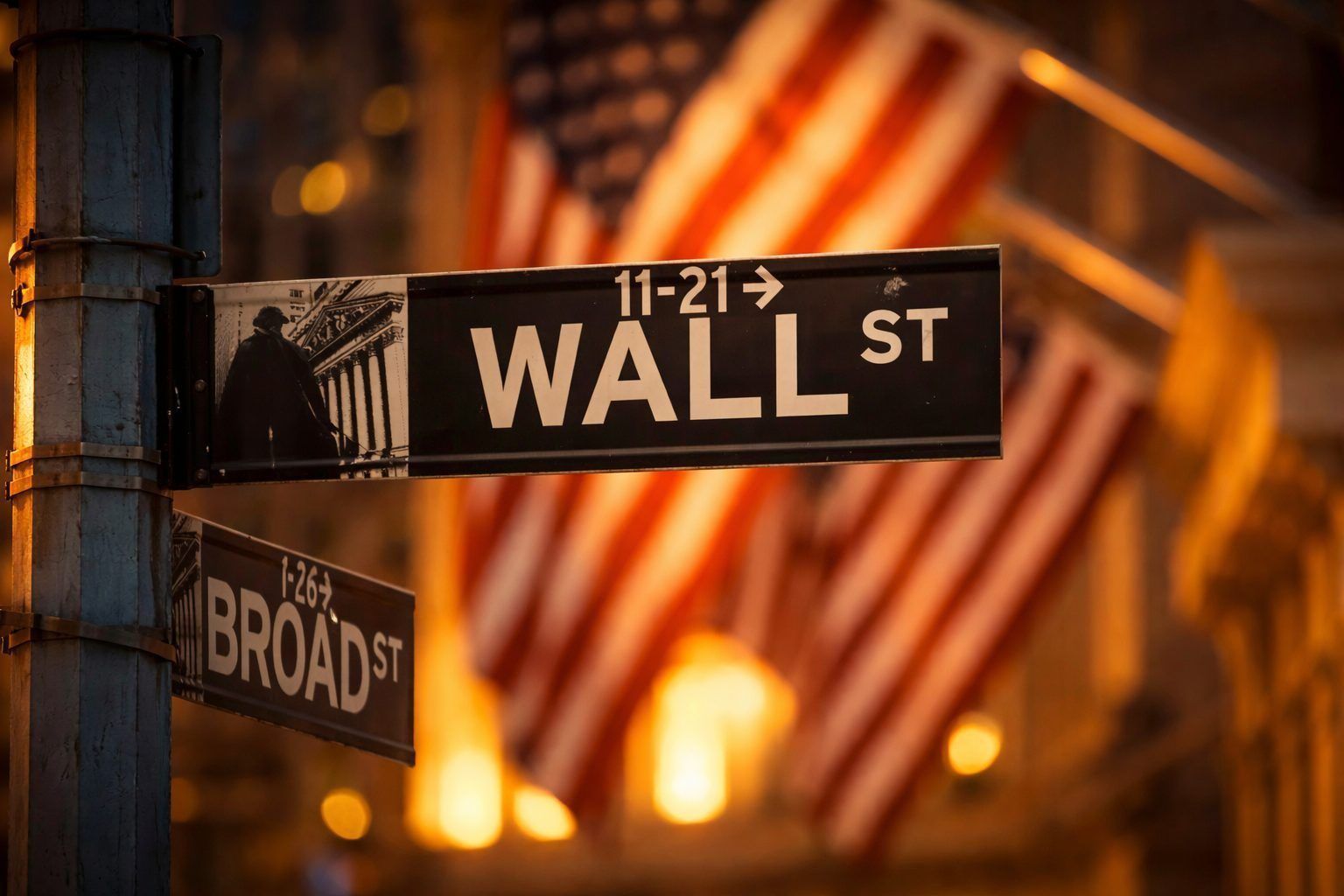

NEW YORK — Dec. 20, 2025 — The U.S. stock market heads into the final stretch of 2025 with a familiar mix of optimism, anxiety, and thin holiday liquidity. On Friday, the S&P 500 rose 0.9% to 6,834.50, the Dow Jones Industrial Average gained 0.4% to 48,134.89, and the Nasdaq Composite climbed 1.3% to 23,307.62, as investors rotated back into technology and AI-linked names after a volatile mid-December pullback.
For the week, the S&P 500 managed a slim 0.1% gain and the Nasdaq ended 0.5% higher, while the Dow and Russell 2000 finished lower—an encapsulation of late-2025 trading: resilient headlines for the benchmarks, but ongoing debate underneath about leadership, valuation, and whether the “AI trade” is accelerating or simply getting more crowded. AP News+1
With the calendar flipping toward 2026, the market’s next big questions are already in motion: Will a year-end “Santa Claus rally” appear, and how much upside is left after another strong year for equities? Strategists aren’t shy about offering answers—but the range of 2026 forecasts has widened sharply, revealing just how much depends on inflation, rates, and whether AI spending turns into durable profits.
Wall Street ends the week higher as AI stocks bounce back
Friday’s rally was powered by the same engine that has driven much of 2025: mega-cap technology and AI-linked semiconductors. AI-related shares led the advance, and big-chip names like Nvidia and AMD posted notable gains, echoing a broader return to “risk-on” sentiment after recent jitters. Investopedia+1
Several company-specific catalysts amplified the move:
- Oracle jumped after reports tied the company to a TikTok joint venture structure involving American investors, a storyline that helped reverse some of the pressure Oracle faced earlier in December amid concerns about heavy AI-related spending.
- Micron extended a surge after earnings beat expectations, reinforcing the narrative that AI-driven demand is still lifting parts of the semiconductor supply chain.
- Nike fell sharply following commentary around a near-term sales outlook and continued headwinds in China—an example of how consumer-facing names can struggle even on strong index days.
Cross-asset signals also mattered. The 10-year Treasury yield rose to about 4.15%, and investors were watching global central-bank divergence after the Bank of Japan raised rates to their highest level in 30 years, a reminder that U.S. markets are still trading in a globally connected rate environment even as Wall Street focuses on the Fed.
Inflation cools — but a government shutdown complicates the signal
The late-week mood shift didn’t happen in a vacuum. Investors were also reacting to inflation data that looked encouraging on the surface.
Reuters reported that November CPI rose 2.7% year-over-year, below expectations cited in the same report, while core CPI increased 2.6%.
But 2025’s inflation story comes with a major asterisk: a 43-day U.S. government shutdown disrupted economic data collection and publication. Reuters noted the shutdown delayed data collection into a period of holiday discounting and led to the cancellation of October CPI and the unemployment rate release—described as an unprecedented disruption for these reports.
That uncertainty matters because the market’s 2026 playbook is still heavily rate-sensitive.
The Fed cut rates — and then signaled it may pause
On Dec. 10, 2025, the Federal Reserve cut the federal funds target range to 3.50%–3.75%, and reporting around the decision emphasized that policymakers were balancing a weakening labor market against inflation that remains above target.
Just as important for markets: the Fed’s messaging has sounded less like an “all clear” and more like a central bank looking for confirmation. Reuters coverage described a policy outlook clouded by data gaps and persistent inflation, with investors navigating uncertainty after multiple cuts. Reuters+1
In practical terms, the market has been trying to price two competing realities at once:
- Easing is supportive for stocks (discount rates fall, financial conditions loosen).
- If inflation re-accelerates, the Fed may stop early—and “higher for longer” could return in a new form.
The labor market is cooling, and Wall Street is watching closely
Recent labor-market data has shown a slowdown that’s not yet a recession, but also not the red-hot backdrop of earlier cycles.
Reuters reported nonfarm payrolls rose by 64,000 in November and the unemployment rate stood at 4.6%, while noting the shutdown distorted household survey data and created unusual measurement challenges.
Separate reporting highlighted slower wage growth and softer job dynamics into year-end, reinforcing a theme that’s become central to the 2026 debate: Is the economy gliding into a “soft landing,” or setting up for stagflation-style tension where growth slows but inflation doesn’t cooperate? Barron’s+1
AI is still the market’s growth engine — but the payoff debate is intensifying
If 2025 proved anything, it’s that AI can lift the indexes. The question now is how much it can lift earnings—and how quickly.
Concerns about heavy AI capex and uncertain near-term returns have repeatedly surfaced around major tech and cloud names. Reuters reported, for example, that Oracle signaled significantly higher spending as it chases AI cloud customers—an emblem of a broader market worry: investment is enormous, but the profit timeline may be longer than equity investors prefer.
Meanwhile, the “AI buildout” is not just a stock-market story—it’s fueling a real-world investment boom. Reuters reported that data-center dealmaking hit a record in 2025, with over 100 transactions totaling nearly $61 billion through November, driven by demand for AI computing capacity. Reuters
Yet even as the AI theme expands, major long-horizon investors are becoming more cautious about concentration and valuation risk. The Financial Times reported that AustralianSuper, Australia’s largest pension fund, plans to reduce its allocation to global equities in 2026, citing concerns that the AI-driven rally—particularly in U.S. tech—may be maturing as valuations rise and leverage builds.
That split—booming investment on one hand, rising skepticism on the other—helps explain why December’s tape has been so jumpy.
Market breadth is improving, but tech still matters most
One of the most important late-2025 developments has been improving market breadth—a sign that gains aren’t coming only from a handful of mega-cap names.
MarketWatch noted that equal-weighted measures have been outperforming recently, underscoring that more stocks have been participating even when mega-cap tech wasn’t leading day-to-day.
However, the same analysis underscored a reality that matters for index investors: technology remains a large share of the S&P 500, and it’s difficult for the benchmark to make substantial progress without tech contributing.
This is why December has felt like a tug-of-war: a broadening rally may be healthy, but the index still needs tech to stay afloat near highs.
Santa Claus rally 2025: the setup, the stats, and the psychology
With only a handful of sessions left in the year, traders are pivoting to seasonality—specifically the “Santa Claus rally,” traditionally defined as the final five trading days of the year plus the first two of the next.
Reuters reported that, historically, this period has delivered an average gain of about 1.3% for the S&P 500 since 1950, and that in 2025 the window begins in the final week of December and runs into early January.
Other market data referenced by Advisor Perspectives (citing Citadel Securities’ historical compilation) similarly points to a positive seasonal tilt during the last two weeks of December.
But seasonality comes with a catch: holiday liquidity can exaggerate moves—both up and down—and investors are still digesting macro uncertainty around inflation, rates, and economic data disruptions.
Holiday trading hours: what’s open, what’s closed, and why it matters
Because liquidity can be thin, market mechanics matter more than usual.
- The NYSE confirms an early close at 1:00 p.m. ET on Wednesday, Dec. 24, 2025, and normal holiday closure on Thursday, Dec. 25.
- Nasdaq lists the same 1:00 p.m. ET early close on Dec. 24 and closure on Dec. 25.
- Bond markets typically follow SIFMA recommendations, including a 2:00 p.m. ET early close on Dec. 24 and closure on Dec. 25.
- Even after President Trump directed federal offices to close on Dec. 24 and 26, Reuters reported major U.S. exchanges said they would follow their normal schedules, including the planned early close on Dec. 24 and a regular session on Dec. 26.
For investors, the practical takeaway is simple: expect thinner volumes and potentially sharper price swings around Christmas week, especially in high-beta corners like AI, semiconductors, and momentum tech.
2026 US stock market forecasts: S&P 500 targets from 7,100 to 8,100
Wall Street’s baseline expectation for 2026 is still positive—but the spread between bullish and cautious calls is striking.
Here’s a snapshot of widely cited 2026 outlooks and targets circulating in late 2025:
- Bank of America: A comparatively cautious call, with the S&P 500 projected to finish 2026 around 7,100 (described as among the most bearish major-bank targets).
- JPMorgan: A base case near 7,500 for 2026, with upside scenarios above 8,000 if rate cuts continue more than expected.
- RBC Capital Markets: A 7,750 target over the next 12 months, framed as largely driven by earnings growth rather than valuation expansion.
- Morgan Stanley: An outlook calling for the S&P 500 to rise to roughly 7,800 over the next 12 months, alongside continued emphasis on managing bull-market risks (including policy and inflation).
- Citi: A 7,700 year-end 2026 target, as published via a MarketWatch report republished by Morningstar.
- FactSet (bottom-up): A bottom-up consensus trajectory pointing to 7,968.78 by year-end 2026.
- Oppenheimer: A bullish call that has circulated publicly suggesting 8,100 by the end of 2026.
MarketWatch also referenced a compiled consensus around 7,500, implying about a low-double-digit gain from late-2025 levels—another way of saying: the “average” strategist is still constructive, even if there’s more disagreement than usual about the path. MarketWatch
The bull case for 2026: earnings growth plus easing financial conditions
A core reason many strategists stay positive is the earnings outlook.
Barron’s highlighted expectations for roughly 13% earnings growth in 2026 in some forecasts and cited projections around $310 S&P 500 earnings per share, while stressing that fundamentals—and particularly profit margins—remain the market’s “load-bearing wall.” Barron’s
J.P. Morgan Asset Management’s year-ahead outlook similarly discusses expectations for earnings growth into 2026, while noting the continued role of mega-cap tech in overall profit expansion.
If the economy avoids recession, inflation stays contained, and the Fed keeps policy from turning restrictive again, the optimistic narrative is straightforward: earnings growth does the work, and the index can grind higher even without a valuation surge.
The bear case: renewed inflation, fewer cuts, and an AI “air pocket”
The market’s biggest risk isn’t a single headline—it’s a regime shift.
Two major fault lines dominate cautious forecasts:
1) Inflation could re-accelerate—and rates could stay higher than bulls expect.
Reuters reported that economists warned the softer CPI reading may have been influenced by shutdown-related technical factors and delayed data collection, with some expecting inflation to accelerate in December. Reuters+1
Business Insider, citing Apollo’s chief economist, argued that stagflation risks could interfere with the rate-cut narrative that has supported the rally.
2) The market is still vulnerable to a pullback in mega-cap AI leadership.
Investopedia reported Bank of America’s view that high valuations in “buy-the-dream” AI stocks could face an “air pocket,” with less favorable liquidity conditions potentially limiting upside. Investopedia
At the institutional level, the Financial Times report on AustralianSuper’s planned equity reduction underscores that concerns about concentration and valuation aren’t just retail chatter—they’re increasingly part of big-money portfolio planning. Financial Times
In short: if the market’s most crowded winners wobble at the same time that inflation pressures return, 2026 could look far choppier than headline targets suggest.
What to watch next week: key data, thin liquidity, and the year-end finish
Even with holiday hours approaching, the week ahead isn’t devoid of catalysts.
Reuters flagged several major data releases investors will be watching, including U.S. GDP, durable goods orders, and consumer confidence, alongside ongoing debate over the 2026 interest-rate path and year-end positioning.
At the same time, market participants should keep a close eye on:
- Treasury yields (equities have been sensitive to sudden moves in long rates) Investopedia
- AI infrastructure headlines (capex, data-center deals, cloud demand, and profitability timelines) Reuters+1
- Breadth indicators (whether the rally continues to broaden beyond mega-cap tech) MarketWatch+1
- Holiday liquidity effects (thin volume can amplify volatility) New York Stock Exchange+1
Bottom line: 2025 ends strong, but 2026 is shaping up as a “prove it” year
As of Dec. 20, 2025, the U.S. stock market’s message is optimistic but conditional. The S&P 500 is near its highs, 2025 performance remains solid, and many major strategists project further gains in 2026.
But the support beams for that outlook are now very clear—and increasingly debated:
- Disinflation must hold, even with messy data distortions.
- The Fed must be able to ease without reigniting inflation.
- AI spending must translate into broad earnings power, not just capex headlines and valuation expansion.
Related articles: NASDAQ:NVDA