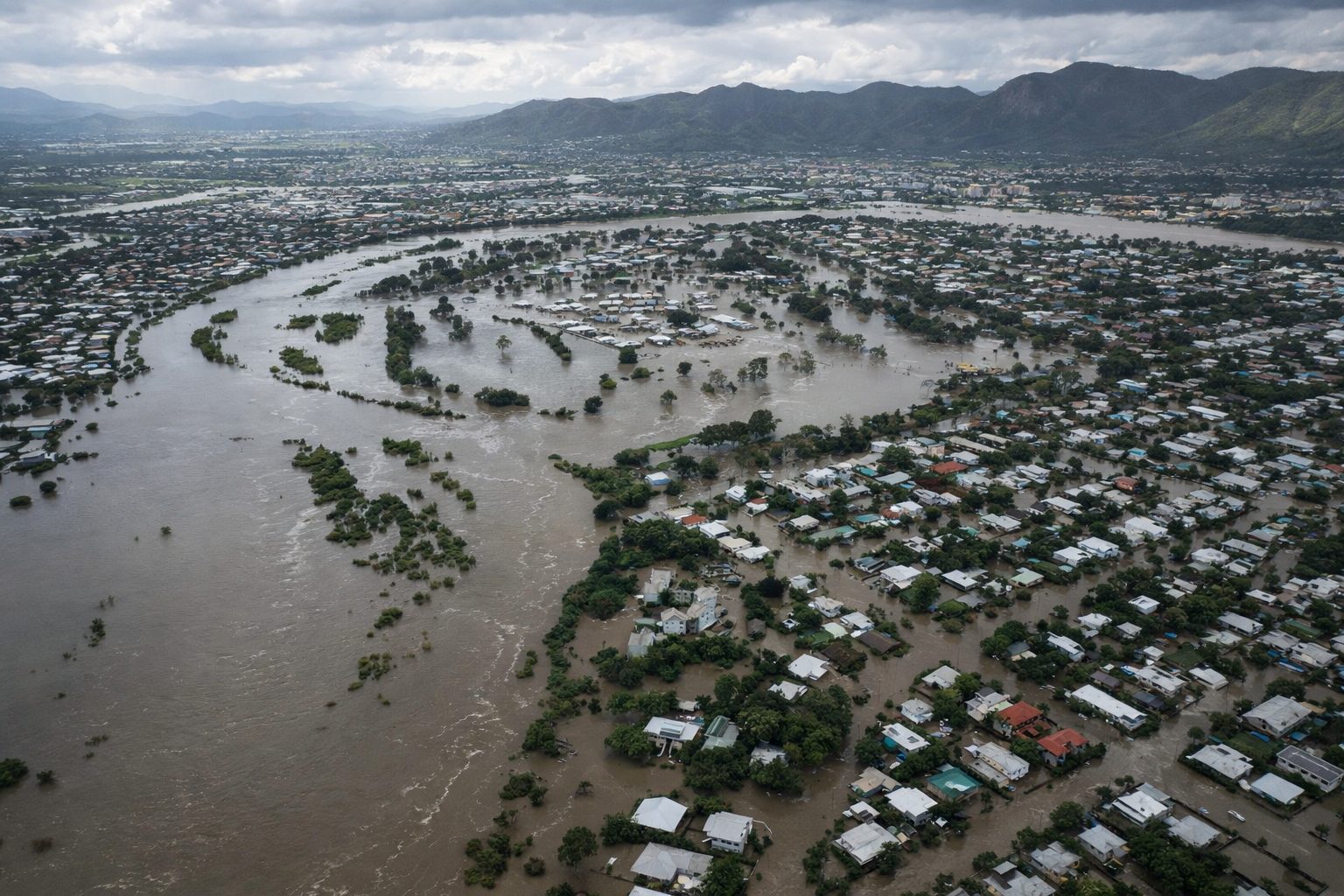
As another atmospheric river pushes into the U.S. West Coast on Sunday, December 21, 2025, the conversation has shifted from “when will the water stop?” to “how fast can communities recover?” and “who’s equipped to respond?” Federal forecasters are warning of long-duration heavy rain and flash flooding risk in parts of California, while the Pacific Northwest remains waterlogged after a punishing stretch of storms that damaged infrastructure, forced evacuations, and kept restoration crews running at full speed. wpc.ncep.noaa.gov+2The Weather Channel+2
Against that backdrop, a wave of business announcements and local recovery efforts is spotlighting a reality homeowners and property managers know all too well: water damage is a time-sensitive emergency, whether it comes from flooded rivers, burst pipes, failed levees, or building-system malfunctions. In Florida, two separate updates this week underscore how restoration providers are expanding their footprints and emphasizing certified response—one in Miami’s Little Havana, the other along the Treasure Coast in Fort Pierce and Port St. Lucie.
West Coast weather update for Dec. 21: Heavy rain hazard ramps up, with flooding concerns shifting south
The National Weather Service’s Weather Prediction Center (WPC) said early Sunday that the onset of a long-duration heavy rain hazard was underway as an atmospheric river made landfall across central and northern California, with terrain-favored areas capable of seeing 0.5–1.0 inch per hour rain rates and flash flooding likely through the morning.
Weather coverage this weekend also points to a familiar pattern: repeated storm pulses that strain already saturated watersheds. The Weather Channel noted that the heaviest impacts are expected farther south than earlier events this month, offering some relief to a still-saturated Pacific Northwest—but not removing the risk entirely. The Weather Channel ABC News similarly reported flood watches across parts of Northern California, with some places potentially seeing 4 to 6+ inches, while adding that the Pacific Northwest could still pick up 1–2 inches and significant mountain snow.
Pacific Northwest flooding: From storm response to long recovery, with levees, dams, and documentation in focus
Earlier this month, a potent atmospheric river helped unleash widespread flooding and landslides across parts of the Pacific Northwest. NASA described how moisture targeting the region starting around December 7 drove the early-December deluge. NASA Science Reuters reported that by December 11, heavy rain triggered flooding across Oregon, Washington, and into British Columbia—closing roads and prompting evacuations—while officials warned the situation could change quickly as rivers approached record levels.
By mid-month, the emergency escalated further in places where flood-control systems were stressed. Reuters reported that a levee breach near Tukwila along the Green River prompted flash flood warnings and evacuations, with crews working to plug a “car-sized” gap using heavy equipment and large sandbags. Reuters
State response: Emergency funding and a push for federal support
Washington Gov. Bob Ferguson amended an emergency proclamation on December 16, directing $3.5 million in emergency funds and activating state assistance programs across 14 impacted counties, while the state worked with FEMA on a potential Major Disaster Declaration. The governor’s office also said the state’s Emergency Management Division was setting up Disaster Case Management to help residents navigate longer-term recovery resources.
Federal engineering response: Dams, drawdowns, and flood-fight materials
In a Dec. 20 update, the U.S. Army Corps of Engineers (USACE), Seattle District, described how operating Howard A. Hanson and Mud Mountain dams contributed to downstream flood-risk reduction. USACE said storing a record amount of water behind Howard A. Hanson Dam prevented an additional five feet of floodwater in the Green River at Auburn—water levels that could have overtopped many levees—while emphasizing the need for careful, gradual outflow reductions as forecasts evolve.
USACE also detailed the scale of “flood fight” logistics across the region. In a Dec. 17 news release (updated Dec. 19), the Seattle District said it delivered more than 250,000 sandbags, 2,200 supersacks, and 10,000 linear feet of gabion baskets, along with pumps and automated sandbag machines, while conducting and approving emergency repairs to multiple levees and flood-protection sites across Washington, Idaho, and Montana under Public Law 84-99 authority. nws.usace.army.mil
A separate USACE update on Dec. 19 explained the logic of controlled drawdowns after storms: dams “charge” by capturing inflows during heavy rain, then “discharge” through managed releases to create storage capacity for the next storm—while trying not to exceed downstream levee capacities. USACE said Howard A. Hanson Dam reached a record 74% capacity on Dec. 12 before water managers began a strategic drawdown to regain space ahead of forecast storms. nws.usace.army.mil
Boots-on-the-ground: National Guard mission highlights the “time is everything” reality
The Washington National Guard described mobilizing roughly 300 Soldiers and Airmen for what it called one of the state’s largest and fastest flood responses in recent memory, supporting rescues, evacuations, and levee reinforcement from Dec. 11–18 across multiple counties. The Guard said the weeklong mission included filling more than 20,000 sandbags, supporting swift water rescues, assisting evacuations, and conducting a hoist rescue mission.
The recovery phase: Counties urge residents to report damage—and a Dec. 21 in-person help option
As floodwaters recede, local governments are emphasizing documentation as the gateway to recovery aid. Snohomish County said its Department of Emergency Management launched an online damage survey on Dec. 16, covering impacts from historic flooding that began with weather events starting Dec. 9. The county said the survey would remain open through Dec. 31, 2025, and urged residents to document damage with photos, lists, and receipts before cleanup.
Notably for today (Dec. 21), Snohomish County’s site lists in-person help for the damage survey from 11 a.m. to 5 p.m., Sunday, Dec. 21, 2025, at the Startup Event Center in Startup, Washington.
A FOX 13 Seattle explainer this week also pointed residents to county impact surveys and said Gov. Ferguson activated an Individual Assistance program as counties compile damage assessments to determine eligibility for federal disaster relief.
Miami restoration expansion: Flood Recovery opens a new Little Havana office to speed response
While the Pacific Northwest grapples with large-scale flooding and infrastructure repairs, restoration demand is also being shaped by the day-to-day reality of water losses in dense urban areas—leaks, plumbing failures, and localized flooding that still require rapid response.
In a Dec. 18 announcement, Flood Recovery said it opened a new office in Little Havana, Miami, expanding service coverage and response capacity across central Miami. The company said it already operates from Miami Gardens, and that the new location is designed to improve response times for emergency water damage situations across neighborhoods including Little Havana, Downtown Miami, Brickell, Coral Gables, Flagami, and Allapattah.
The release also listed services such as emergency water damage restoration, water extraction, structural drying, moisture control, and mold prevention following water damage—an emphasis that mirrors what many property managers prioritize in high-density, mixed-use corridors: stopping secondary damage before it multiplies into higher rebuild costs and longer tenant displacement.
Florida’s Treasure Coast: SERVPRO of Fort Pierce NE spotlights 24/7 IICRC-certified response
On Florida’s east coast, another company update highlights the growing emphasis on certification, equipment, and around-the-clock availability—especially in areas where seasonal storms, coastal humidity, and aging building systems can make water damage a recurring threat.
In a Dec. 19 press release distributed via EIN Presswire, SERVPRO of Fort Pierce NE promoted its 24/7 emergency response for Fort Pierce and Port St. Lucie, describing IICRC-certified technicians using moisture detection tools, extraction equipment, and structural drying systems intended to reduce long-term risks such as mold growth. The release also said the locally owned operation serves Fort Pierce, Port St. Lucie, Jensen Beach, Hutchinson Island, and St. Lucie County, and noted the business was founded in 2021.
The statement included a list of technician certifications—Water Restoration Technician (WRT), Applied Microbial Remediation Technician (AMRT), Applied Structural Drying (ASD), and Fire and Smoke Restoration Technician (FSRT)—and positioned the company as offering end-to-end services from extraction through drying and reconstruction.
The bigger picture: Why the disaster restoration market keeps expanding
The business moves in Miami and Fort Pierce land in a market already expected to grow, even before accounting for the kind of multi-week storm sequences now affecting major regions.
Market research firm Mordor Intelligence estimates the global Disaster Restoration Services Market at $42.93 billion in 2025, projecting growth to $55.53 billion by 2030 (a 5.28% CAGR).
Industry sentiment, however, is not just about top-line demand—it’s also about capacity, labor, equipment costs, and the friction of insurance-based work. A Restoration & Remediation Magazine analysis of industry trends reported that 56% of contractors expected revenue growth from restoration and remediation work (with strong optimism among residential contractors).
At the same time, industry reporting has pointed to operational stressors—rising expenses and cash-flow strain, particularly for firms heavily dependent on insurance-driven jobs—factors that can affect how quickly a community can move from “mitigation” to full rebuild. C & R –
Water damage isn’t always a flood: Schools, businesses, and the hidden cost of leaks
Flooding dominates headlines, but many of the most disruptive water damage events start with a mechanical failure. In Maryland, a Washington Post report described how a malfunctioning sprinkler system caused water damage across multiple floors at Sherwood High School, closing the building and reopening broader concerns about mold in schools—a reminder that restoration demand also spikes from routine infrastructure failures, not just weather disasters.
And internationally, flooding-driven business disruptions are also part of the story: The Guardian reported on Monmouth in Wales after severe flooding, describing the challenges small businesses face—especially around insurance coverage—when extreme weather repeatedly hits commercial districts.
What property owners should do right now if they’re dealing with water damage
With new storm systems still unfolding this weekend, officials and restoration professionals are repeating a consistent message: act fast, document thoroughly, and prioritize safety.
Here are steps that align with what local and state recovery programs are emphasizing right now:
- Stay safe first. Avoid standing water near electrical sources. If you’re unsure about wiring, breakers, or structural stability, wait for qualified help.
- Document before you tear out. Counties handling disaster recovery are explicitly urging residents to take photos, make itemized lists, and keep receipts—because those details can matter for reimbursement and aid eligibility.
- Report damage through official channels. In Washington, counties are using impact surveys to quantify damage and support requests for outside aid. Snohomish County says its survey runs through Dec. 31, and it lists in-person help today (Dec. 21) for those who need it.
- Move quickly on drying and mitigation. Even when floodwaters recede, moisture trapped in walls, flooring, and insulation can create secondary damage. That’s why restoration firms emphasize rapid extraction, moisture detection, and structural drying.
- Watch for secondary hazards. Flood events can bring debris, contaminated water, and hidden structural issues—conditions that agencies like USACE note can remain risky even as rivers drop.
Bottom line for Dec. 21, 2025: Restoration becomes the next front line
The weather threat hasn’t ended—federal forecasters are still tracking heavy rain hazards tied to atmospheric rivers. wpc.ncep.noaa.gov+1 But across the U.S., the parallel story is the one that follows every major water event: stabilize homes, restore critical infrastructure, and expand capacity fast enough to meet demand.
From Washington’s flood fight—where dams, levees, sandbags, and damage surveys are shaping the recovery pipeline—to Florida’s restoration providers expanding coverage in Miami and highlighting certified response in Fort Pierce, the same equation holds: speed and preparedness now define resilience.